REVIEW · CANCUN
Two Tanks Scuba Diving for Beginners in Cancun
Book on Viator →Operated by A' HA' Scuba Diving · Bookable on Viator
Most people start nervous. That’s the point.
This two-tank beginner scuba experience in Cancún is built to get you from first-time gear to real underwater time in one morning, with hands-on coaching and a small group (max 8). I like how they keep the day structured, with theory plus pool skills before you ever head out on the boat. I also like the variety: you’ll spend time at MUSA Underwater Museum and then switch to Manchones Reef, so your brain stays engaged instead of repeating the same scene. One consideration: you must be able to swim and perform required in-water skills, and if you can’t do that for safety reasons, there isn’t a refund.
The vibe is calm and practical, not showy.
The instructors (including Marin, Lorena, and support from Carolina) are often described as patient and focused on comfort, and that shows in how they talk you through gear, breathing, and body language. A possible drawback to plan for: you’re going from land to open water by boat, and seasickness can happen even with medicine, so don’t skip the anti-nausea plan if you’re prone to it.
In This Review
- Key things I’d pay attention to
- Two-Tank Beginner Scuba in Cancun: what you’re really paying for
- Starting point at Hotel Sotavento Cancun: timing that keeps the day easy
- Medical questionnaire, basic theory, and pool skills: the “do this first” part
- Tank #1 at MUSA Underwater Museum: statues that turn into snorkeling-level landmarks
- Tank #2 at Manchones Reef: where wildlife sightings come in strong
- Safety rules that affect your trip: health checks, sunscreen, and flight timing
- The equipment and wetsuit you actually get (and what to bring anyway)
- The small-group vibe: more attention, fewer distractions
- How the boat ride and rough water can affect you
- Is it worth $169? The value math for first-timers
- Who should book this (and who should think twice)
- A few practical tips to make your morning smoother
- Should you book A’ HA’ Scuba Diving for two tanks in Cancun?
- FAQ
- What’s the schedule for the two-tank beginner scuba experience?
- What does the instruction include before going underwater?
- Are there health conditions that prevent me from participating?
- Do I need to know how to swim?
- What are the two underwater locations?
- Is sunscreen allowed?
Key things I’d pay attention to
- Small group coaching (max 8) that helps you get more direct attention
- Pool practice first, so the underwater part doesn’t feel like a total surprise
- Two different sites: MUSA Underwater Museum first, then Manchones Reef
- Guides who read your comfort level, with lots of check-ins reported by past divers
- Coral-protection rule: sunscreen is not allowed in the water
- Flight timing matters: plan a rest window of 18–24 hours after your sessions
Two-Tank Beginner Scuba in Cancun: what you’re really paying for
What makes this outing worth the money is the mix of instruction + gear + two separate underwater stops in about 5 hours. At $169 per person, you’re not just buying “time underwater.” You’re buying a morning where you learn the basics and then immediately use them while the instructors are still fresh in your head.
I also like the “no certification needed” approach for first-timers. If you’re curious but not ready to commit to a full course, this format helps you understand what scuba feels like with real coaching. And because the group is capped at 8 travelers, it tends to feel more personal than big-boat chaos.
Just remember the deal is not casual swimming. It’s a safety-first activity with medical limits and required in-water skills. If you know you’ll struggle with comfort, buoyancy, or following directions, you’ll want to take that seriously before you book.
You can also read our reviews of more scuba diving tours in Cancun
Starting point at Hotel Sotavento Cancun: timing that keeps the day easy
Your day starts with a clear rhythm. You check in at 8:00 a.m., then the boat leaves around 9:30 a.m., and you’re back around 1:00 p.m. That means you still have most of the afternoon for the beach, food, or a quick stroll around the hotel zone.
The meeting point is at Hotel Sotavento Cancun (Km. 4, Blvd. Kukulcan, Zona Hotelera). If you’re using taxis, rideshares, or buses, it’s a straightforward pickup area and close to public transportation.
Boat mornings also mean you’ll want to think practically about comfort. Bring your ID, a towel, and your swimsuit (plus anything personal you use). Past participants often recommend bringing a way to keep your stuff dry on the boat, since storing items early or using a waterproof sack can save stress.
Medical questionnaire, basic theory, and pool skills: the “do this first” part
Before you go anywhere, you fill out a medical questionnaire. This isn’t paperwork theater. There are specific health conditions that mean you can’t participate, including asthma, heart or brain problems, high blood pressure, lung lesions, organ transplant, diabetes, epilepsy, and any surgery within the past year. If any of those apply, you should assume you won’t be allowed to go in the water.
After that, you’ll get a basic theory lesson and then pool practice. This is the part that many first-timers end up appreciating most, because pool water is where you learn the mechanics without the extra pressure of being far from the boat. You’ll practice skills needed for basic scuba control, and the goal is simple: you should be able to follow directions, handle gear, and stay composed.
Also note a key rule: you must be able to swim. And because some required skills happen in the water, if you can’t complete them for safety reasons, there’s no refund for that situation. So if you’re not a confident swimmer, I’d treat this as a “maybe train first” moment, not just a booking.
Tank #1 at MUSA Underwater Museum: statues that turn into snorkeling-level landmarks
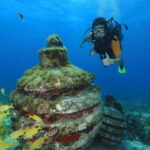
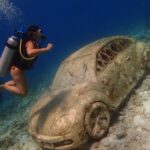
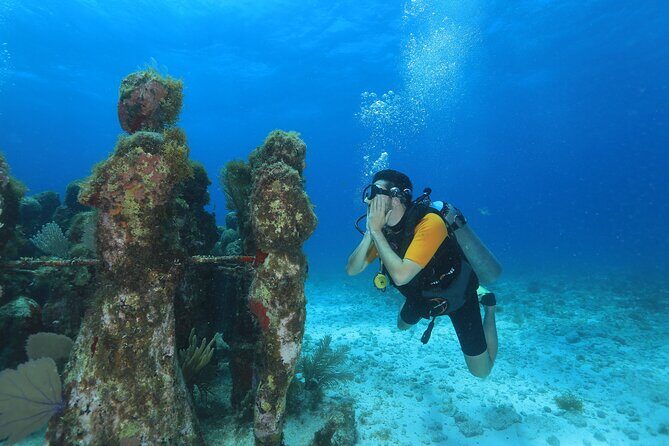
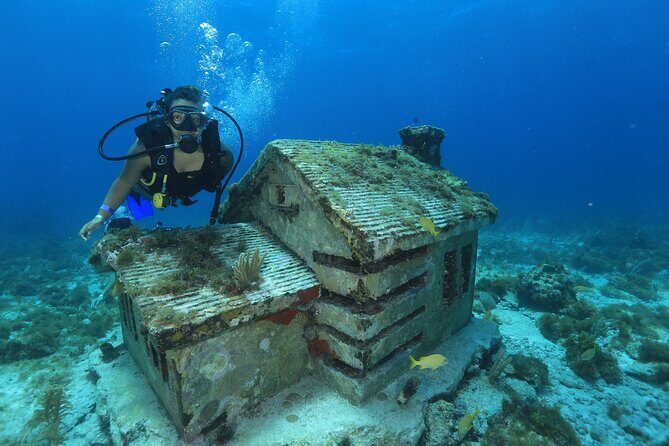
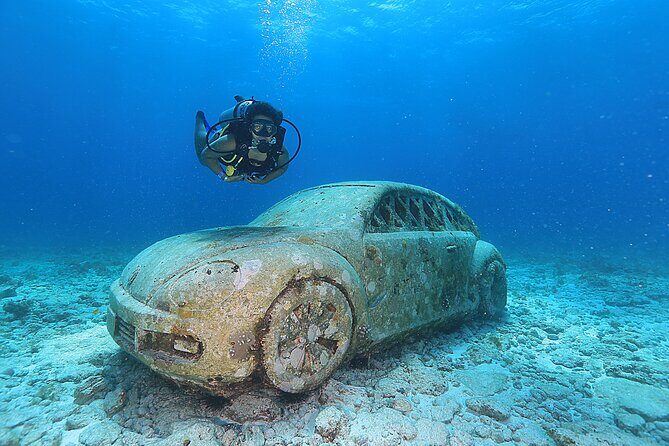
Your first underwater stop is at MUSA Underwater Museum. The museum is famous for underwater sculptures, and you’ll likely experience it less like art class and more like a guided walk-through with your instructor pointing things out.
Even if you’ve seen photos of MUSA before, the underwater perspective changes everything. You’re dealing with buoyancy and slow movement, which makes the shapes feel larger and the surroundings feel more alive. In past feedback, people mention enjoying the statues as well as the sea life that lives around them.
A practical expectation: you’ll be focusing on fundamentals while still trying to notice what’s around you. This is where calm coaching matters. If you start feeling rushed, that’s usually fixable by slowing down, using the signals you’re taught, and staying steady with your breathing.
Tank #2 at Manchones Reef: where wildlife sightings come in strong
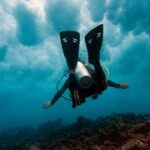
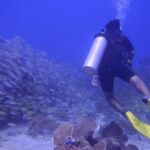
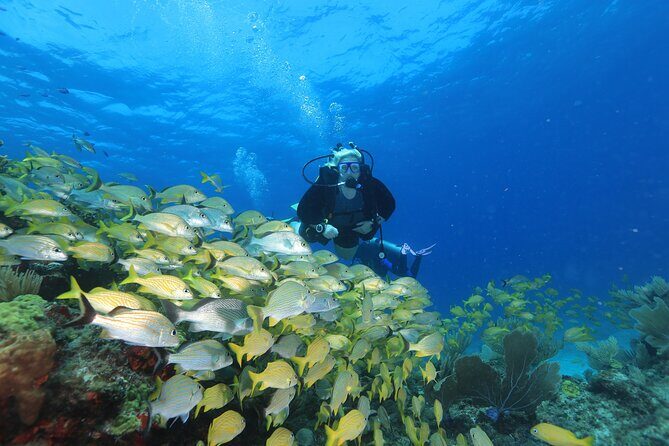
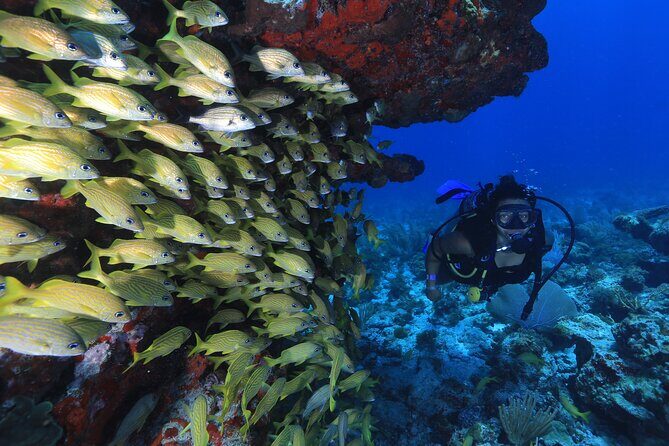
Your second underwater stop is Manchones Reef. This is where the experience often shifts from “learning the gear” to “wow, look at that.” Reports from previous participants include sightings like sea turtles, sting rays, octopus, nurse sharks, moray eel, lobsters, puffer fish, and lots of colorful reef fish.
Reef conditions and animal activity vary day to day, but you can think of Manchones as the site where your instructor’s attention to detail helps you spot wildlife you’d otherwise miss. Past divers describe guides using hand signals and pointing out creatures one by one, sometimes even looking under rocks. If you’re nervous at first, it can be reassuring that the crew is actively scanning with you, not leaving you to “figure it out.”
One more thing: many first-timers worry about sharks. You don’t control what animals do, but you do control your pace. When you’re calm and streamlined, it’s easier to look up, look around, and enjoy the scene instead of bracing for the unknown.





Safety rules that affect your trip: health checks, sunscreen, and flight timing
This is a safety-first operation, and it shows in the rules they give you up front.
No sunscreen in the water. Sunscreen/sunblock is not allowed for coral protection. So plan to apply sunscreen on land (if you need it) well before you get in the water, and avoid bringing it out where it could make contact in the dive area.
Rest time after your sessions. You’ll want to plan 18–24 hours of rest before taking a flight after the scuba experience. If you’re doing a tight itinerary, this matters. Build that buffer so your trip doesn’t turn into rushing through airports.
Swim ability and in-water skills. You must know how to swim, and you must be able to perform required skills. If you can do those things, the day tends to feel smooth. If you can’t, it becomes a safety issue quickly.
The equipment and wetsuit you actually get (and what to bring anyway)
Included in your $169 price are the big ticket items:
- BCD, regulator, mask, and fins
- Wetsuit
- Basic theory + pool lessons
- Two-tank sessions (first at MUSA, second at Manchones Reef)
That’s a major value point. You don’t have to rent the full setup, figure out sizing at the last minute, or guess whether the gear is in good shape. Plus, the pool portion is where you learn how that gear works on you, which makes the open water part less intimidating.
What’s not included: photos/videos and transportation from your hotel. Photos can be optional, and many people like the picture package because it removes the hassle of juggling camera settings while trying to stay calm underwater. Some divers also mentioned bringing their own camera setup, but having the official team capture images is often a lot easier.
Bring the practical extras that make the day better:
- Swimsuit and a towel
- Anti-nausea pills if you’re prone to motion sickness (take them 1–2 hours before the boat)
- A way to keep your phone and personal items dry, like a waterproof sack
The small-group vibe: more attention, fewer distractions
A big part of the “why” here is group size. With a max of 8 travelers, it’s easier for instructors to keep track of where everyone is, how everyone is breathing, and whether anyone needs extra reassurance.
This is one reason people in reviews keep mentioning that instructors check in regularly and coach body language. Names that come up often include Marin and Lorena, with Carolina also noted for being helpful and thorough with meeting instructions and equipment support.
In plain terms: if you’re nervous, you don’t want to be one person among thirty. You want someone watching for stress signals and stepping in early. This setup tends to make that possible.
How the boat ride and rough water can affect you
Because this is a boat activity, you’re trading a shore stroll for an ocean crossing. Seasickness is the main concern, and the company explicitly suggests anti-nausea medication for the best effects.
Even with medication, you might still feel off if the water is rocky. Some past participants mentioned getting help and encouragement during rougher conditions, and that’s part of why the training and the calm coaching matter. If you’re very motion-sensitive, treat the anti-nausea plan as non-negotiable.
Also, plan to arrive on time. The schedule is tight: check-in at 8:00, boat at 9:30. Being late can cut into the time you have for fitting gear and getting comfortable.
Is it worth $169? The value math for first-timers
Let’s talk value. You’re paying for:
1) Instruction (theory + pool skills)
2) Full gear (not just a rental, but everything you need)
3) Two separate underwater sites in a single morning
4) A small group experience with active guidance
For a lot of beginners, the hardest part is not the water. It’s the fear of doing it wrong. Paying for coaching before you go in is what reduces that fear and increases your chance of having fun.
And in feedback, many people emphasize that they felt safe and supported. That’s not guaranteed on every outing, but when you combine small-group size with instructors who stay engaged, it’s a strong recipe for a “new skill, good outcome” day.
If you’d rather just rent gear and go on your own, this won’t be that. But if you want the learning curve smoothed out, this price feels more like a training package than a ticket.
Who should book this (and who should think twice)
This experience is a good match if you:
- Want a first scuba experience without a long certification process
- Like hands-on coaching and want extra attention (small group helps)
- Are okay following safety rules and practicing skills in the pool
- Can swim and are physically capable of doing basic underwater tasks
- Want a morning activity that still leaves time for the rest of Cancún
It might be a poor match if:
- You can’t meet the medical restrictions (asthma, heart/brain issues, high blood pressure, lung lesions, etc.)
- You’re not confident in swimming
- You’re dealing with recent surgery or a medical situation that could be a hard no
- You know you get very sick on boats and haven’t found anti-nausea strategies that work for you
A few practical tips to make your morning smoother
- Arrive early so fitting and check-in don’t feel rushed.
- Pack motion sickness help. Take it 1–2 hours before the boat.
- Apply sunscreen on land, since sunscreen isn’t allowed for coral protection once you’re in the water.
- Use a waterproof way to carry your phone/keys. Keeping items dry reduces stress.
- If you’re camera-minded, consider the photo/video add-on. It’s easier than trying to manage your camera while also controlling buoyancy and breathing.
- If you’re nervous, trust the process. Many instructors use humor and clear coaching to keep you calm, and that matters.
Should you book A’ HA’ Scuba Diving for two tanks in Cancun?
I’d book this if you want a structured, safety-first beginner experience where you learn skills in a pool, then use them right away at MUSA and Manchones Reef. The combination of two underwater stops, small group size, and coaching from instructors like Marin and Lorena is exactly what makes first-timers feel steady.
Skip it if you can’t swim well, don’t meet the medical restrictions, or you know boat rides hit you hard. Also, don’t schedule a flight the same day. Give yourself the recommended 18–24 hours of rest.
If you want that first “I’m actually doing scuba” moment with guidance and real sights to look at, this is a strong pick for Cancún.
FAQ
What’s the schedule for the two-tank beginner scuba experience?
Check-in is at 8:00 a.m., the boat departs around 9:30 a.m., and you return around 1:00 p.m. The total duration is about 5 hours.
What does the instruction include before going underwater?
You’ll do a basic theory lesson and pool practice, including skills you must be able to perform in the water before you can continue to the open-water sites.
Are there health conditions that prevent me from participating?
Yes. People with asthma, heart or brain problems, high blood pressure, lung lesions, organ transplant, diabetes, epilepsy, or surgery less than 1 year cannot dive.
Do I need to know how to swim?
Yes. You must be able to swim, and you also need to perform scuba skills in the water for safety. If you can’t complete the skills, you can’t proceed and there is no refund for safety reasons.
What are the two underwater locations?
The first tank is at MUSA Underwater Museum, and the second tank is at Manchones Reef.
Is sunscreen allowed?
Sunscreen/sunblock is not allowed for coral protection. Plan any sunscreen use accordingly.