REVIEW · CANCUN
Diving in the Mexican Caribbean for Beginners | 2 Tanks 2 Dives | All Inclusive
Book on Viator →Operated by Go Diving Cancun · Bookable on Viator
First time in the water feels like a big leap. This Cancun beginner scuba program turns that leap into a step-by-step plan: short theory, pool skill practice, then two ocean water sessions with a small group. You’ll also get the Caribbean underwater museum experience at MUSA, plus a natural reef stop for marine life.
I especially like the small group limit (max 6), because it means your instructor can watch your breathing, buoyancy, and comfort in real time. I also really appreciate the safety-first approach, with equipment setup, sign communication, and practice that mirrors what you’ll do at sea.
One thing to plan for: the day is long, roughly 6 hours, and you’ll be on and off boats plus in open water. And yes, you need to know how to swim, plus the medical restrictions are real—no asthma and no uncontrolled high blood pressure.
In This Review
- Key Highlights You’ll Want to Know
- What Happens on a Beginner Scuba Training Day in Cancun
- Meeting at Pescador and Getting Gear Fitted to You
- 35 Minutes of Theory, Then Pool Practice That Really Prepares You
- Boat Ride Out to the Sites and the Buoy-Down Setup
- Stop 1: MUSA Underwater Museum and the 33 ft / 10 m Water Session
- Stop 2: Natural Reef for Tropical Fish and Sea Life Variety
- Timing, Comfort, and What the Whole 6 Hours Feels Like
- Value Check: Is $190.69 a Good Deal for Two Tank Sessions?
- Who This Program Is Best For (and Who Should Skip It)
- Instructors Who Keep You Calm: Clemente and the Patient Coaching Style
- Photo Packages, Sea Sickness, and Real-World Tips
- Should You Book This Cancun Beginner Program?
- FAQ
- What time does the activity start in Cancun?
- How long does the experience take?
- How many people are in the group?
- What’s included in the price?
- What’s not included?
- Do I need to know how to swim?
- Is this only for certified divers?
- Are there medical restrictions?
- What if weather is bad or I need to cancel?
Key Highlights You’ll Want to Know
- Pool practice that matches the ocean so you’re not guessing underwater
- Safety training + hand-signal communication before you go in deeper
- Two water sessions with a clear structure and a calm, coached pace
- Stop 1 at MUSA (about 33 ft / 10 m) with the famous sculpture field
- Stop 2 on a natural reef for tropical fish variety
- Top-rated instructors like Clemente/Clementine praised for patience and clear instruction
What Happens on a Beginner Scuba Training Day in Cancun
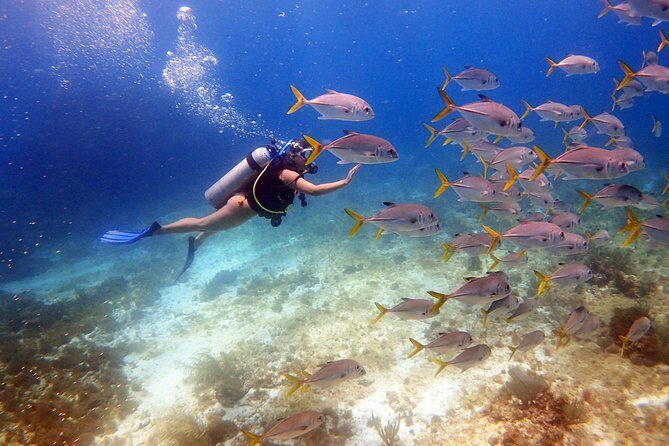
This is built for first-timers who want the full experience without the guesswork. The rhythm is pretty simple: you get fitted with your gear, learn the basics, practice in a pool, then do two coached outings in the water—one at the underwater museum and one on a natural reef.
The biggest value here is not just the sites. It’s the way the day is paced. You start with a short theory session focused on safety and practical underwater skills, then you repeat the same movements and routines in the pool. That repetition is what makes the ocean portion feel less mysterious and more like a new setting for the same skills.
You can also read our reviews of more scuba diving tours in Cancun
Meeting at Pescador and Getting Gear Fitted to You
The day starts at the meeting point at Pescador, Kukulcan Boulevard, Zona Hotelera, Cancún at 8:00 am, and the activity ends back there. When you arrive, you’re met in the marina area and you’ll be assigned a complete scuba setup based on your size. That matters more than people think: correct fit helps your mask seal, makes breathing feel easier, and reduces fiddling once you’re underwater.
You also get refreshments right away—bottled water, juices, and snacks—which is handy because a long morning plus salty air can make you feel run-down if you’ve eaten lightly.
One small practical note: transportation from your hotel isn’t included. If you don’t want to coordinate a taxi or transit, budget time (and likely a ride) for the morning arrival and getting back afterward.
35 Minutes of Theory, Then Pool Practice That Really Prepares You
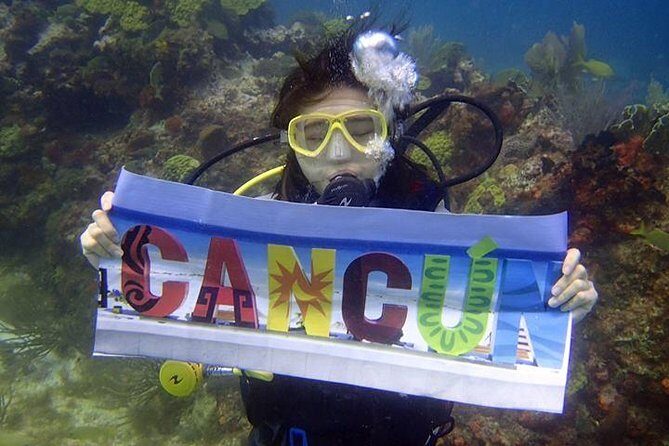
After gear, you’ll have a 35-minute theory class. It’s not a textbook lecture. It’s built around what you need to function calmly underwater:
- how the equipment works
- how you communicate using signs/hand signals
- how your body responds underwater
- the techniques that support controlled, safe movement
Safety is the headline here. Even several first-timer reviews emphasize how instructors stayed focused on making people feel steady—especially during entry, descent, breathing technique, and mask clearing.
Then comes the pool. This is where the day earns its beginner-friendly reputation. You’ll practice skills that are similar to what you’ll do at sea, so you’re not learning “how this works” and “what to do” at the same time. If you tend to get anxious when you’re new at something, that pool step is a big deal.
Boat Ride Out to the Sites and the Buoy-Down Setup
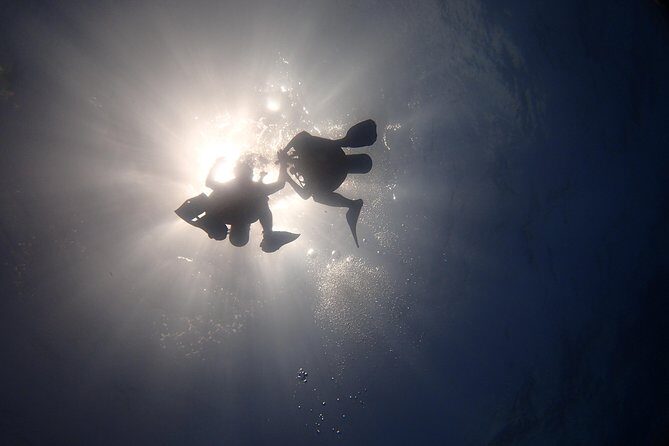
Once the pool work is done, you board a boat for about a 30-minute trip to the descent area. When you arrive, the setup is straightforward: divers are tied to buoys for the descent. That buoy tether approach can reduce chaos and helps you settle in before going downward.
From the reviews, the general theme is that the instructors stay right with the group through key moments—water entry, descending, and getting back up. One person specifically noted the instructor staying with them the whole time, which is exactly the kind of support you want on your first day.
Stop 1: MUSA Underwater Museum and the 33 ft / 10 m Water Session
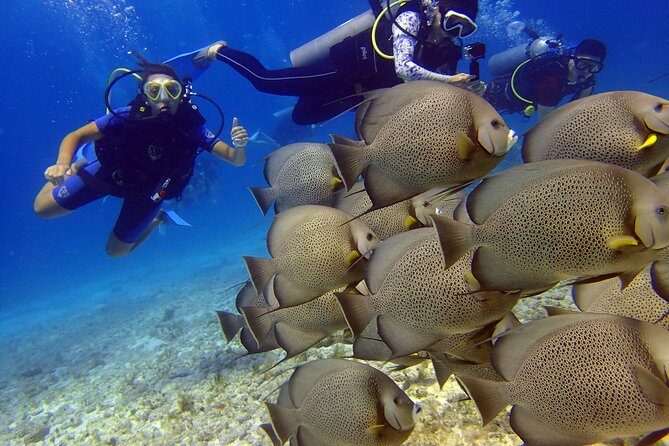
The first ocean water session is at Museo Subacuatico de Arte (MUSA). You’ll spend about 35 minutes underwater at roughly 33 ft / 10 m.
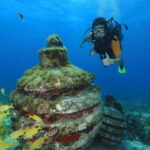
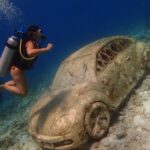
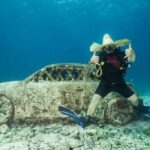
What makes MUSA special is the scale and the mood. This isn’t just rocks and fish. It’s a field of around 400 underwater sculptures, which means you have something to look at the whole time. For a first-timer, that’s helpful because it gives your eyes a job and helps take focus off fear.
Also, it’s a smart way to introduce you to buoyancy and control. If you’re trying to get comfortable with breathing and position, a structured environment with clear visual landmarks can help you stay calm. One review even noted that the reef turned out better than the museum, which tells me the pairing works: you’re not locked into one type of experience.





Stop 2: Natural Reef for Tropical Fish and Sea Life Variety
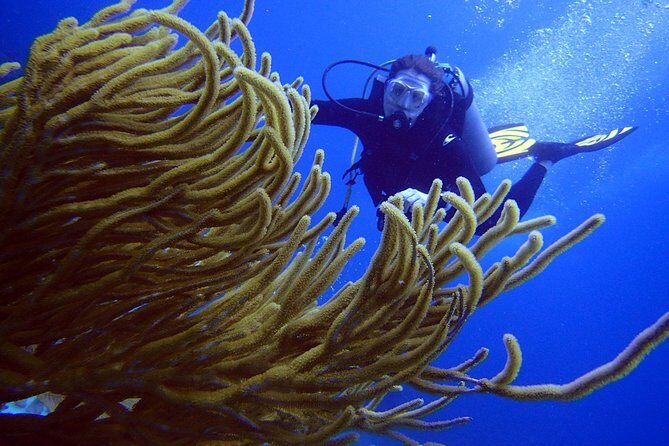
After the first site, you head back toward a second location on a natural reef for another 35-minute underwater session. This is where you’ll trade sculpture views for the rhythms of a living ecosystem.
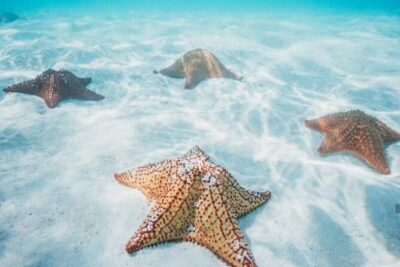
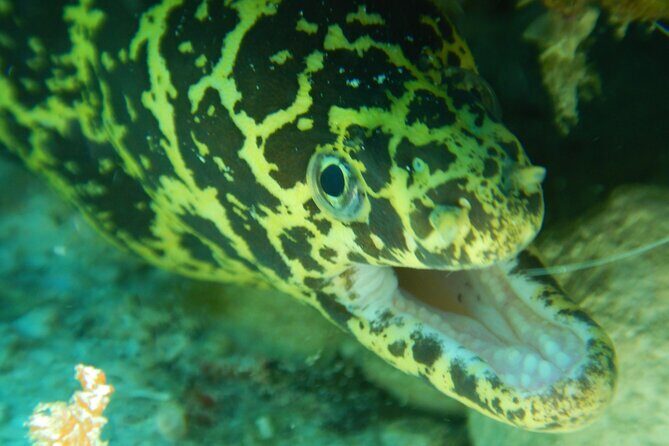
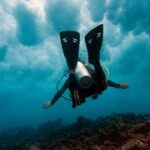
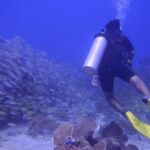
Expect a different feel than MUSA. Instead of “statues to navigate,” you’re watching behavior—movement between coral and open water, schools of fish, and the general sense that the Caribbean is doing its own thing. Multiple reviews mentioned seeing sea turtles, lobster, and a variety of fish, plus a lot of enthusiasm for the reef’s look and marine life.
This reef portion is also a good confidence-builder. By the time you reach stop two, you’ve already gone through your first coached underwater routines. That means you can spend more of your brain on enjoying what’s in front of you and less on remembering what came next.
Timing, Comfort, and What the Whole 6 Hours Feels Like
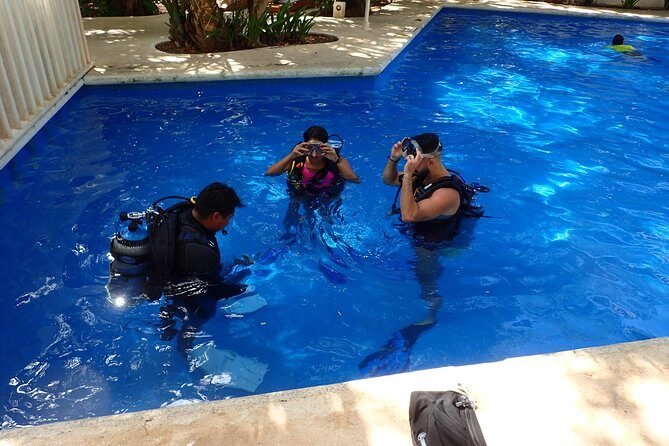
Plan on a roughly 6-hour day. Here’s the general flow:
- morning gear setup
- theory (about 35 minutes)
- pool practice
- boat ride to the sites (about 30 minutes)
- first underwater session (about 35 minutes)
- second underwater session (about 35 minutes)
- return boat ride (about 30 minutes)
For most beginners, the main comfort factor isn’t the scuba gear. It’s whether you stay relaxed. The instructors repeatedly get praise for patience and for giving clear instruction, and that lines up with what you actually need at each step: calm reminders, quick fixes, and ongoing check-ins.
One practical drawback mentioned in feedback: the day can feel long on the boat, and you should be ready to spend time outside the water too. If you’re the type who hates waiting, bring a little patience. If you’re excited about the end result, the schedule passes quickly.
Value Check: Is $190.69 a Good Deal for Two Tank Sessions?
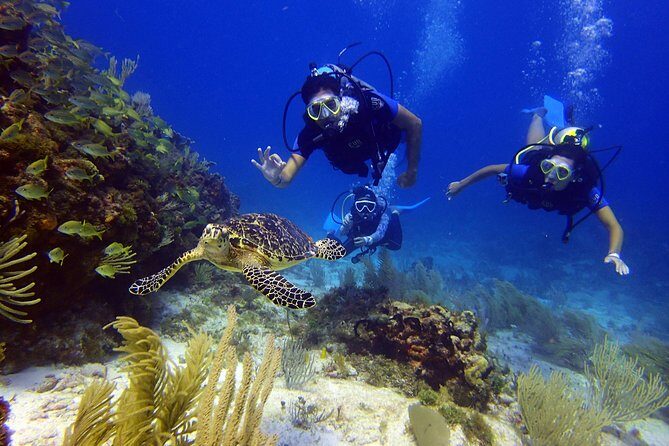
At $190.69 per person, the big value question is what’s included versus what you pay separately. Based on the tour info, this price covers:
- all scuba equipment you need
- snacks, including bottled water/juice/cookies/fruit
- all fees and taxes
- big, fast, comfortable boats
- “top quality facilities”
Not included:
- a wetsuit if needed
- transportation between your hotel and the facilities
In reviews, people also bring up costs for photo packages and gear add-ons. One tip that keeps coming up: you may want to budget around $70 to $85 for pictures. That’s optional, but since underwater shots can be the only proof you were actually there, it’s smart to plan ahead if photos matter to you. Wetsuit rental costs are mentioned too—someone noted $10.
So is it a bargain? For a beginner-focused day with two coached ocean sessions plus pool training, equipment, and boat time, it’s reasonably priced—especially if you’d otherwise have to rent gear and pay for a full guided day on your own. The main way it stops being good value is if you end up needing extra transport coordination or you quickly add photo packages and a wetsuit.
Who This Program Is Best For (and Who Should Skip It)
This experience is clearly aimed at people with a moderate fitness level and who can handle basic physical effort for gear setup and time outdoors. You also must know how to swim—and this is not optional.
It’s not for:
- people with asthma
- people with respiratory problems
- people with controlled or uncontrolled high blood pressure
- anyone flying within the next 24 hours
That’s the kind of restriction list you should treat seriously. If any of that applies to you, you should talk to a medical professional before booking.
Who it suits best:
- true first-timers who want a structured “learn first, then go” approach
- people who like small groups and getting close attention
- anyone interested in both the MUSA underwater museum and a natural reef
One review also mentioned that a smaller group is recommended, which reinforces the benefit of the max-6 setup.
Instructors Who Keep You Calm: Clemente and the Patient Coaching Style
A lot of the praise lands on the instructor’s ability to make the day feel manageable. Names that came up include Clemente (also written as Clementine in feedback), with multiple comments about clear instructions, patience, and staying considerate—especially for beginners.
Here’s what that means in plain terms for you:
- you’ll get consistent coaching during setup and underwater routines
- you should feel comfortable asking questions before you go in
- if you struggle with timing or comfort, you’re more likely to get immediate help instead of being left behind
If you get anxious in new situations, this kind of coaching tone can make the difference between tapping out and having a great time. One review even described an instructor noticing a technical problem rather than assuming fear—exactly the kind of problem-solving you want in your corner.
Photo Packages, Sea Sickness, and Real-World Tips
Two real-world things to plan for:
1) Underwater photos cost extra. Budget time and money if you want them.
2) Sea sickness can happen. One person mentioned getting sea sick and couldn’t finish the last part, even though they’d had a great time up to that point.
I can’t tell you how you personally will react to boat rides, but I can tell you what to do with that information: if you’re even slightly prone to motion sickness, take it seriously and be prepared. Go in with food strategy that sits well with you, and let the crew know early if you feel off.
And if you hate the idea of being in photos: you can skip it. You still get the experience, but you won’t have the same underwater “proof” later.
Should You Book This Cancun Beginner Program?
If you want a first-time scuba experience with pool practice, a safety-focused training session, and two different underwater settings (MUSA sculptures plus a natural reef), this is a strong match. The small group format and consistently praised instruction style are what make it feel beginner-friendly rather than chaotic.
Don’t book if you:
- can’t swim
- have asthma, respiratory issues, or high blood pressure
- are traveling by air within 24 hours
- know you’ll panic at boat rides or you’ve had severe motion sickness before without a plan
If you fit the criteria, I’d book. And I’d do one more thing: decide ahead of time whether you want the photo package, so the day feels like an experience instead of a surprise expense.
FAQ
What time does the activity start in Cancun?
It starts at 8:00 am at the meeting point in the Zona Hotelera area of Cancún (Pescador, Kukulcan Boulevard). The activity ends back at the meeting point.
How long does the experience take?
The total duration is about 6 hours.
How many people are in the group?
The maximum group size is 6 travelers.
What’s included in the price?
Included are all scuba equipment, snacks (including bottled water or juice, cookies, and fruit), and all fees and taxes. Boats and facilities are included as well.
What’s not included?
A wetsuit is not included if you need one, and transportation between your hotel and the facility is not included.
Do I need to know how to swim?
Yes. You need to know how to swim.
Is this only for certified divers?
No. It’s a beginner-focused experience with a theory class and pool practice before the ocean water sessions.
Are there medical restrictions?
Yes. It’s not for travelers with asthma, respiratory problems, or controlled or uncontrolled high blood pressure.
What if weather is bad or I need to cancel?
Free cancellation is available up to 24 hours in advance for a full refund. If the experience is canceled due to poor weather, you’ll be offered a different date or a full refund.