REVIEW · CANCUN
Cancun: Scuba Diving for Beginners, 2 Dives
Book on GetYourGuide →Operated by A' HA' Scuba Diving Cancun · Bookable on GetYourGuide
Two ocean sessions, no certificate stress. This beginner SCUBA day in Cancun pairs pool practice with real time in crystal water, so you’re not just watching from the shore. I like that you get to experience two famous sites in one outing, including the MUSA Underwater Museum.
What makes it extra appealing is the calm coaching. Many groups are guided by instructors like Marin, with Carolina praised for smooth organization, and they keep instruction clear from the pool to open water. One drawback to plan for: the museum entrance fee is not included (500 Mexican pesos per person), and you must swim well enough to complete required water skills—there’s no refund if you can’t safely do that.
Key moments worth circling on your calendar
- Pool-first training: you practice key gear and safety skills before you go out on the water
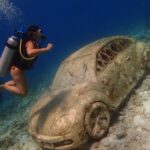
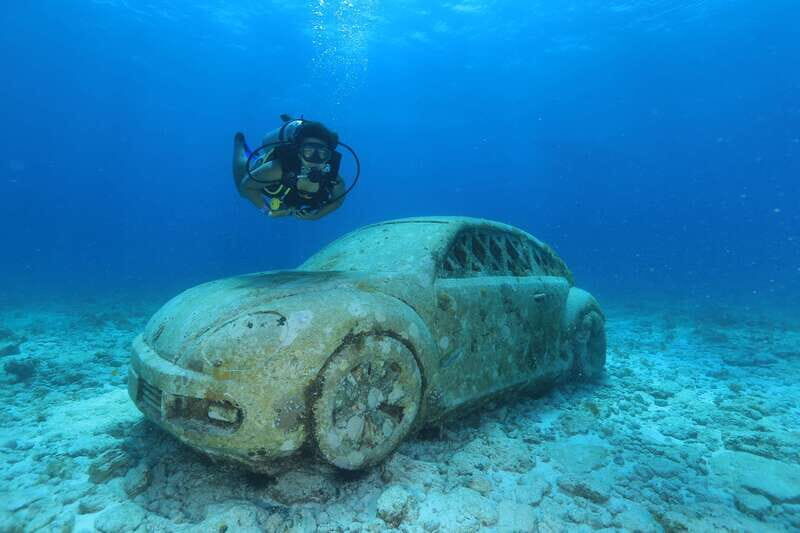
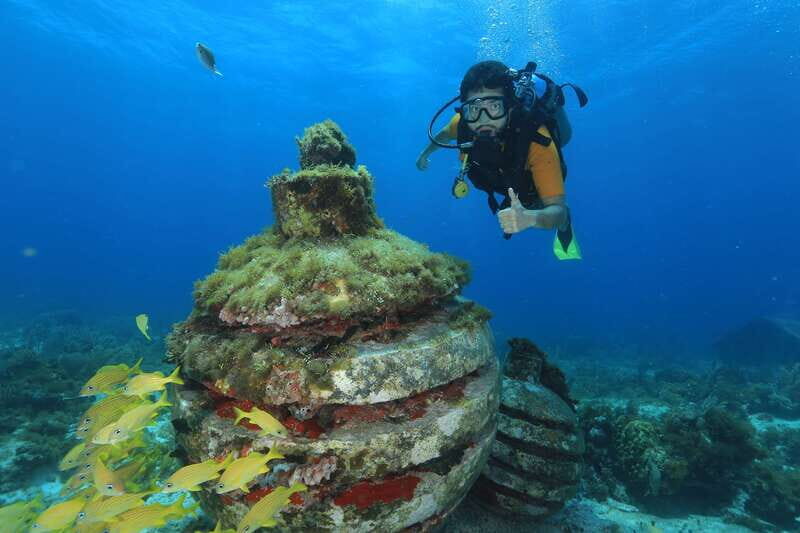
- MUSA Underwater Museum: iconic sculptures turned into habitat for fish and other sea life
- Manchones reef: a second site for more reef life and a different feel from the museum
- Small group size (up to 8): easier to get one-on-one coaching and stay on the same pace
- Full equipment included: BCD, regulator, mask, fins, plus a wetsuit
- No-cert path: you start with theory and guided practice, not a prior license
In This Review
- Why Cancun’s beginner SCUBA setup feels low-pressure
- Your schedule: 8:00 check-in, 9:30 boat, 1:00 return
- Pool practice: what you learn before you’re on open water
- MUSA Underwater Museum: sculptures, fish, and a memorable first site
- Manchones reef: second session reef life and more time with fish
- Gear and instruction: why small groups can make or break a first day
- Price and value: what the 167 USD covers (and what costs extra)
- What to bring (and what not to bring) for a smooth morning
- Health rules and age limits you should take seriously
- Tips for staying calm when it’s your first open-water SCUBA day
- Should you book this 2-session beginner package?
- FAQ
- Do I need a scuba certification for this tour?
- How many ocean sessions are included, and where do they go?
- What time does the experience run?
- Where do I meet the group?
- Is transportation from my hotel included?
- Is the entrance fee for the MUSA included?
- What should I bring?
- What health or age limits apply?
- Is sunscreen allowed?
Why Cancun’s beginner SCUBA setup feels low-pressure
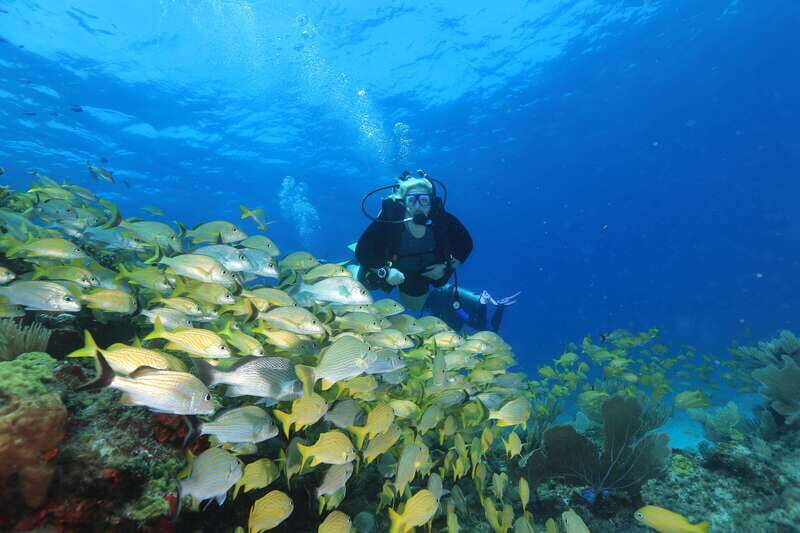
This tour is built for people who want the real underwater experience without already having a certification. The structure matters: first you learn basics, then you practice in a pool environment, then you spend two separate ocean sessions with gear and close guidance.
I especially like that it’s not just a one-and-done try. Two separate underwater sites let you compare the feeling of moving over museum sculptures versus gliding over a reef with lots of fish. And since the group stays small, you’re less likely to get lost in the shuffle.
The other big win is the equipment and wetsuit are handled for you. You’re not spending your vacation time hunting gear or guessing fit. You show up, suit up, and get taught step-by-step.
Your schedule: 8:00 check-in, 9:30 boat, 1:00 return
Timing is tight, so it helps to know the flow before you go. Check-in is at 8:00 AM, then the boat departs at 9:30 AM. You’re back at the dock around 1:00 PM, which makes this a doable morning plan even if you like to keep your afternoons free.
A typical rhythm looks like this:
- Start with medical paperwork and short theory
- Do pool practice to nail basic skills and comfort with equipment
- Head to the water for the first site at MUSA
- Take a break between sessions, then go to Manchones reef
- Finish and return to the dock by early afternoon
One practical consideration: the day includes boat time between sites. Even when seas are calm, you’ll likely feel it, so it’s smart to plan accordingly.
You can also read our reviews of more scuba diving tours in Cancun
Pool practice: what you learn before you’re on open water
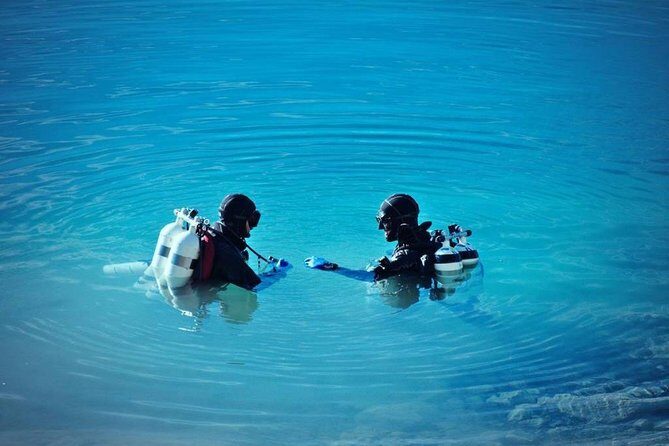
The pool session is where you gain confidence fast. You’ll get basic theory, then hands-on practice using the full scuba kit you’ll later wear in the ocean. The goal is simple: you should understand how your gear works and how your body needs to respond once you’re underwater.
From what I’ve seen emphasized by the instructors, they focus on the stuff that prevents panic. You’ll learn and rehearse common hand signals, get comfortable with breathing from the regulator, and practice key movements while you’re still in controlled water. Several groups also highlight that instructors stay patient when equalizing feels tricky for beginners.
This is also where you’re coached on quick fixes—like what to do if water gets into your goggles or if your breathing setup gets knocked out of position. That kind of preparation makes a huge difference when you finally get out there.
If you tend to worry, come in with a calm mindset. Tell your instructor early if you’re nervous about bubbles, depth, or anything gear-related. The training is designed so you don’t have to guess.
MUSA Underwater Museum: sculptures, fish, and a memorable first site
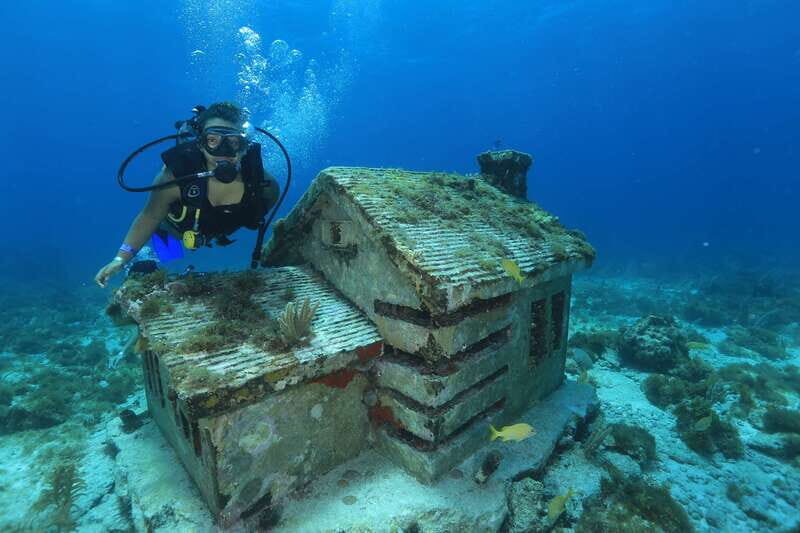
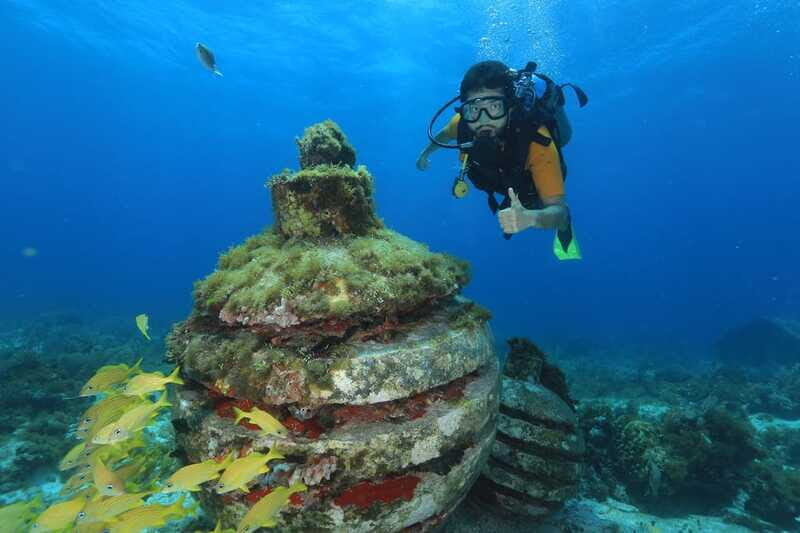
Your first ocean session is at the MUSA Underwater Museum, one of the most recognizable underwater experiences around Cancun. You’re essentially swimming through a gallery where sculptures have become a habitat. Expect to see statues covered with marine life, and expect fish movement all around you—not just off in the distance.
Beginners often love this site because it feels more structured than a natural reef. The shapes give your eyes something to latch onto while you adjust to breathing and buoyancy. You also get that wow factor of seeing art underwater with clear visibility.
In past groups, visibility has been reported as stunning, and people describe the museum as vibrant with fish activity. The guides tend to stay close and point out features you might miss on your own, like small creatures tucked into corners or fish that gather around specific sculptures.
If you’re the type who wants a strong first impression, this is a smart order: the museum sets the tone, then you move to a reef-style site for a different kind of viewing.
Manchones reef: second session reef life and more time with fish
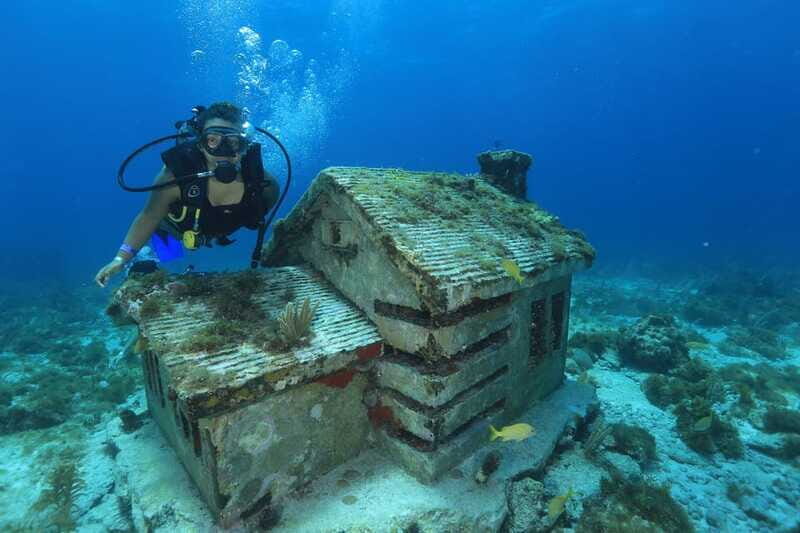
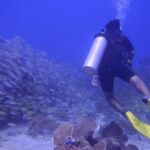
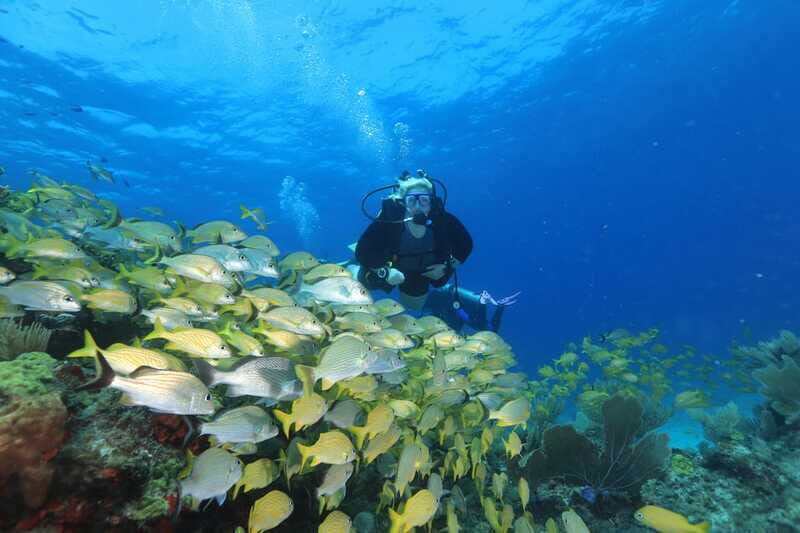
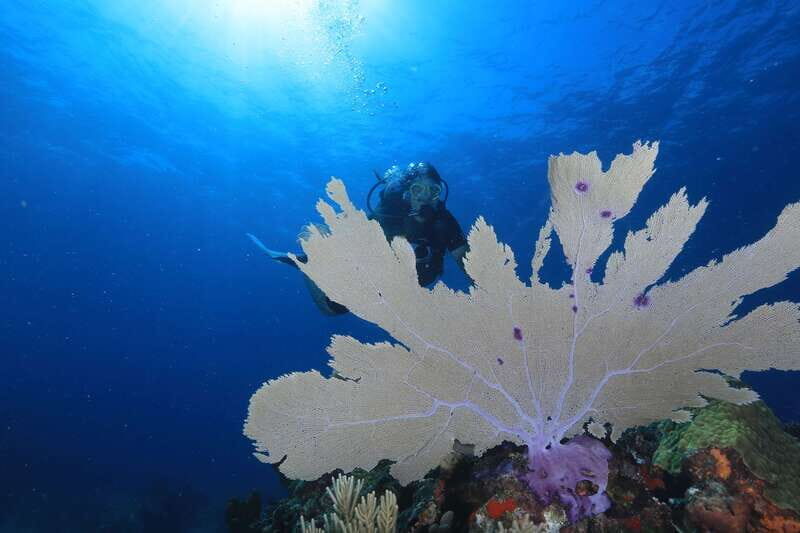
After your first session, you’ll head to Manchones reef for the second underwater experience. This is where the day shifts from museum shapes to reef travel. You’ll spend time looking over corals and scanning for fish in the water column.
This second site tends to feel more like classic reef snorkeling turned into full SCUBA control. People describe lots of fish, colorful reef life, and the kind of steady cruising where you can finally relax into the breathing rhythm.
Guides often use their knowledge of the area to help you spot creatures you’d likely overlook. In group experiences, they also make sure you’re not rushing—so you get to enjoy the reef without feeling like you’re chasing the guide.
For many first-timers, Manchones is the moment it clicks. You stop thinking about the gear and start focusing on the animals, the shapes of corals, and the quiet movement of fish.
Gear and instruction: why small groups can make or break a first day
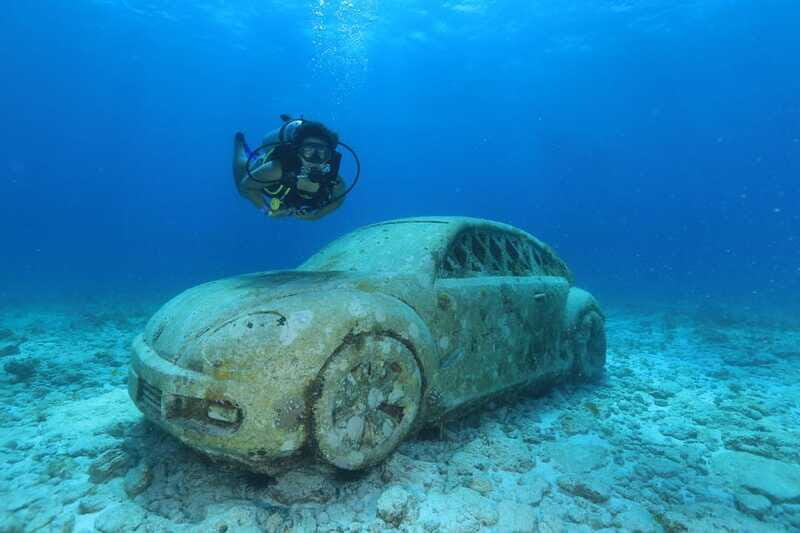
This is where the tour’s value really shows. You’ll get full equipment (BCD, regulator, mask, fins) and a wetsuit. That removes a big “beginner tax” because fit and comfort matter a lot underwater.
What people consistently praise is the instructors’ approach: calm explanations, clear safety instruction, and regular check-ins once you’re underwater. Several groups mention instructors staying patient with common beginner issues, like nervousness right after entering the water or difficulty equalizing.
The small-group size—limited to 8 participants—also helps. You don’t get treated like a number, and you can ask questions without shouting over a crowd. In a few experiences, people even noted the group was tiny, which likely boosted how much attention each person received.
One note: you’ll need to be able to perform required skills in the water. You should also know how to swim. If you can’t complete the basics safely, the tour can’t let you go forward for safety reasons, and there’s no refund in those situations. That’s not meant to be harsh—it’s how the safety system works.





Price and value: what the 167 USD covers (and what costs extra)
At $167 per person for about 5 hours, this pricing is aimed at first-timers who want guidance plus two ocean sessions in one structured day. You’re not only paying for access to the water. You’re paying for the teaching time, the pool training, and the full gear setup.
Included:
- Theory and pool lesson
- Two ocean sessions: MUSA + Manchones reef
- Full SCUBA equipment: BCD, regulator, mask, fins
- Wetsuit
- Purified drinking water
Not included (important):
- MUSA entrance fee: 500 Mexican pesos per person
- Photos/videos (optional)
- Hotel transportation
That entrance fee is the one extra line item you should plan for ahead of time. If you’re comparing options, factor that in so you’re judging the true total cost.
About photos: they’re optional, and people often say the add-on is worth it because it preserves the moment when you’re still learning and don’t have to worry about your camera. One person mentioned a photo/video package cost around $80, and another arranged GoPro-style footage for $60. Prices can vary, so ask what’s current on the day.
What to bring (and what not to bring) for a smooth morning
Packing is straightforward. Bring:
- Swimwear
- A towel
- Comfortable clothes
- Passport or ID card
What to avoid is equally important. Don’t bring sunscreen. Reef protection rules apply, and sunscreen can be a problem for delicate marine ecosystems.
Also plan your timing. Because you’ll be doing SCUBA training and spending time underwater, you need to rest for 18 to 24 hours before flying. This matters if you’re flying out the same day or the next morning.
One more practical thing: this is a water-heavy day. You’ll get wet, and you won’t have a ton of dry space to change around. Pack like you’re going to the beach plus an early morning activity: a dry layer for afterward goes a long way.
Health rules and age limits you should take seriously
This is a safety-first experience, and the medical restrictions are clearly stated. People with asthma, heart or brain problems, high blood pressure, lung lesions, organ transplant, diabetes, epilepsy, or anyone with surgery less than 1 year are not allowed to participate.
It also isn’t suitable for:
- Pregnant women
- People who can’t safely complete water skills
- Non-swimmers
- People with respiratory issues
- People with epilepsy
- People with high blood pressure
- People with recent surgeries
- People over 65
- Children under 10
If you’re in the gray zone medically, don’t guess. Ask your doctor if SCUBA is safe for you. Your best vacation is a safe one.
Tips for staying calm when it’s your first open-water SCUBA day
If you’re nervous, you’re not alone. Many first-timers feel a surge of adrenaline when they first enter the ocean. The best strategy is to tell the instructor right away so they can slow you down and coach you through it.
Here’s what helps most:
- Listen to the briefing and memorize your hand signals early
- Go at the instructor’s pace rather than trying to prove you’re fearless
- Take your time with breathing and buoyancy control
- If equalizing feels uncomfortable, signal early and keep working at it the way you practiced
Also, plan for the boat ride. Some groups mention seasickness for a few people. If you’re sensitive, motion sickness medicine can be a smart pre-emptive move.
Once you settle, you’ll notice a cool pattern: the underwater world starts to feel normal, and your attention shifts to animals and scenery instead of gear.
Should you book this 2-session beginner package?
I think you should book if you meet the safety basics: you can swim, you’re comfortable completing required water skills, and you’re eligible under the medical and age rules. If you’ve wanted to try SCUBA but didn’t want the hassle of certification, this is an efficient way to get trained and see real sites.
I’d pass or choose another plan if you’re expecting a purely relaxed, no-skills experience. This is learning-focused, and the tour depends on you doing the exercises correctly.
If MUSA and a reef site are on your Cancun wish list, this format is a strong match. You get two underwater experiences in one morning, with small-group attention and beginner-friendly instruction.
FAQ
Do I need a scuba certification for this tour?
No. You’ll complete theory and pool practice for beginners and then do two ocean sessions with guidance.
How many ocean sessions are included, and where do they go?
You get two tank sessions: one at the MUSA Underwater Museum and a second at Manchones reef.
What time does the experience run?
Check-in is at 8:00 AM, boat departure is at 9:30 AM, and you return to the dock at around 1:00 PM.
Where do I meet the group?
Meet at Sotavento hotel. Ask for scuba diving and look for the team by the pool area. Sotavento is behind Calypso hotel.
Is transportation from my hotel included?
No, transportation from your hotel is not included.
Is the entrance fee for the MUSA included?
No. The entrance fee is 500 Mexican pesos per person and is not included.
What should I bring?
Bring swimwear, a towel, comfortable clothes, and your passport or ID card.
What health or age limits apply?
Children must be at least 10 years old and maximum 65 years old. The tour also lists conditions like asthma, heart or brain problems, high blood pressure, lung lesions, organ transplant, diabetes, epilepsy, and surgery within the last year as not allowed.
Is sunscreen allowed?
No sunscreen is allowed for this activity.