REVIEW · CANCUN
2 Tanks Scuba Diving Wreck and Reef in Cancun for Certified Divers
Book on Viator →Operated by A' HA' Scuba Diving · Bookable on Viator
Two tanks, one seriously cool mission.
This Cancun outing is built for certified divers who want both a man-made wreck and a living reef in the same afternoon, with a max group size of six. I like that the shop takes care of the heavy lifting: you’ll handle the medical statement, get fitted with wetsuit and scuba gear, then head out for two separate underwater sessions. I also really appreciate the focus on convenience and fairness—national park entry and dock fees are included, so you’re not hunting for surprise add-ons mid-trip.
The one thing to consider is that this experience is strict about health limits and schedule. If you have certain conditions (like asthma, heart/brain issues, high blood pressure, lung lesions, organ transplant, diabetes, epilepsy, or surgery within the last year), you won’t be able to participate. If you’re prone to boat motion sickness, plan ahead too—this is time on the water, and they strongly suggest anti-nausea help.
In This Review
- Key points at a glance
- A wreck-and-reef plan that actually fits your afternoon
- Small group coaching: fewer people, more attention
- The first tank at wrecks C-58 or C-55
- The second tank on a Cancun reef for variety
- What’s included (and what you need to bring)
- Health rules and safety boundaries you should know early
- The boat ride reality: nausea tips and weather dependence
- Price: is $159 actually good value here?
- Should you book? My practical call
- FAQ
- What certification do I need?
- Is scuba equipment included?
- What will I do during the tour?
- What time does the boat leave and when will I be back?
- What should I bring?
- Are there medical restrictions?
Key points at a glance
- Max 6-person group for a calmer pace and easier coaching
- Two underwater sessions: wreck C-58 or C-55, then a Cancun reef
- Gear + wetsuit included, plus tanks and weights
- Sunscreen restrictions during the coral areas for protection
- English-speaking staff and careful fit checks (Carolina mentioned for professionalism)
A wreck-and-reef plan that actually fits your afternoon
Timing matters with scuba. Too often, you end up with half a day of waiting and little time for actual time underwater. Here, the schedule is tight and clear: check-in starts around 1:00 p.m., and the boat leaves at 2:00 p.m. You’re back at the dock by about 5:30 p.m.
The experience meets at Hotel Sotavento Cancun (Km. 4, Blvd. Kukulcan), and the activity ends back at the meeting point. The listed start time shows 1:30 p.m., but the practical move is simple: arrive early enough to handle your paperwork without stress. You’ll fill out a medical statement first, then get fitted and ready.
In real terms, what you’re buying is a focused half-day package: paperwork, gear, and two tank sessions that mix a dramatic structure (the wreck) with softer, fish-filled habitat (the reef). It’s a good format when you don’t want to spend the entire day out on the water—or when you want variety without jumping between multiple operators.
You can also read our reviews of more scuba diving tours in Cancun
Small group coaching: fewer people, more attention
This is capped at six travelers, which changes the feel of the day. With smaller groups, you typically get:
- more personal checks during setup
- a smoother count-down and entry process
- easier communication when conditions shift
You’ll start with required paperwork. That medical statement is not a formality—it’s how the operator determines whether you can safely go in the water. Then they fit you with a wetsuit, plus the full scuba setup: BCD, regulator, mask, fins, and the weights you’ll need for proper buoyancy.
One staff detail I like: they make it about comfort and fit, not speed. Carolina is specifically mentioned for being friendly, professional, and making sure equipment fits comfortably. That matters because a wetsuit that pinches or a fin that doesn’t match your kick can turn a fun afternoon into an exhausting one.
Also, language is a real quality-of-life factor on tours. English is offered, and people mention the crew spoke very clear English—so you’re not left guessing during safety moments or at the surface between tanks.
The first tank at wrecks C-58 or C-55
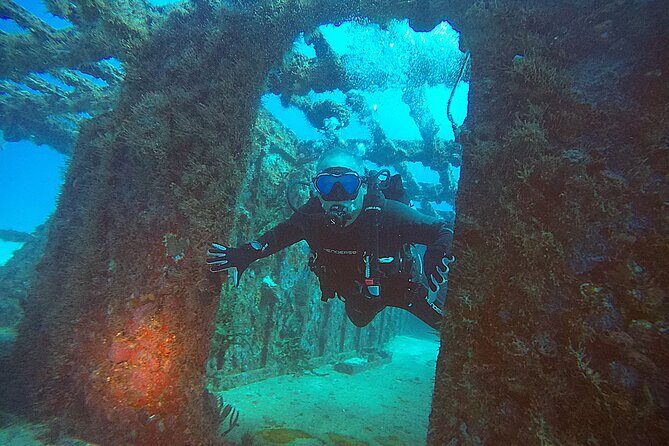
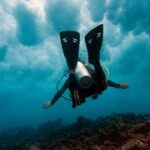
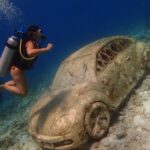
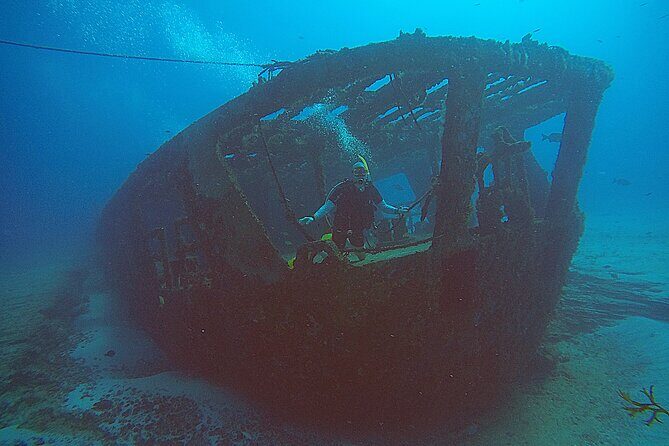
Tank one takes place on the shipwreck C-58 or C-55. Having two options is useful: if one site is busy or conditions aren’t ideal, you still get a wreck experience. Either way, the draw is the same—wrecks create vertical structure and edges that marine life can use for shelter and feeding.
Here’s what I think makes this stop worth it for certified divers: wrecks tend to produce a different kind of “see everything” moment than reefs. Instead of scanning for small coral pockets, you’re reading the structure—angles, openings, and the way the wreck breaks up the water column. You often end up with better chances to spot a range of marine activity because there’s more to look at than a flat reef section.
The experience also keeps things manageable. Since the format is two tanks total, you’re not spending the afternoon doing endless one-site repetitions. You get to enjoy the wreck as the main event, then shift gears for the reef second.
One practical note: wreck sites can be more demanding on attention. Even if you’re comfortable underwater, keep your buoyancy tight and your movements controlled, because you’ll be spending time looking at structure up close.
The second tank on a Cancun reef for variety
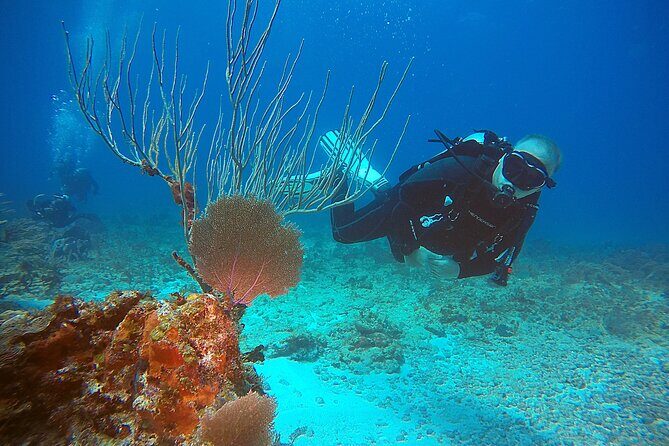
After your wreck session, the day moves to a Cancun reef for the second tank. This is where you trade the hard geometry of a shipwreck for a living habitat.
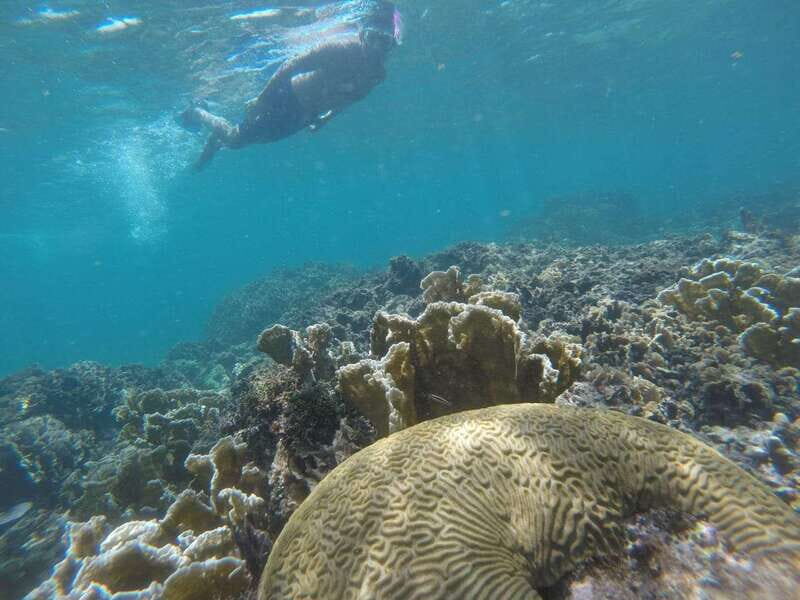
The operator’s aim is to help you find places with more varied marine life around an artificial reef. Artificial reefs can be great because they create habitat where natural structure might be limited. In plain terms: you’re often not just looking at one type of scenery—you’re looking for different species using the reef surfaces, crevices, and calmer pockets.
This is also a smart sequence: wreck first, reef second. You get the dramatic, wow-factor structure early, while you’re feeling fresh. Then later, you can focus on the reef’s textures and fish life when you’ve already settled into your rhythm for the day.
If you’re the type who enjoys both bigger features (wreck structure) and smaller details (reef life), this two-stop plan hits both moods without turning the schedule into a marathon.
What’s included (and what you need to bring)
One of the best value points here is how much they include. You don’t need to bring your own scuba kit. They provide:
- Full scuba equipment: BCD, regulator, mask, fins
- Wetsuit
- Tanks and weights
- Two tank sessions total
That means you can travel lighter. In a place like Cancun, that’s not just convenience—it’s also fewer headaches at airports and less risk of arriving with gear you forgot.
What you should bring:
- your scuba certification card (plastic, digital, or picture is mentioned as acceptable)
- a swimsuit and/or things for getting ready
- towels
- anything else for personal comfort after the water (you’ll be coming back to the dock by mid-afternoon)
A key rule: sunscreen/sunblock isn’t allowed for coral protection. That’s important to take seriously. Reef protection policies can be strict, and they’re enforcing it here. If you’re the type who usually relies on lotion, plan differently—cover up with clothing and hat options you already travel with, and be ready to use shade when it’s available.
Photos and videos are optional and not included, so if you want a visual record, plan for the fact that it will be an extra purchase.




Health rules and safety boundaries you should know early
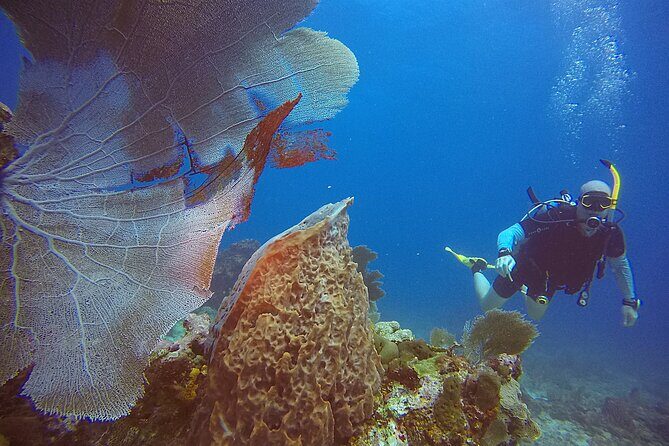
This is for open water certified divers or equivalent. You’ll need your certification card, and you’ll fill out a medical statement on arrival.
They’re very clear about who cannot participate, including people with:
- asthma
- heart or brain problems
- high blood pressure
- lung lesions
- organ transplant
- diabetes
- epilepsy
- any surgery within the last year
If any of that applies to you, don’t assume you can talk your way in. The rules are part of how the operator protects you.
Another safety point for planning: you need to rest for 24 hours after diving before taking an airplane. If your trip includes flying the next day, build in that buffer. It’s one of those details that seems small—until you’re trying to scramble flights because you didn’t plan the timing.
The boat ride reality: nausea tips and weather dependence
Since this is boat-based, the water portion isn’t optional. The operator even suggests anti-nausea pills 1 to 2 hours before you get on the boat. I appreciate that because it’s better to prevent nausea than to fight it once you’re out on open water.
Also, this experience depends on good weather. If conditions aren’t right, the activity may be adjusted. That’s normal for sea conditions, but it means your travel flexibility helps.
On top of that, they call for moderate physical fitness. That doesn’t mean you need to be an athlete, but you should be comfortable with getting into and out of the water, managing your gear, and handling basic movement on a boat.
Price: is $159 actually good value here?
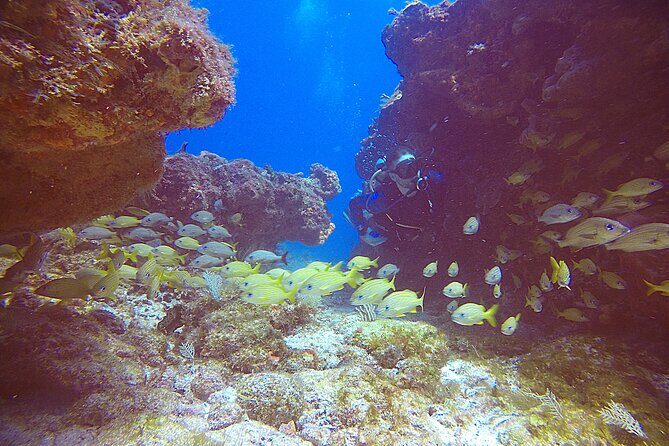
At $159 per person for about 4 hours, this isn’t a bargain-basement deal—but it also isn’t priced like a private charter.
Here’s the value logic that stands out:
- You’re getting two tank sessions, not just one.
- Wetsuit, tanks, weights, and core gear are included, so you aren’t paying extra to rent basics.
- National park entry and dock fees are included, which is a big deal for transparency.
- The group size stays small (up to six), which often means more practical attention per person.
So for many certified divers, the price makes sense because it bundles what usually adds up in other packages: gear rental, fees, and multiple in-water stops. If you were planning to do a wreck and a reef anyway, this format saves time and coordination.
What you should consider before booking is your comfort with the rules. If you’re sensitive to motion sickness, it’s worth taking that anti-nausea suggestion seriously. And if you’re someone who needs lots of certainty about medical clearance, read the restrictions carefully before you invest time.
Should you book? My practical call
You should book this if you’re:
- Open water certified or equivalent
- looking for a wreck plus reef combo in one afternoon
- happy to follow rules around sunscreen for coral protection
- comfortable with a small-group format where you’ll get real attention
You might skip it if:
- you’re dealing with any of the listed medical conditions
- you don’t want to plan around motion sickness
- your schedule doesn’t allow the 24-hour rest before flying
If your goal is a memorable underwater day that feels organized—with a professional, English-speaking crew and equipment handled for you—this two-tank plan is a strong bet. And if you care about variety, the wreck-first then reef-second layout gives you two different underwater “stories” without turning it into a full-day slog.
FAQ
What certification do I need?
You’ll need to be a minimum Open Water Diver or equivalent, and you should bring your certification card (plastic, digital, or a picture).
Is scuba equipment included?
Yes. You’ll get full scuba equipment including BCD, regulator, mask, fins, plus a wetsuit, tanks, and weights.
What will I do during the tour?
You’ll complete a medical statement, then do two tank sessions: the first at the shipwreck C-58 or C-55, and the second on a Cancun reef.
What time does the boat leave and when will I be back?
Check-in is around 1:00 p.m., the boat departs at 2:00 p.m., and you return to the dock about 5:30 p.m.
What should I bring?
Bring your scuba certification card, plus a towel and swimsuit (and anything else for your personal care). Anti-nausea pills are suggested 1 to 2 hours before the boat.
Are there medical restrictions?
Yes. The operator states that people with asthma, heart or brain problems, high blood pressure, lung lesions, organ transplant, diabetes, epilepsy, or surgery within the last year cannot participate.