REVIEW · CHICHEN ITZA
Private Tour in Chichen Itza Official History Guide
Book on Viator →Bookable on Viator
Chichén Itzá feels different with a real guide. This private walk turns the big sights—Kukulcán and the Sacred Cenote—into an easy-to-follow story with stops for photos and shade. I especially like the timed pacing before the worst crush and the way the guide keeps the route clear and not rushed. One thing to plan for: admission and parking are extra, since the tour price does not include them.
Meet your guide at the central area in front of the observatory, and you’ll get bottled water plus help with the on-site logistics. It’s offered in English, runs about 2 to 3 hours, and stays private for your group (up to 10 people).
In This Review
- Key things to know before you go
- Private timing matters at Chichén Itzá
- Meeting at the observatory: start strong and get oriented fast
- Kukulcán, the Great Ball Court, the observatory, and the Sacred Cenote
- Temple of the Warriors: a north-to-south route with a story break
- Price and the real cost of getting in
- Guides like Pepe: stories, visuals, and patient pacing
- Logistics that cut stress: tickets, restrooms, parking, and time
- What to bring and how to plan your day
- Who this tour fits best (and who might prefer something else)
- Should you book this Private Tour in Chichén Itza?
- FAQ
- Is Chichén Itzá admission included in the tour price?
- How many people can be in a group for this private tour?
- How long does the tour take?
- Where do we meet our guide?
- What fees are in addition to the tour price?
- Can I cancel for a full refund?
Key things to know before you go
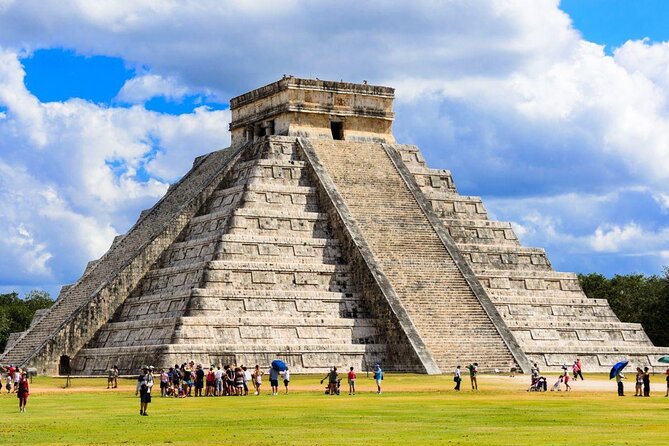
- A guided route across the full complex: you’ll see the main buildings, including the ball court, observatory, Sacred Cenote, and more.
- Temple of the Warriors timing and story flow: north-to-south walking with a planned break and plenty of photo time.
- English history teaching with visuals: guides like Pepe (and Enrique Tun) use photos or drawings to help you understand what you’re looking at.
- On-site help that reduces friction: your guide points out where to get entrance fees and restrooms, and can share practical entry tips.
- Cost math is mostly about admission: the group price is the smaller part—Chichén Itzá admission and parking are the big add-ons.
Private timing matters at Chichén Itzá
Chichén Itzá can feel like a pile-up of people around one famous pyramid. This tour fixes that by giving you a private format with an intentionally paced route. You’re not stuck doing the same stop-and-go sprint that large groups do, and you’re not forced to “keep up” with strangers.
I like that the experience stays focused on the buildings, not just check-the-box photos. You get a guided walk that covers the main landmarks first, then returns to key areas with more context as you move north to south. That structure helps you connect what you see with the story being told, instead of treating each structure like a standalone postcard.
One more practical plus: your guide is there to manage small moments that slow everyone down—like where to buy tickets, where to use the restroom, and how to handle shade. When you’re walking in heat, those details are not small.
You can also read our reviews of more tours and experiences in Chichen Itza.
Meeting at the observatory: start strong and get oriented fast
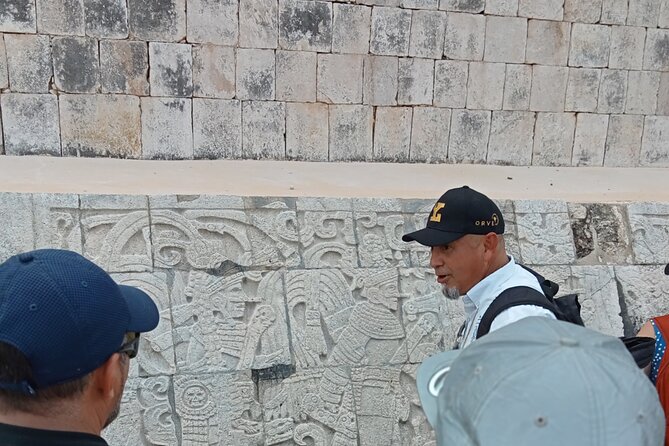
The meeting point is the central area in front of the observatory. That’s useful because it puts you near major sight lines right away, and it gives you a clean starting reference point for the walk.
Your guide also takes care of the first wave of logistics. They’ll let you know where you can get your entrance fees on-site, and where the restroom is. That matters because Chichén Itzá entry can involve a bit of waiting and a bit of confusion if you arrive with no plan.
You’ll receive a mobile ticket for the tour itself. Admission to the ruins is not included, so you’ll still need to budget for that. But having a guide help you with the first steps means you spend less time wandering and more time actually seeing.
Kukulcán, the Great Ball Court, the observatory, and the Sacred Cenote
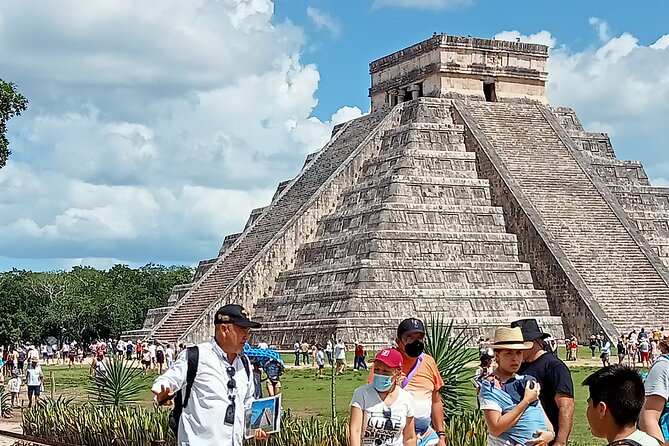
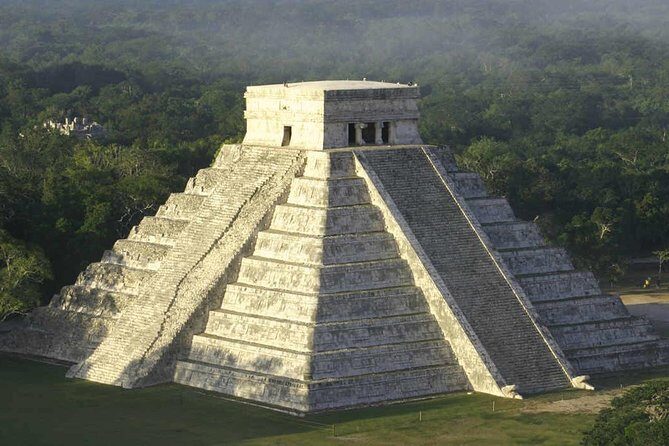
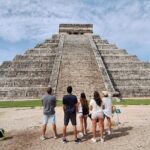
Your walk covers the major buildings people come for: the Temple of Kukulcán, the Great Ball Court, the observatory, and the Sacred Cenote, plus the other important points in the complex. Think of this as your main lap—broad coverage first—so you know what everything is before the deeper story begins.
What makes this worth it is how the guide frames what you’re looking at. Instead of just pointing and saying “this is that,” your guide explains what makes each structure important and how the site pieces connect. One review-style detail that stood out is how some guides bring extra visuals—photos, drawings, and even archival images—to help you visualize the ideas tied to the buildings.
This is also where the tour’s pacing shows. You’re not rushed from one spot to the next. There’s time for photos and time to pause when shade is available. That’s a big deal at Chichén Itzá, where the sun can hit hard and fast.
Admission for the ruins is not included, so you should treat this as a guided visit where you pay the site entry separately. The upside: once you’ve got your bearings, you’re not just standing there waiting. You’re actively learning while you walk.
Temple of the Warriors: a north-to-south route with a story break
After the initial coverage, the tour shifts into a more structured route that focuses on the Temple of the Warriors area and the surrounding landmarks. The guide starts in the northern section, where you’ll spend time around the Temple of Kukulcán and get an explanation for why it’s considered one of the new wonders. You then move through the Great Ball Court area again, plus the platform of Venus and the Sacred Cenote.
There’s also a small break built into the flow. That’s the kind of detail that helps families and mixed-age groups, because the tour stays human-sized instead of forcing everyone into one long stretch.
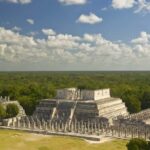
Then you head south through the complex to see the observatory, the nunnery, and the building people often call the church. Throughout, the guide works in picture stops and shade when possible. That creates a visit that feels like a guided walk with stops, not a line you’re trying to escape.
If you’re picturing only the pyramid, this is the part that can change your mind. The tour emphasizes how the site reads as a whole. It’s not just one monument. It’s a connected set of places.
Price and the real cost of getting in
The tour price is $113.50 per group, with room for up to 10 people. The tour duration is typically 2 to 3 hours, and bottled water is included. Private guide time is usually where you’re paying for value, and here you’re also getting a route that covers multiple major structures instead of laser-focusing on one.
Now for the part you must plan for: Chichén Itzá admission is extra at MX$643 per person, and there’s also a parking fee of MX$110 per booking. That means the total cost depends more on how many people you have than on the base tour price.
Here’s the simple way to think about it:
- You pay the group tour fee once (up to 10 people).
- You pay admission per person.
- You pay parking once per booking.
So if you’re traveling as two people, you’ll feel the admission cost more. If you’re traveling as a small group, the base tour price spreads out fast.
My practical advice: do the math before you book, and be ready for cash or card needs on-site for admission and parking. The tour guide can help you find the right spots, but the fees are still your responsibility.

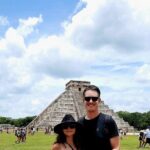
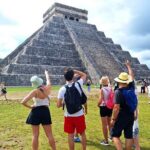
Guides like Pepe: stories, visuals, and patient pacing
This tour is strongly shaped by the guide you get. Names that come up often include Pepe (Jose Maria Osorio), plus Enrique Tun. Across guides, the most praised style is clear communication in perfect English, with history explained in a way that stays understandable.
A standout theme is teaching with visuals. Some guides carry photos, drawings, and archival images, and they use them to help you interpret the site rather than just watch someone talk. One review detail that you should take seriously: some guides can spend time on Mayan glyphs and drawings to tell the story in a more grounded way. Even if you don’t read glyphs yourself, those explanations can make the structures feel less random.
Pacing also matters. The tour is designed to work for kids and multi-generational groups. The guide’s job isn’t only history; it’s also keeping everyone engaged and giving you a calm route with enough patience for questions. If you have children, that flexibility can be the difference between a stressful day and a memorable one.
And yes, help doesn’t stop at the ruins. Some guides share practical local recommendations for lunch after the tour ends. If you like eating like a local, it can be worth taking the suggestion and following through.
Logistics that cut stress: tickets, restrooms, parking, and time
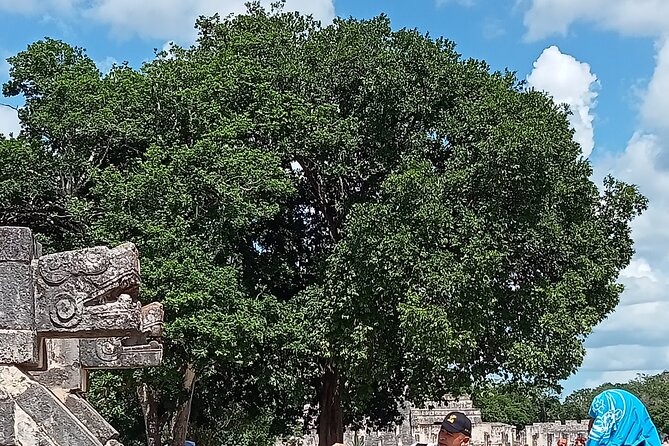
A guide is most useful when they handle the stuff that steals your energy. Here, the tour includes guidance on where to get entrance fees and where the restroom is. That reduces wasted time in lines and helps you avoid wandering around in the wrong direction.
Parking is another key point. There’s a parking fee of MX$110 per booking. You’ll also want to choose the official parking area. One practical tip that shows up in guide-style feedback is to ignore random persuasion and go to the official parking to avoid getting bounced around.
Timing planning is also worth attention. One guide-style detail: there can be a time difference between the Cancun area and Chichén Itzá, so double-check your watch so you don’t show up too early or too late. The better move is to start early. Some guides help you begin ahead of the busiest rush, which can make the first part of the walk feel easier.
Finally, the tour is near public transportation. So if you’re not driving, you can still plan your day without everything turning into a taxi marathon.
What to bring and how to plan your day
This tour includes bottled water, so you’re not starting empty-handed. Beyond that, you’ll want to think like a walker in the Yucatán heat: wear sun protection you trust, and plan for some time in open areas between shaded pauses.
You’ll have time for pictures, so consider what you like shooting. If you love detail shots, you’ll likely enjoy the way the guide slows down at important points and uses visuals to explain what you’re seeing.
Because admission is extra, I’d also plan to arrive ready to handle the per-person ticket fee efficiently. The guide will point you where you need to go, but it helps to come prepared.
One more “day-planning” thought: because the experience is structured and paced, try not to schedule long, complicated connections right after. Give yourself breathing room to get out, grab lunch, and reset.
Who this tour fits best (and who might prefer something else)
This private tour is a great fit if you want:
- A full guided visit across the complex, not just one famous pyramid
- A clearer story than you’d get from a self-guided wander
- Patient pacing for families, mixed ages, or anyone who wants time for questions
- English explanations with visuals and time for photos
It may be less ideal if you’re the type who wants the cheapest option and doesn’t care about guidance. The base tour fee is just part of the total picture, and the admission per person is the bigger cost.
Also, if you already know Chichén Itzá deeply and you’re comfortable navigating entry yourself, you might skip the guide. But if this is your first visit (or your first visit in a long time), the structured walk and “what am I looking at” explanations are exactly what turn ruins into something you’ll remember.
Should you book this Private Tour in Chichén Itza?
I’d book it if you want a calmer, clearer Chichén Itzá experience with a guide who can explain the site as more than a single stop. The best value is in the combination of private pacing, English guidance, and the way the route is built to move you from one key building to the next without losing the thread.
Do it with your eyes open on the costs: admission (MX$643 per person) and parking (MX$110 per booking) are extra. Still, paying those directly is also part of the trade: you’re buying time with a guide, not just entry.
If you want a Chichén Itzá visit that feels like a guided story walk—with shade breaks, photos timed in, and history explained clearly—this is the kind of tour that makes the money feel justified.
FAQ
Is Chichén Itzá admission included in the tour price?
No. The tour price does not include the Chichén Itzá admission fee. You’ll pay the admission fee on your visit (MX$643.00 per person).
How many people can be in a group for this private tour?
It’s private for your group, with up to 10 people per booking.
How long does the tour take?
Plan for about 2 to 3 hours.
Where do we meet our guide?
The meeting point is the central group in front of the observatory at Chichén-Itzá (the tour start location listed as Chichen Itzá 97751, Yucatán).
What fees are in addition to the tour price?
Parking fees are MX$110.00 per booking, and admission to Chichén Itzá is MX$643.00 per person. Bottled water is included.
Can I cancel for a full refund?
Yes. You can cancel up to 24 hours in advance for a full refund. If you cancel less than 24 hours before the start time, it won’t be refunded.