REVIEW · CHICHEN ITZA
Chichen Itza Walking Tour in Portuguese or Italian Skip the Line Access
Book on Viator →Operated by Experinciasyucatan · Bookable on Viator
Chichén Itzá in 90 minutes feels intense. You’ll get a focused walk through the park’s biggest “wow” stops, with skip-the-line access that helps you spend less time waiting and more time looking closely.
I especially like the way this tour pairs story with visuals. You’ll get an expert guide (for Portuguese-speaking departures, Russel has been mentioned as attentive and friendly), plus photos during the walk so you’re not constantly juggling your camera and your attention.
One thing to consider: the pace is tight. The stops are packed into a short window, and some people may find it a bit too detailed—especially since the sites include stories tied to human sacrifice and other brutal themes.
In This Review
- Key things I’d focus on before you go
- Skip-the-Line Entry and Getting Oriented Inside Chichén Itzá
- El Castillo: The Feathered Serpent Temple and the “Calendar” Idea
- Temple of the Warriors: Engravings, Pillars, and the Darker Side of the Story
- Sacred Cenote: The Underworld Entrance and the Archaeology Finds
- Gran Juego de Pelota: The Big Ball Game and Its Ritual Meaning
- How the 90-Minute Pace Really Works (and Who It Fits)
- Price and What You’re Truly Paying For
- The Guide Experience: Helpful, Professional, and Built for Questions
- Small Comforts That Add Up: Lockers, Mobile Tickets, and Nursing Service
- Who Should Book This Chichén Itzá Walking Tour
- Should You Book This Tour?
- FAQ
- How long is the Chichén Itzá walking tour?
- Where does the tour start and where does it end?
- What sites are included during the tour?
- Is skip-the-line access included?
- What is included in the price?
- How big is the group?
- What is the cancellation policy?
Key things I’d focus on before you go
- Small group size (max 12): easier navigation and more chances to ask questions.
- Skip-the-line access: faster entry so you don’t burn time before you even start.
- Four signature stops only: El Castillo, Temple of the Warriors, Sacred Cenote, and the Ball Court.
- El Castillo’s astronomy angle: you’ll hear why it’s treated like a three-dimensional calendar.
- Cenote offerings details: the Sacred Cenote isn’t just scenery—expect specific finds like ceramics and gold sculptures.
- Practical extras: mobile ticket, lockers, and photos during the tour (plus nursing service).
Skip-the-Line Entry and Getting Oriented Inside Chichén Itzá
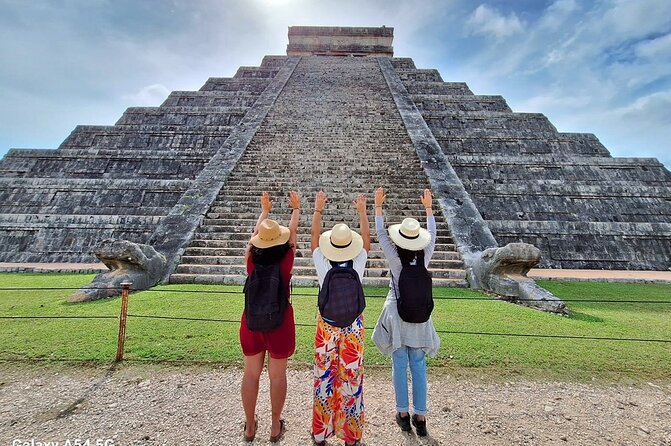
Chichén Itzá is famous for a reason, but it can also be a bit chaotic when you first arrive. This tour is built to reduce that friction. You start at 97751 Chichén-Itzá, Yucatán, and the tour ends back inside the park, where you get some free time for extra photos.
The mobile ticket helps too. Instead of hunting for paper, you can keep everything on your phone. And because the group stays small—up to 12 travelers—the guide can keep you moving without losing the thread of the explanations.
One more practical win: lockers are included. If you’re bringing a daypack, water bottles, or anything you don’t want on your shoulders in the heat, it’s a simple comfort upgrade.
You can also read our reviews of more tours and experiences in Chichen Itza.
El Castillo: The Feathered Serpent Temple and the “Calendar” Idea
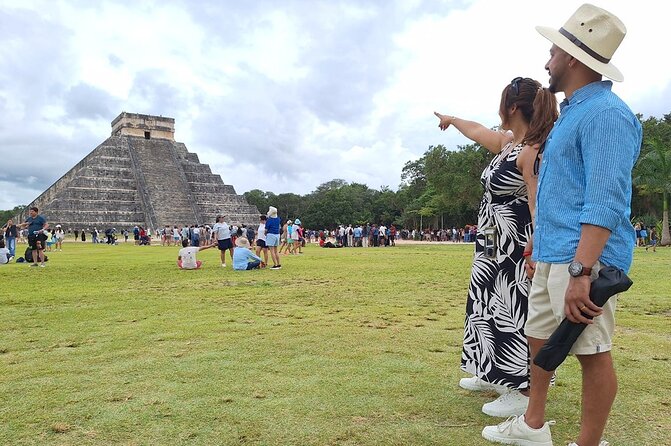
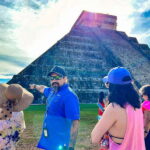
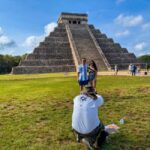
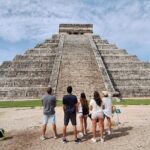
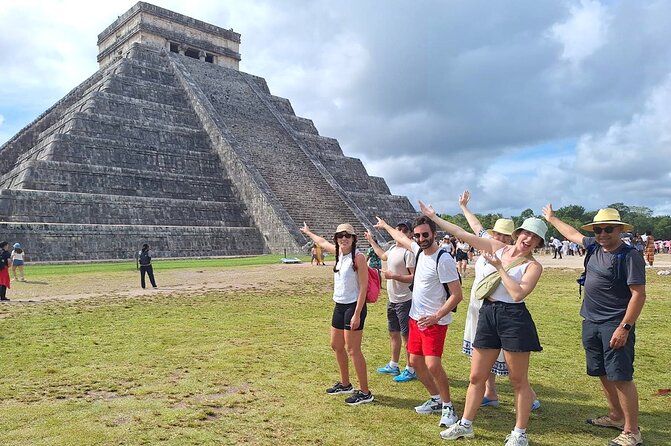
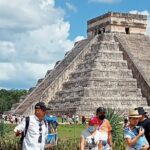
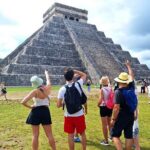
Your first major stop is El Castillo, the most emblematic structure in Chichén Itzá. You’ll spend about 30 minutes here, which is long enough to actually look—not just pose and rush.
What I like about El Castillo is that it isn’t presented as a random pyramid. You’ll hear it explained as a temple tied to the feathered serpent and connected to Mayan astronomy. The guide also frames it as a three-dimensional calendar, which changes the way you see the steps and angles.
A good way to use your time at this stop:
- Look at the pyramid form as more than a photo subject. Think about what lines and sides might “mark” rather than just what looks old.
- Listen for the astronomy and acoustics angle. Even if you can’t test acoustics on the spot, it gives context to why people talk about this site so passionately.
Possible drawback: because the tour starts strong, you’ll want your energy. El Castillo is your first big focus point, so if you’re sensitive to crowds or sun, plan to hydrate early and wear something with decent sun coverage.
Temple of the Warriors: Engravings, Pillars, and the Darker Side of the Story
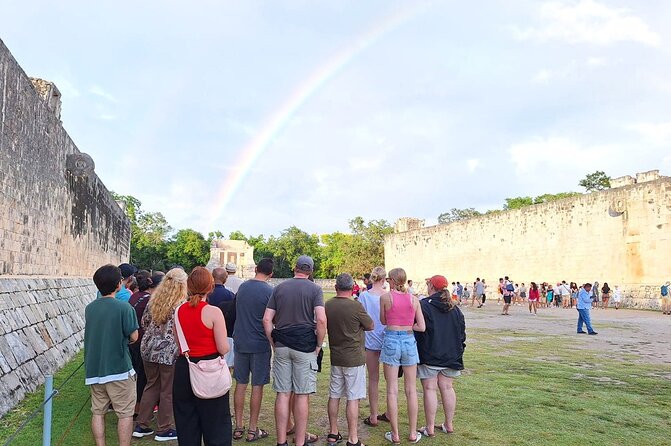
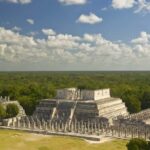
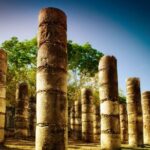
Next up is the Temple of the Warriors, where you’ll have around 20 minutes. This stop feels different from El Castillo right away. Instead of the broad, iconic pyramid silhouette, you’re dealing with details: warrior engravings and the structure of the temple itself.
Here’s what makes it memorable. The square pillars are explained as supports for the temple roof, and you’ll see (or at least be guided toward) how the design ties into military power. The darker part comes with the murals—linked to the practice of human sacrifice.
That mix matters because it keeps your understanding from becoming too “postcard.” Chichén Itzá wasn’t only ceremonial elegance. It also reflects authority, conflict, and ritual.
If you want to enjoy this stop without getting overwhelmed:
- Keep your eyes on one pillar or one panel at a time.
- Let the guide’s context guide what you notice, since the details can be easy to miss when you’re moving quickly.
Sacred Cenote: The Underworld Entrance and the Archaeology Finds
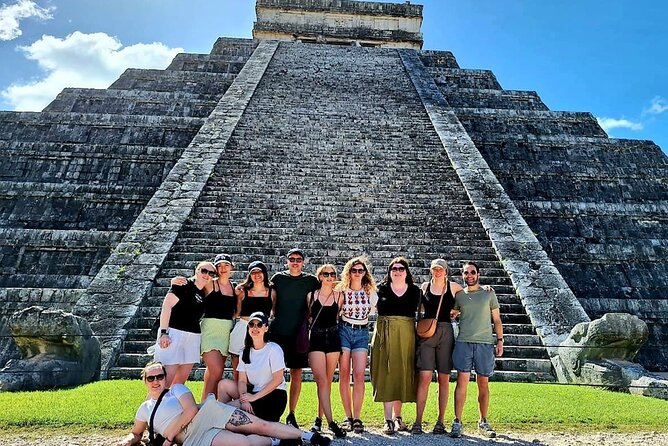
Then you move to the Sacred Cenote, with about 20 minutes here. A cenote is already interesting on its own—an open sinkhole tied to the area’s water story. But this one carries major symbolic weight in Mayan culture.
You’ll learn that the Sacred Cenote was treated as an entrance to the underworld. That mythic framing matters because the site isn’t just a natural feature. It’s interpreted as a ritual pathway.
The tour also brings in archaeology. The guide explains that archaeologists explored the cenote over different years, and the offerings found there include:
- ceramics
- precious stones
- gold sculptures
- animal bones
What I like about sharing those specifics is that it gives you something concrete to hold onto. It’s easy to stand at a spectacular site and think only in vague impressions. But when you hear what was found, the cenote becomes a place with a real record behind the legend.
One consideration: because your time is limited, you won’t get a long, slow “sit and absorb” moment. If you’re someone who loves standing quietly at sacred spaces, keep your expectations realistic. Use your 20 minutes to focus on understanding rather than sightseeing in every direction.
Gran Juego de Pelota: The Big Ball Game and Its Ritual Meaning
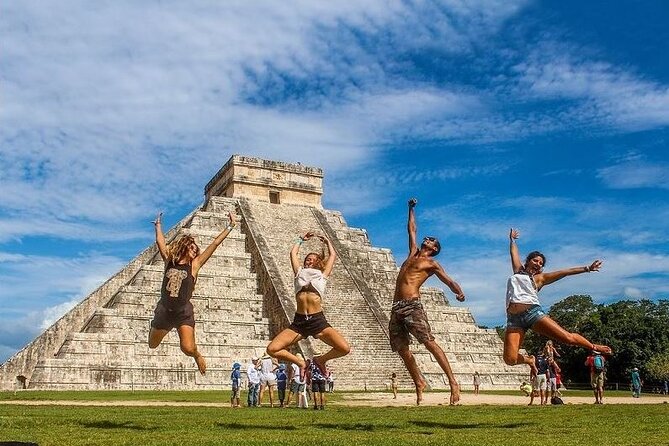
Your last main stop is Gran Juego de Pelota, the big ball court. Expect around 20 minutes. This is the site most people associate with the dramatic Mesoamerican ball game, and the tour explains it in a way that connects sport, ritual, and power.
You’ll hear that it was the biggest ball game in Mesoamerica and that archaeologists interpret it as a ritual connected to the sun. The ending of the ritual is described as grim: the winning captain was considered to behead the loser.
I’m mentioning that because it shapes how you’ll feel at the site. If you prefer gentle sightseeing stories, you might find the subject heavy. If you want an honest look at the way ceremonies worked in this culture, you’ll likely appreciate the guide not skipping the uncomfortable parts.
How to make the most of this stop:
- Look at the layout first, then listen to how the ritual interpretation fits the space.
- Pay attention to any explanation about the sun symbolism. It helps turn the court from “big walls” into “a designed stage.”

How the 90-Minute Pace Really Works (and Who It Fits)

This tour runs about 1 hour 30 minutes. That time includes four stops, with most visits around 20 minutes and the first one at 30 minutes.
The upside is obvious: you see the headline locations in a short, efficient sweep. This is ideal for a day that already includes transportation time, lunch plans, or multiple attractions in the area.
The downside is also clear: it’s not a slow, roaming style tour. If you want extra time to stare at carvings, reread details from an information board, or move at your own rhythm, this structure may feel fast.
The group size—up to 12—helps a lot. It keeps the walking manageable and it gives the guide room to answer questions without the classic “everyone waits while one person asks” problem.
Also, the tour ends inside Chichén Itzá with free time for more photos. So you’re not forced to leave immediately after the guided portion. Think of the tour as the head start; the extra time is your chance to reset and take the shots you actually want.
Price and What You’re Truly Paying For
The tour price is $35.76 per person, and that’s where value comes from: you’re mostly buying guide time, organization, and the convenience of a guided route with skip-the-line access.
But don’t ignore the extra costs listed for entry:
- Foreign ticket: 671.00 MXN
- National ticket with INE: 298.00 MXN
- Tip is not included
So the real cost is usually the tour fee plus your park admission type. If you’re traveling with kids, there’s a helpful detail: a child ticket under 13 years is included.
How I’d judge value:
- If you’re short on time, the guided loop can save you a lot of wandering.
- If you’re the type who likes explanations tied to specific structures, the guide adds real value because Chichén Itzá rewards attention.
- If you already know the site well or you’re very independent, you might question whether a guided walk is necessary.
The fact that 96% of buyers recommend it, with an average rating of 4.9, is a strong sign the tour hits the basics—clear guidance, smooth flow, and a professional feel.
The Guide Experience: Helpful, Professional, and Built for Questions

This is a shared expert guide tour, with the option for a private tour if that option is selected. The shared format matters because it’s part of keeping the route efficient and the time focused.
From the Portuguese-speaking experience shared with your provided info, the guide named Russel was described as attentive and friendly, speaking Portuguese with a Carioca accent. That kind of communication style matters at Chichén Itzá because you’re listening to meaning—calendar ideas, ritual interpretations, archaeology findings—not just facts.
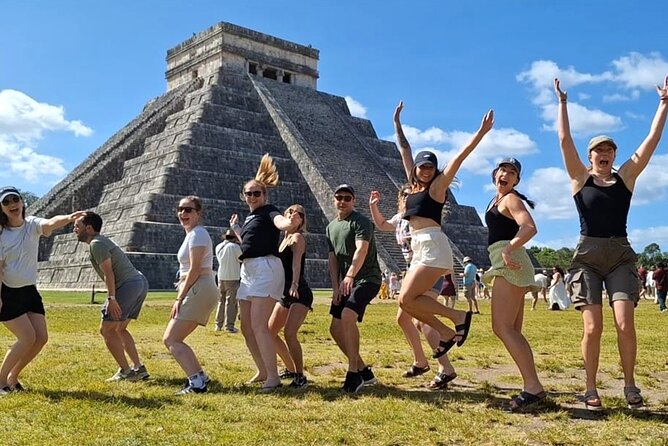
The tour also includes photos during the tour. That’s more than a nice-to-have. It reduces the hassle of trying to get clean pictures while standing in a crowded place, and it helps you capture the group shots you’ll wish you had later.
Small Comforts That Add Up: Lockers, Mobile Tickets, and Nursing Service
It’s the little things that make this tour easier to enjoy.
You get:
- Mobile ticket convenience
- Lockers included
- Photos during the walk
- Nursing service included
- Service animals allowed
Also, the tour is described as near public transportation, which can help if you don’t want to rely on private transfers.
I’m not saying these details will change how you feel about El Castillo. But they do change how stressed you feel while getting there, storing stuff, and staying comfortable in the park.
Who Should Book This Chichén Itzá Walking Tour
This tour makes the most sense if you:
- want a structured, short visit that hits the main sites
- enjoy history and explanations tied to specific features like El Castillo and the Sacred Cenote
- appreciate the convenience of skip-the-line access and a small group
- want someone to help you notice what you might otherwise miss
It might be less ideal if you:
- prefer slower, self-paced wandering with lots of time at fewer locations
- dislike tours that include uncomfortable ritual topics (human sacrifice and the ball game’s violent end are part of the story)
If you fall into the “I want time to breathe” camp, look at the private tour option since you can often control the pace more easily.
Should You Book This Tour?
I’d book it if your goal is to see the essentials of Chichén Itzá with smart guidance and minimal wasted time. For $35.76, you’re getting a professional setup, a guided loop through the biggest stops, and practical extras like lockers and photos during the tour. The small group limit (max 12) is the cherry on top.
I’d only hesitate if you know you get impatient with a packed schedule. This one is efficient by design, and some people may find it too detailed or too long for their taste—especially in a park that can already feel intense.
If that sounds like you, consider booking with a mindset of: guided meaning first, photos second. Then use the final free time inside the park to slow down and enjoy your own pace.
FAQ
How long is the Chichén Itzá walking tour?
It lasts about 1 hour 30 minutes.
Where does the tour start and where does it end?
It starts and ends at 97751 Chichén-Itzá, Yucatán, Mexico. The tour ends inside the park, and you get free time afterward for more photos.
What sites are included during the tour?
You visit El Castillo, Temple of the Warriors, Sacred Cenote, and Gran Juego de Pelota.
Is skip-the-line access included?
Yes. The experience is described as offering skip-the-line access.
What is included in the price?
The tour includes a shared expert guide (private tour if selected), photos during the tour, nursing service, lockers, and the ticket for a child under 13. Admission ticket amounts are listed as included for the stops, but park ticket fees for foreign and national visitors are also listed as not included.
How big is the group?
The tour has a maximum of 12 travelers.
What is the cancellation policy?
Free cancellation is available up to 24 hours in advance for a full refund. If you cancel within 24 hours of the start time, the amount paid is not refunded.