REVIEW · COSTA MAYA
PADI Discover Scuba Diving
Book on Viator →Operated by Mar Adentro Diving · Bookable on Viator
Ready to try scuba without the marathon?
This PADI intro scuba experience in Costa Maya is built for first-timers and for people who want a refresher without signing up for a long certification path. I really liked two things: the small group size (you get close coaching) and the smooth, confidence-building descent using the mooring line. One possible drawback: if you rely on very clear English for every step, you’ll want to pay attention and speak up early—some participants noted that the instructor’s English can be harder to follow.
The training is straightforward: a bit of theory, shallow-water skills where you can stand, then a short boat ride to the coral garden. For about $100, you get scuba equipment plus bottled water, and you’re capped at a safe maximum depth of 40 feet.
If the sea is rough, expect it to affect your comfort and timing. One guest couldn’t finish the open-water part because of conditions, but the crew stayed supportive and professional.
In This Review
- Key Things That Matter Most Here
- Costa Maya’s Intro Scuba Plan in Plain English
- What Happens Before You Go Under: Theory That Actually Helps
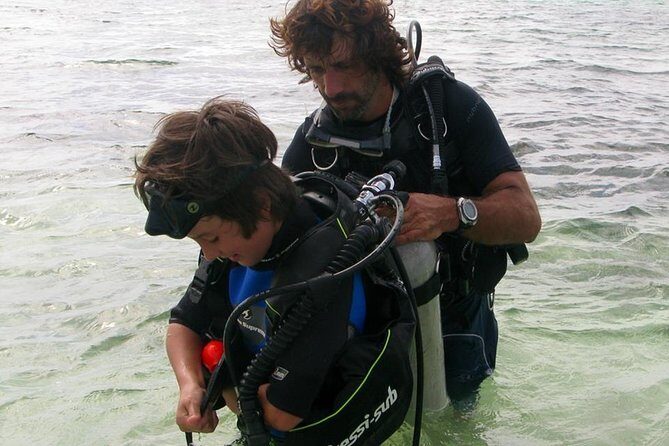
- Confined-Water Skills: The Shallow Zone Where You Can Stand
- The Short Boat Ride to the Coral Garden
- Mooring Line Descent and the 40-Foot Safety Limit
- Reef Time: What You Can See and How It Feels
- Value for About $100: Why This Costs Less Than a Certification Path
- Logistics and Practical Tips for Costa Maya Daylight
- Safety and Health Checks: Don’t Guess
- Who Should Book This (and Who Might Think Twice)
- Should You Book This Costa Maya Intro Scuba Session?
- FAQ
- Where does this experience start?
- How long is the PADI intro scuba session?
- What does it cost?
- What’s included in the price?
- What training do you do before going out?
- How deep do you go, and how long are you underwater?
- Who should check with a doctor before booking?
- What are the age and group-size limits?
- What are the cancellation rules, especially if weather changes?
Key Things That Matter Most Here
- Max depth is 40 feet with an easy, structured plan for first-timers
- Small groups (up to 16) so your instructor can stay close and correct fast
- Mooring-line descent helps you get down smoothly and reduce panic
- Equipment and bottled water included, so you’re not chasing basics
- Reef time averages around 43 minutes, with exact timing based on air use
Costa Maya’s Intro Scuba Plan in Plain English
This experience is a PADI Discover Scuba style session run by Mar Adentro (you may see the full provider name with scuba-related words, but I’ll just call it Mar Adentro here). The goal is simple: you learn the basics, practice them in very shallow water, then head out for underwater time in a coral area under instructor care.
The whole session runs about 3 hours 45 minutes. In practice, the pace is efficient: you’re not doing an all-day class, and you’re not waiting around for hours before getting into the water. On average, it’s booked around 40 days ahead, so if you’re traveling on a tight cruise schedule, booking early can reduce stress.
The vibe is calm and hands-on. Multiple guides are named across reviews, and they repeatedly show up as patient and focused—people felt safe even when they were nervous at first. You also won’t be carrying gear around much. Equipment is provided, and bottled water is part of the package.
You can also read our reviews of more scuba diving tours in Costa Maya
What Happens Before You Go Under: Theory That Actually Helps
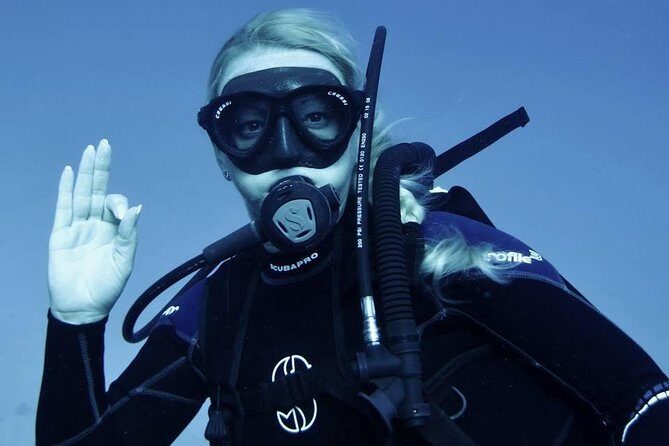
You start with a short theory block on how scuba works for your body. The focus is on physiology (what’s happening to you as you change pressure) and a practical SCUBA unit overview (how your gear fits together and what each piece does).
This part matters because it’s the difference between following instructions blindly and understanding why you’re doing something. When you know what to expect—especially around buoyancy and breathing—you’ll spend less mental energy panicking and more energy looking at the reef.
From the instruction flow, you can expect a clear sequence:
- Learn what scuba systems do
- Understand the main procedures you’ll practice next
- Get set up so the shallow-water session doesn’t feel like a surprise test
If you get anxious easily, this is where you should speak up. Several reviews mention instructors calming nerves and staying patient while participants sorted out issues like ear pressure or equipment fit.
Confined-Water Skills: The Shallow Zone Where You Can Stand
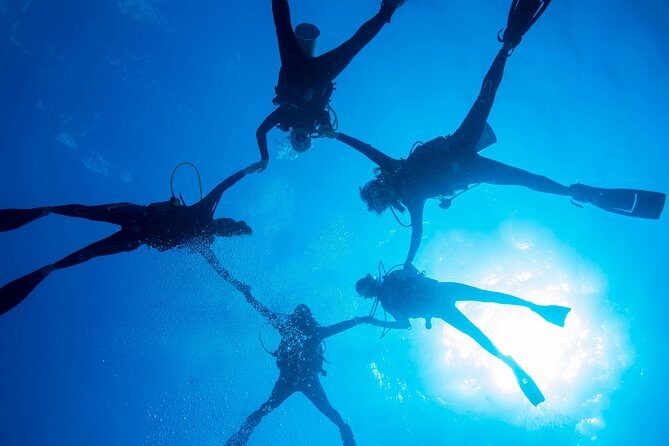
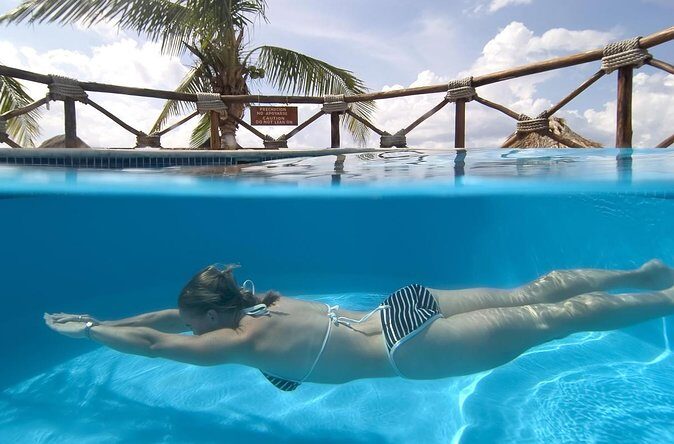
Next comes skills training in confined water—shallow enough that you can stand. That’s not just for convenience. It’s a key safety design feature for first-timers.
In this section, you typically practice the basics of:
- Controlled breathing and staying relaxed
- Using your gear correctly
- Basic buoyancy control (so you don’t shoot upward or sink fast)
- Building muscle memory for how to respond if something feels off
This is also where you’ll find out whether you’re comfortable with the feel of the regulator and the weight setup. One review specifically mentioned problems with ears and pressure regulation, and the instructor took time until the participant could manage it. Another mentioned a mask leak and weight belt fit issues—again, the instructor helped adjust things instead of pushing through.
Practical takeaway: if anything feels wrong in the shallow water, say it immediately. The shallow part is where it’s easiest to fix.
The Short Boat Ride to the Coral Garden
After the skills practice, you’re looking at about a 10-minute boat trip to the coral garden spot. It’s not long, but it’s enough time for the reef to come into view and for the crew to get organized.
A few real-world tips from what’s worked for past visitors:
- Bring a little patience for weather changes. This experience needs good weather, and conditions can affect whether everyone completes the full plan.
- If you’re sensitive to boat motion, mention it right away. Rougher seas have been reported, and the crew’s job is to help you manage comfort, not just follow a script.
If you’re doing this as part of a cruise stop, keep your timing tied to the excursion’s local schedule. One reviewer noted it ran on local time (not ship time), and that helped avoid last-minute stress.
Mooring Line Descent and the 40-Foot Safety Limit
When it’s time for the main underwater section, the experience is designed around structure and control.
You’ll go down along a mooring line. That’s a big deal for first-timers. Following a line helps you avoid that helpless feeling of floating or drifting while you’re still adjusting breathing and buoyancy.
Depth-wise, the plan is capped at a maximum of 40 feet for safety standards. The bottom typically starts around 25 feet, which gives you a consistent “from-to” structure rather than a gradual mystery descent.
How long you’ll spend underwater depends on your air consumption. The program notes an average time of about 43 minutes. Many reviews match that “around 40–45 minutes” window, so you can expect something in that ballpark.
Also, the instructors stay close during the session. Multiple reviews specifically praised guides who stayed near enough to reassure and coach. That closeness is especially helpful if you start feeling nervous once you’re farther from the surface.





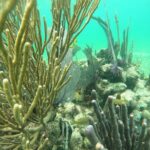
Reef Time: What You Can See and How It Feels
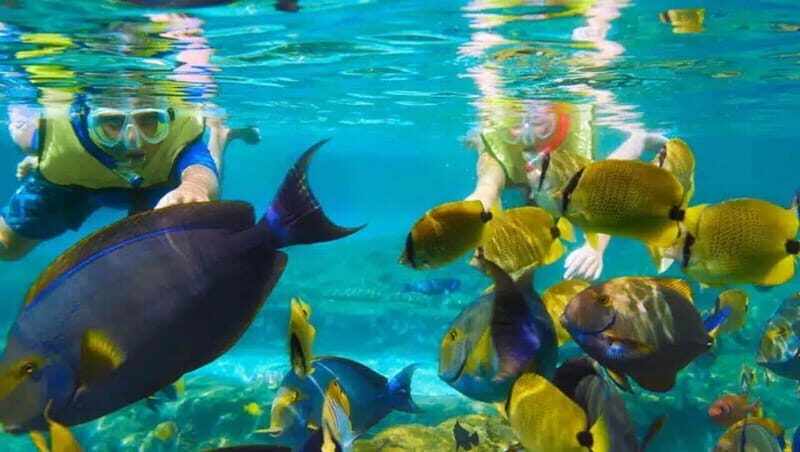
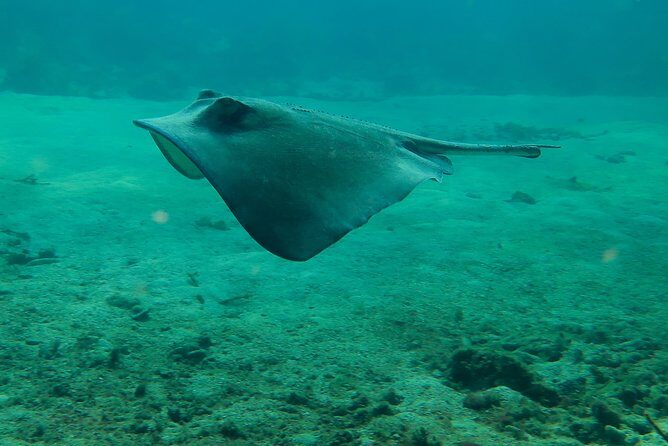
This is the part you’ll remember: time spent near coral with fish cruising past at close range. Reviews mention schooling fish, stingrays, turtles, rays, lobsters in or near caves, and lots of small reef life. You’re also likely to see coral that looks healthier than you might expect for a spot off the coast.
The experience is shallow enough that most first-timers can focus on exploration rather than survival. It also tends to feel peaceful once you settle into breathing and buoyancy.
A few comfort notes that helped people in reviews:
- Ear pressure can happen even when you’re doing everything right. Tell your instructor early.
- If your first attempts are shaky, the coaching is designed to bring you back step-by-step. Several reviews describe instructors staying patient while participants built confidence underwater.
- If you’re with a partner, you may be able to stay near the boat while they’re underwater and snorkel at the surface, depending on how the group is handled. (Ask on the day.)
And yes, there’s often a sweet finish. Several reviews mention fresh pineapple after the session, which is a nice end to an exhausting-but-fun half-day.
Value for About $100: Why This Costs Less Than a Certification Path
At $100 per person, this isn’t “cheap” in a world sense, but it’s strong value when you compare it to the time, effort, and cost of full certification.
Here’s why it’s a good deal for the right people:
- You get equipment included, so there’s no rental math or last-minute shopping.
- You skip the long certification grind, but you still get real instruction and practice.
- You get guided underwater time, not just a taste of gear without coaching.
- Small groups help you actually learn instead of waiting for the instructor to notice you.
Also, this format helps you answer a key question: do you genuinely like scuba once the novelty wears off? If you do, you’ll be in a better position to choose how to proceed afterward.
If you’re certified already, this can still be fun as an organized local reef session—but the “value” angle is clearest for people who are brand new or rusty and want structure without a full course.
Logistics and Practical Tips for Costa Maya Daylight
Let’s keep it simple: plan for ease, then plan for weather.
Getting there: your cost may include taxi. One commonly mentioned figure is $4 USD per person per ride, with solo travelers sometimes seeing $8 USD. If you’re cruising, bring cash and save yourself a scramble.
Meeting point: it starts at Huachinango, 77976 Q.R., Mexico, and the activity ends back there. The meeting area is noted as near public transportation, which helps if you’re not using a cruise transfer.
Mobile ticket: you’ll get a mobile ticket, and you receive confirmation at booking time. That’s good for day-of sanity.
What to pack:
- Reef-friendly sun protection
- Something to protect you from sand and salt
- A towel or dry change of clothes for afterward
- Bug spray for the beach area, if you’re going before or after the water time
Bathroom reality: one review flagged that restroom facilities near the beach bar aren’t top-tier. So if you’re picky, use the bathroom early and don’t assume you’ll find a resort-level setup.
Safety and Health Checks: Don’t Guess
Scuba is safe for many people, but it’s not for everyone. The experience clearly asks you to check with your doctor if you have certain health factors, including:
- High blood pressure or angina, or medication used to control blood pressure
- A history of collapsed lung (pneumothorax) or chest surgery
- A history of seizures, blackouts, fainting, convulsions, or epilepsy, or medications used to prevent them
- Heart disease, heart attack, or heart/vessel surgery
Also, there’s a required timing window after your session: you need at least a 12-hour period between diving and ascending to altitude above 300 meters (about 1,000 feet). In plain terms: don’t plan a fast flight or immediate high-altitude move right after.
Minimum age is 10 years old, and the session caps at 16 travelers, which supports close instruction.
Who Should Book This (and Who Might Think Twice)
Book this if:
- You’re new to scuba and want training that starts in shallow water
- You want a guided reef experience without committing to a full certification course
- You like the idea of close coaching, especially if anxiety is part of your personality
You might think twice if:
- You know you need very strict language clarity in English and you’re worried you won’t follow explanations comfortably
- You’re prone to panicking in choppy conditions or on boats (rough seas have affected at least one schedule)
If your goal is simply to check scuba off a list, this can still be rewarding. But if your goal is learning comfort and safety basics for future trips, this format tends to deliver.
Should You Book This Costa Maya Intro Scuba Session?
I’d book it if you want a structured first scuba experience with small groups, careful coaching, and a plan that keeps you near the learning stage long enough to build confidence. The mooring-line descent and the shallow skills portion are exactly the kind of “boring but smart” safety design that makes a big difference when you’re nervous.
If you hate boat rides or you’re dealing with any health concerns from the medical checklist, then talk to your doctor first and choose a calm day if possible. And if English clarity is critical for you, plan to ask questions early and don’t wait until you’re already in the water.
For most first-timers, this is a solid, friendly way to see the coral garden up close while learning real skills—without the long course.
FAQ
Where does this experience start?
It starts in Huachinango, 77976 Q.R., Mexico, and it ends back at the same meeting point.
How long is the PADI intro scuba session?
It lasts about 3 hours 45 minutes (approx.).
What does it cost?
It’s listed at $100.00 per person.
What’s included in the price?
Equipment use is included, and bottled water is provided.
What training do you do before going out?
You do theory, then basic skills training in confined water (shallow enough to stand). After that, you take a short boat trip to the coral garden for the main underwater session.
How deep do you go, and how long are you underwater?
Max depth is 40 feet. The bottom starts around 25 feet. Underwater time depends on air consumption, with an average of about 43 minutes.
Who should check with a doctor before booking?
You should check with your doctor if you have high blood pressure, angina, a history of collapsed lung or chest surgery, a history of seizures/blackouts/fainting/epilepsy (or related medications), or heart disease/heart attack or heart/vessel surgery.
What are the age and group-size limits?
Minimum age is 10. The activity has a maximum of 16 travelers.
What are the cancellation rules, especially if weather changes?
Free cancellation is available up to 24 hours in advance for a full refund. If the experience is canceled due to poor weather, you’ll be offered a different date or a full refund.