REVIEW · COSTA MAYA
Discovery Scuba Dive.
Book on Viator →Operated by Doctor Dive Costa Maya · Bookable on Viator
First time under the surface is easier here. This beginner-focused scuba experience is built for absolute newcomers, starting in the shallows with a PADI-trained instructor and then moving to a calm, short reef visit. It’s also a smart value: you get the full lesson, shoreline practice, and an instructor-led one-tank plan for about 3 hours.
I especially like the slow, skills-first approach. Your guide (names I picked up include Lucas, Cesar, Antonio, Tony, and Charlie) works with you set by set, so you’re not just dropped into the deep end. I also like that the reef portion stays short and controlled—around 30 to 40 minutes with a maximum depth of 40 ft—so you can actually enjoy what you came for: coral and tropical fish.
One thing to consider: if you’re not certified, you can’t bring cameras or recording devices for safety reasons. That means plan on enjoying the moment with your eyes, and if you want pictures, you’ll need to ask the shop what they can provide.
In This Review
- Key highlights worth knowing
- Getting comfortable fast: the Discover-style setup
- The real timeline in Costa Maya: about 3 hours from shop to reef
- Shallow-water skills: what you practice and why it works
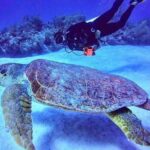
- The reef visit: coral, tropical fish, and a controlled depth limit
- Gear, rental, and the “no camera” rule for noncertified divers
- Instructor attention: what makes the team style feel different
- Price and value: is $100 worth it in Costa Maya?
- Logistics that actually matter: getting to the shop and staying on time
- Who should book this first-timer scuba experience?
- Should you book in Costa Maya? My take
- FAQ
- Do I need scuba certification to do this experience?
- How deep will I go?
- Is scuba equipment included in the price?
- How long does the whole tour take?
- Can noncertified divers bring a camera or recording device?
- What’s the cancellation cutoff?
Key highlights worth knowing
- Step-by-step skills in shallow water before you go offshore
- Max 16 people, which helps keep the instruction personal
- Equipment included (and rental is listed at $25 USD if you need it)
- 30–40 minutes near the Mesoamerican Barrier Reef region at up to 40 ft
- A guide right at your side during the whole underwater portion
- No cameras/recorders for noncertified divers, so your focus stays on safety
Getting comfortable fast: the Discover-style setup
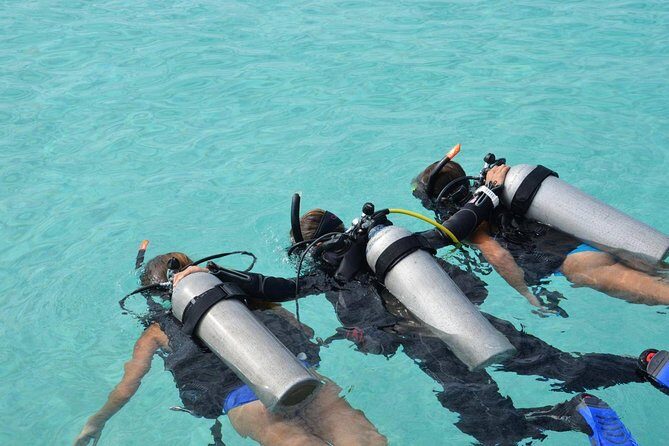
This experience is designed for people who have no scuba certification and no formal experience. The big idea is simple: you get taught what you need, you practice it close to the waterline, and then you only progress once you show you can handle the basics.
It starts with a check-in at the shop, then a short theories session. You’ll learn the equipment and safety rules in English, then move to a shoreline area for hands-on practice. This order matters. It helps your brain go from What is all this? to Oh, I can handle this. And once you start moving through the gear motions on land, the water part feels far less intimidating.
The course stays beginner-only, so nobody is rushing you to “keep up.” The staff style I noticed in the feedback is patient and direct. Names that come up often include Cesar (helpful with buoyancy), Lucas (calm and thorough), Antonio/Tony (making first-timers feel safe), and Charlie (taking time and checking everyone).
You can also read our reviews of more scuba diving tours in Costa Maya
The real timeline in Costa Maya: about 3 hours from shop to reef
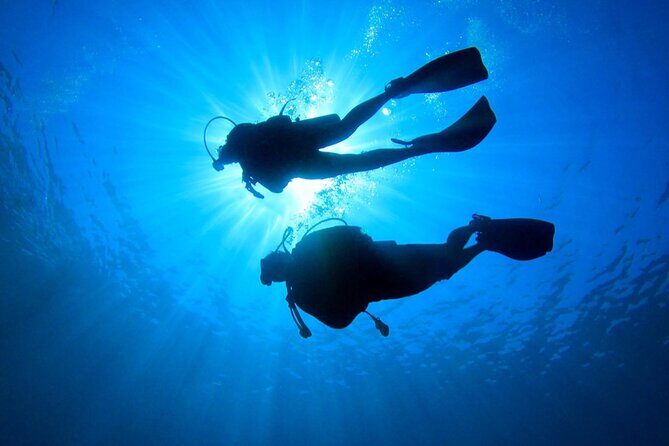
Expect the whole thing to take roughly 3 hours. The flow is built around three phases: instruction, shallow practice, then the reef visit.
1) Shop check-in + short theories
You’ll get geared up after the instructor explains the equipment and key safety steps. This is where you learn what each piece does and what you need to remember once you’re breathing underwater.
2) Shallow-water practice from shore
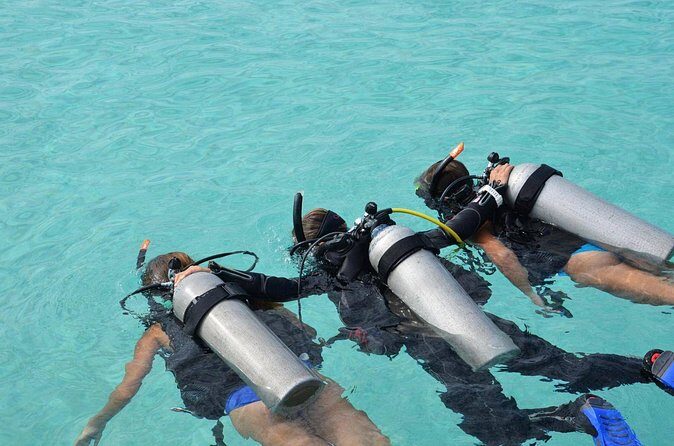
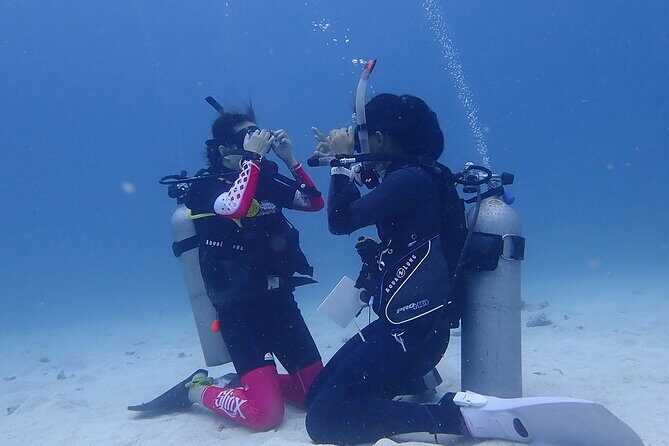
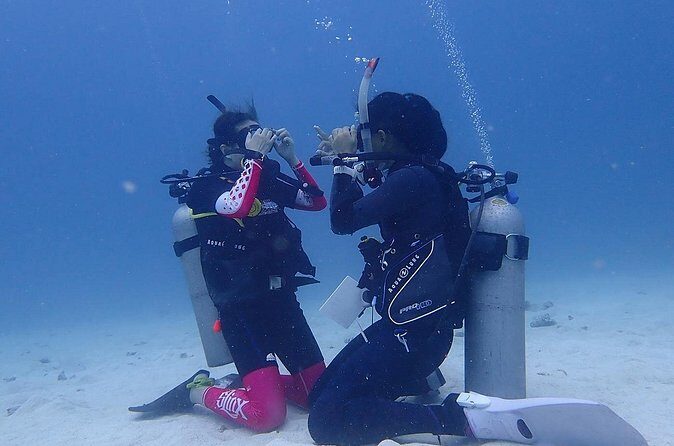
Next comes the controlled part: you practice the skills near the water with an English-speaking guide. This is where you get your bearings—mask and regulator handling, basic breathing awareness, and how to move while you stay calm.
3) Boat transfer + one-tank reef session
When you pass the skills, you’ll head out on a boat to a coral reef location that’s described as a short distance offshore. Once the captain ties off, your guide helps you into the water and stays close the entire time.
The underwater time is about 30 to 40 minutes, with a maximum depth of 40 ft. That’s a great match for a first session: long enough to see coral and fish up close, short enough to avoid feeling stressed or “too hyped” for the conditions.
Shallow-water skills: what you practice and why it works
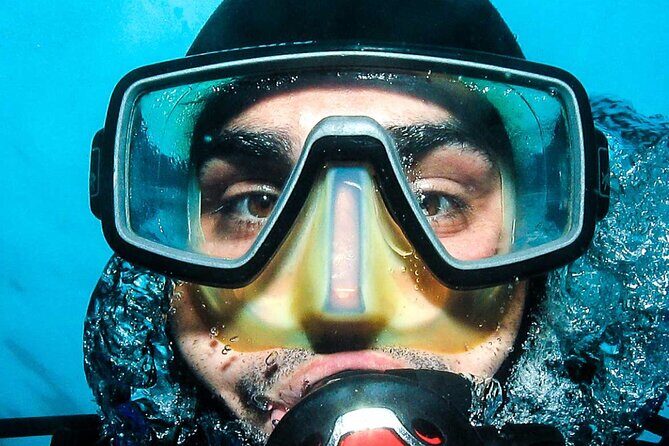
The shallow section isn’t filler. It’s the part that turns scary into doable.
You’ll go to the water from shore and practice with your guide close by. People often arrive nervous—totally normal. The best part of the shallow setup is that it gives you repeated chances to get comfortable with the basics. If something feels off, you can fix it right away on the spot instead of powering through while panicked.
From the kinds of comments the instructors earned, a few skill themes stand out:
- Buoyancy control help (Cesar is specifically praised for steady, hands-on assistance)
- Clear, direct instruction with a patient pace (Lucas, Tony, Antonio, and others)
- Not continuing until you feel ready—the instruction keeps moving only when you demonstrate comfort
Also, the ratio guidance in the feedback is reassuring. One comment points to about one guide per two people during the underwater portion. That kind of attention is what lets beginners learn without feeling like they’re on their own.
Bottom line: you’re not “just trying scuba.” You’re learning how to be safe in a new environment.
The reef visit: coral, tropical fish, and a controlled depth limit
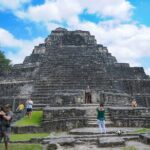
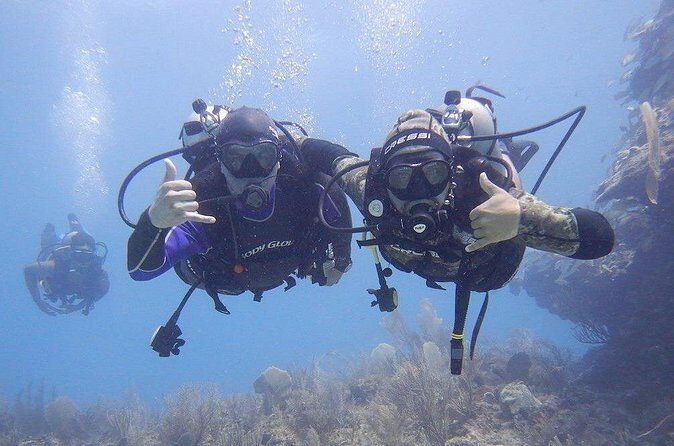
The highlight for most first-timers is what you see once you’re settled. Your reef session is planned for a coral reef that’s reachable quickly from shore, so you’re not spending the day bouncing on a long boat trip.
Underwater, the experience is meant to feel guided and calm. Your dive leader stays right beside you the entire time, and the plan keeps the max depth to 40 ft. That limit is practical: it reduces risk for beginners and keeps the experience easier to manage physically.
What you’ll likely notice quickly:
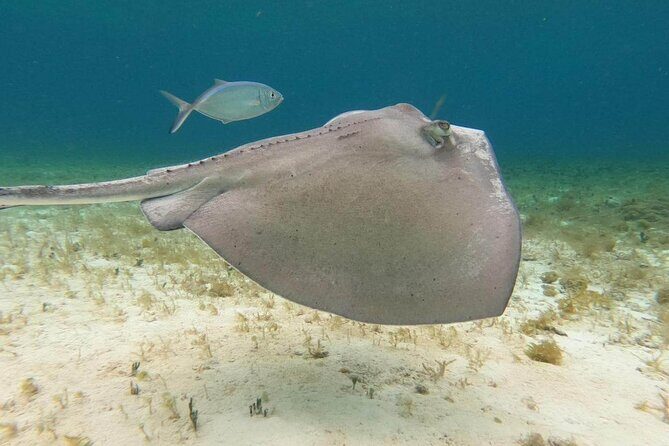
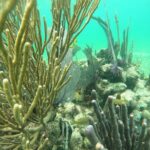
- Colorful tropical fish hovering around coral formations
- Coral close-up, including living coral you can watch without needing advanced buoyancy skills
- The feeling of breathing underwater becoming normal—especially because you’re paired with instruction rather than just watching a guide disappear ahead
The reef time is also long enough to look around, not just to pass through. If you’ve loved snorkeling but wanted more time and more depth, this is that middle ground.
Gear, rental, and the “no camera” rule for noncertified divers
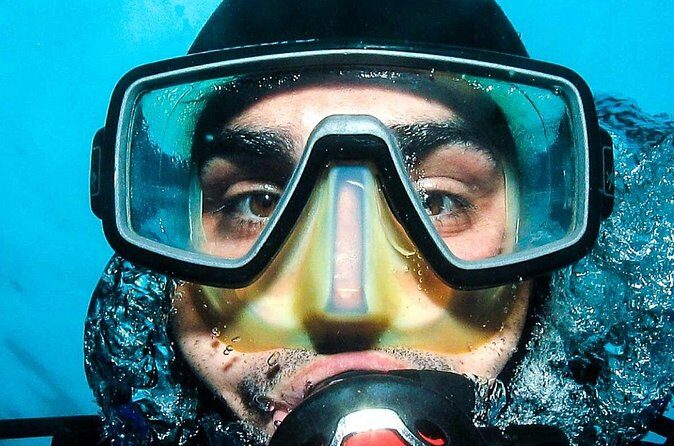
Gear is part of the value here. The experience includes the necessary scuba equipment, which is a big deal if you’re trying to travel light. You don’t have to hunt down rental gear ahead of time.
That said, you may see an equipment rental option listed at $25 USD at the shop. If you’re planning to bring your own gear, or you think you might need something last-minute, it’s worth asking at check-in. The key point for planning: don’t assume you’ll need rentals, because the included gear is part of the standard offer.
Now the trade-off: for safety reasons, noncertified divers are not allowed to take cameras or recording devices. This affects how you plan the experience.
- If you want your own photos, you’ll need to know you likely won’t be able to use a camera underwater.
- If you care about photos, ask the shop about options for getting images from their side (some feedback indicates there are photo options available, but you’ll want to confirm what’s offered during your session).
I treat this rule as a good prompt to shift your goal. Instead of filming everything, you watch what the guide points out, practice staying relaxed, and let the moment land.


Instructor attention: what makes the team style feel different
A lot of first-time experiences depend on the human factor. Here, the human factor comes through clearly.
Different guide names show up repeatedly—Cesar, Lucia, Antonio, Nico, Lucas, Tony, and Charlie—and the consistent theme is the same: patient, thorough coaching. Even when someone is already certified, they still go step by step and keep checking comfort and readiness. For total beginners, that thoroughness is the whole point.
Two types of help seem especially important for new scuba students:
- Physical coaching in the water, like direct buoyancy assistance
- Confidence-building pacing, where you move forward only when you’re comfortable with the skills
This matches what you want when you’re learning a breathing system you’ve never used underwater. The goal isn’t just safety; it’s making you feel like you belong there for the reef portion.
Price and value: is $100 worth it in Costa Maya?
At $100 per person for an experience that lasts about 3 hours, the value is strongest when you compare it to the cost of doing this “the hard way.” If you had to pay for a standalone lesson plus equipment plus a guided reef attempt, the total adds up quickly.
What you get here that drives the value:
- Beginner instruction with a short theories session
- Shore practice so your first underwater minutes aren’t blind
- All necessary gear included
- A real reef visit with a controlled max depth and a guided setup
Also, the group limit matters. The experience caps at 16 travelers, which typically means less “waiting around” and more attention during the skills part.
If you’re cost-sensitive, also remember this: the experience is built so that snorkeling-only people get a real change of pace. You’re not just looking at fish from the surface. You’re learning to move and see while breathing underwater at a depth you can manage.
Logistics that actually matter: getting to the shop and staying on time
This activity starts at a specific shop location in Mahahual, and it ends back at the same meeting point. It’s listed as near public transportation, but if you’re arriving from the cruise port, plan to use a short taxi ride and then walk a few blocks.
One practical takeaway from the feedback: the cruise terminal area can be slow to exit, and getting from the gangway to the taxi stand can take time. If your ship is late, it can shift your whole schedule—so build in buffer time rather than assuming everything will be smooth.
Once you arrive, the schedule feels efficient. The instructors handle the flow: check-in, gear, theories, practice, then the boat portion. If you show up ready (not rushed), the experience runs the way it’s intended.
Who should book this first-timer scuba experience?
This fits best if you want a structured first experience without certification pressure.
You’ll likely enjoy it if you:
- Are a true beginner with no scuba certification
- Like learning in steps and practicing before going farther
- Want to see coral and tropical fish at a controlled depth (up to 40 ft)
- Appreciate close guidance, not “figure it out” energy
You might think twice if you:
- Expect to record with a camera underwater as a noncertified diver (the no-camera rule applies)
- Get anxious without constant reassurance (the staff can be patient, but you’ll still need to cooperate with the process)
For most people, the shallow-skills start is the comfort. It turns first-timers into calm first-timers.
Should you book in Costa Maya? My take
If you’re looking for a first scuba experience that feels safe, paced, and focused on the reef, this is a strong choice. The combination of step-by-step shallow practice, gear included, a 40 ft max depth, and a short guided reef session is exactly what you want when you’re learning.
I’d book it especially if you’ve tried snorkeling and wished it went deeper or lasted longer. This gives you that missing step—breathing underwater with coaching—without turning the afternoon into a stressful endurance test.
Just go in knowing you’ll focus on the experience, not your camera. And if you care about photos, ask the shop what’s possible before you start.
FAQ
Do I need scuba certification to do this experience?
No. This is described as a beginners-only course for people with no experience or certification.
How deep will I go?
Your maximum depth is listed as 40 ft, and the underwater portion is about 30–40 minutes.
Is scuba equipment included in the price?
Yes. The experience states that all necessary gear is included. The shop also lists full equipment rental at $25 USD, so it may be worth asking if you have special needs.
How long does the whole tour take?
The duration is listed as about 3 hours.
Can noncertified divers bring a camera or recording device?
For safety reasons, noncertified divers are not allowed to take cameras or recording devices.
What’s the cancellation cutoff?
You can cancel for a full refund up to 24 hours before the start time. If you cancel within 24 hours, the amount paid is not refunded.