REVIEW · ISLA HOLBOX
Holbox: Stars and Bioluminescent Marine Life Kayaking Tour
Book on GetYourGuide →Operated by Kayaking Holbox · Bookable on GetYourGuide
Night on Holbox is a show.
This guided nighttime kayaking outing pairs skywatching with an up-close swim of bioluminescent plankton, so the ocean lights up the moment you move. You’ll be out on the water as the stars sharpen overhead and the coastline fades into quiet dark.
Two things I really like: you get stargazing in low light pollution, and you also get a real chance to see the plankton glow near the surface (not just hear about it). Guides vary in style, but when they’re on—like Diego or Omar—the explanation of the ecosystem and what triggers bioluminescence can make the whole experience click.
One consideration: the glow can vary by season and conditions. The effect is usually strongest in spring and summer, and in other months you might see less intense light.
In This Review
- Quick reasons this tour is worth your time
- Kayaking at night: why this Holbox plan feels different
- Getting picked up in downtown Holbox and reaching the launch point
- Gear, rules, and what to bring for a good night
- The paddle out: stars, shooting stars, and spotting planets
- Constellation talk plus the ecosystem story behind bioluminescence
- The sandbanks swim: where the neon-blue magic happens
- How long is it really, and how the pacing will feel
- Price and value: is $44 a fair deal for Holbox at night?
- Who should book this kayak-and-stars tour
- Practical tips for the best bioluminescence and star viewing
- Should you book this tour on Holbox?
- FAQ
- How long is the Holbox stars and bioluminescent marine life kayaking tour?
- Is hotel pickup and drop-off included?
- What languages are the guides?
- What should I bring?
- Is a flashlight allowed during the tour?
- Is food or drinks included?
- Is this tour wheelchair accessible?
Quick reasons this tour is worth your time
- Low-light stargazing: fewer city lights means the sky looks sharper.
- Bioluminescent plankton swim: your movement helps trigger that neon-blue glow.
- Constellations + zodiac guessing: you’ll learn what you’re seeing and why it changes by month.
- 3–5 planets spotting: not just stars—your guide may point out planets too.
- Nighttime calm on the kayak: quiet water sounds and a slower pace than daytime tours.
- Hands-on ecosystem talk: the guide explains what causes bioluminescence and how it fits locally.
Kayaking at night: why this Holbox plan feels different
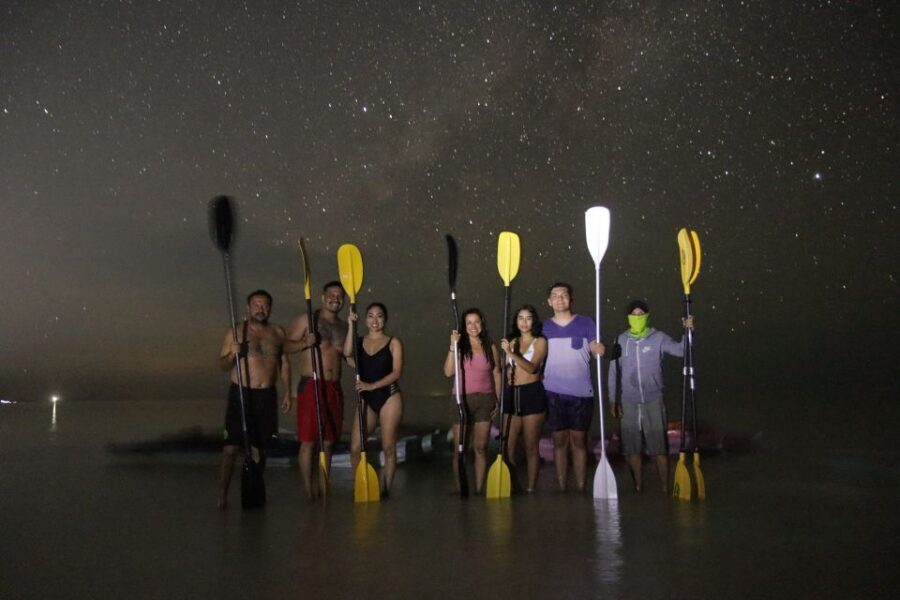
Daytime Holbox is all bright heat and beach energy. Nighttime is the opposite. This tour uses that darkness on purpose so you can actually see stars and get the best chance of a strong bioluminescence reaction.
Kayaking is the sweet spot here. You’re close enough to the water to notice the glow, but you’re not stuck in a loud boat setting where everything feels rushed. The pacing stays relaxed—just enough movement to work your body, then time to look, learn, and swim when you reach the sandbanks.
Also, the experience is guided end-to-end. That matters at night, when it’s easy to feel lost. Your guide keeps you oriented, points out constellations, and explains why the ocean can look like it’s lit from within.
You can also read our reviews of more tours and experiences in Isla Holbox
Getting picked up in downtown Holbox and reaching the launch point
The tour starts with hotel pickup and drop-off in downtown Holbox. That’s a big value point because Holbox is easy to navigate on foot, but you don’t want to be juggling taxis after dark.
You’ll also spend a short bit of time traveling by golf cart, about ten minutes, to get to the launch area. In a place like this, that’s a practical way to keep the group together without a long transfer.
A small detail to plan around: the meeting reference point is the entrance area to Casa Las Tortugas. The tour notes that the hotel isn’t affiliated with the operator, but it’s used as a clear landmark. If you’re not getting direct pickup for some reason, that reference point will help.
Gear, rules, and what to bring for a good night
Before you paddle out, you’ll be set up with kayaking gear. This matters because nighttime movement is slower and steadier when the fit and safety setup are right.
Bring beachwear and a towel. Even if you think you’ll stay dry, nighttime water has a way of getting into everything. One practical tip: if your towel is mainly for after, keep it packed so it doesn’t become a wet weight during the paddle.
A few clear rules are part of the experience. No flashlight is allowed—this protects the night sky viewing and helps keep the plankton glow visible. No smoking, and alcoholic drinks aren’t allowed in the vehicle. If you’re the kind of person who relies on your phone flashlight, plan on leaving it off for the trip.
Also, keep your expectations realistic about comfort. This is active at night: paddling, then stepping into water to swim near the glowing plankton zone.
The paddle out: stars, shooting stars, and spotting planets
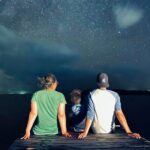
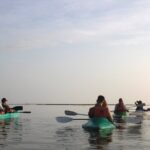
Once you’re on the water, your first job is simple: look up. The tour is designed so you can see the sky clearly in an area with very low light pollution. On a good night, that means constellations look crisp instead of washed out.
Your guide will point out constellations as you go along. You’ll also have a fun chance to spot your own zodiac constellation depending on the month you visit. That’s more than trivia. When you connect the stars to the calendar, the sky stops being random dots.
Your guide may also help you spot 3 to 5 planets, which is a nice upgrade from the usual only-big-dipper approach. Plan to be patient—planets are easy to miss if you’re rushing or checking your phone constantly.
And yes, you may see shooting stars. You won’t control that, of course, but the timing is right. Nights on Holbox feel still enough that your eyes settle, and your brain starts noticing tiny movements in the sky.
Constellation talk plus the ecosystem story behind bioluminescence
You’ll get more than star names. You’ll also get a guide-led explanation of the local ecosystem and what causes bioluminescence.
This is a key part of why the tour feels meaningful. When you understand that the glow is tied to plankton reacting to movement and conditions, it stops being a random magic trick. It becomes something you can influence with your actions in the water—especially during the swim portion.
The guide’s delivery can vary by language and personality. English-speaking guests are supported, and the guides work in Spanish, French, and English. Still, if you’re sensitive to missing details, go with the mindset that the star lecture is supplemental, not the whole reason to go.
If you want to maximize learning without stress, focus on the main cause-and-effect: motion helps trigger the light, and that light shows up most clearly when the plankton is active and the conditions cooperate.
The sandbanks swim: where the neon-blue magic happens
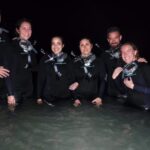
Here’s the big moment. You paddle to sandbanks, then you go for a dip. This is where bioluminescent plankton can glow neon-blue as it senses your movement.
This part is usually most impressive in the warmer months. The tour notes the bioluminescent effect is most prominent in spring and summer, and guides also suggest that rain can improve intensity. That doesn’t mean storms are required, but it does mean the ocean can light up more when the environment shifts in a way that supports plankton activity.
What the glow feels like is hard to capture on a screen. People describe it like your body outlines itself with light. That’s not just poetic language—it’s the visual pattern you get when moving through a lit zone. The moment you kick or wave your hands, the water responds.
In some outings, guides have also introduced extra wildlife moments—like a horseshoe crab—and guests have reported surprise sightings such as a sting ray appearing with blue light around it. Don’t bank on it every single time, but keep your eyes open. Night changes how you notice motion.
How long is it really, and how the pacing will feel
The tour runs about 1.5 hours total. That’s long enough to paddle, learn a bit about the sky and ecology, then enjoy the swim. It’s not so long that you feel drained or bored.
The rhythm typically goes like this:
- A short transfer to the launch area
- Kayak setup and safety orientation
- A guided paddle for stargazing and constellation points
- A sandbank stop, then a swim in the plankton zone
- Return back to the starting area and drop-off in downtown Holbox
Pacing is part of the value. At night, it’s easy to feel cold or restless if the group moves too slowly. Here, the timing stays structured enough that you always have something to do: paddle, look up, listen, then swim.
Price and value: is $44 a fair deal for Holbox at night?
At $44 per person, you’re paying for three things at once: guided nighttime stargazing, guided movement on the water, and a chance at seeing bioluminescent plankton up close.
Daytime Holbox tours can easily cost as much or more while offering just one “wow factor.” Here, you get multiple hits—stars overhead and glow under you—plus a swim that most land-based tours can’t replicate.
Food and drinks aren’t included, so plan on grabbing something before or after. If you come hungry, it can reduce your enjoyment when you’re waiting for the glowing-water moment. If you’re already hydrated and fed, $44 feels more like paying for access, timing, and a knowledgeable guide rather than just renting a kayak.
Bottom line: this is a strong value if you want a memorable night and you understand that the glow depends on conditions.
Who should book this kayak-and-stars tour
This tour fits best if you like nature plus a little hands-on action. You’ll enjoy it if you’re comfortable being in water at night and you can handle a short swim during a guided stop.
It’s also a great choice for couples and solo travelers. A few people have booked solo and still got included confidently in how the kayaking is handled. If you’re worried about doing it alone, your guide-led setup usually helps you feel less awkward.
If you’re traveling with teens or older kids, this can be a fun active night. The kayak experience and the glowing-water surprise tend to work well for families who like “real activities,” not only sightseeing.
One caution: the information you have says it’s wheelchair accessible, but it also lists the tour as not suitable for wheelchair users. In practice, nighttime kayaking and getting into the water are the bigger barriers. If accessibility is a priority, you should ask the operator directly what support they can provide for your specific needs.
Practical tips for the best bioluminescence and star viewing
A few simple moves can make the difference between seeing a light show and just hoping for one.
- Wear swim clothes you don’t mind getting wet. If you have to change or wrestle with dry clothes after, you’ll lose time and comfort.
- Keep the phone use light. The glow is real, but it’s also easy to over-document. The screen can pull you out of the moment.
- Don’t bring a flashlight, and plan to trust the darkness. Dark adaptation helps both stars and glow visibility.
- If rain is on the forecast, don’t panic. The tour notes rain can improve bioluminescence intensity.
- Choose your month wisely. The effect is most prominent in spring and summer, so your odds rise if you’re traveling then.
If you’re hoping to maximize wildlife chances (like the horseshoe crab sightings people have described), stay calm and quiet during the water moment. Sudden noise and fast movements aren’t the goal. The ocean lights up from interaction, but you still want to watch as much as you trigger.
Should you book this tour on Holbox?
I’d book this tour if you want a true nighttime nature experience. The combination of stargazing and glowing bioluminescent plankton is rare, and the kayaking format keeps you close to both the sky and the water.
I wouldn’t book it if you’re only chasing certainty. The glow can be stronger in spring and summer, and conditions can affect intensity. You should go for the whole night—sky, calm water, guide talk, and the swim—not only for a guarantee of maximum blue light.
If you’re flexible, curious, and ready to get a little wet, this is the kind of Holbox activity that turns into a “do you remember when…” story.
FAQ
How long is the Holbox stars and bioluminescent marine life kayaking tour?
The duration is about 1.5 hours.
Is hotel pickup and drop-off included?
Yes. The tour includes pick-up and drop-off in downtown Holbox.
What languages are the guides?
The guide language options include Spanish, French, and English.
What should I bring?
Bring beachwear and a towel.
Is a flashlight allowed during the tour?
No. Flashlights are not allowed.
Is food or drinks included?
No. Food and drinks are not included.
Is this tour wheelchair accessible?
The information says the tour is listed as wheelchair accessible, but it also notes it is not suitable for wheelchair users. If mobility is a concern, you should check with the operator before booking.