REVIEW · HOLBOX
Holbox: Bioluminescence by Kayak and Stargazing.
Book on GetYourGuide →Operated by Eco Adventure Holbox · Bookable on GetYourGuide
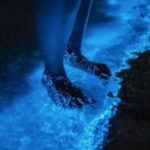
Night on Holbox feels like another planet. This bioluminescence kayak experience takes you out on calm water, paddling by starlight and then letting you walk, swim, and watch glowing plankton react to your every move. I especially love the moment you step onto the sandbank and your footprints start showing up in blue-green dots, like the sea is keeping a secret. I also love how the guides time it to get you away from light pollution, so the night sky and the glow both look clean. The one drawback to consider is that this is a natural phenomenon, so the intensity can be great or merely good depending on season and ocean conditions, and there’s no food included at this price point.
Getting there and moving through the night is also well organized. You’ll get picked up from your Holbox hotel (about 15 minutes before your scheduled time), then ride in an all-terrain vehicle/golf cart style transfer to the last hotel area in the zone (Las Nubes), where you get kayak instructions before heading out. Depending on the group and vehicle setup, some rides may involve a trailer section, which can be fine for some people but not everyone.
In This Review
- Key things I’d plan around
- Holbox at night: why kayak + stargazing works
- Pickup, golf carts, and getting to Las Nubes
- Paddling out toward the Punta Mosquito sandbanks
- How bioluminescence looks when you step on the sand
- Swimming: millions of microorganisms reacting to you
- The night sky: how stargazing fits in
- Price and logistics: is $49 worth it?
- What to bring (and what not to forget)
- Who should think twice before booking
- Practical tips to get your best glow
- Should you book Holbox bioluminescence by kayak and stargazing?
- FAQ
- How long is the Holbox bioluminescence kayak and stargazing tour?
- Where do I get picked up?
- Do you kayak all the way to Punta Mosquito?
- When is bioluminescence usually strongest?
- What colors will I see in the glowing water?
- What should I bring and what is not allowed?
Key things I’d plan around
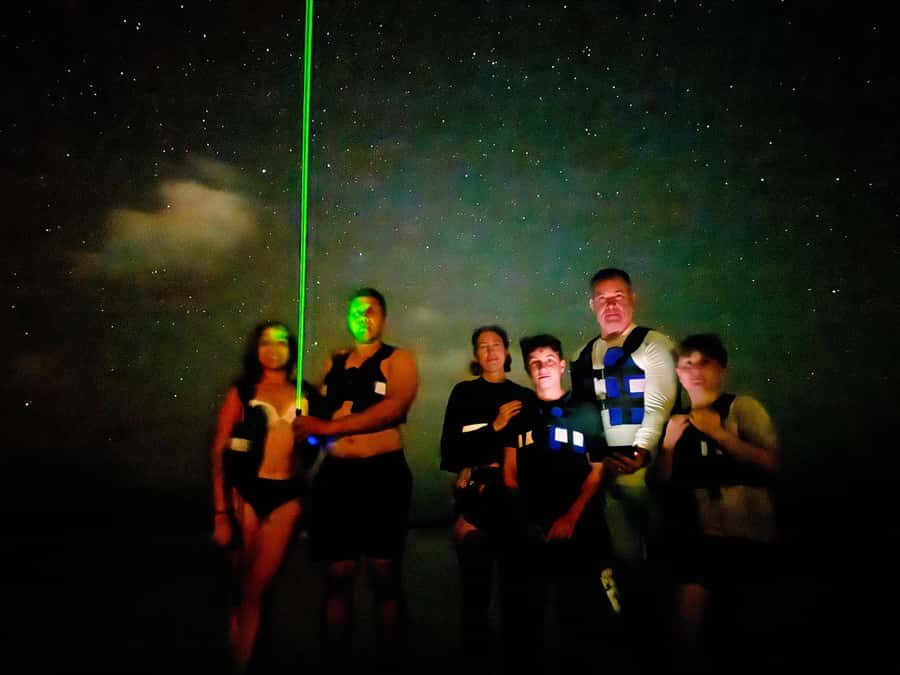
- Punta Mosquito sandbanks only: you’ll paddle to the famous area’s glowing sand, but not to Punta Mosquito itself, since access is prohibited.
- Season affects the glow: normally May to September is strongest (about 70% to 100% intensity).
- You’ll do three glow moments: sandbank footprints, then a walk into the water, then a swim where your body lights up.
- Colors aren’t guaranteed: green, white, or blue can show up, and you don’t get to pick.
- Stargazing is part of the plan: guides look for spots far from light pollution if the sky cooperates.
- Bring mosquito repellent: it’s not included, and the tour asks for biodegradable repellent.
Holbox at night: why kayak + stargazing works
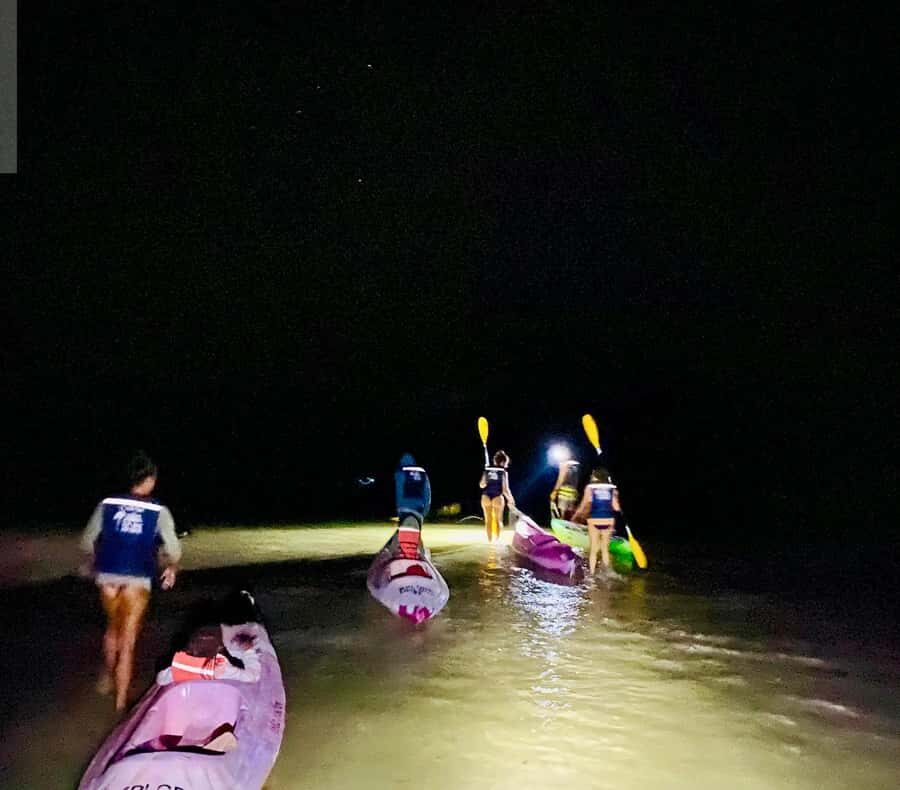
Holbox is famous for sea-and-sky nights, but this tour turns the usual stargazing routine into something you can feel. You’re not only looking up at the stars. You’re also watching the ocean respond to you in real time. That mix is what makes this feel more like an experience than a viewing session.
The setup matters. The water is calm, so you can focus on what’s happening rather than fighting waves or paddling hard. Then the guides intentionally move you away from light pollution within their navigation limits, which is a big deal on islands where streetlights and boats can wash out the sky. When conditions line up, it feels like you’re watching two glowing worlds at once: one above you and one below you.
You can also read our reviews of more tours and experiences in Holbox
Pickup, golf carts, and getting to Las Nubes
This tour is built around a simple flow: pickup, transfer, instructions, then the water.
You’ll be picked up from your hotel in Holbox around 15 minutes before the agreed time. If road conditions are tricky, the vehicle can arrive later, but the idea is to keep things moving quickly once you’re at the reception point outside the hotel. Also, taxis/vehicles don’t wait long (the limit is 5 minutes), so be ready and waiting.
Once you’re picked up, you’ll ride to the last hotel in the hotel zone area (Las Nubes). After that, you’ll switch to kayaks (single or double) and get instructions before you paddle out. One practical note: depending on vehicle configuration, you might ride in more than one section of the golf-cart style transfer. A recent UK reviewer noted that on a group ride for five, two people were in the trailer part of the cart. If you’re sensitive to that kind of seating, it’s worth asking about the exact vehicle setup when you confirm your time.
Paddling out toward the Punta Mosquito sandbanks
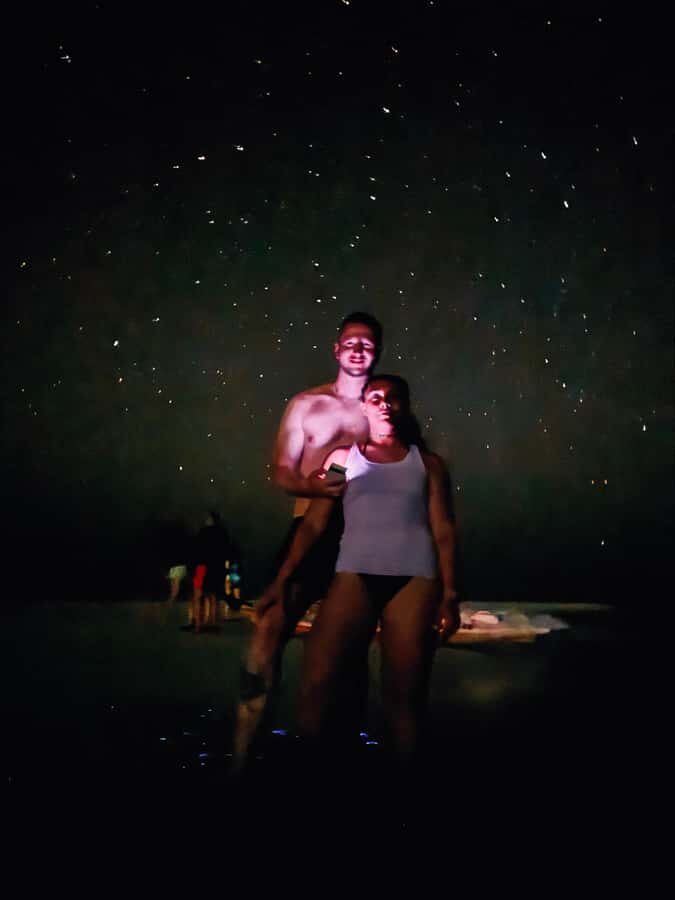
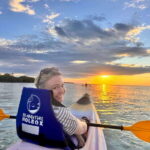
After instructions, you’ll paddle for about 15 to 20 minutes to the glowing area known as Punta Mosquito sandbanks. Here’s the key detail: you do not go to Punta Mosquito itself. The sandbanks are accessible, but Punta Mosquito is protected, and access is completely prohibited.
That choice is good for two reasons. First, it helps keep the environment stable in a place where many tours could otherwise cause chaos. Second, it keeps the route predictable. You’re heading to a spot the guides know has the right plankton conditions.
During this paddle out, you can often start seeing bioluminescence with every movement. The glow is usually most noticeable when you’re moving the water—paddling, brushing through the surface, or kicking up tiny ripples. If the night is right, the whole kayak ride can feel like you’re leaving a trail of light.
How bioluminescence looks when you step on the sand
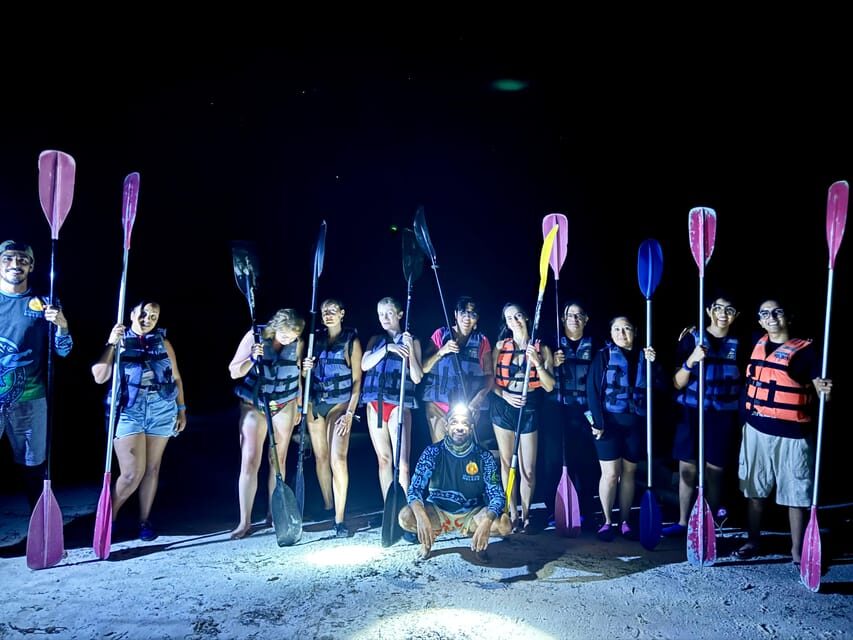
This is one of the tour’s strongest moments, and it’s why I’d put it near the top of your Holbox shortlist.
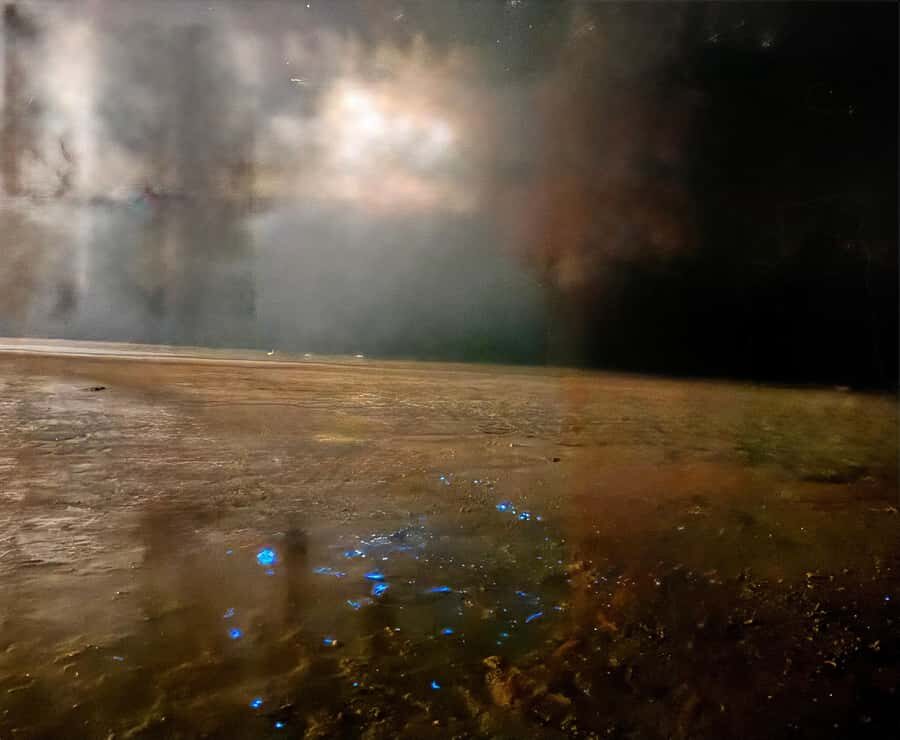
Once you reach the area with the highest concentration of plankton, the process starts with something simple: you get out of the kayaks and walk onto the sandbanks. It’s not just “the sand is glowing.” You’ll see your own footprints light up with blue-green dots. That cause-and-effect is the magic trick. Instead of passively watching, you’re creating the glow with each step.
Then the guides walk you further into the sea to a reasonable depth for swimming. The depth matters because it lets you see how bioluminescent microorganisms react to movement without requiring anything extreme. You also want enough water coverage to make the effect obvious, but not so much that you’re struggling.
Swimming: millions of microorganisms reacting to you
When you swim, the tour shifts from “wow, look” to “wait, that’s my body lighting up.”
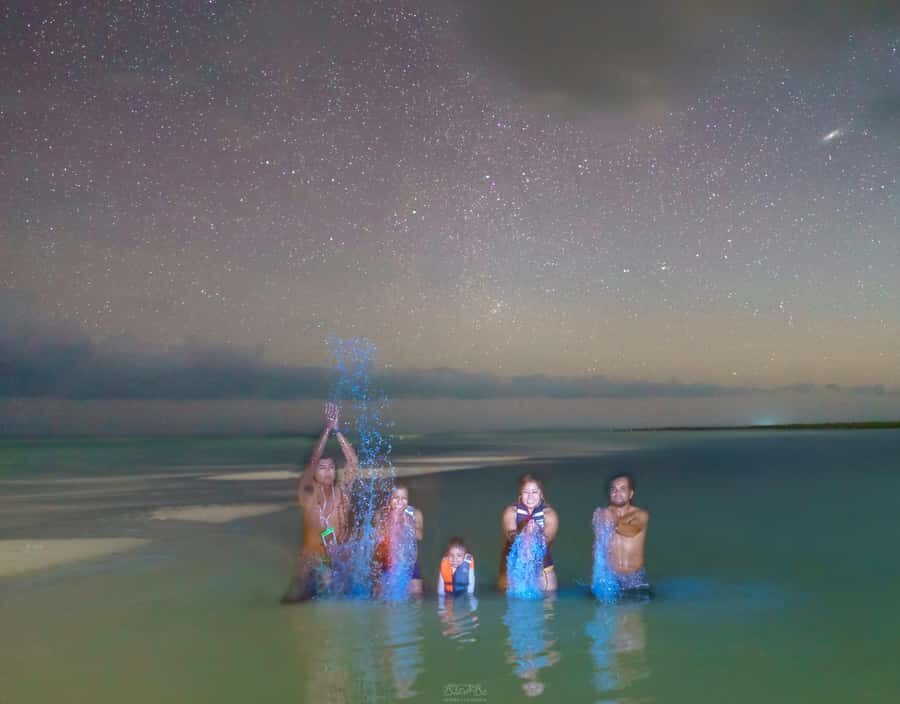
With each movement, you can see your body glow as millions of bioluminescent microorganisms light up in response. The tour also mentions three possible colors—green, white, or blue—and the color is unpredictable. That unpredictability is part of the charm, but it also means you shouldn’t expect one guaranteed palette.
What you can control is your comfort. You’ll be in swimwear, so bring the right gear: a towel, a change of clothes, and water shoes. Light footwear helps you handle sand and shallow rocky bits without turning the swim into a foot-scramble.
Also: this isn’t a party vibe. You’re not allowed intoxication, alcohol, or drugs. Flash photography is also prohibited. Those rules aren’t just for safety or vibes—they help protect the conditions needed for the glow and keep light from ruining the effect.
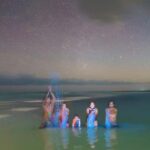
The night sky: how stargazing fits in
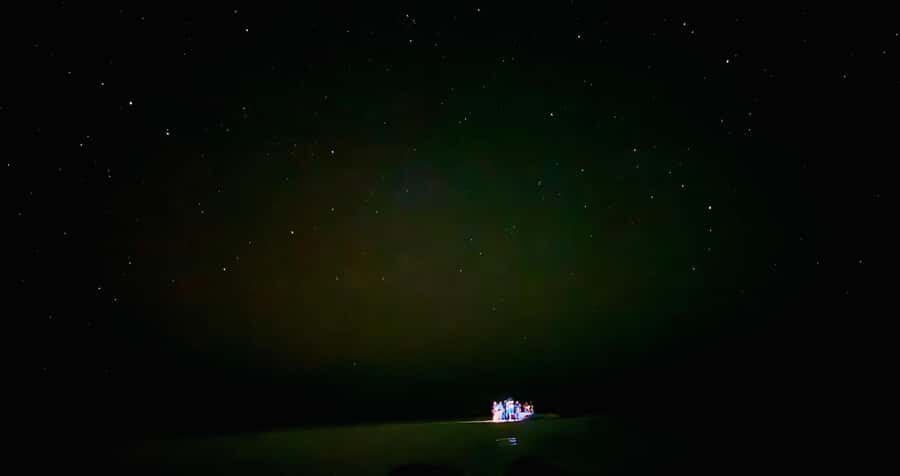
Even if you’re there mainly for the glowing water, the stargazing is a real bonus when the sky cooperates.
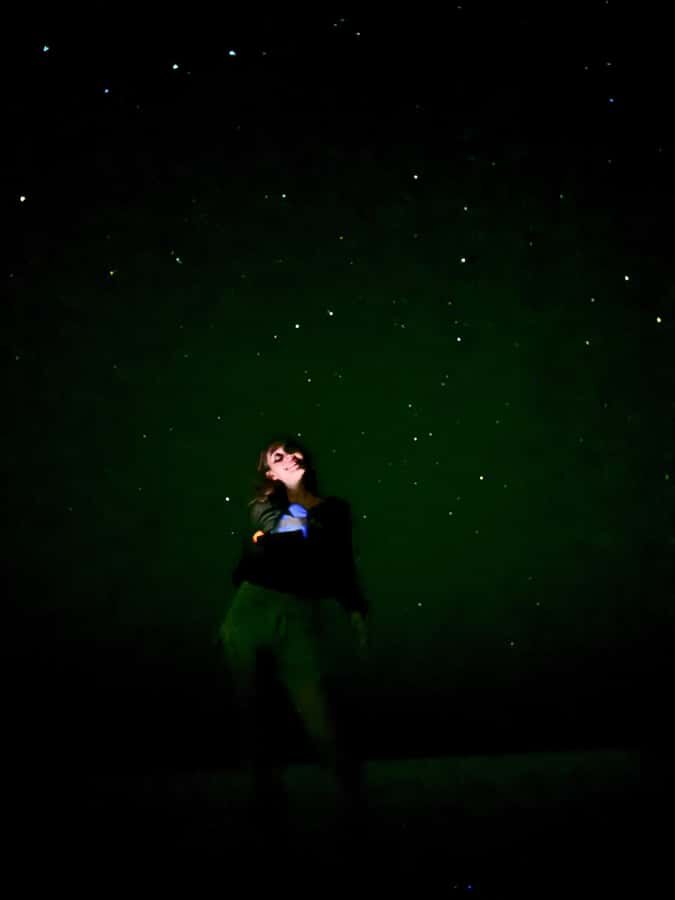
The guides look for a spot with low light pollution, respecting their navigation limits, and if the sky is clear, you get another spectacle: stars in the sky and stars in the water. You’ll notice the difference quickly. When you’re far from artificial light, the horizon gets darker and the stars look sharper. If there’s cloud cover or haze, you’ll still get the water effects, but the sky view might be less dramatic.
Seasons matter here too. The tour explains that the visibility/intensity of bioluminescence varies through the year: normally May to September can show at about 70% to 100% intensity, while other months can range roughly 30% to 80%, depending on plankton, water temperature, and currents.
So for your planning brain: if you’re traveling outside May to September, don’t cancel the idea—just adjust expectations. The show can still be excellent, it’s just less guaranteed.
Price and logistics: is $49 worth it?
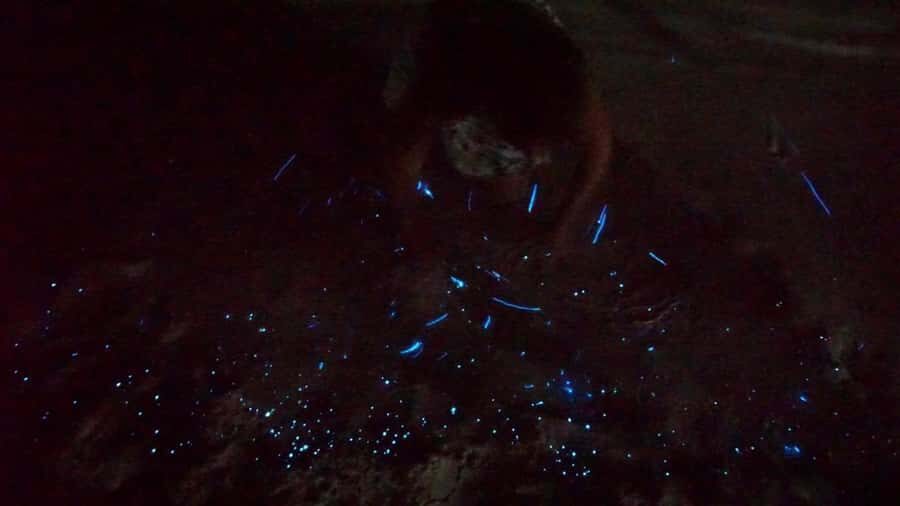
At $49 per person for a 2-hour experience, you’re paying for a very specific mix: nighttime transport, kayak gear and instructions, access to the right sandbank area (without going into the protected Punta Mosquito zone), and a guide team focused on low light pollution.
Here’s the balanced take. The tour cost is reasonable if you treat it as a night activity built around an environmental phenomenon. You’re not buying a meal or a full-day outing; you’re buying access to a short window where plankton glow and a dark-sky setting can line up.
A UK reviewer even flagged that the price felt a little high compared with longer tours that sometimes include food and drinks. That’s a fair comparison. If you’re the type who wants a full evening with snacks included, you may prefer a longer tour option.
If you mainly want the bioluminescence moment and you’re happy to bring your own post-tour plan, this price can feel fair—especially since the experience is guided and timed to the conditions that matter.
The overall rating shown for the experience is 4.6 (95 reviews), and the vibe from the guide side looks consistent, including praise for specific guide performance. One Mexico-based review singled out Victor as a great guide.
What to bring (and what not to forget)
This is a tour where small prep helps a lot. Bring the basics and you’ll enjoy the night more.
Bring:
- Swimwear
- Change of clothes
- Towel
- Insect repellent (and ideally biodegradable)
- Water shoes
- Any extra comfort item you’re allowed to take (but keep bags minimal)
Not allowed:
- Flash photography
- Drones
- Pets
- Luggage or large bags
- Alcohol/drugs, and intoxication
One thing I strongly suggest: don’t treat repellent as optional. Mosquitoes are an ongoing island reality, and the tour specifically calls for insect repellent and biodegradable repellent.
Who should think twice before booking
This tour isn’t for everyone physically. It’s marked as not suitable for children under 2, pregnant women, people with back problems, mobility impairments, wheelchair users, people with heart problems, people with epilepsy, people over 75, people with recent surgeries, and people over 70.
Even if none of those apply, think about your comfort level at night in the water. You’ll be in a kayak, then walking onto sandbanks and swimming at a reasonable depth. If you’re unsure, ask the operator what the activity level feels like on your date.
Also note: the tour aims for calm waters and a guided experience, but it still takes place outdoors at night, and nature is doing the work. Expect variability.
Practical tips to get your best glow
A few small moves can make a big difference:
- Time it right in your calendar: if you can choose dates, aim for May to September for the strongest bioluminescence odds.
- Arrive ready: be prepared at your pickup spot before the vehicle arrives. The vehicle won’t wait long.
- Wear water shoes: it’s not about style. It’s about traction and comfort when you step on and off sand.
- Skip the flash and loud distractions: it helps your eyes adjust to the dark and keeps the glow visible.
- Keep expectations flexible: you might see more green, white, or blue depending on plankton conditions, water temperature, and currents.
Most importantly, try not to overthink it once you’re out there. When the guides stop at the best plankton spot, the effect is dramatic enough that you’ll forget about everything else.
Should you book Holbox bioluminescence by kayak and stargazing?
I’d book it if you want a night experience that’s active, sensory, and genuinely different from another beach evening. This is especially worth it when you’re traveling during peak bioluminescence months and you’re okay with the fact that nature controls the intensity.
Don’t book it if you’re worried about nighttime water activities, you’re sensitive to the ride setup, or you want a long tour with food and drinks included at this price level. Also pass if you’re in any of the listed medical or mobility categories.
If you fit the activity profile, the payoff is real: your footsteps light up, your movements glow, and the stars get a chance to show up without getting washed out by nearby lights. For Holbox, that’s a night you’ll remember long after the hotel lights come back on.
FAQ
How long is the Holbox bioluminescence kayak and stargazing tour?
The total duration is about 2 hours.
Where do I get picked up?
Pickup is from your Holbox hotel. The driver arrives about 15 minutes before the agreed time, and you meet at reception or outside where the vehicle can access.
Do you kayak all the way to Punta Mosquito?
No. You paddle to the Punta Mosquito sandbanks area, but Punta Mosquito itself is protected and access is prohibited.
When is bioluminescence usually strongest?
The tour notes that normally from May to September, visibility can be about 70% to 100% intensity. In other months, visibility can vary roughly 30% to 80% depending on conditions.
What colors will I see in the glowing water?
The tour says you may see green, white, or blue, and the color is unpredictable.
What should I bring and what is not allowed?
Bring swimwear, a change of clothes, a towel, insect repellent (biodegradable is requested), and water shoes. Flash photography, drones, pets, large bags/luggage, and alcohol or drugs are not allowed.