REVIEW · CANCUN
Two Dives and Class for Begginers Divers in Cancun
Book on Viator →Bookable on Viator
If your first time on air feels intimidating, this Cancún course helps a lot. I like the small group size (max 4) and how the team builds confidence step by step, with instructors like Aldo and Fabio keeping things clear and controlled. Full scuba equipment is included too, so you’re not stuck playing gear roulette before you even leave the shop.
One thing to take seriously: this isn’t for everyone. People with asthma, heart issues, high blood pressure, lung disorders, epilepsy, or recent surgeries should skip it, and if any of those apply you’ll need a doctor’s note.
In This Review
- What you actually do in 6 hours
- Key highlights worth knowing
- Entering the day at Scuba Total (and why logistics matter)
- The people behind the calm
- Theory and pool skills: where nervous turns into ready
- Equalizing, seasickness, and keeping your head clear
- Stop One: Museo Subacuatico de Arte (MUSA) without the surface-to-underwater shock
- What you might see
- Stop Two: Manchones Reef for coral and colorful fish
- A small-group advantage on the reef
- The price: what $165 covers, and what you still need to plan for
- Is it good value?
- Meeting point, timing, and what to pack (so the day stays fun)
- Weather reality on the coast
- Health checks and who this course fits best
- What can go wrong (and why that doesn’t automatically ruin your day)
- Should you book Two tank sessions and beginner class in Cancún?
- FAQ
- How long is the beginner course?
- Where do we meet?
- What’s included in the $165 price?
- What extra fees should I expect?
- Is hotel transportation included?
- Do I need to bring my own wetsuit?
- Who should not take this course?
- When is it safe to fly after?
What you actually do in 6 hours
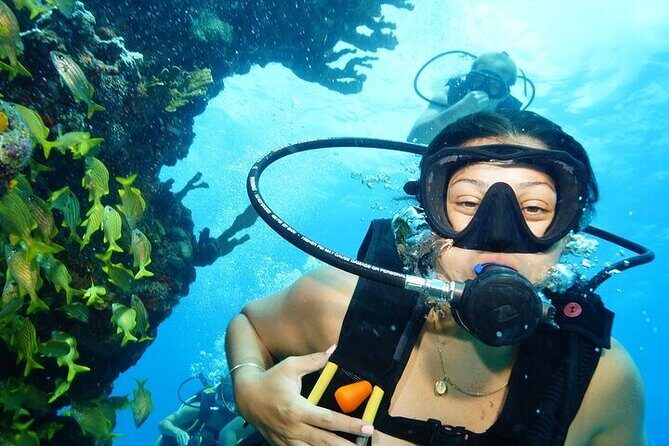
You start at 10:00 am at Scuba Total (Blvd. Kukulcan km 16.2, Zona Hotelera) and get a theory lesson, then practice in a pool before going out for two underwater sessions—one at Museo Subacuatico de Arte (MUSA) and one at Manchones Reef. Gaby handles communication and scheduling, and the day is designed to be hands-on without feeling chaotic. Budget for the $10 government fee per person, since it’s not included in the $165 price.
Key highlights worth knowing
- Max 4 people: you get more coaching and fewer awkward lines waiting for instruction
- Pool practice first: theory becomes muscle memory before the ocean
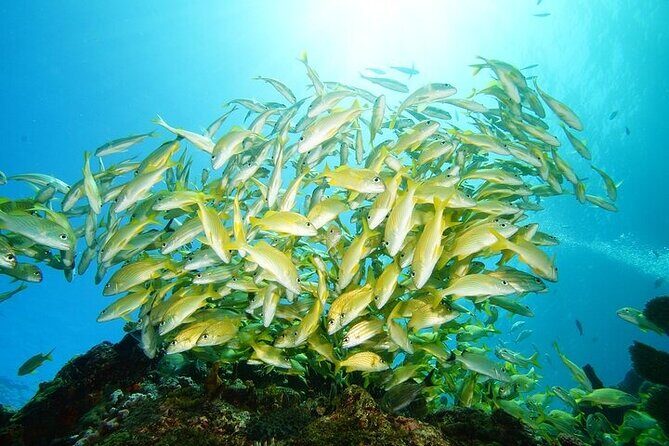
- MUSA + Manchones Reef: sculptures/art underwater, then coral and lots of marine life
- Equipment included: regulator, BCD, fins, mask, weights, and tanks are all handled for you
- Serious safety training: skills and safety drills are covered before you go below
- Plan your flight: wait 18–24 hours after your sessions before flying
You can also read our reviews of more tours and experiences in Cancun


Entering the day at Scuba Total (and why logistics matter)
This is the kind of beginner course where the schedule is your friend. You meet at Scuba Total on the hotel zone strip (near public transportation), and the start time is listed as 10:00 am. The tour runs about 6 hours, and you return to the same meeting point.
What I like here is that the day doesn’t ask you to solve problems. Equipment is provided, the instruction is structured, and the group size is capped at four. That means you’re less likely to get rushed, lost, or stuck waiting around while someone else gets fitted.
Also, the team communicates in English, and you get a confirmation at booking. Many visitors appreciate that because it reduces the “what happens next” stress—especially when you’re learning something new and your brain is already busy enough.
The people behind the calm
You’ll likely see several familiar staff members in the flow of the day. Gaby is mentioned for communication and getting plans lined up. Aldo and Fabio show up as instructors who stay patient and check in often. And on the day, it helps that staff members are described as warm and welcoming from the moment you arrive.
Theory and pool skills: where nervous turns into ready
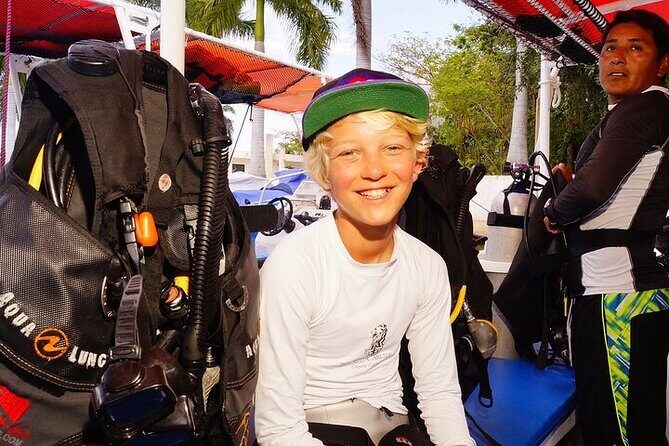
The course starts with a quick medical questionnaire to confirm you’re fit for the adventure. Then you’ll get a theory session that covers scuba basics and safety. It’s not presented as a trick exam—it’s more like the framework you need so the ocean doesn’t feel like a surprise quiz.
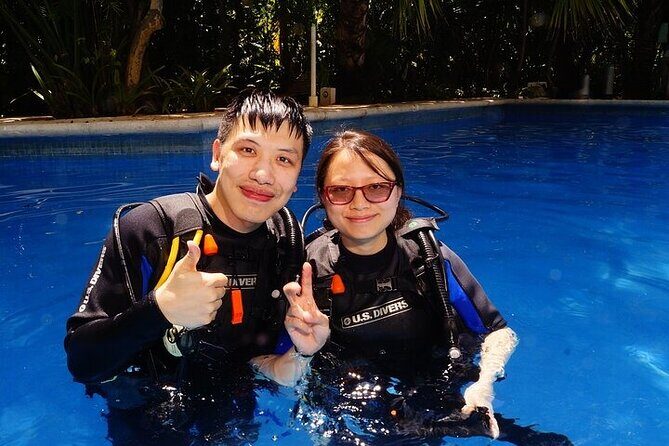
Next comes the pool. This is where beginners win or struggle, and this program clearly leans into pool time. Your instructor guides you through hands-on practice and makes sure you’re comfortable with the key skills before you move to open water.
I’d treat the pool as the main event. If you take those drills seriously—slow breathing, equalizing, control of your buoyancy—you’ll enjoy the outdoor part much more. If you rush through the pool because you’re eager, your confidence often lags behind.
Equalizing, seasickness, and keeping your head clear
If you’re prone to discomfort, you’ll be glad the instructors handle real-life issues with patience. One story shared how an instructor took extra time helping someone who had trouble equalizing at the surface and ensured a safe descent. Another account described how a student felt seasick between underwater sessions, and the instructor stepped in to get him calm and ready again for the second session.
That’s the big value for beginners: the team doesn’t treat problems like failures. They treat them like part of the learning curve.




Stop One: Museo Subacuatico de Arte (MUSA) without the surface-to-underwater shock
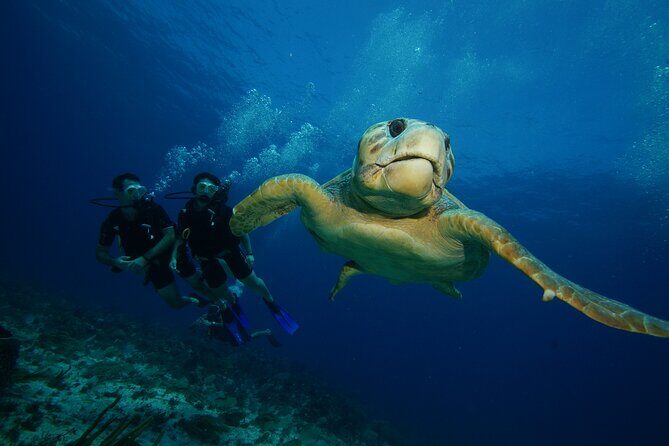
Your first outdoor underwater stop is Museo Subacuatico de Arte (MUSA). This site is famous for underwater sculptures—art and marine life sharing the same space. The appeal for beginners is practical: the sculptures give you things to look at besides just trying to stay calm.
MUSA also helps break the mental loop. Instead of focusing only on gear and breathing, you have natural visual anchors underwater. That can be a big deal when you’re still learning how everything feels.
What you might see
You should expect colorful surroundings and lots of attention-worthy details. Based on the experiences shared, people often end up seeing a good mix of marine life too—things like nurse shark and barracuda have been mentioned, along with a sleeping stingray. Of course, wildlife sightings aren’t guaranteed, but this kind of site tends to reward patient watching.
Stop Two: Manchones Reef for coral and colorful fish
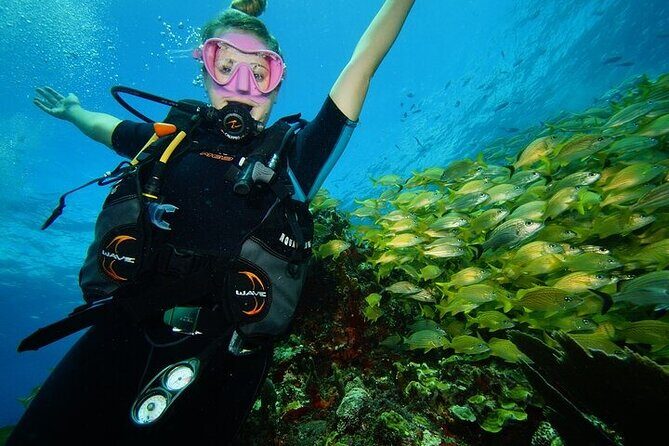
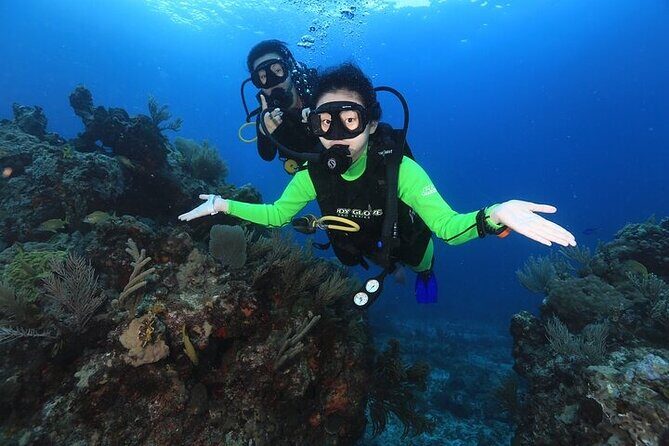
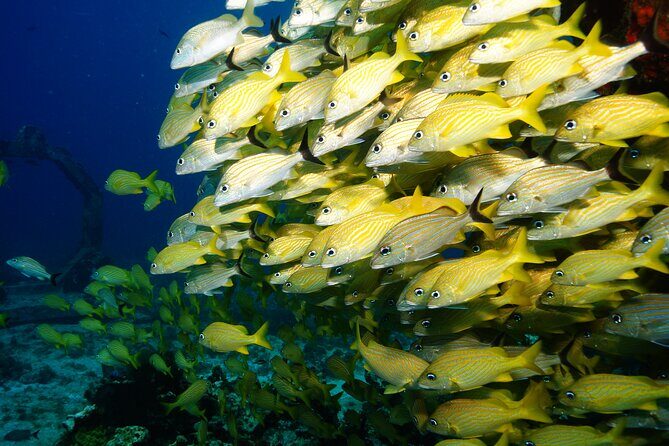
After MUSA, you head to the second outdoor stop: Manchones Reef. If MUSA is about art under the sea, Manchones is more about the living reef—corals and marine life you’d never notice from the surface.
This stop is great if you want variety in your day. You get a change of scenery: sculptures and then reef habitat. For beginners, that variety also helps you stay engaged, which reduces the temptation to panic when you’re thinking too much.
A small-group advantage on the reef
On a cap of 4 divers, it’s easier for the divemaster/instructor to keep eyes on everyone. That matters more on the reef, where you might want to look closely at small creatures and not feel like you’re being ignored. One highlight described instructors pointing out tiny hidden life, which is exactly the kind of detail that makes a two-tank day feel worth it.
The price: what $165 covers, and what you still need to plan for
The listed price is $165 per person and includes a lot of what typically adds up fast for beginners. You get:
- Full scuba equipment (regulator, BCD, fins, mask)
- Weights and tanks
- Pool class plus two tank sessions
- Cookies, bottled water, and hot tea in winter
There are also a couple add-ons and extras to note. Transportation from your hotel is optional, and a wetsuit is optional too. Photos and videos are also optional. And the government fee of $10 per person is not included, so plan for that on top of the base rate.
Is it good value?
For me, the value comes from the combination of gear + structured beginner coaching + two underwater sites. If you’ve ever had to rent gear, wrangle sizing, and then also chase instruction time, you’ll understand why this matters. Here, the equipment and the training flow are built together.
Meeting point, timing, and what to pack (so the day stays fun)
You start at 10:00 am at Scuba Total in the Zona Hotelera area, and the tour ends back at the meeting point. The day is designed to run smoothly, but you can still make it easier on yourself.
Bring:
- Swimsuit and a towel
- Personal care items
- Anything you normally need for comfort
If you’re prone to seasickness, the advice is to take anti-nausea meds 1–2 hours before boarding. That’s not the kind of tip you want to wait for once you’re already on the boat.
Weather reality on the coast
This activity needs good weather. If conditions are poor, you’ll be offered a different date or a full refund. It’s not a guarantee of sun and calm seas—but it is a guarantee the operator won’t send you out in unsafe conditions.
Health checks and who this course fits best
The course has clear health guidance. It’s not recommended for people with:
- asthma
- heart issues
- high blood pressure
- lung disorders
- epilepsy
- recent surgeries
If any of those apply, the program asks you to bring a doctor’s note so you don’t get shut down last minute.
It also lists a moderate physical fitness level. That doesn’t mean you need to be an athlete. It does mean you should be comfortable with basic water movement and following safety instructions calmly.
What can go wrong (and why that doesn’t automatically ruin your day)
No one wants bad surprises, but you can learn a lot from how staff handle them.
One story included a boat engine issue on the return trip, and the team got things sorted so they could get back. That kind of competence matters because beginners are the people most likely to feel anxious when anything changes. A well-run operation keeps the mood steady.
And throughout the day, instructors are described as doing constant check-ins and repeating basics until everyone understands. That’s a huge benefit if you’re nervous or if English isn’t your first language.
Should you book Two tank sessions and beginner class in Cancún?
Book it if:
- you want a beginner-focused course with theory + pool skills before ocean time
- you like a small group where you get attention
- you want a two-site day: MUSA for underwater art and Manchones Reef for coral life
Think twice if:
- your health history includes asthma, lung disorders, heart issues, high blood pressure, epilepsy, or recent surgery
- you’re uncomfortable with taking basic safety instructions seriously (this course rewards calm focus)
- you don’t want to plan your schedule for the 18–24 hour flight wait after your sessions
If you want a smooth first underwater experience in Cancún—without feeling like you’re being herded—this is a solid choice.
FAQ
How long is the beginner course?
It runs about 6 hours (approx.), starting at 10:00 am and ending back at the meeting point.
Where do we meet?
You meet at Scuba Total on Blvd. Kukulcan km 16,2, Zona Hotelera, 77500 Cancún, Q.R., Mexico.
What’s included in the $165 price?
Full scuba equipment (regulator, BCD, fins, mask), weights and tanks, pool class, and two tank sessions are included. Cookies, bottled water, and hot tea in winter are also included.
What extra fees should I expect?
A government fee of $10.00 per person is not included.
Is hotel transportation included?
Transportation from your hotel is not included, but it’s offered as an optional add-on.
Do I need to bring my own wetsuit?
A wetsuit is optional, and you can bring one if you prefer. The core scuba equipment is provided.
Who should not take this course?
It isn’t recommended for people with asthma, heart issues, high blood pressure, lung disorders, epilepsy, or recent surgeries. If any of those apply, the program notes that you should bring a doctor’s note.
When is it safe to fly after?
You should wait 18–24 hours after your underwater sessions before boarding a plane.