REVIEW · BACALAR
Tour of the Lagoon of Bacalar on pontoon -Collective-
Book on Viator →Operated by Bonzay Tour Bacalar · Bookable on Viator
Small boat. Big lagoon colors.
This 2.5-hour pontoon tour threads together Lagoon views, cenotes, and swim stops, with a guide who explains how Bacalar works at a real ecosystem level, including stromatolites. I especially like the mix of easy swimming spots (many are shallow) and the fact that you get included life jackets without feeling rushed. One possible drawback to plan for: even though the tour is offered in English, the guide may use more Spanish than you expect depending on the day.
What makes this one feel good is the pace. You’re not just holding onto a railing for photos. You stop often, learn as you go, and then actually cool off in the water. The group is capped at 10 travelers, so the experience stays personal, and the operator offers hotel pickup within Bacalar if you ask.
If you’re the type who likes to understand where you are—why the water looks the way it does, what that weird rock structure is—this tour clicks. You’ll see Bacalar from the lagoon, the cenotes from the pontoon, and the fort and pirate-era stories from the waterline too.
In This Review
- Key things I’d file away before you go
- Seven-Color Lagoon: why Bacalar looks different from the water
- Getting on board with Bonzay Tour: comfort, life vests, and timing
- The pontoon itinerary, stop by stop (and what each one is for)
- Stop 1: Lago Bacalar (Lake of the Seven Colors)
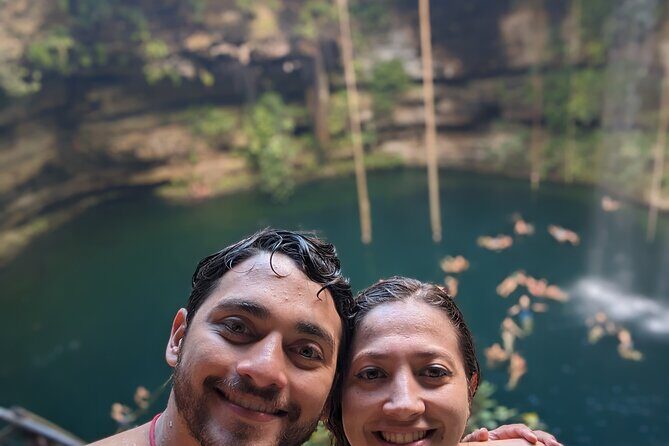
- Stop 2: Cenote Cocalitos
- Stop 3: Isla Pajaros
- Stop 4: Cenote de la Bruja
- Stop 5: Fuerte San Felipe Bacalar
- Stop 6: Canal de los Piratas
- Stop 7: Estromatolitos
- Guides and storytelling: Zayed, Tony Manrique, Gerardo, and Zayeb
- What’s included in the $26.88 price (and where extra costs show up)
- Swim reality: shallow coves, deeper options, and water comfort
- Price vs. value: when this tour makes sense
- Practical tips so your day runs smoother
- Who should book this lagoon pontoon tour (and who should consider alternatives)
- Should you book this Bacalar pontoon tour?
- FAQ
- How long is the Lagoon of Bacalar pontoon tour?
- What’s included in the price?
- Is hotel pickup available?
- Where does the tour start and end?
- Is the tour in English?
- Is there an extra cost for using the restroom?
Key things I’d file away before you go
- Small group (max 10): more questions, less waiting around.
- Multiple swim chances: shallow water at some spots, deeper at others if you want it.
- Stromatolites lesson: the tour teaches why these formations matter worldwide.
- Plus water and fruit snacks: bottled water and seasonal fruit are included.
- Optional pickup in Bacalar: you can avoid the scramble to reach the pontoon meeting area.
Seven-Color Lagoon: why Bacalar looks different from the water
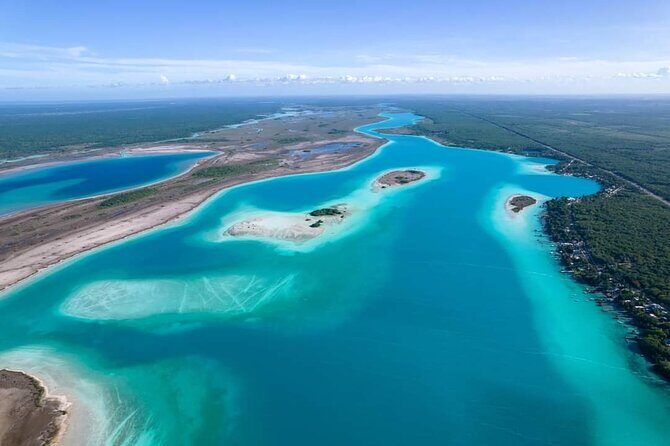
Bacalar’s Lagoon is known for its color shifts, and that’s exactly why a pontoon works better than a quick photo stop from shore. From the water, you can see how the lagoon changes tone as you move, and you’ll spend time at spots where the water looks like layered glass.
The tour focuses on the things that create that experience. You start with the Lago Bacalar itself, then you move through cenote areas and low, calm access points where swimming is practical. You also get a couple of “look closely” moments where the guide talks about the biology and geology of Bacalar, not just the pretty view.
You can also read our reviews of more tours and experiences in Bacalar.

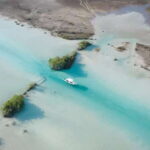

Getting on board with Bonzay Tour: comfort, life vests, and timing
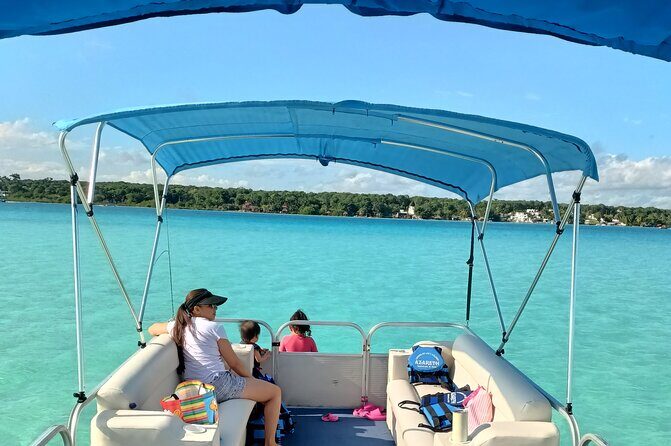
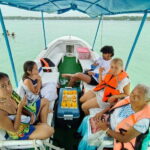
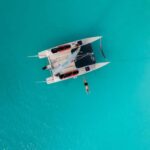
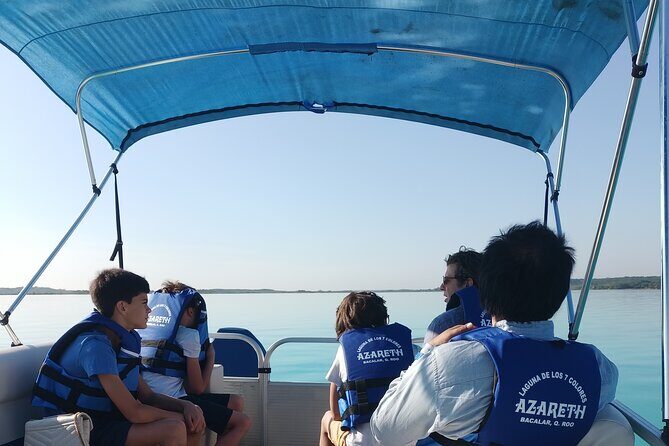
This is a pontoon-style boat outing, and you can expect a setup that’s made for lagoon time—easy seating, not a frantic speed-boat vibe. Life vests are included, which matters because you’ll be jumping in at multiple stops.
The itinerary is built around a simple rhythm:
- arrive and orient,
- learn for a few minutes,
- swim for longer,
- then move on.
In the reviews, people also noted that the pontoon can have a covered top, which is a real plus if the sun is doing its best impression of a hair dryer.
Group size is small (up to 10), so if you’re worried about being lost in a crowd, you’ll usually feel more like part of the group than a spectator.
The pontoon itinerary, stop by stop (and what each one is for)
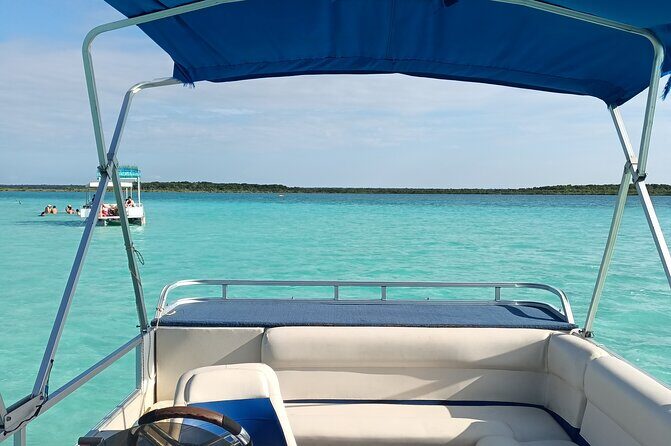
Here’s what the 2 hours 30 minutes looks like in real time, with the practical meaning behind each stop.
Stop 1: Lago Bacalar (Lake of the Seven Colors)
You begin at Lago Bacalar itself, the natural waterhole that feeds the lagoon. The stop is short—around 10 minutes—so think of it as your “now look at this” moment. The guide uses it to set the stage for the color and the water source story.
Why it’s worth it: this is where the lagoon stops being a postcard and starts being a system.
Stop 2: Cenote Cocalitos
Next is Cenote Cocalitos, where you’ll learn about stromatolites—what they are and why they’re important to protect. Another short stop at about 10 minutes, but the lesson is the point.
What to expect: a quick education break that pays off later, because you’ll hear the same theme return at the end.


Stop 3: Isla Pajaros
After that, you’ll travel for about 30 minutes to reach Isla Pajaros. Once there, you get roughly 40 minutes on-site. This is an area that’s ideal for swimming because it’s not deep, and if conditions are right, you may spot birds nesting on the island.
How to use this time: if you like calmer water and an easier entry, this is often the “float and enjoy” stop.
Stop 4: Cenote de la Bruja
Cenote de la Bruja is another brief stop (about 10 minutes). The draw here is the contrast—why a cenote feels different from a lagoon. The edges are described as spectacular, which usually means the view is about rock walls and water movement, not just open blue.
Consideration: since it’s short, don’t expect this to replace the longer swim spots later. Think of it as the dramatic geography chapter.
Stop 5: Fuerte San Felipe Bacalar
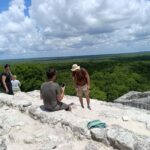
You’ll visit Fuerte San Felipe Bacalar with lagoon views. This fort was built to defend Bacalar against repeated attacks by English pirates who came looking for natural resources.
Why it matters: even if you’re not a history fan, it gives the lagoon a human timeline. It reminds you the water wasn’t just scenery—it was something people fought over.
Stop 6: Canal de los Piratas
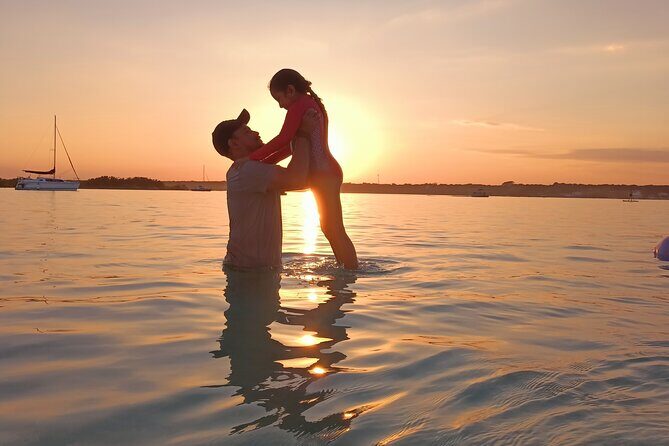
This is the big swim and photo stop, with about 1 hour here. The canal can go from shallow to deeper water depending on where you choose to swim. It’s also a great spot for pictures because of how the channel and lagoon colors line up.
Practical note: bring your comfort level, not just your camera. If you prefer shallow water, you can keep it simple. If you want to go deeper, you’ll have the option.
Stop 7: Estromatolitos
The last educational stop is about Estromatolitos (stromatolite formations). The guide ties it all together—what you saw earlier, why it matters, and why these formations need protection.
This is a good close to the day. By the time you reach the final lesson, the biology makes more sense because you’ve already been swimming and looking at the water conditions the whole way.
Guides and storytelling: Zayed, Tony Manrique, Gerardo, and Zayeb
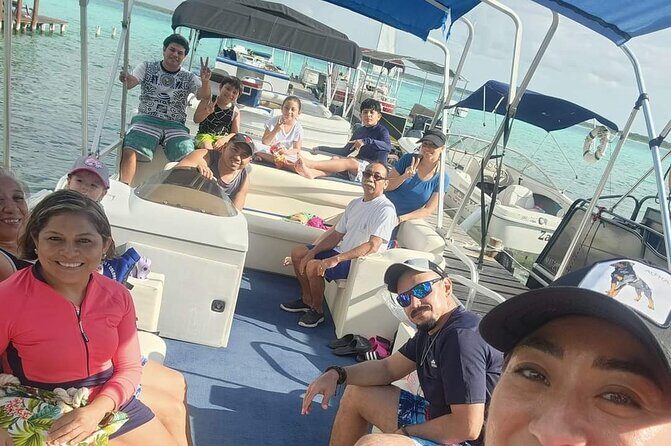
A lot of the value in this tour comes from the human part: clear explanations and a guide who cares about the lagoon’s ecosystem, not just the schedule.
I’ve seen praise tied to guides such as:
- Zayed, known for taking care of the group and explaining lagoon history and stops clearly.
- Tony Manrique, praised for being passionate and friendly, with clear explanations at each stop.
- Gerardo, noted for making sure people felt comfortable and for bilingual explanations.
- Zayeb, another variation of the same guide name showing up in feedback, also praised for fun and for good explanation.
Language can be the wild card. The tour is offered in English, and some guides speak very good English. At the same time, I’ve also seen cases where the experience leaned more Spanish than expected. My advice: if you know basic Spanish words for water and swimming, you’ll feel extra comfortable. If you don’t, just remember the main visual parts are easy to enjoy even if a few details go by fast.
What’s included in the $26.88 price (and where extra costs show up)
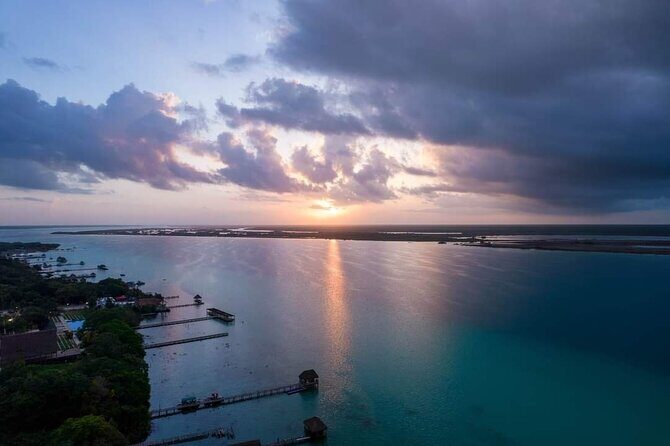
At $26.88 per person, you’re paying for a 2.5-hour lagoon circuit with a boat, included safety gear, and some refreshment. Here’s the included part:
- Lifevest
- Bottled water
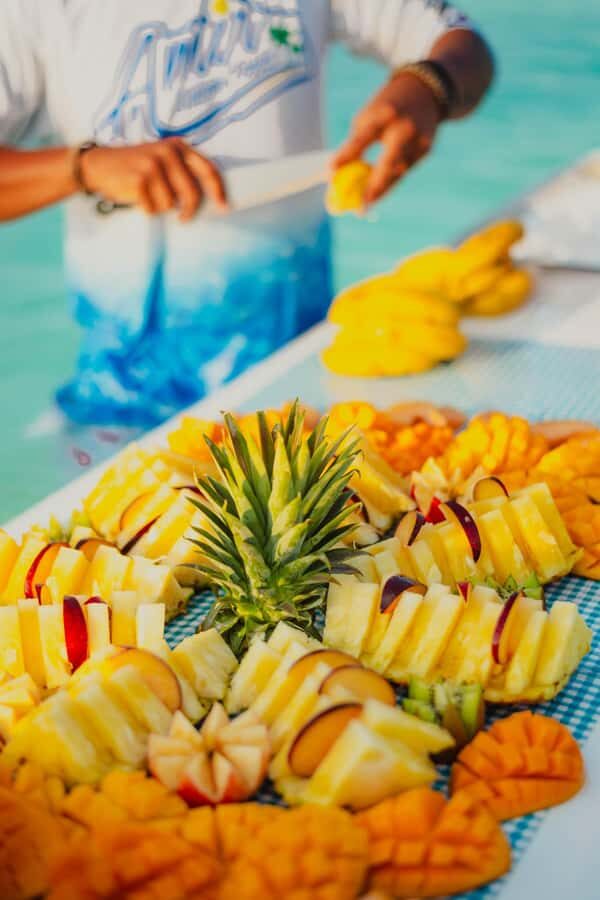
- Seasonal fruit snacks (minced fruit selection)
For a lagoon tour, that’s a solid baseline. You’re also getting multiple stops that combine sightseeing with actual water time, not just a drive-by.
What is not included:
- A sanitary fee of 10 pesos per person paid directly with the restaurant staff.
- Parking is not available unless you consume food from the restaurant.
So if you’re the type who likes to plan restroom breaks, just factor in that you may need to pay for facilities when the day requires it.
Also note a small rule that matters: the operator says do not use blockers. I’d treat that like a “follow the water protection request” instruction. If you’re bringing anything for skin that could be a blocker, ask what they mean so you don’t get stuck or have to change plans on the spot.
Swim reality: shallow coves, deeper options, and water comfort
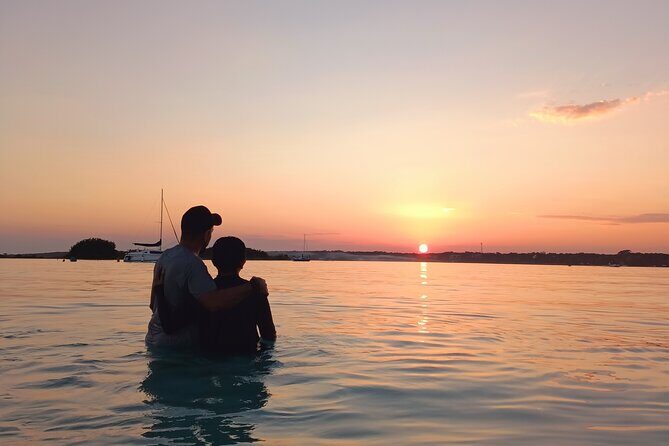
The itinerary isn’t one long, intimidating leap into deep water. It’s more like: swim where it’s easiest, then choose how brave you want to be.
- Isla Pajaros is described as not deep, which makes it friendlier for families and for anyone who doesn’t want to think too hard.
- Canal de los Piratas has shallow-to-deep options, so you can match the swim to your comfort.
If you like sitting in the water, you’ll probably enjoy these shallow-friendly stops because they give you a “stand or sit” option rather than a constant wade-in-a-wave situation.
And because life vests are provided, you can focus on the water and the views instead of wondering if you’re properly equipped.
Price vs. value: when this tour makes sense
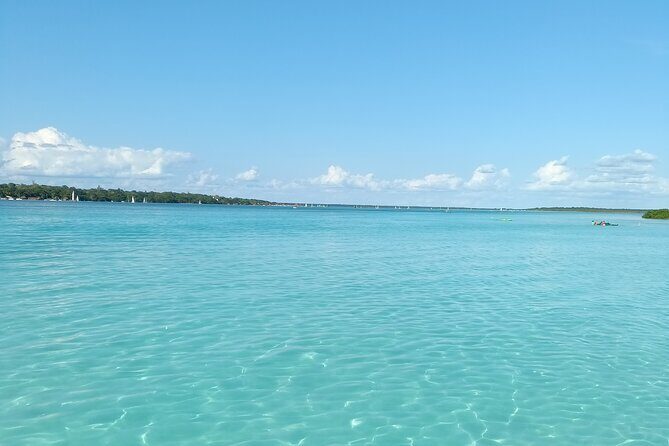
This tour makes the most sense if you want:
- a small-group lagoon experience,
- multiple swim moments,
- short, efficient education stops on ecology,
- and basic snacks and water without extra stops for food.
It’s also a good fit if you dislike long travel days and want a controlled, local outing. Bacalar is the kind of place where the lagoon itself is the main event, and this tour keeps the focus on that.
If you’re trying to compare it to other lagoon options, use a simple test: do you get safety gear and multiple swim stops without paying extra for the core experience? Here, the basics are included, and the schedule is built around real time on the water.
Practical tips so your day runs smoother
Here are the things I’d do before you arrive, based on how the tour is structured and how it’s been described:
- Plan for payment on restroom facilities: sanitary access can cost 10 pesos per person via restaurant staff.
- Aim to show up ready for water time: you’ll be swimming at more than one stop.
- Bring the right mindset, not just the camera: the best moments come when you pause and look. The guide’s explanations work best when you’re not sprinting between photo angles.
- Respect the no blockers instruction: follow what the staff asks for so you don’t cause problems for the water or for the tour.
- If you care about English: consider that the tour is offered in English, but some days lean Spanish. I’d still book it if you’re flexible and mainly want the lagoon experience.
Also, weather can affect the feel of any water tour. Even on days that aren’t perfect, the day still works because you’re not stuck with only one long outdoor segment—you get a tour rhythm that keeps you moving through stops.
Who should book this lagoon pontoon tour (and who should consider alternatives)
You’ll likely love this if you:
- want a guided lagoon and cenote day with a small group,
- enjoy swimming in calm, manageable spots,
- like learning why the lagoon and stromatolites matter,
- and appreciate a guide who explains things clearly (names like Zayed and Tony Manrique come up for a reason).
You might want to choose something else if:
- you need strictly English-only narration with no variation,
- you dislike any cenote-style geography stops (they’re short here, but still part of the plan),
- or you’re very sensitive to paying small extras for facilities.
Should you book this Bacalar pontoon tour?
My take: yes, if you want the lagoon experience without turning it into a chore list. The best reason to book is the combination of small group size, repeated chances to swim, and built-in comfort thanks to the included life vests and covered pontoon setup (when available).
The main thing to get clear before you go is language expectations. The tour is offered in English, and many guides do a great job. Still, plan for the possibility of more Spanish than you expect, and you’ll be fine.
If your priorities are simple—see Bacalar from the water, cool off in multiple spots, and learn a bit about stromatolites while you’re at it—this is a very reasonable way to spend your day on the lagoon.
FAQ
How long is the Lagoon of Bacalar pontoon tour?
It’s about 2 hours 30 minutes total.
What’s included in the price?
Life vests, bottled water, and seasonal fruit snacks are included.
Is hotel pickup available?
Pickup is offered if you request it, and it’s within Bacalar.
Where does the tour start and end?
It starts at El Pez de OroUno in Centro, Bacalar, and it ends back at the same meeting point.
Is the tour in English?
The experience is offered in English. Some explanations may still include Spanish depending on the guide and day.
Is there an extra cost for using the restroom?
Yes. Toilet use is an additional cost with the restaurant staff, and there is a sanitary generation fee of 10 pesos per person.