REVIEW · MERIDA
Self-Guided Audio Tour – Chichen Itza, the Greatness of the Mayas
Book on Viator →Operated by SOUNDWALKRS · Bookable on Viator
Chichén Itzá sounds like a story, not a checklist. This self-guided smartphone audio tour turns the UNESCO-listed ruins into a walking script, with offline maps and chapter-based audio you can play at your pace. The audio focuses on the Mayas’ world view, guided by Kukul Khan and the Popol Vuh, with extra audio-style touches like 3D sounds at key moments.
I especially like that you can explore without a fixed group schedule. You start where you need to start, listen in order, and keep moving when you feel like it. I also like the way the narration points your attention to specific parts of the site, including the Ball game area, so your visit feels more purposeful than just wandering.
One thing to plan for: this is not a guided service that provides gear. You’ll need your own smartphone and headsets, and you’ll still need to buy your Chichén Itzá admission ticket separately.
In This Review
- Key things you’ll notice on the audio tour
- Why Chichén Itzá works so well as a self-guided audio route
- Start at the Ball game area and get oriented quickly
- Kukul Khan and the Popol Vuh chapter: mythology with directions
- The Ball game audio moment: what to picture while you walk
- Historic landmarks and the performing arts theater stop
- Offline audio and maps: how to make the tech part painless
- Time on site: how a 1-hour tour actually feels
- What’s included, what isn’t, and what to bring
- Who this experience is best for
- The review takeaway: what people love most
- Should you book this Chichén Itzá audio tour?
Key things you’ll notice on the audio tour

- Kukul Khan as your guide: the narration uses the feathered serpent concept to frame what you see.
- Popol Vuh storytelling moments: audio helps you connect Mayan traditions to the places you walk past.
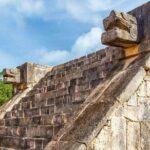
- Ball game focus: the route is built around imagining the importance of the ball game.
- Chapter-style pacing: you’re not rushed by a group timetable.
- Performing arts theater stop: audio calls out this area so you don’t just pass through.
- Offline-ready audio and maps: download ahead so the site stays accessible even with spotty signal.
Why Chichén Itzá works so well as a self-guided audio route
Chichén Itzá can feel overwhelming fast. There are ruins, angles, distances, and explanations floating around in ten different directions. This tour fixes that problem by giving you a single thread to follow. Instead of trying to read everything at once, you listen to the next chapter and let it guide where you look.
The experience is also built for flexibility. You’re choosing the pace, not the tour leader. That matters here because people often want a few extra minutes to catch views, photos, or just the general feel of the place. The audio approach lets you pause, slow down, and then jump back in.
I also like that the story isn’t only about big architecture. The narration connects the city to Mayan advances in different scientific fields and sports, and it frames the site through mythology—specifically Kukul Khan and the Popol Vuh. That makes your walk more than sightseeing. It becomes an interpretation you can carry with you as you move.
You can also read our reviews of more guided tours in Merida
Start at the Ball game area and get oriented quickly

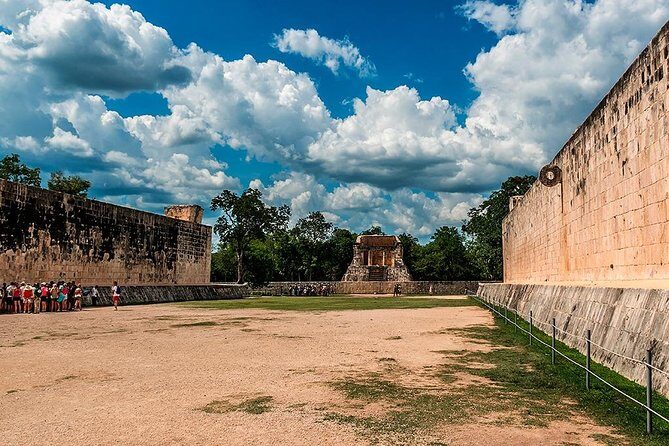
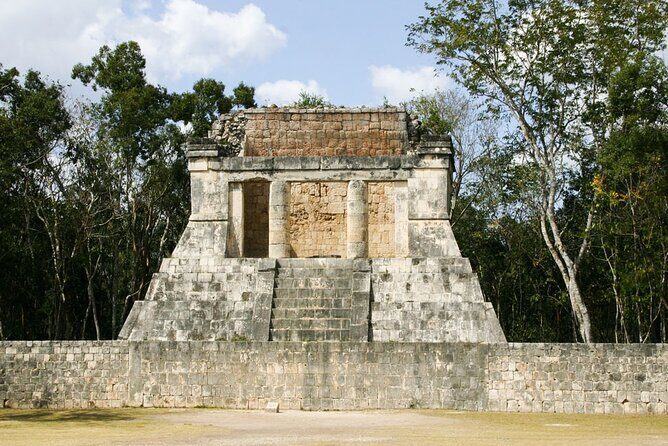
Your tour starts at Chichén Itzá, at the address listed for the site (97170 Mérida, Yuc., Mexico). The meeting point instruction is simple: stand in front of the Ball game in Chichén Itzá. From there, the audio chapters carry you forward.
That’s a smart choice. Ball courts are a natural anchor. If you start in the middle of the ruins, it’s easy to feel disoriented. Starting at a recognizable feature gives you a mental map immediately—like, okay, this is the center of the story.
You’re also not stuck waiting around. The tour is private, meaning only your group participates, and the experience is self-guided. So once you begin, you can move when you’re ready, instead of syncing your timing to a group’s pace.
Kukul Khan and the Popol Vuh chapter: mythology with directions
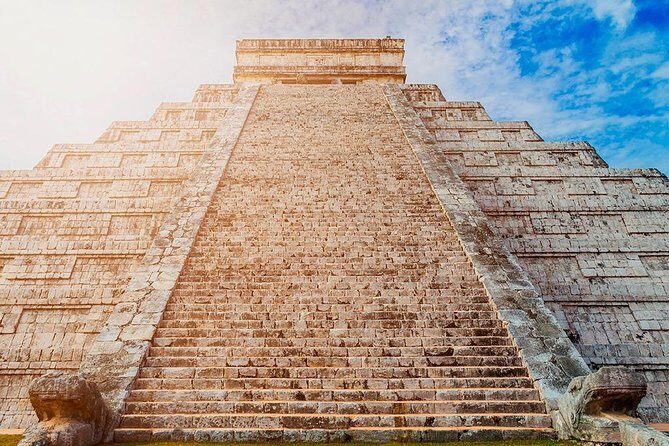
The first stop is the storytelling engine. The audio introduces Chichén Itzá as one of the 7 modern wonders, famous for its ruins. It describes the place as an ancient Mayan city that shows the greatness of Mayan civilization, including advances in different scientific fields and sports. Then it brings in Kukul Khan as your guide.
In the audio, you hear the Popol Vuh narrated by Kukul Khan. The purpose isn’t academic trivia. It’s to give you a lens for what you’re looking at while you’re still at the site. The narration asks you to imagine you’ve stepped into an alternative magical universe—so your attention shifts from what the stones look like to what the story says they meant.
There’s also a sound-design element. The tour mentions feeling the vibration and energy of the place, and using 3D sounds to fuel your imagination during the self-guided journey. Practically, that means you should keep your volume at a level where you can hear details clearly while still hearing yourself think. If your phone speaker is low, it can make the 3D effects feel subtle instead of impactful.
The Ball game audio moment: what to picture while you walk
The next stop is all about sports—specifically, the importance of the Ball game for the Mayas. This is where the tour becomes less about overall city mythology and more about focused meaning tied to a specific feature.
The audio tells you to follow the voice and imagine what it was like in those times. That’s the key instruction. You’re not just learning that a ball game existed. You’re encouraged to mentally model how central it may have been, and how the ritual and cultural weight could have shaped how people experienced this space.
A practical tip: when that chapter starts, slow down your walking. Don’t treat it like a background podcast. Look around during the narration. Even if you can’t grasp every detail of what the Mayas used the space for, you’ll at least connect the story to the physical place you’re standing in.
This chapter is also a nice breather. After the first “big picture” mythology segment, it narrows your attention. That helps a one-hour visit feel complete instead of scattered.
Historic landmarks and the performing arts theater stop
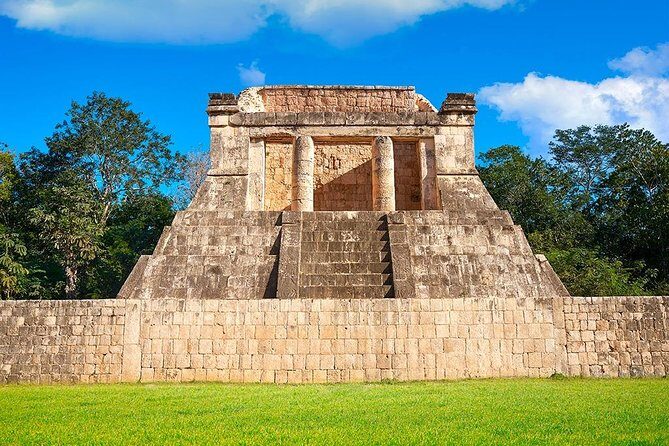
After the Ball game focus, you move through additional chapters at what the audio calls historic landmarks, plus one stop at a performing arts theater.
The challenge with Chichén Itzá is that many ruins can blur together if you only see them visually. The tour counters that by telling you, in audio form, to treat each stop as a distinct moment. Even when the description stays general, it still helps you avoid that common problem of walking through a site with no clear reason to stop.
For the performing arts theater portion, the value is in attention. The audio makes you pause and look deliberately instead of drifting past it. You’re given a structured reason to be there, and that’s what turns a quick pass into a meaningful stop.
What I’d keep in mind: because the tour chapters describe stops in broad terms (historic landmark, then another landmark), you might want to bring your own curiosity. If you like learning through questions—What function might this have had? How would people use this space?—the audio will give you enough narrative fuel to keep your mind working.
You can also read our reviews of more tours and experiences in Merida
Offline audio and maps: how to make the tech part painless

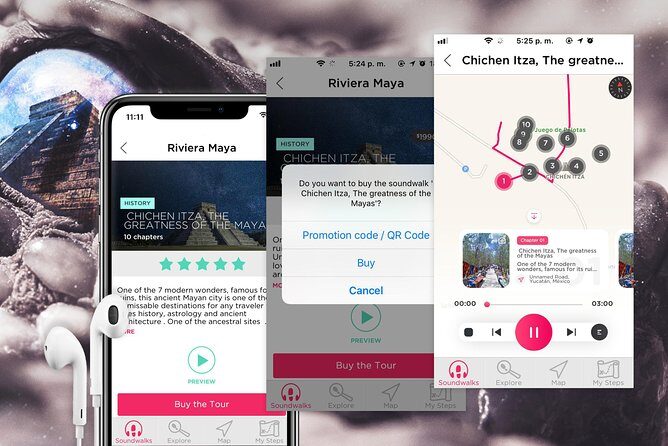
One of the best parts of this setup is that it’s designed for offline use. The tour includes all chapters that can be used offline, plus maps and tips. That’s a big deal at ruins sites where cell service can be unreliable.
Before you start, download what you need while you still have a stable connection. Then test audio volume and headset compatibility. The tour does not include a smartphone or headsets, so you’ll want your own setup ready before you arrive. If your phone battery is low, bring a charger or power bank—this kind of tour is only “easy” if your device stays alive.
The map component is especially helpful because this experience is self-guided. Even if you can see the ruins clearly, you still benefit from knowing which chapter comes next and where you’re supposed to position yourself during the story.
And that 3D sound mention? Treat it like an invitation to use headphones. If you listen only through a noisy phone speaker, you may miss a portion of what the audio is trying to do.
Time on site: how a 1-hour tour actually feels

The duration is listed as about 1 hour. That length is ideal for Chichén Itzá for two reasons. First, it reduces decision fatigue. You don’t have to figure out whether you’ll spend two hours or four hours before you even arrive. Second, a one-hour narrative helps you leave with a sense of closure, not just a memory of stones.
In practice, you’ll get the most out of the hour if you don’t rush between stops. Instead, use a simple rhythm: listen to the chapter, look around, then move to the next stop. The audio-driven pacing is meant to support walking—not to trap you in place.
If you’re the kind of visitor who likes to photograph often, plan to run a little slow at the start and then “catch up” later. The tour’s biggest strength is the sequence of story beats: Kukul Khan and Popol Vuh, then the Ball game focus, then historic landmark stops, and finally the performing arts theater. Don’t skip the listening time.
What’s included, what isn’t, and what to bring
Included:
- All chapters available for offline use
- Maps and tips to explore Riviera Maya selected spots
Not included:
- Snacks
- Smartphone and headsets
- Admission Ticket
So, bring a plan for the basics. You’ll want:
- Your own phone (with enough battery)
- Headsets (so you can hear narration and 3D audio details)
- Your admission ticket to enter Chichén Itzá
- Water and a snack if you’ll be there longer than the audio tour
This matters because the tour is designed around your devices and your entry into the site. If you arrive without headsets, the audio might still play, but it’s much harder to enjoy the story as intended.
Who this experience is best for
This self-guided audio tour is a good match if you want Chichén Itzá to feel like a story. The narration leans hard into mythology, and the Kukul Khan + Popol Vuh framing is the heart of it. If you enjoy learning through narrative, you’ll likely find it more satisfying than a purely visual walk.
It’s also a great fit for pacing flexibility. Families, solo travelers, and couples can each control their own speed. The tour being private for your group helps too, because you’re not dealing with the stop-and-go rhythm of strangers.
Also, the experience states that most travelers can participate, and service animals are allowed. It’s listed as near public transportation, which can matter if you’re not driving.
The main mismatch is for people who want a live guide explaining everything in real time. This is not that. You’re following audio chapters, so you’ll want to be comfortable learning by listening.
The review takeaway: what people love most
The most praised aspect is the mythology and storytelling approach. One five-star review highlighted how the mythology was told in a wonderful manner while exploring the ruins, with strong enjoyment from feeling immersed in the story. That lines up with the structure of the audio itself: Kukul Khan as guide, Popol Vuh narration, and sound design meant to bring scenes to life as you move through the site.
Should you book this Chichén Itzá audio tour?
Yes—if you want Chichén Itzá to feel understandable and connected, not just impressive. The biggest value here is the guided narrative: Kukul Khan, the Popol Vuh framing, and a chapter sequence built around specific features like the Ball game and the performing arts theater. The offline maps also remove stress, which is a practical win.
Skip it if you prefer a live explanation and Q&A, or if you don’t want to rely on your phone and headsets. Also remember: you’ll still need to handle your admission ticket separately.
If you’re aiming for a one-hour visit that turns ruins into a story you can walk through, this is the kind of tour setup that makes the time feel worth it.