REVIEW · COZUMEL
Night Snorkeling – Observation of octopus and other species
Book on Viator →Bookable on Viator
Cozumel turns magical after dark. This night snorkeling experience is built around watching octopus and squid hunt at night, and your job is simple: observe, don’t touch. I love that the water is kept shallow and controlled (max 2.5 meters), and I love that you get experience videos plus on-the-spot filming during the swim. One real consideration: it depends on good weather, so storms can cancel the outing.
You’ll walk from the shore, then spend about an hour in the water swimming constantly in a small, protected zone—no bigger than two basketball courts. I also like the small scale (a maximum of 4 travelers), which means you get clearer coaching instead of getting lost in the crowd.
If you’re nervous about swimming, that’s normal. The guide will explain how to move even if you can’t swim, and you can ask for a life jacket if you want one. The only catch is that this is still an active, night-water experience, so a moderate fitness level helps.
In This Review
- Key highlights worth knowing before you go
- Night snorkeling in Cozumel: what you’re really seeing after dark
- Money Bar Beach Club at 7:30 pm: the start that keeps things simple
- Walking into the water: the shallow setup and real safety vibe
- The 1-hour swim: team movement, camouflage, and underwater communication
- Who you might spot: octopus, squid, rays, eels, and night hunters
- Flashlights, diving lamps, and how to make the most of your view
- The included video: why it’s better than you think
- Price and value: is $77.67 worth it?
- Who should book this night snorkel (and who might rethink it)
- Should you book night snorkeling in Cozumel?
- FAQ
- What time does the night snorkeling start?
- How long is the tour?
- Where do I meet for the tour?
- What’s included in the $77.67 price?
- Do I get a life jacket?
- Is there a limit on group size?
- How deep is the water?
- What happens if weather is bad?
- Is there free cancellation?
Key highlights worth knowing before you go
- Shallow by design: maximum depth is listed at 2.5 meters
- Light is part of the plan: each person gets a flashlight, plus diving lamps
- Tiny group: capped at 4 travelers for hands-on help
- Your movement matters: you’ll follow team instructions since octopuses rely on camouflage
- Wildlife variety is the point: octopus and squid, plus rays, eels, puffer fish, lobsters, and more
- Video is included: experience videos are part of the package, with the guide filming throughout
Night snorkeling in Cozumel: what you’re really seeing after dark
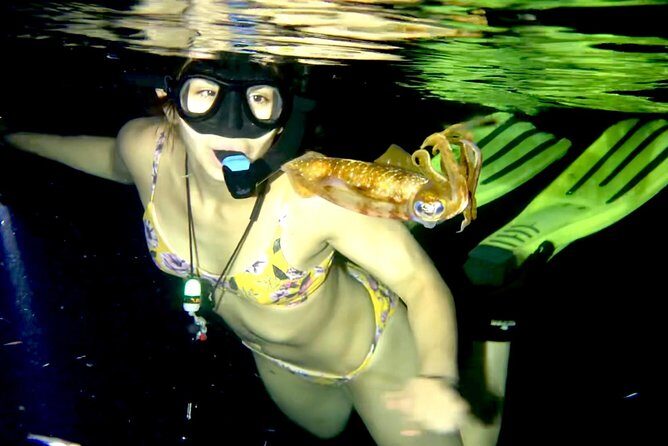
Day snorkeling in Cozumel is all about bright water and quick glimpses. Night snorkeling is different in a way that’s hard to explain until you’re there. At night, the sea feels like it’s running its own schedule. Predators come out. Scavengers move. Tiny fish change how they behave. And if you’re lucky, you get the real stars of the show—octopus and squid.
This tour is specifically framed as observation-only. That matters. You’re not going for a hands-on encounter. You’re watching nocturnal animals hunt, change positions, and react to the water around them. The guide keeps you at a safe distance and reminds everyone not to encourage direct contact with any of the species.
One of the best surprises of night water is how “busy” it can feel even when the action looks slow. Flashlights reveal shapes you’d miss in daylight—like a ray’s outline gliding by, or the way an eel seems to decide to appear right when you start paying attention.
You can also read our reviews of more evening experiences in Cozumel
Money Bar Beach Club at 7:30 pm: the start that keeps things simple
The tour meets at Money Bar Beach Club (Carr. Costera Sur Km 6.5, Zona Hotelera Nte., Cozumel). Start time is 7:30 pm, and the activity ends back at the meeting point.
Because the group is small, the start tends to feel organized and calm. You’ll be getting gear use taken care of on-site—snorkeling equipment is included—then you’ll prepare for the walk from shore to where you’ll be in the water. This isn’t a long, complicated transfer day. That’s good value, because you spend your time actually doing the experience.
Also, it’s offered in English and you’ll get a mobile ticket. If you’re arriving from the hotel zone, it’s helpful to confirm exactly where to meet when it’s dark (the address is clear, but landmarks can look different at night).
Walking into the water: the shallow setup and real safety vibe
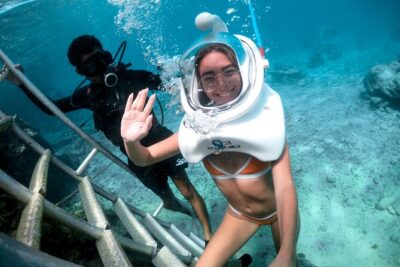
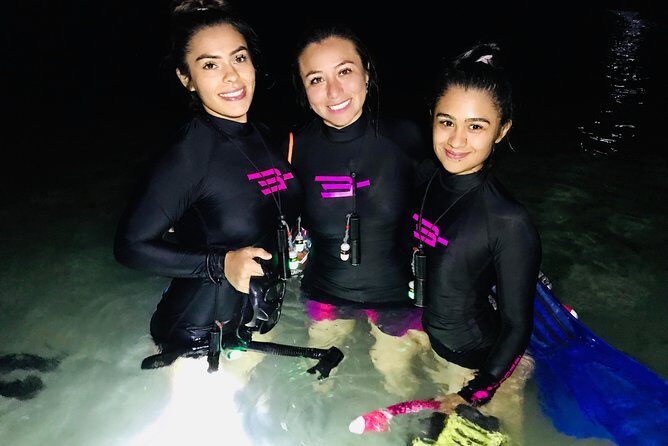
Right away, the tour focuses on the kind of safety that makes night snorkeling feel doable. You’ll move from shore into the water together. The snorkeling area stays limited—listed as no bigger than two basketball courts—so you’re not scattered across the reef.
Depth is also managed. The tour notes a maximum depth of 2.5 meters, which is one of the big reasons people come away feeling confident. You’re not planning a deep-water session. You’re planning a night observation session where the guide can keep eyes on everyone.
You also get tools that help you both see and follow instructions:
- Each person has a flashlight
- There are diving lamps in use during the activity
- The guide is ready with a camera for videos throughout
And yes: if you think you need a life jacket, the tour says they can provide one. That’s not just a “nice option.” It’s the difference between feeling tense all night and actually enjoying it.
The 1-hour swim: team movement, camouflage, and underwater communication
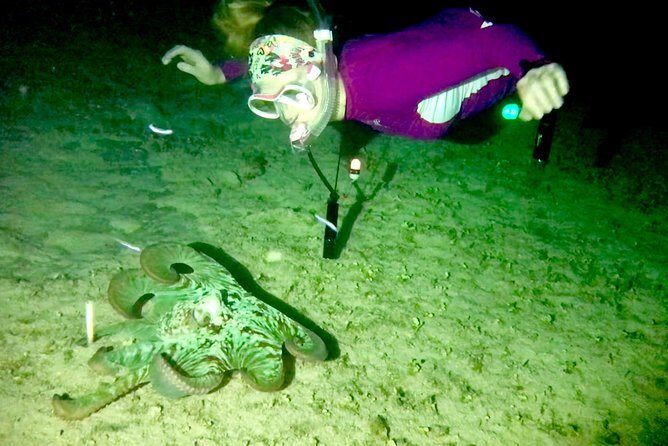
Expect about 1 hour in the water, and the wording is honest: you’ll be swimming constantly. This isn’t a sit-and-stare drift where you barely move. The idea is that you stay together and sweep through the small observation zone so you can spot nocturnal activity as it shifts.
Here’s the trick: octopuses camouflage extremely well. You’re not just wearing a snorkel and floating. You’re working as a team, using the guide’s direction so you’re not accidentally turning away from the best viewing spots.
The guide will explain:
- How to move in the water
- How to handle it if you can’t swim
- How to communicate in the water
That last part is underrated. Night water adds confusion fast—when you can’t see faces clearly, a simple signal system makes everything smoother. Even if you’re an experienced snorkeler, night conditions change how you interpret distance and movement.
Also, the guide stresses you won’t encourage direct contact with animals. That’s part of making this feel respectful and safe. You’ll be close enough to observe behavior, but not close enough to disturb hunting, hiding, or shelter.
Who you might spot: octopus, squid, rays, eels, and night hunters
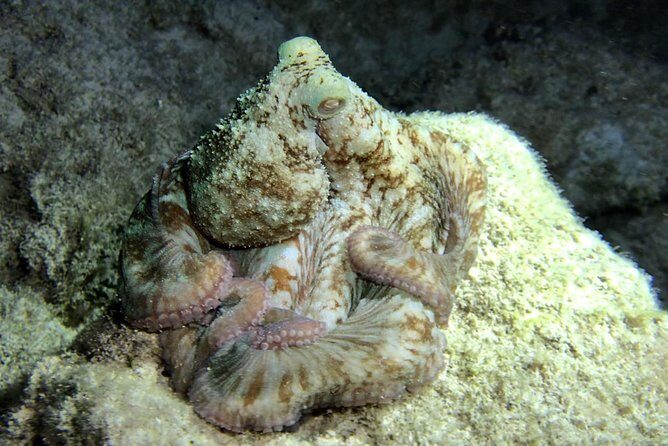
The headline is octopus and squid, and the tour is built around those nocturnal behaviors. At night, cephalopods can look unreal. In the dark, you often notice movement in “bursts”—a sudden change of shape, a shifting position, or a quick glide between cover and open space.
But the best night snorkeling sessions in Cozumel often become variety shows. People have reported seeing:
- Stingrays
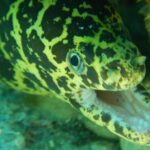
- Eels (including long eels and moray-type sightings)
- Puffer fish
- Lobsters and other crustaceans
- King crab–type activity and crabs
- Squid and other night fish
- Even bioluminescence effects (and glowing plankton-type moments)
One recurring theme is that the wildlife isn’t just one animal. It’s a mix of hunters and the smaller creatures that show up once the action starts.
A fun (and important) detail from one account: the operator promised an octopus sighting and offered a no-cost return if an octopus wasn’t seen. You shouldn’t assume that guarantee applies to every booking, but it’s worth asking before you go if octopus is your must-see.
You can also read our reviews of more snorkeling tours in Cozumel


Flashlights, diving lamps, and how to make the most of your view
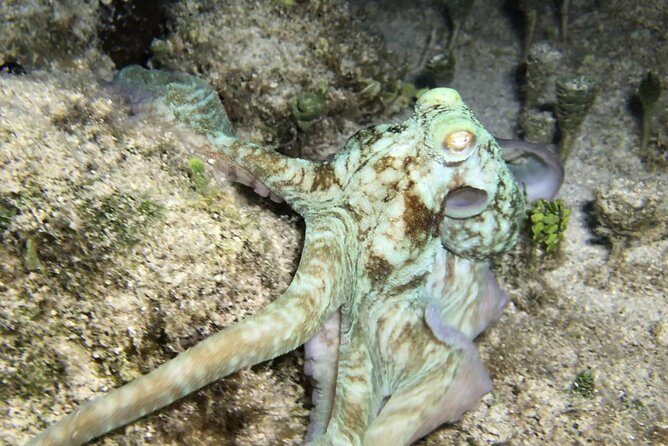
Night snorkeling is all about controlling your light. Your flashlight helps you see what’s near, but it also changes the scene. The guide’s instructions matter because you’re not just shining light randomly—you’re moving as a group in a small area.
If you want good viewing:
- Keep your light directed where the guide signals
- Move slowly and follow the team’s pace
- Don’t rush toward a shape you see—pause, then confirm with the guide’s direction
A lot of the magic comes from watching animals react to the underwater environment rather than “posing” for you. Bioluminescence moments are especially sensitive to how you move and how you manage light.
And remember: the tour’s goal is observation. If you’re going in expecting a selfie-with-an-octopus fantasy, you’ll miss the real point. The real win is seeing camouflage, hunting behavior, and the way nighttime turns the reef into a living system.
The included video: why it’s better than you think
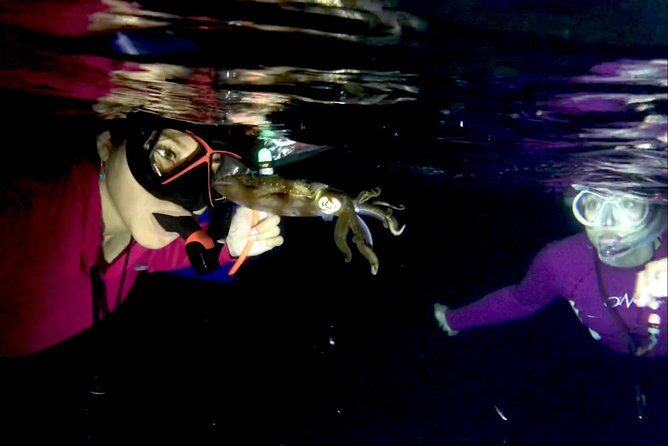
This tour includes experience videos. That’s not a throwaway add-on. Night snorkeling can be hard to remember clearly—your attention is divided between spotting animals, tracking distance, and following safety instructions in the dark. Having footage means you can rewatch the moments you didn’t fully catch the first time.
The tour details also mention the guide is ready with a camera at all times to take videos. And in multiple accounts, guides didn’t just film when it was convenient—they filmed when animals appeared, including during close-enough viewing.
There is one caution from a negative experience: one person felt videos/photos promised didn’t arrive as expected, and another had equipment fit issues. That doesn’t invalidate the tour—night water means small glitches can happen—but it does mean it’s smart to keep expectations realistic and confirm how video delivery works when you book.
Price and value: is $77.67 worth it?
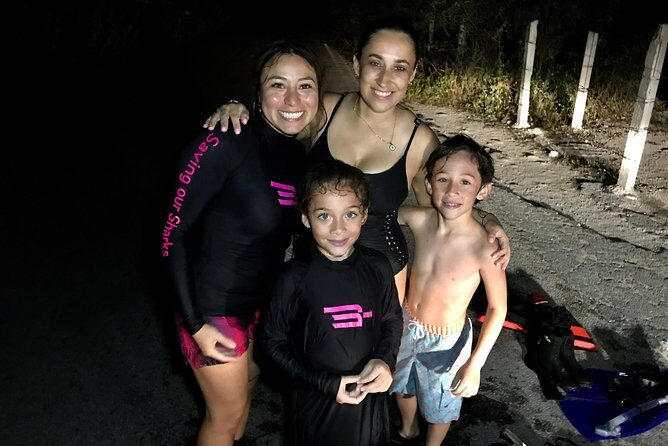
At $77.67 per person, this isn’t a bargain-basement snorkeling deal, but it also doesn’t look overpriced for what you get on paper. You’re paying for:
- Snorkeling equipment
- Diving lamps
- Experience videos
- A guided, controlled night observation session in shallow water
- A small-group setting (max 4)
The value gets stronger because night snorkeling is logistically harder than daytime. You’re not just renting gear—you’re relying on a guide to spot nocturnal activity safely, manage lighting, and keep everyone moving as a team.
What you should budget separately:
- Ferry to Cozumel
- Taxi to the meeting point
- Taxi back to your hotel
So the real cost is “tour price plus getting there.” If you already have easy transport and you’re traveling with a small group, the $77.67 starts to look like a very reasonable way to buy a genuinely different experience.
Who should book this night snorkel (and who might rethink it)
This is a great fit if you:
- Want something different from standard daytime reef snorkeling
- Are comfortable with night conditions and can follow guide instructions
- Prefer a small group with more attention
- Enjoy wildlife viewing more than “stunts” in the water
The tour notes moderate physical fitness. That makes sense. You’ll spend about an hour swimming constantly in dark water. Even with safety controls, you’re still moving.
You might reconsider if:
- You expect deep-water snorkeling or reef exploring over big distances
- You’re very uncomfortable in dark settings and don’t like water-based activity at all
- Your main goal is hands-on animal interaction (this is observation-only and the guide actively avoids encouraging contact)
Also keep in mind equipment can vary by fit. One negative account described a snorkel not staying secure. If you’re picky about gear fit, ask the guide to help check the fit before you enter the water.
Should you book night snorkeling in Cozumel?
I’d book it if you want a real night experience, not just “snorkeling but later.” The setup is built for safety and focus: shallow water, a tight observation zone, flashlights for everyone, and a guide actively filming your best moments. The small group size (up to 4) is a big deal for night sessions where communication and movement matter.
Skip it—or at least think carefully—if you hate active swimming for extended stretches, or if you’re relying on perfect conditions. Weather matters here. And since this is an observation trip, you’ll get the most satisfaction if you go in ready to watch hunting, camouflage, and nighttime behavior rather than expecting guaranteed, close encounters with every animal.
If octopus is your top priority, it’s worth asking about any octopus-sighting promise they may use in practice. Even without guarantees, the tour is clearly geared to deliver exactly that kind of night magic.
FAQ
What time does the night snorkeling start?
It starts at 7:30 pm at the Money Bar Beach Club.
How long is the tour?
It runs about 1 hour 30 minutes (approx.), including time from start to return.
Where do I meet for the tour?
Meet at Money Bar Beach Club, Carr. Costera Sur Km 6.5-Sur, Zona Hotelera Nte., 77675 Cozumel, Q.R., Mexico.
What’s included in the $77.67 price?
Snorkeling equipment, experience videos, and diving lamps are included.
Do I get a life jacket?
If you think you need one, the tour says a life jacket can be provided.
Is there a limit on group size?
Yes. The maximum is 4 travelers.
How deep is the water?
The maximum depth listed is 2.5 meters.
What happens if weather is bad?
The experience requires good weather. If it’s canceled due to poor weather, you’ll be offered a different date or a full refund.
Is there free cancellation?
Yes. You can cancel up to 24 hours in advance for a full refund. If you cancel less than 24 hours before the start time, there’s no refund.