REVIEW · MERIDA
Merida: Mexican Embroidery Workshop
Book on Viator →Operated by Get Routa · Bookable on Viator
Needlework in Merida can be surprisingly engaging. This 2-hour workshop at Casa Texoxe mixes hands-on stitching with clear talk about why embroidery matters—craft, identity, and keeping traditions alive. It’s small too, so you’re not stuck watching from the sidelines.
I especially like the way the lesson connects stitches to cultural meaning, not just technique. I also like how the class is taught patiently, with guidance that works for first-timers and lets you actually finish something you can keep.
One thing to watch: finding the studio can take extra effort if your maps app is off. Get the exact location details ahead of time and don’t wait until you’re standing in the wrong block.
In This Review
- Key highlights before you go
- How Merida’s embroidery workshop turns craft into culture
- Casa Texoxe in Centro: finding the right place fast
- The 2-hour flow: history first, then stitches, then take-home progress
- What you’ll learn through stitches (not just how to make them)
- Beginners welcome: pace, language, and how much help you get
- Supplies and comfort: what’s included, what’s missing, and what to plan for
- Price and value: is $56.72 a good deal for two hours?
- Who should book this embroidery workshop in Merida?
- Practical tips to get the best results with your stitches
- Should you book Merida: Mexican Embroidery Workshop?
- FAQ
- How long is the Merida Mexican Embroidery Workshop?
- How many people are in the class?
- Is the workshop offered in English?
- What is included in the price?
- Are snacks included?
- Where do I meet the workshop?
- Can beginners participate?
- Can I take my embroidery home?
- Are escorts or pets allowed?
Key highlights before you go
- Small group size (max 6) so you get real help while you stitch
- English-friendly instruction, plus an easy pace for beginners
- Materials and water included, so you can show up light
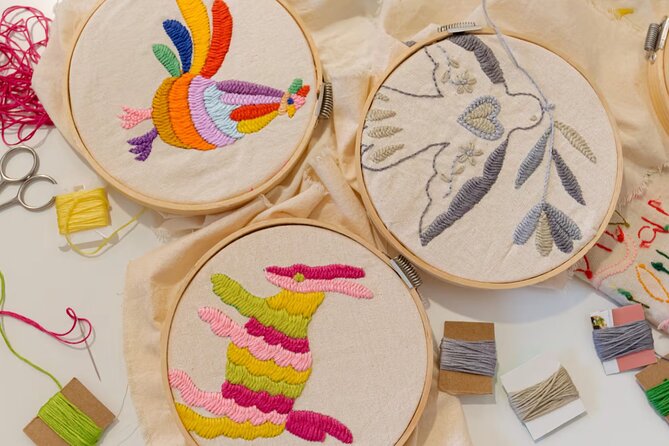
- Take-home embroidery plus extra designs to keep practicing
- Cultural context built in so your stitches mean something
How Merida’s embroidery workshop turns craft into culture
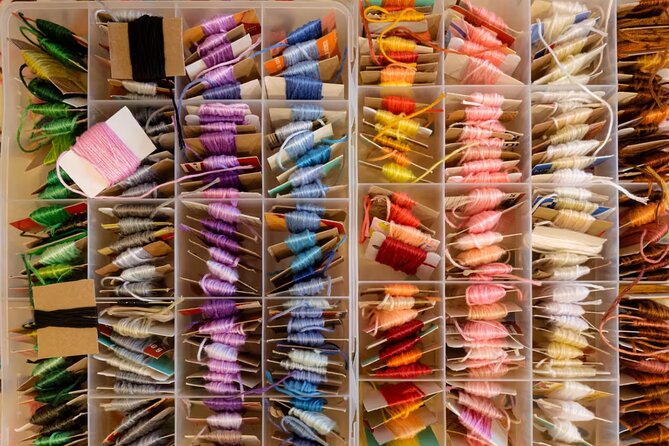
This is the kind of activity that slows you down in a good way. In about two hours, you move from basic understanding to making real progress with needle and thread. The focus isn’t just on the final piece—it’s on why embroidery exists in the first place.
You’ll start with conversation and introductions, then the instructor ties the specific embroidery style you’ll work on to its history and cultural importance. You also get the idea that craftsmanship isn’t a random hobby. It’s part of cultural identity, and people use art to preserve traditions across generations.
If you like learning while doing, this fits. If you like quiet, this fits too. People describe it as calming and relaxing, with an instructor who teaches patiently instead of rushing you.
You can also read our reviews of more tours and experiences in Merida.



Casa Texoxe in Centro: finding the right place fast
The workshop meets at Casa Texoxe in Centro, at C. 72 418 A, 97000 Mérida, Yuc., Mexico. The good news: it’s in an area with near public transportation, so you’re not locked into one type of ride.
The practical note is that location clarity matters. Some participants have run into trouble using map directions, even when the name “Casa Texoxe” is visible. My advice: treat the address as your anchor, and also use whatever exact spot details you receive after booking (message guidance helps a lot in a city where street numbering can be confusing).
Once you arrive, the studio setup is described as comfortable, and the class instruction is easy to follow. In other words: even if the first mile feels tricky, the session itself is smooth.
The 2-hour flow: history first, then stitches, then take-home progress
This workshop runs about two hours, and the structure is built so you never feel stuck with nothing to do.
Step 1: Meet and settle in
You’ll get to know the group first. That matters more than it sounds. Embroidery needs focus, and a calm start helps you relax into the rhythm.
Step 2: Short history and why preservation matters
Next comes the lesson on the embroidery style you’re working on—its origins, its cultural role, and how art helps keep traditions going. The workshop also talks about the relationship between craftsmanship and cultural identity. It’s the “why” behind the “how.”
Step 3: Materials in hand
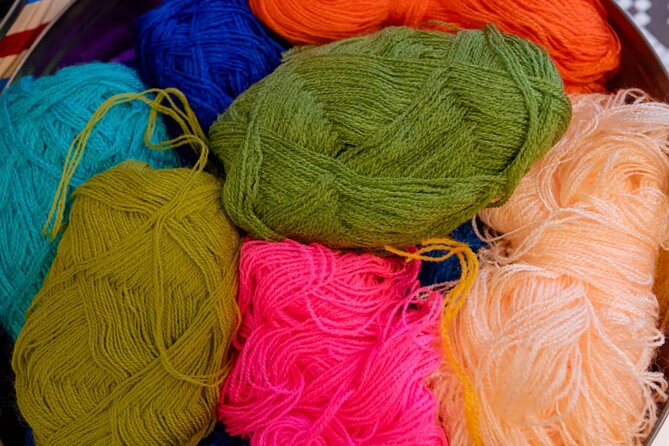
Then it’s time for distribution of supplies. This is important for value: the class includes the materials needed for the activity, so you’re not paying extra to hunt down thread, fabric, or tools.
Step 4: Start stitching
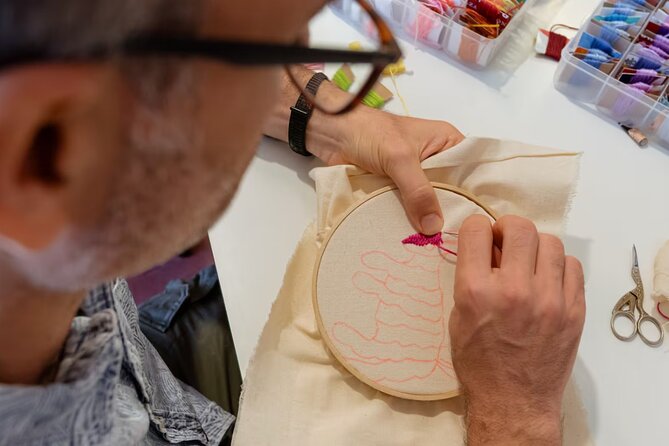
After supplies, you begin the embroidery work. Instruction is hands-on and slow enough for beginners. People highlight that the teacher is patient and explains stitches clearly, which is exactly what you want when you’re trying embroidery for the first time.
Step 5: Finish up and take your work home
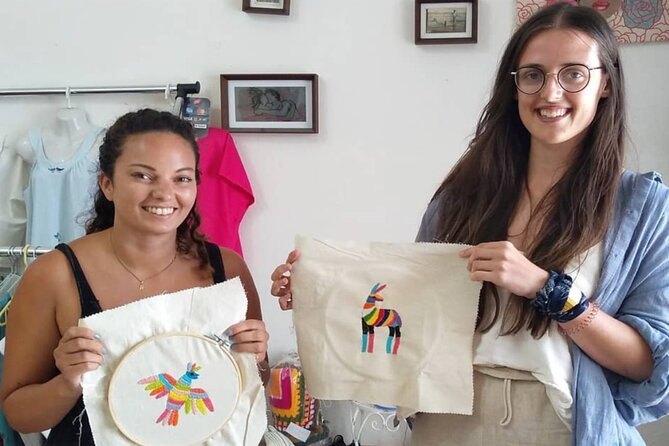
At the end, you’ll wrap up what you learned and you get to take what you made home to finish or save. You’ll also receive additional designs so you can keep practicing after the workshop.
What you’ll learn through stitches (not just how to make them)
Embroidery can look decorative from a distance, but up close it’s technical, intentional, and meaningful. In this class, you’re learning the craft and the cultural context at the same time.
You’ll get guidance on stitches and how they shape the final look. One participant specifically notes learning multiple stitch types and also mentions free-form stitching that creates a sense of dimension. That kind of technique is the difference between a flat pattern and something that looks “alive” on the fabric.
Just as important: the instructor shares examples and talks about tradition. In the class atmosphere, you’re not treated like you’re copying a souvenir. You’re treated like you’re learning a living style of textile art.
If you’ve been seeing embroidery products around Merida, this workshop is a great way to connect what you spot in shops to the labor behind it. You’ll leave with a stronger sense of what it takes to make those textiles—and why people continue passing skills down.
Beginners welcome: pace, language, and how much help you get
You don’t need to know embroidery to enjoy this. The workshop says most travelers can participate, and the class is clearly set up for learners.
A few review-style details that matter for you:
- The instructor is described as patient and calm, which helps a lot when you’re learning new stitches.
- English is the offered language, and people who didn’t speak Spanish still felt comfortable.
- The class stays small—up to 6 travelers—so you can ask questions without shouting across a room.
Also, this isn’t a “watch first, maybe try later” setup. You’re working while you learn. That’s why the take-home piece feels realistic. You’re not just leaving with knowledge—you’re leaving with a project.






Supplies and comfort: what’s included, what’s missing, and what to plan for
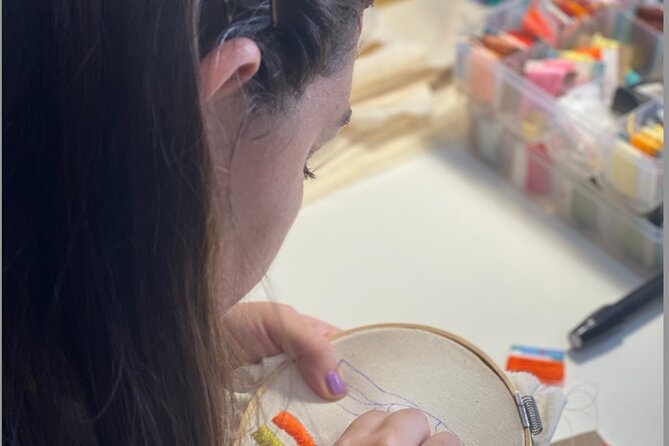
Here’s what you can count on: the price includes the materials needed for the activity and water. That keeps the total cost clear and helps you avoid the common hassle of “surprise add-ons” for supplies.
What’s not included is snacks. If you’re sensitive to hunger (or you simply like snacking while you focus), plan to eat before you arrive. A two-hour crafting session can feel long if your energy dips halfway through.
You’ll also want to know the boundaries. The workshop doesn’t accept escorts or pets. That’s worth keeping in mind if you’re traveling with someone who would rather observe instead of participate.
Price and value: is $56.72 a good deal for two hours?
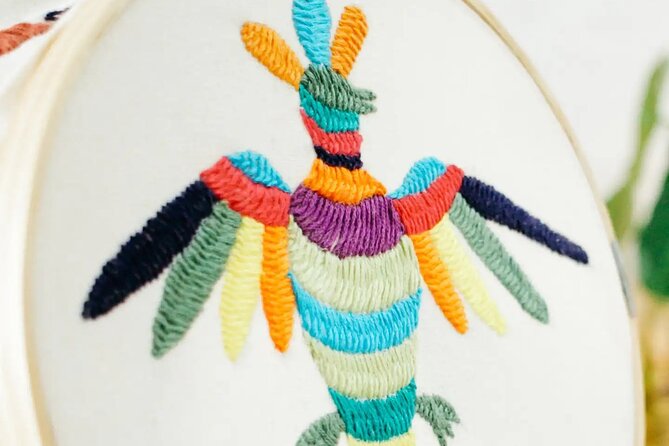
At $56.72 per person for about two hours, the value depends on what you care about: technique, culture, and hands-on making.
For me, the strongest value points are:
- Materials included: you’re paying for instruction plus supplies, not just “the class.”
- Small group size: max 6 means less waiting and more time getting your stitches right.
- Take-home work plus extra designs: you’re not leaving empty-handed, and you get ideas to keep going.
If you compare this to a typical paid activity that gives you only a talk or a brief demo, this has a better “you did the thing” ratio. You pay once, then you leave with a physical result and continuing practice prompts.
If you’re only looking for something fast and entertaining with no learning piece, you might find it too focused. But if you enjoy slow travel—one skill, one story, one finished item—this price makes more sense.
Who should book this embroidery workshop in Merida?
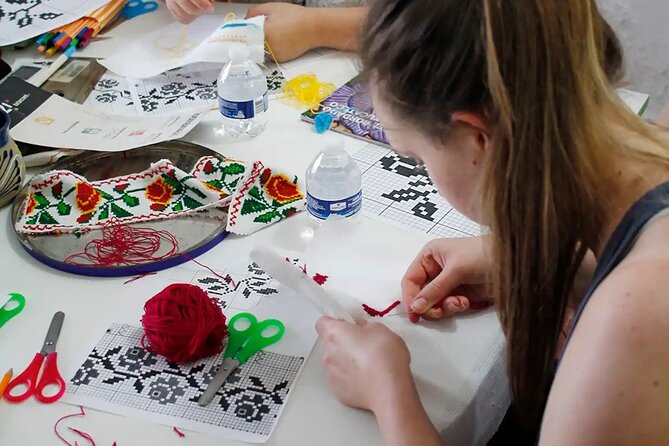
This class is a good match if you want:
- A hands-on activity that actually teaches technique
- A quieter option in Merida that still feels meaningful
- Something you can do solo, without needing a partner or special skill
It also fits well for couples and families in the sense that it’s a structured, guided craft session. The group stays small and the pace is learner-friendly.
Skip it if:
- You’re expecting lots of food stops or a snack-heavy experience (snacks aren’t included)
- You want a high-energy “on the move” tour style
- Weather is a big concern for you, since the experience depends on good conditions
Practical tips to get the best results with your stitches
Embroidery rewards calm attention. A few practical things help you get more out of the time:
- Arrive with time to find the studio and settle in. If you’re new to Centro, this prevents stress from stealing your focus.
- Treat the first part (history and examples) as part of the craft, not extra. The design choices make more sense when you understand what the stitches represent.
- Don’t aim for perfection on your first try. The point is learning the motions and finishing something you can take home.
If you want to keep going after the workshop, use the extra designs you receive. That’s where the class keeps paying off.
Should you book Merida: Mexican Embroidery Workshop?
If you like learning by doing, I think you should book this. The class hits a rare sweet spot: technique you can practice later, plus real context about why the craft matters. It’s also small enough that instruction feels personal rather than generic.
You might hesitate only if you’re the type who hates logistics or you’re likely to rely on shaky map directions. If you plan ahead for locating Casa Texoxe, you’ll probably find the workshop itself is the easy part—and a satisfying one.
FAQ
How long is the Merida Mexican Embroidery Workshop?
It runs about 2 hours.
How many people are in the class?
The workshop has a maximum of 6 travelers.
Is the workshop offered in English?
Yes, it’s offered in English.
What is included in the price?
Materials needed for the activity and water are included.
Are snacks included?
No, snacks are not included.
Where do I meet the workshop?
You meet at Casa Texoxe, C. 72 418 A, Centro, 97000 Mérida, Yuc., Mexico.
Can beginners participate?
Yes. The experience says most travelers can participate, and it’s taught with guidance for learning stitches.
Can I take my embroidery home?
Yes. You’ll take home what you complete during the workshop, and you’ll also receive more designs to keep working on at home.
Are escorts or pets allowed?
No. Escorts and pets are not accepted.