REVIEW · ISLA HOLBOX
Kitesurfing lessons in Isla Holbox
Book on Viator →Operated by KukulKite · Bookable on Viator
Holbox is a playground, and this lesson is the key. I like the smart setup: you can train at Las Nubes for calmer, beginner-friendly conditions or go farther out to Punta Mosquito for a more adventurous session on a long, quiet stretch of sand. I also love that the instructors teach the whole chain, from kite launching and care to actually getting you riding, not just playing on the beach. One thing to keep in mind: kitesurfing is weather-dependent, so your exact timing and spot can shift when wind and conditions are best.
I also appreciate the way the school runs it like a real training program for different levels. Whether you’re starting from zero or trying to build specific skills, the package is built as a 3-hour class block designed to cover the techniques you’ll need to progress. From the teaching styles I’ve seen described, the focus stays on safety plus encouragement—so you don’t get left behind when you’re learning something brand-new.
The rating is consistently strong (5/5 across 78 reviews), and the names that pop up most are instructors like Alex, Isnel, Basilio, Vania, and Ewa. Equipment isn’t described as brand-new, but it’s described as working well—fine for learning, not a reason to book.
In This Review
- Key highlights before you go
- Kitesurfing in Holbox: why these 3 hours matter
- Instructor coaching that pushes you, without rushing you
- Las Nubes vs Punta Mosquito: picking the right kind of lesson
- Las Nubes: shallow water, easier starts
- Punta Mosquito: a longer adventure with a big beach
- Wildlife moment possibility
- The 3-hour lesson flow: from kite basics to riding
- Gear, safety, and what to expect when it’s not all brand-new
- Wind timing on Holbox: how scheduling usually works
- Price and value: what $328.58 buys you
- Who should book this lesson (and who should rethink)
- What to bring and how to get the most out of your 3 hours
- Should you book KukulKite in Isla Holbox?
- FAQ
- How long is the kitesurfing lesson in Holbox?
- Where does the lesson start and end?
- How much does the lesson cost?
- Is the lesson private for my group?
- What language is the instruction in?
- Are there different spots for lessons?
- Is this suitable for beginners?
- What if the weather is poor?
- How does cancellation work?
- What are the operating hours?
Key highlights before you go
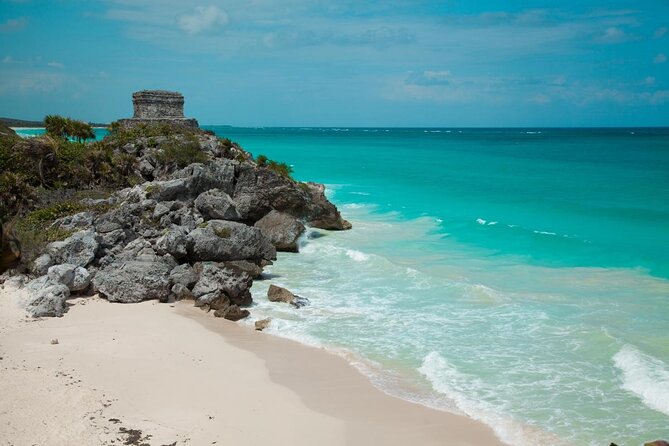
- Two training zones: Las Nubes for shallow, calm water and Punta Mosquito for a longer ride-focused environment
- Full technique coverage in 3 hours: kite launching and care through to riding skills
- Instructor attention matters: multiple reviews praise teaching patience and fast progress, especially in private lessons
- Wind-based scheduling: you’ll be updated so you go out when conditions are right
- Real island feel: you’re learning in Holbox, with chances for wildlife sightings like harmless bat rays
Kitesurfing in Holbox: why these 3 hours matter
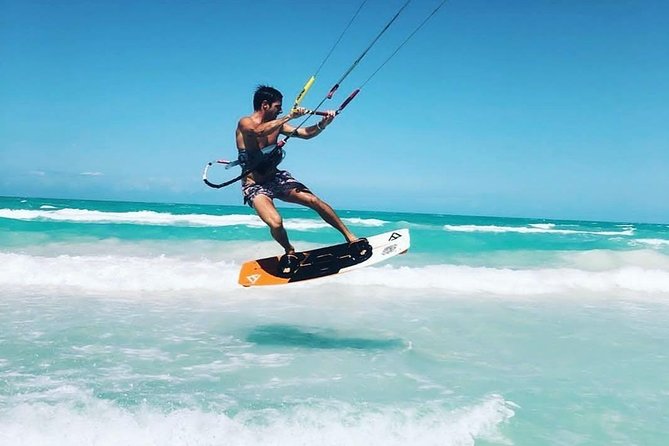
Kitesurfing lessons sound simple on paper: show up, learn, leave with a new hobby. The tricky part is that the sport has a bunch of moving parts at once—kite control, body position, water awareness, and safety habits. That’s why I like this format: a 3-hour package that’s explicitly meant to teach the techniques derived from real kitesurfing practice, not just a demo on land.
Holbox adds the other half of the equation. You’re on an island where the wind can be the main character, and the water is often exactly the kind of place you want to learn without constant distractions. And because the school uses different spots, you’re not stuck forcing every level into the same conditions.
The practical benefit for you: you can plan a lesson that fits a normal vacation day. No need to treat it like a week-long boot camp. Just do the class, then use the rest of your trip to relax, explore, or—if it hooks you—book another session when the wind cooperates.
You can also read our reviews of more tours and experiences in Isla Holbox.


Instructor coaching that pushes you, without rushing you
Good instruction in kitesurfing is part technique, part confidence-building. You don’t just need corrections; you need the “how to think” behind the movements. The strongest praise in the teaching stories centers on instructors who are thorough and encouraging while still investing real time in your progress.
Several instructor names come up in a way that feels consistent: Alex, Isnel, Basilio, Vania, and Ewa. The pattern is the same. They’re described as professional, fun, and patient, with a focus on making you understand what you’re doing and why it matters.
Here’s what that means in real life for your lesson:
- You’ll work on kite launching and kite care, which is the foundation you’ll use every time you go out
- You’ll get guidance that helps you avoid the most common beginner mistakes (the ones that waste wind time and kill motivation)
- You’ll get encouragement that keeps you from feeling like you’re behind, especially if the first attempts don’t work right away
If you’re the type who learns best with direct coaching, private lessons are a common recommendation from people who don’t want to “maybe” progress. The school runs private options, and the teaching style described is exactly what you want when you’re short on time but serious about learning quickly.
Las Nubes vs Punta Mosquito: picking the right kind of lesson
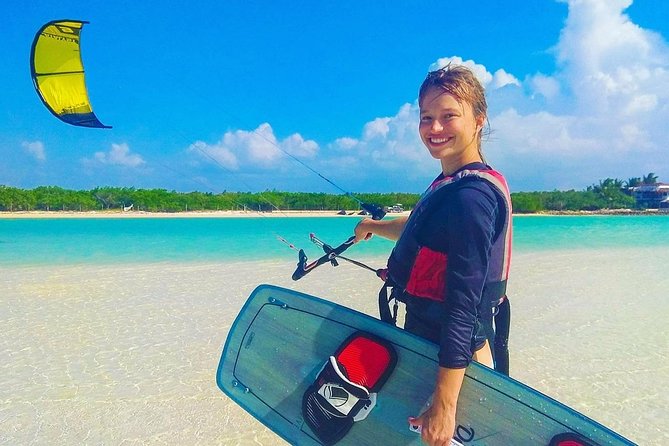
This school uses two spots, and that choice is a big deal. It’s not just geography. It’s how you match the day to your skill level and your comfort.
Las Nubes: shallow water, easier starts
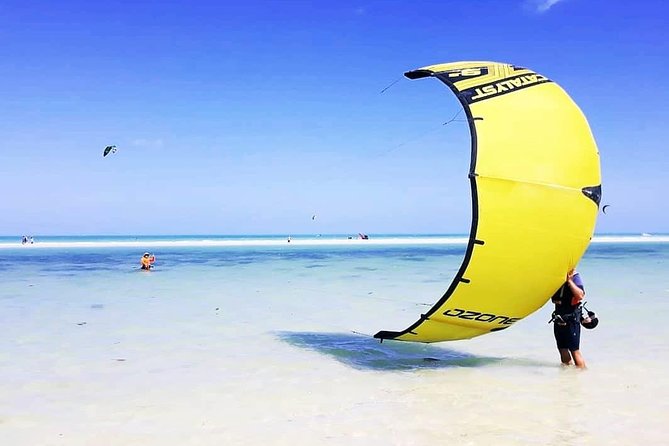
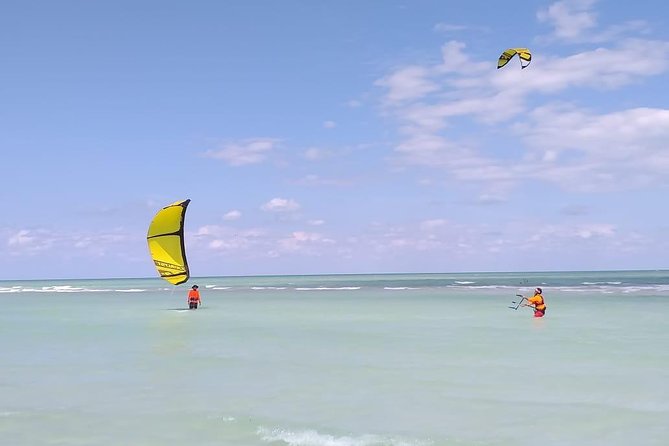
Las Nubes is in the northeast of Holbox and is known for a beautiful sandbar with shallow, calm waters. For you, that usually means more forgiving conditions. When you’re first learning, you need space to make mistakes without feeling like the sea is chasing you.
This spot is ideal if:
- You’re a complete beginner
- You want to focus on control without fighting rougher water
- You’re trying to build confidence fast while you learn the basics
Punta Mosquito: a longer adventure with a big beach
Punta Mosquito is described as a real adventure. You start from the boat dock and arrive at a virgin beach of about 40 km. That’s a lot of room to work. It also suggests a setting where you can feel more like you’re doing “the sport,” not just learning it.
This spot is a better fit if:
- You already understand some kite control and want more room to practice
- You like a sense of adventure and don’t mind a more logistical session
- You want a training day that feels like a destination itself

Wildlife moment possibility
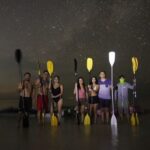
One review mentions seeing harmless bat rays during a lesson. You shouldn’t plan your trip around that, but it’s a nice reminder that Holbox isn’t just wind and water—it can include real nature moments.
The 3-hour lesson flow: from kite basics to riding
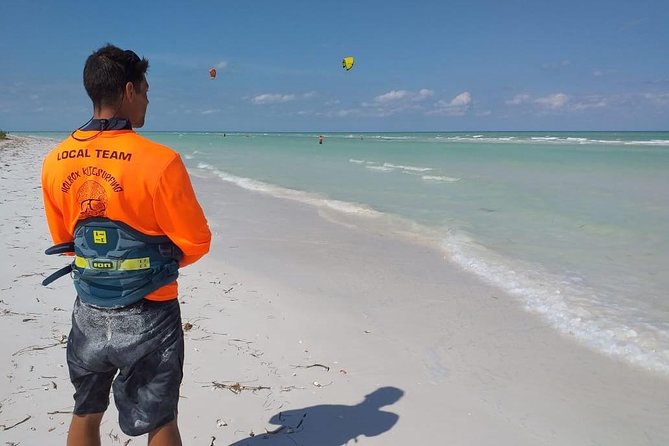
The package is structured as a complete 3-hour class. That matters because kitesurfing learning is cumulative. One hour of theory won’t get you anywhere. One hour of riding attempts without fundamentals can also be a mess. The idea here is to cover the full chain of skills.
While every day depends on wind and conditions, here’s the typical learning arc this kind of lesson is built around, and it matches what people report they learned:
1) Kite launching and care
Before you’re on the water, you train how to handle the kite safely. This is where you learn not only what to do, but how to do it consistently.
2) Control on the beach / in shallow water
You practice the basic inputs: steering, depower habits, body positioning, and how to respond when the kite angle changes.
3) Transition to water starts and riding attempts
As the session progresses, the goal is to get you to the point where you can ride successfully—at least in the form you’re aiming for right now. In several accounts, instructors are credited with helping students get riding by the end of the first day, and even water starts after one day of lessons.
If you’re the kind of person who wants proof that you’re progressing, this is the part that usually makes or breaks the experience. The school’s setup and teaching style are repeatedly praised in exactly that direction: students don’t just leave with instructions; they leave with real attempts they can feel.
Gear, safety, and what to expect when it’s not all brand-new
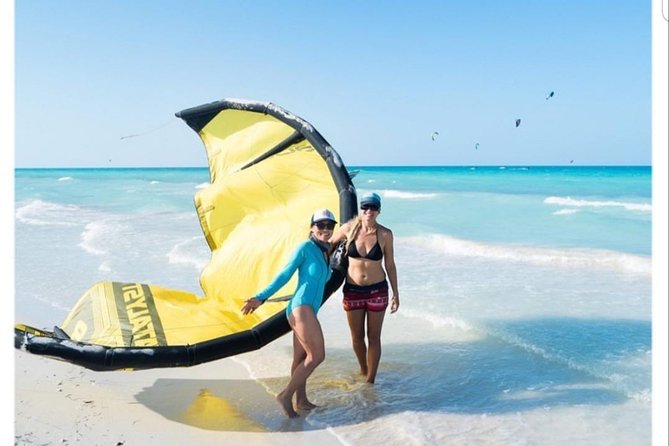
You should know one honest detail: equipment is not described as the newest stuff. But it’s also described as working perfectly fine, which is the key point for a lesson.
For you, “equipment works” means:
- You can focus on learning technique instead of troubleshooting gear
- You still get the safety benefits you need while practicing
- Your session time isn’t swallowed by avoidable problems
Safety is also part of the instruction style that people highlight. In praise for instructors like Basilio, the descriptions repeatedly point to safe and effective measures and a strong focus on doing things the right way, not just the fast way.
Keep your mindset practical. Your first time doing kitesurfing can feel chaotic. The best teachers help you turn that chaos into something repeatable: small steps, clean corrections, and safer outcomes.
Wind timing on Holbox: how scheduling usually works
Kitesurfing is weather-driven, so the best lesson days happen when wind and conditions cooperate. The school runs within daily opening hours from 9:00 AM to 9:00 PM during the season window listed (Jan to late May), and the activity lasts about 3 hours.
The operational detail I like: you’re typically updated when conditions are perfect and when and where your class will happen. That reduces the chance you waste time waiting around, and it helps you trust the plan instead of guessing.
Timing advice for your trip:
- Try to keep at least one half-day flexible. Wind can be moody, and the best learning happens when it’s consistent enough to practice.
- If you’re booking early (average booking is about 9 days ahead), you’ll give yourself better options—especially if you’re traveling during peak periods.
Price and value: what $328.58 buys you
At $328.58 per person for roughly 3 hours, this is not a “cheap activity.” But it’s also not priced like a luxury spa day. It’s closer to what a real skill lesson costs—because you’re paying for instruction time, safety oversight, and the ability to use the right training spots on Holbox.
Here’s the value logic I’d use as you decide:
- You get structured coaching aimed at progressing to riding skills, not just one small taster
- You get access to two distinct training environments (Las Nubes vs Punta Mosquito), which helps match the day to your level
- People describe the organization as simple but reliable, and the learning progress as fast enough to justify booking
One review specifically calls out that the cost felt acceptable compared with other schools on the island. I’d still treat it as a serious activity purchase: bring your best effort, don’t overschedule, and plan to follow instructions closely. When you do that, the cost tends to feel fair.
If you’re short on time and your goal is to get on the board faster, private lessons are often recommended as the smartest way to compress learning. The school offers private instruction, and the teaching approach described suggests you’ll get more direct attention than in any mixed setting.
Who should book this lesson (and who should rethink)
This is a strong fit if:
- You want a structured beginner-to-progress experience
- You’re excited to learn kite handling and safety habits the right way
- You like a relaxed, friendly coaching vibe, not a stiff classroom feeling
- You can handle the idea that the day depends on wind and weather
You might rethink it if:
- You’re hoping for zero weather-related uncertainty. If conditions aren’t right, your session can shift or be rescheduled.
- You’re only looking for a “scenic photo moment.” This is an actual lesson, and you’ll be working for it.
It’s also a good match for couples or friends since it’s a private tour/activity for your group. That setup can matter because kitesurfing learning depends on being able to focus and get clear corrections.
What to bring and how to get the most out of your 3 hours
The data doesn’t list a packing checklist, so I’ll keep this grounded and practical without inventing specifics. For kitesurfing lessons, your priority is staying comfortable and ready to get wet and move.
I suggest you plan for:
- Swimsuit/wetsuit needs you already know you use for water sports
- Sunscreen and something to protect your skin and eyes
- A plan for drying off after—Holbox days can be humid, and you don’t want to spend your next stop wet and cranky
Also, mentally prepare for the learning curve. The best sessions aren’t the ones where everything works instantly. They’re the ones where you keep trying with corrections in hand.
If wildlife sightings like bat rays happen, that’s a bonus. You’ll still be learning first, but the island can surprise you.
Should you book KukulKite in Isla Holbox?
Yes, if you want kitesurfing instruction in a place built for it. I’d book it if:
- You’re willing to learn technique step-by-step
- You want coaching that’s described as thorough and encouraging, with names like Alex, Isnel, Basilio, Vania, and Ewa showing up repeatedly for strong teaching
- You want the option to train at Las Nubes for calmer water or go to Punta Mosquito for a more adventurous, wide-open beach experience
Before you commit, be realistic. This is a sport lesson, not a magic wand. The value shows up when you treat the 3 hours like training time: follow safety guidance, stay engaged, and give yourself one good practice day to build momentum.
If wind is cooperative during your stay, you’ll likely leave with the kind of progress that makes you want another session. If wind isn’t great, you’ll at least know the instructors are aiming to run when conditions are right—so you spend your time wisely.
FAQ
How long is the kitesurfing lesson in Holbox?
The lesson is about 3 hours.
Where does the lesson start and end?
It starts in Isla Holbox, Quintana Roo, Mexico, and ends back at the meeting point.
How much does the lesson cost?
The price is $328.58 per person.
Is the lesson private for my group?
Yes. It’s listed as a private tour/activity, meaning only your group participates.
What language is the instruction in?
The experience is offered in English.
Are there different spots for lessons?
Yes. The school uses Las Nubes and Punta Mosquito, depending on conditions and the learning setup.
Is this suitable for beginners?
Yes. The packages are described as ideal for beginners, and they also work for advanced riders.
What if the weather is poor?
This experience requires good weather. If it’s canceled due to poor weather, you’ll be offered a different date or a full refund.
How does cancellation work?
You can cancel for a full refund up to 24 hours in advance. If you cancel less than 24 hours before the start time, it isn’t refunded.
What are the operating hours?
The listed opening hours are 9:00 AM to 9:00 PM, from 11/01/2025 to 05/28/2026 (Monday through Sunday).