REVIEW · MERIDA
Discover the Historic Center of Merida
Book on Viator →Operated by Nojoch Tours · Bookable on Viator
Mérida’s center gives up its secrets fast. This 2-hour walking tour is a smart way to see the key sites of the Historic Center, with free admission built into the stops and an English-speaking guide keeping things clear and moving. You start at Museo Casa Montejo and end near Santa Lucía, so the route feels like one smooth story.
I especially like two things: the variety of architecture and art—from a 16th-century family house to a neoclassical palace—and the way the tour links each place to the people of the region. The murals in El Palacio de Gobierno and the symbolism inside Cathedral de Mérida help you read what you’re looking at instead of just snapping photos.
One consideration: each stop is brief (often 10–15 minutes), so if you like to linger in one church or one hallway, you might feel a bit rushed. Still, it’s a solid “see it all” plan for first-timers and busy schedules.
In This Review
- Key things to know before you go
- A tight, two-hour route that actually teaches you the city
- Starting at Museo Casa Montejo: a preserved 16th-century home, not a generic museum stop
- Cathedral de Mérida (San Ildefonso): Renaissance design plus conquest-era symbolism
- El Palacio de Gobierno: where neoclassical architecture meets Mayan-and-conquest murals
- Parque Hidalgo and the Gran Hotel: an early-1900s “classroom in design”
- Iglesia de Jesús: Jesuit colonial architecture and a Baroque altarpiece
- Universidad Autónoma de Yucatán (UADY): the academic heart in a colonial shell
- Teatro Peon Contreras: opened in 1908, with fresco and a dome you’ll remember
- Parque de Santa Lucía: the you-and-me benches plus serenades
- Price and value: why $26.93 can be a smart deal for a 2-hour orientation
- Logistics that make it easier on a real trip day
- Who should book this walking tour
- Should you book this Historic Center of Mérida tour?
- FAQ
- How long is the Historic Center of Merida tour?
- How much does the tour cost?
- What language is the tour offered in?
- Is admission included for the stops?
- Where does the tour start?
- Where does the tour end?
- What group size should I expect?
- Will I get a mobile ticket?
- What is the cancellation window?
Key things to know before you go
- Casa Montejo’s 16th-century preserved structure: you’ll see how the Montejo family’s world was kept alive through the Viceregal era
- Cathedral de Mérida (San Ildefonso): the oldest cathedral in mainland Mexico, tied to conquest-era symbolism like the Christ of Unity
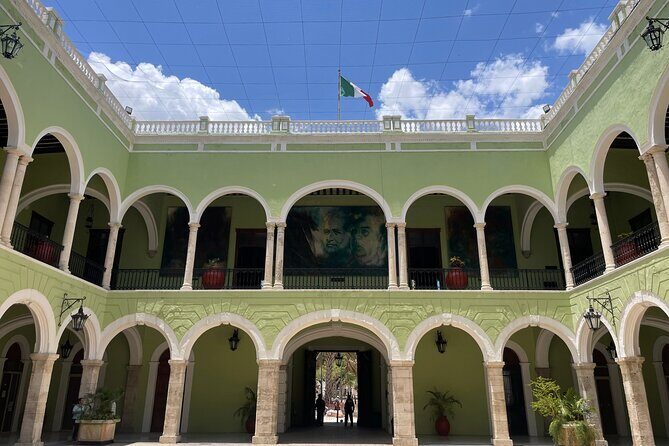
- Fernando Castro Pacheco murals at El Palacio de Gobierno: Mayan history and the conquest story explained in visual form
- Teatro Peon Contreras opened in 1908: you get the big architectural highlights, including ceiling fresco and the interior dome
- Parque de Santa Lucía: the famous you-and-me benches plus the tradition of Yucatec serenades
- Small group size (max 15): easier questions and less crowd pressure while you walk block to block
A tight, two-hour route that actually teaches you the city
This tour is built for momentum. In about 2 hours, you cover eight major stops, with short guided segments (typically 10–15 minutes each). That pacing is the point: you get the big ideas of Mérida without spending your whole day parked in one square.
I like that it’s not just “look at a building.” You’ll connect the dots between colonial power, indigenous heritage, and everyday city life. The itinerary moves from private space (the Casa Montejo museum) to public religion (the cathedral), to government art (murals), and then into culture and street-side romance (the theater and Santa Lucía Park).
Also, the group limit is 15 people, which makes a difference in how much you can ask on the spot. And with an English offering, you won’t have to guess what you’re seeing.
You can also read our reviews of more historical tours in Merida


Starting at Museo Casa Montejo: a preserved 16th-century home, not a generic museum stop
You begin at Museo Casa Montejo in the Centro area. The big reason this first stop works is simple: it’s one of the few houses from the 16th century that still survives from the Viceregal period. Instead of starting with another church (which a lot of city tours do), you start with a family space—one tied directly to the founding of Mérida.
Your guide walks you through the history of the Montejo family, the founders of Mérida, and then you move through elegant rooms decorated in Porphyrian style. That detail matters because it gives you a feel for status and taste in early colonial society. You also get a look at temporary exhibitions of art and culture, so even if you’re not a “museum person,” there’s a living, changing component to the visit.
Practical tip: since this is your first stop, use it to get your bearings for the rest of the day. By the time you leave, you’ll have the names and context in your head, which makes every later square easier to understand.
Cathedral de Mérida (San Ildefonso): Renaissance design plus conquest-era symbolism
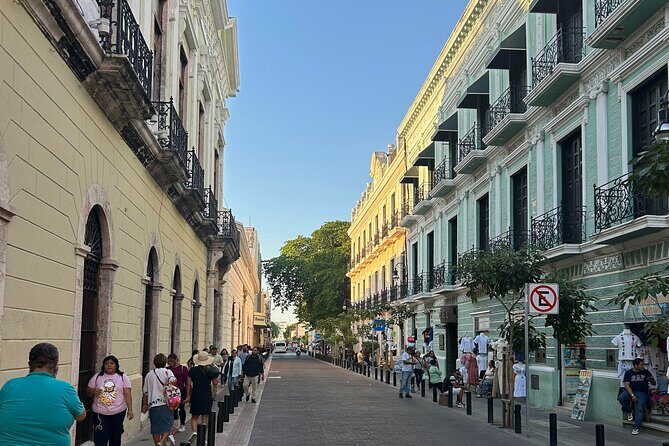
Next up is Cathedral de Mérida, formally Cathedral of San Ildefonso. The tour frames it as the oldest cathedral in mainland Mexico and among the first built in America. That’s a striking claim, and it’s not just trivia. When a place is this old, it tends to gather layers—style, power, and meaning.
You’ll learn about the cathedral’s Renaissance-style architecture, and you’ll hear how its history connects to the conquest of Yucatán. Then comes the part I find most useful: the guide points out religious elements that are still preserved, including the Christ of Unity. When someone explains the symbolism, you stop treating the interior like “pretty, old stuff” and start noticing what the builders wanted people to feel.
Why this stop is valuable: it’s a real anchor point. Once you understand what the cathedral represents, you can better read the civic storytelling happening just a few streets away.
El Palacio de Gobierno: where neoclassical architecture meets Mayan-and-conquest murals
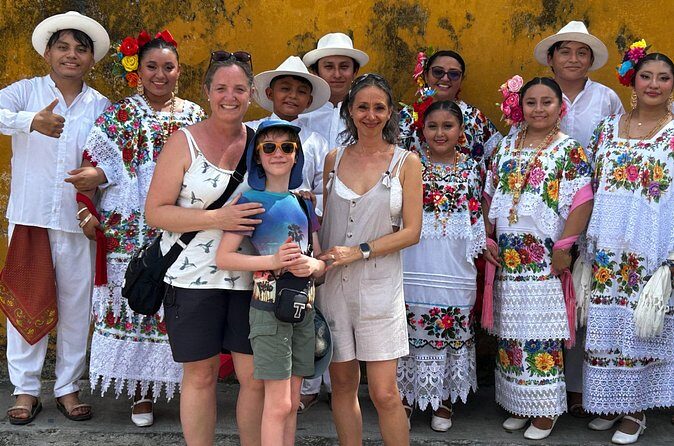
Then you head to El Palacio de Gobierno, a neoclassical building that acts like a visual history lesson. The headline attraction here is the murals by Fernando Castro Pacheco, which narrate—visually and with force—the history of the Mayan people and the conquest of Yucatán.
I like that the guide doesn’t treat these murals as wallpaper. You get the context of the works and a quick tour of key spaces, including the balcony overlooking Plaza Grande. That matters because government buildings are meant to be seen. From that balcony idea, you can imagine civic life happening—speeches, announcements, the theater of power.
One small challenge: because the stop is short, you’ll be selecting what to focus on. If murals are your top interest, stand where you can see the main compositions clearly, then let the guide’s explanation pick your attention for you.
Parque Hidalgo and the Gran Hotel: an early-1900s “classroom in design”
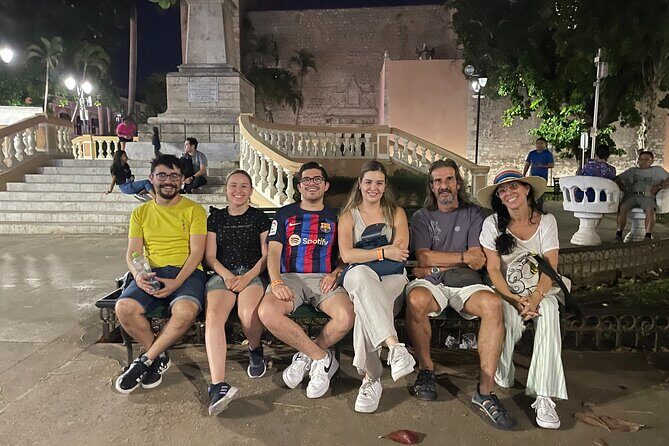
At Parque Hidalgo, you’ll take in the Gran Hotel, which still carries the feel of its early 20th-century elegance. This stop is more than a photo stop. The guide shares why it matters in Merida’s social life, which helps you understand how public spaces and grand buildings interact.
Expect to hear about details like marble floors, period furniture, and Art Nouveau touches. Those design elements are like a code. If you don’t know what you’re looking at, it can just seem “pretty.” With a guide, it becomes a signal of the era’s taste and ambitions.
If you’re the type who likes to notice textures and materials, this is a good moment to slow your walking pace—just for a minute or two—so the building doesn’t blur into the background.




Iglesia de Jesús: Jesuit colonial architecture and a Baroque altarpiece
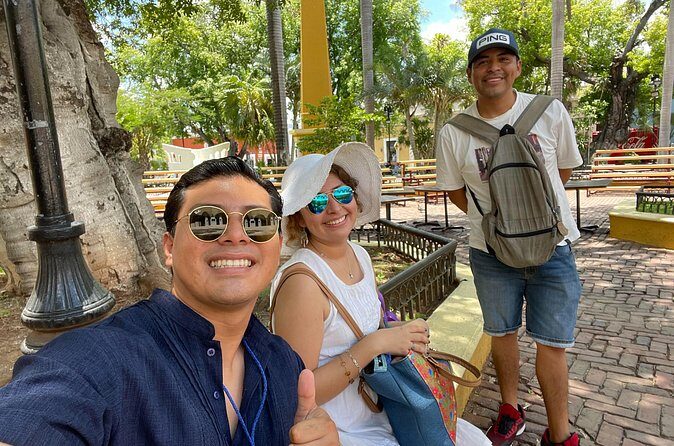
Next is Iglesia de Jesús, described as a church of colonial origin built by the Jesuit order. The façade is noted for being sober, which is a useful contrast after the visual intensity of murals and major squares.
Inside, the standout feature is the Baroque-style altarpiece. That shift—simple outside, dramatic inside—is exactly the kind of architectural storytelling worth understanding. The guide also connects the church to the College of San Pedro, adding another layer to why this place exists beyond its walls.
What to expect: a short guided look that gives you the essentials. You won’t get a long worship-time experience here, but you will get context that makes the interior details less random.
Universidad Autónoma de Yucatán (UADY): the academic heart in a colonial shell
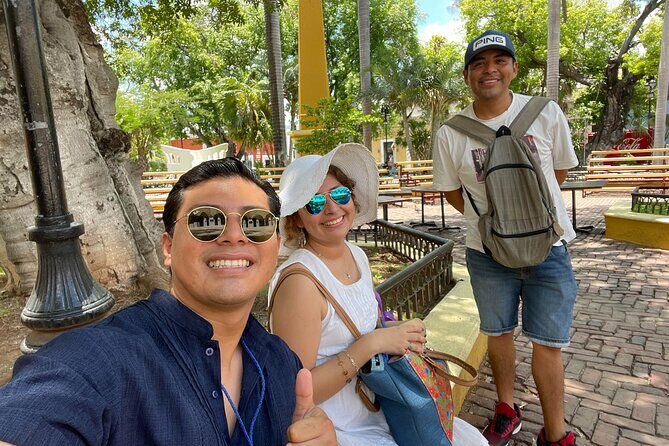
Your next stop is Universidad Autónoma de Yucatán (UADY), specifically the rectory in an old colonial building. This is one of those places that can look like “just another historic building” unless someone explains why it’s important.
The guide narrates the evolution of the UADY, which is described as one of the oldest universities in the southeast. You’ll also see the architecture of the building and how it still preserves its historical essence.
I like this stop because it rounds out the tour. It shifts the focus from conquest-era power and religious authority to education as a long-term force shaping city life. Even in a short visit, it makes Merida feel less like a museum city and more like a functioning place with roots.
Teatro Peon Contreras: opened in 1908, with fresco and a dome you’ll remember
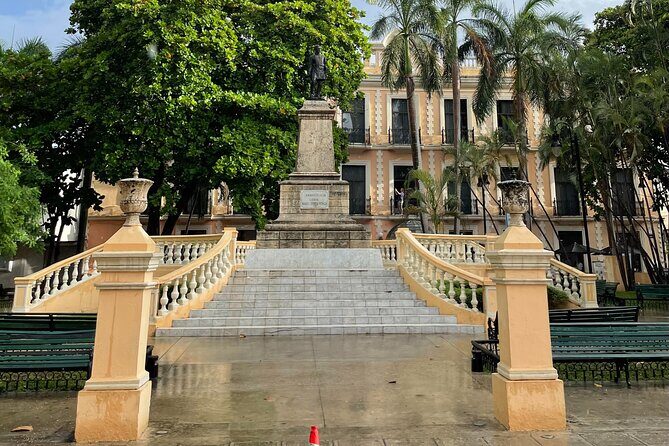
Then you’ll visit Teatro Peon Contreras, considered the most important cultural venue in Mérida. The theater opened in 1908, and it hosts operas, concerts, and other shows.
Even if you’re not planning to see a performance during your trip, this is a great architecture stop. The tour highlights details like the fresco of the ceiling of the main hall and the splendor of its interior dome. Those are the kinds of elements that make a theater feel theatrical even before you hear music.
Tip for photos: aim to capture one wide interior view plus one close detail. The dome and ceiling fresco are easier to appreciate when you separate them in your shots instead of trying to get everything at once.
Parque de Santa Lucía: the you-and-me benches plus serenades
Your last stop is Parque de Santa Lucía. This is where Merida turns a little more personal. The park is famous for the ‘you and me’ benches, and the tour frames it as a corner full of romanticism and local tradition.
You’ll also learn about traditional Yucatec serenades and the musical culture around the square. Then you’ll see the everyday energy of restaurants and shops that surround this charming colonial space.
This ending works because it’s a decompression zone. After churches, palaces, and a theater, you finish with something human-scale—music, conversation, and people-watching.
Price and value: why $26.93 can be a smart deal for a 2-hour orientation
At $26.93 per person for about 2 hours, this tour is priced for value if you want a guided orientation of the Historic Center. You’re not paying just for footsteps. You’re paying for someone to connect architecture, art, and historical context across multiple major landmarks.
The other value boost is that the tour includes admission tickets free for the stops listed. That matters because it removes uncertainty and adds time efficiency—you move from place to place without wasting time on ticket logistics.
Also, with a mobile ticket and English availability, it’s easier to manage on a day when you’re juggling everything else (heat, walking, food plans, and getting around).
Logistics that make it easier on a real trip day
The meeting point is at Museo Casa Montejo, C. 63 506, Centro, 97000 Mérida, Yuc., Mexico. The tour ends at Parque de Santa Lucía, C. 60 476A, Parque Santa Lucía, Centro, 97000 Mérida, Yuc., Mexico, and it notes that the route finishes four blocks north of the starting point on the main street.
A few practical notes I’d plan around:
- The schedule is tight, so wear comfortable walking shoes.
- The group max is 15, so it won’t feel like a school bus, but you still want to stay close enough to hear.
- It’s offered in English and uses a mobile ticket, which helps you keep the day simple.
- Service animals are allowed, and the tour is described as suitable for most people.
If you’re booking and your plans might shift, you can cancel up to 24 hours in advance for a full refund. That gives you some flexibility without turning your vacation into an anxious spreadsheet.
Who should book this walking tour
Book this if you want a guided “big-picture Merida” day. It’s especially good for:
- First-time visitors who want the Historic Center in a manageable time block
- People who like art and architecture, including murals, altarpieces, and theater design
- Anyone who benefits from a guide explaining what symbolism to notice, not just what the building is
If you’re the type who wants to sit for long periods inside museums or churches, consider using this tour as a foundation. After the tour, you can choose one place to return to on your own time.
And if you care about having a personable guide, the experience includes excellent human energy—one named guide, Cesar León, is specifically mentioned as friendly and well-informed in the tour experience.
Should you book this Historic Center of Mérida tour?
I think it’s a smart choice if your goal is to understand Merida quickly and walk away with a clear sense of how different eras shaped the city. The route covers the main pillars—Casa Montejo, Cathedral of San Ildefonso, El Palacio de Gobierno, Iglesia de Jesús, UADY, Teatro Peon Contreras, and Santa Lucía Park—and the guide’s job is to connect the art and architecture to the story.
Skip it only if you already plan to do a deep, slow museum day with lots of independent wandering. This tour is efficient by design. For a first taste of the Historic Center, that efficiency is a feature, not a flaw.
FAQ
How long is the Historic Center of Merida tour?
The tour lasts about 2 hours.
How much does the tour cost?
It costs $26.93 per person.
What language is the tour offered in?
The tour is offered in English.
Is admission included for the stops?
Admission is listed as free for the stops included in the tour.
Where does the tour start?
It starts at Museo Casa Montejo, C. 63 506, Centro, 97000 Mérida, Yuc., Mexico.
Where does the tour end?
It ends at Parque de Santa Lucía, C. 60 476A, Parque Santa Lucía, Centro, 97000 Mérida, Yuc., Mexico.
What group size should I expect?
The tour has a maximum of 15 travelers.
Will I get a mobile ticket?
Yes, it uses a mobile ticket.
What is the cancellation window?
You can cancel up to 24 hours in advance for a full refund.