REVIEW · COZUMEL
Discover Diving in the Reefs of Cozumel
Book on Viator →Operated by Aquasafari Dive Shop · Bookable on Viator
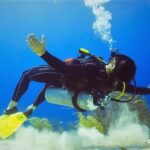
Cozumel makes scuba feel simple. The warm, crystal-clear water over the barrier reef gives you that rare mix of comfort and big scenery. I like the small group size (up to 4 people), which means your instructor can stay hands-on, not just talk at you. You also get a single-tank outing with an instructor, capped at 40 feet, so the plan feels controlled and beginner-friendly.
I really appreciate the step-by-step training flow: a theory session, then practical skills on the beach (and sometimes in a pool or in the sea) before you head out. Coaches like Vanessa and Fernando, who’ve guided first-timers on this kind of course, are the kind who go slow, explain well, and help you feel ready in your own body.
One thing to factor in: the marine park reef tax ($15 USD) is not included, and you’ll need to pay by credit/debit card. Also, keep your timing tight—one review mentioned a departure issue tied to voucher timing and boat departure rules, which can be strict when the schedule is under pressure.
In This Review
- Key things I think are worth your attention
- First-time scuba in Cozumel’s calm, clear water
- The 12:00 pm schedule and the meeting point you should actually find
- Training before the reef: theory, then practical skills on land or in the water
- Gear is handled for you, so you can focus on breathing and buoyancy
- Paraiso (Paradise) Reef: your single-tank reef session and what you’ll likely see
- Price and value: $110 for instruction, gear, and a guided reef day
- Instructors: why Vanessa and Fernando’s calm coaching matters
- Small-group reality: what can go wrong (and how to protect your day)
- Who this works for best, and who should skip it
- Should you book Aquasafari’s Cozumel beginner reef experience?
- FAQ
- How much does this experience cost?
- What is the reef tax, and is it included?
- How long does the experience take?
- What happens before you go to the reef?
- How deep will you go?
- What scuba equipment is provided?
- Where does it start, and what time should I arrive?
- Can I cancel and get a full refund?
Key things I think are worth your attention
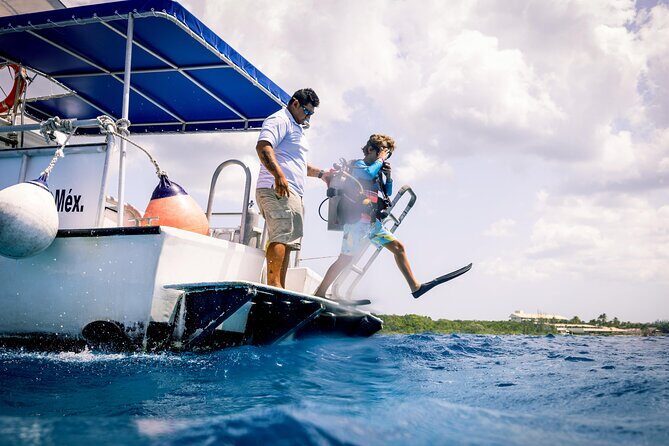
- Max 4-person coaching makes the learning pace feel personal.
- Theory + practical practice first so you’re not thrown into the reef cold.
- Single-tank, up to 40 feet keeps the experience beginner-manageable.
- Paraiso (Paradise) Reef + snorkeling time means you still get reef viewing even if you’re new to scuba.
- Gear, locker, towel, and bottled water included so you travel lighter.
- $15 marine park reef tax is extra, paid separately at the site.
First-time scuba in Cozumel’s calm, clear water
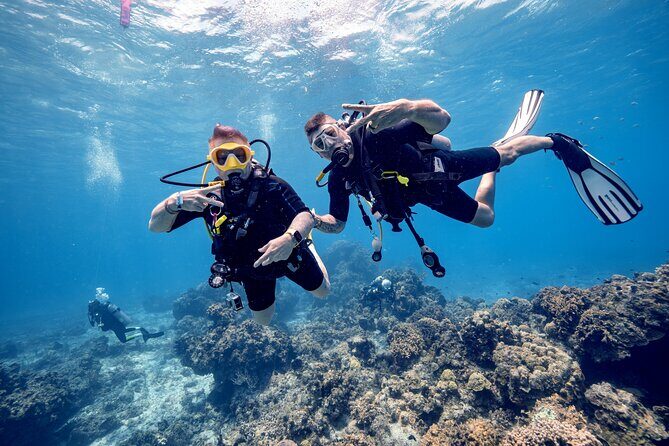
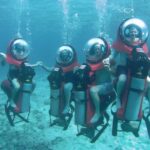
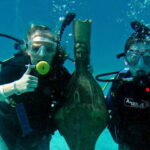
If you’re new to scuba, you want two things: a coach who can teach without rushing, and water that lets you focus. Cozumel is famous for warm, clear visibility, and this experience leans into that. You start with instruction, then you practice your skills in controlled conditions before you go out.
This is a small-group course, so you’re not sandwiched behind a crowd. That matters because beginner skills are physical and mental at the same time—breathing, buoyancy, and remembering steps while your brain is still learning how underwater feels. With a group capped at 4, you’re more likely to get real-time corrections.
You’re also not signing up for long, complicated dives. It’s structured around one tank with your instructor and a maximum depth of 40 feet, which keeps the day realistic.
You can also read our reviews of more scuba diving tours in Cozumel
The 12:00 pm schedule and the meeting point you should actually find
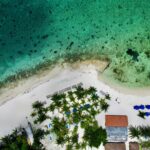
The activity starts at 12:00 pm local time, and you should arrive 30 minutes early for registration. You’ll start and end at Cozumel Palace All Inclusive Resort, at Av. Rafael E. Melgar, Centro, 77609 Cozumel, Q.R., Mexico.
Because the meeting spot is a well-known resort area, it tends to be easier to reach than scattered dock locations. The tour also notes it’s near public transportation, so if you’re not staying right there, you can still plan a simple ride without turning it into an all-day logistics headache.
You’ll get a mobile ticket, which helps if you’re the type who doesn’t love printing things. I’d still keep your confirmation info handy on your phone and treat the early arrival as non-negotiable—this kind of activity runs on water time, not just land time.
Training before the reef: theory, then practical skills on land or in the water
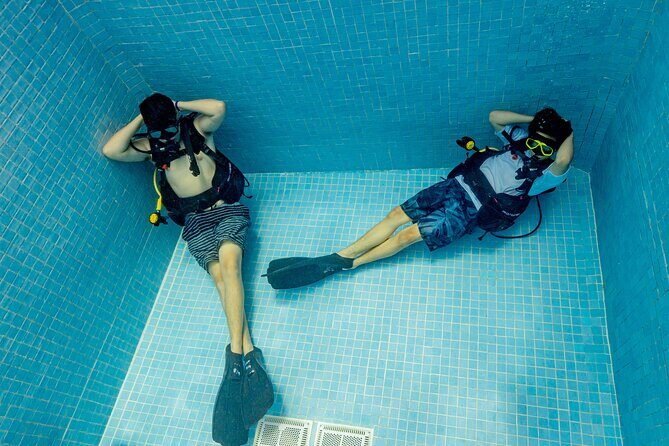
The core idea here is that you earn your reef time step-by-step. You’ll have a theoretical class first, then a practical session. The practical part can happen in a pool or in the sea, and after you cover the basics, you practice on the beach.
That ordering is smart. Theory tells you what the equipment is doing and what to expect. Then practical training gives you the muscle memory: how your regulator feels, how your buoyancy works, how to move with purpose (not panic-flail), and how to follow the instructor’s signals.
Once the instructor feels you’ve mastered the basics, you’ll gear up and move to the boat. The day stays calm because it has checkpoints, not surprises.
Gear is handled for you, so you can focus on breathing and buoyancy
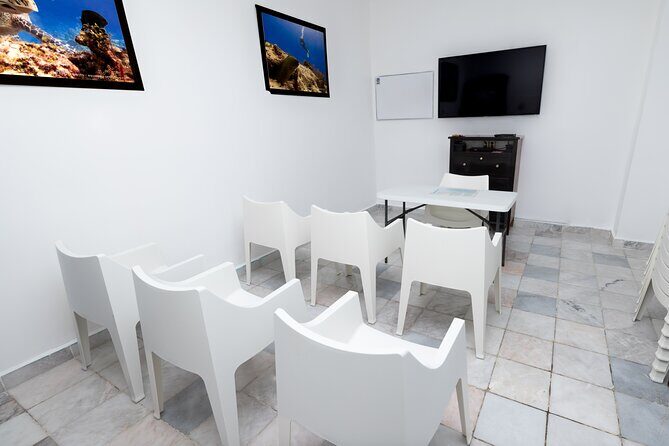
You don’t need to bring your own scuba equipment. The experience includes complete equipment, including a BCD vest, regulator, fins, visor, and the provided suit. You’ll also have access to a locker, plus a towel and bottled water.
That’s real value for first-timers. Equipment shopping or rental management can eat your vacation day before you even get wet. Here, you can show up in swimsuit and comfortable clothing and let the team handle the rest.
Tip: plan on feeling a little clumsy at first. When you’re new, your main job is to stay relaxed. If you’re worried about the gear, you’ll tense up and make everything harder. Let the instructor fit and guide you, then focus on slow breathing and controlled body position.
Paraiso (Paradise) Reef: your single-tank reef session and what you’ll likely see
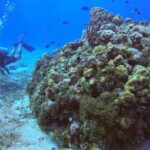
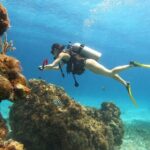
After training, you head out by boat to the reef for a guided single tank experience with your instructor. The itinerary highlights Paraiso (Paraiso/Paradise) Reef as the main stop.
Your instructor takes you to the best local spot for snorkeling on the reef as well. That means even if you don’t feel like you’re doing everything perfect underwater (totally normal on a first outing), you still get reef viewing time in a way that’s approachable.
The maximum depth is 40 feet, and that ceiling is important for beginners. Shallow reef conditions make buoyancy easier and reduce the stress of being far from the instructor. It also keeps your overall timing manageable so the day doesn’t stretch into a long, exhausting session.
From real first-time experiences, this is often where the reef “clicks.” One first-timer described seeing lots of fish and coral, plus a shark, stingray, crabs, and more. You can’t guarantee specific animals on any reef day, but that kind of wildlife variety is exactly what Cozumel is known for.



Price and value: $110 for instruction, gear, and a guided reef day
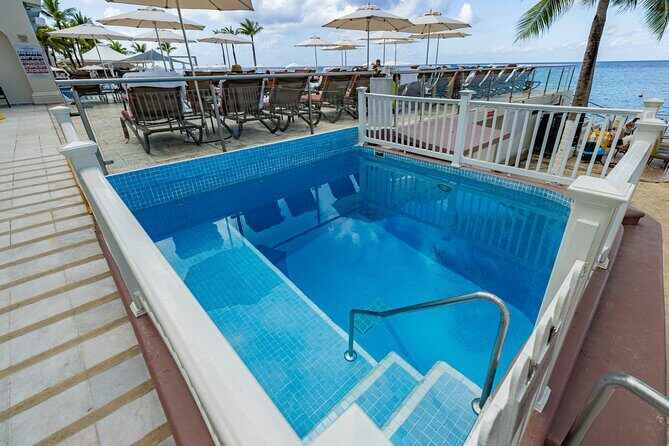
At $110 per person, this is priced like a true beginner course, not a quick sightseeing snorkel add-on. You’re paying for a structured learning plan: theory, practical coaching, included equipment, boat transfer, plus extras like locker, towel, and bottled water.
The one extra cost is the marine park reef tax: $15 USD, charged per credit/debit card and not included in the base price. So your all-in cost is usually a bit higher once you factor that in.
Here’s how I think about the value: if you’re brand new to scuba, you’re not just buying “time underwater.” You’re buying the translation between what you think you’re doing and what your body actually needs to do. With a max group size and an instructor-led format, that coaching is often what turns a scary first attempt into a confident one.
If you already know scuba and you just want a quick reef visit, you might find cheaper options. But for a first outing, this price structure matches the effort involved.
Instructors: why Vanessa and Fernando’s calm coaching matters
The biggest difference between a good beginner session and a tough one is your instructor’s teaching style. In past experiences, instructors like Vanessa and Fernando got praised for being patient, clear, and good at easing nerves.
That shows up in how the training is delivered: you get lots of practical guidance until you feel confident enough to go out. First-timers often feel awkward because underwater rules are different—breathing rhythm, buoyancy control, and how visibility affects your sense of direction.
When an instructor explains things clearly and keeps you comfortable in the sea after pool practice, the day feels less like a test and more like learning. If you’re the type who gets nervous when you don’t know what comes next, choose this kind of guided structure and give yourself credit for the learning curve.
Small-group reality: what can go wrong (and how to protect your day)
Most of the experience is built to feel smooth: small group, step-by-step training, and a guided reef session. But scuba days are weather-and-schedule dependent. One review mentioned a boat departure problem tied to voucher timing and passengers arriving after ferry time, and that it became strict about letting people board even though they had already taken care of vouchers.
You can’t control every operational detail. What you can control is your arrival and paperwork readiness. Arrive early, keep your phone ticket ready, and be on time for registration. Treat the start time as firm and don’t plan to run late after the resort pick-up or check-in.
If you build your day around that—rather than hoping the schedule will bend for you—you’ll reduce your risk of stress.
Who this works for best, and who should skip it
This experience is designed for travelers with a moderate physical fitness level. That usually means you should be able to handle basic movement in gear, follow instructions, and handle being in and out of the water without major limitations.
It’s not recommended for people with respiratory conditions, and it’s not recommended for people with recent surgeries. If you have any medical concerns, take them seriously and ask a qualified professional before your trip. Water comfort depends on more than confidence.
If you’re otherwise healthy and you’re looking for your first scuba experience with clear guidance, this is a good fit. If you’re expecting to become an expert that day, you’ll feel the training pace. But if you want to get comfortable, see the reef, and learn the fundamentals in a safe way, you’ll probably love how it’s structured.
Should you book Aquasafari’s Cozumel beginner reef experience?
I’d book this if you check these boxes:
- You’re a true beginner or you want your first guided scuba session with lots of instruction.
- You want a small group and an instructor you can actually ask questions to.
- You care more about learning skills and seeing the reef than about doing a complicated multi-tank plan.
- You’re okay paying the extra $15 marine park reef tax by card.
I’d think twice if:
- Your schedule is fragile and you may be late for the 12:00 start.
- You have respiratory issues or recent surgery and aren’t sure you’re cleared for water activities.
Bottom line: this is a beginner-leaning, instructor-led way to get your first real reef experience in Cozumel’s clear waters, with the practical training that makes the day feel doable. If you show up early, listen closely, and treat it as learning—not performance—you’ll leave with more confidence than you expected.
FAQ
How much does this experience cost?
It costs $110.00 per person. The experience includes instruction, equipment, boat transfer, and basic amenities like bottled water, a towel, and a locker.
What is the reef tax, and is it included?
The marine park reef tax is not included. It’s $15 USD and is paid using a credit or debit card.
How long does the experience take?
The duration is about 4 hours 30 minutes (approx.). Plan your day so you’re not rushing right after.
What happens before you go to the reef?
You start with a theoretical class, then do practical skills (which can be in a pool or in the sea). After the instructor feels you’ve mastered the basics, you practice on the beach and then head to the reef.
How deep will you go?
You’ll go on a single tank experience with your instructor to a maximum depth of 40 feet.
What scuba equipment is provided?
The tour includes complete equipment: BCD vest, regulator, fins, visor, and the provided suit.
Where does it start, and what time should I arrive?
It starts at Cozumel Palace All Inclusive Resort in Centro, Cozumel. The tour begins at 12:00 pm, and you should arrive 30 minutes early for registration.
Can I cancel and get a full refund?
Yes. You can cancel up to 24 hours in advance for a full refund.