REVIEW · PLAYA DEL CARMEN
Coba Multun-Ha Cenote Tulum and Mayan Museum Small Group
Book on Viator →Operated by Mayan Riviera Tours · Bookable on Viator
Your day gets Mayan fast.
This small-group tour strings together two very different ancient sites plus a cenote swim, and the guide experience is a big part of why it works. On this route, I’ve seen guides like Jesus and Antonio praised for turning ruins into clear stories, not just a list of names. With hotel pickup in the Riviera Maya and a max group size of 15, it feels easier to ask questions and keep your day moving.
Two things I like a lot: first, you get real time at Coba and Tulum without the big-tour chaos. Second, the day ends with a swim at Multum Ha, so you cool off when you’re ready for it, not when the schedule says so. The one drawback to plan for is that Tulum has a required entrance payment in cash, and the rules there also ban bottles/food in disposable packaging—so bring what you need, store what you don’t, and stay flexible.
One more practical consideration: the day is long and sunny. Even with a good pace, you’ll walk the sites, and Coba’s pyramid climb is not guaranteed or included, so you’ll want a backup plan if you were hoping to summit.
In This Review
- Key highlights worth planning for
- A Coba-to-Tulum day that actually flows
- Pickup and timing: why early start matters
- Stop 1: Coba ruins—jungle shade and big-scale Maya life
- Coba pyramid climb: plan like it might not happen
- The transition: from jungle ruins to cliffside views
- Stop 2: Tulum ruins on the Caribbean coast
- What your guide should help you notice
- The one rule to remember at Tulum
- Jaguar Park and the Mayan Museum: artifacts you can place
- Multum Ha cenote swim: the cool finish you’ll remember
- What to expect in water
- Lunch, drinks, and what to pack so the day stays easy
- What I’d pack (practical list)
- Price and value: $109 plus the reality of local fees
- Who should book this tour, and who might not love it
- Should you book this small-group Coba, Tulum, Mayan Museum, and Multum Ha cenote tour?
- FAQ
- What’s the duration of this tour?
- Is hotel pickup included?
- How big is the group?
- What’s included in the price?
- Are drinks included with lunch?
- Do I need cash for Tulum ruins?
- Is swimming in the cenote included?
- Is climbing the Coba pyramid included?
- FAQ
- Is the tour offered in English?
- What should I bring for the cenote?
- Can I bring a water bottle into Tulum?
- What payment method is accepted for the Tulum entrance fee?
- Are children allowed?
- Is there time for photos?
Key highlights worth planning for
- Small group size (max 15) keeps things personal and cuts down on waiting
- Two standout ruins in one day: Coba in jungle shade and Tulum on the Caribbean coast
- Mayan Museum at Jaguar Park adds meaning to the ruins with thousands of artifacts
- Multum Ha cenote swim at the end is a stress-free payoff after heat and walking
- Food and drinks structure: buffet lunch and water are included, but lunch drinks cost extra
A Coba-to-Tulum day that actually flows
This tour is built like a good day plan: start with one ruin in the shade of the jungle, move to a dramatic coastal site, add a museum stop for context, then finish with a swim. You’ll still do a lot in one day, but the order makes sense—especially because the cenote is your last stop. By then, you’re usually ready to stop thinking about history for a few minutes and just enjoy cool water.
The small-group format is the unsung advantage. A group of up to 15 means you’re not stuck in a conga line at every viewpoint. I also like that the tour uses an air-conditioned minivan for the long stretches, with bottled water provided (and a request that you bring a reusable non-plastic bottle for refills). That’s a simple detail that helps you stay comfortable, especially when the day is hot.
And yes, you’ll hear plenty about Maya culture. The best guides on this route don’t just recite facts; they explain how the sites connect—what you’re looking at and why it mattered. People mention names like Antonio, Gabriel, Tonantzin, and Carlos because guides are often the difference between a check-the-box tour and a “now I get it” day.
You can also read our reviews of more museum experiences in Playa del Carmen

Pickup and timing: why early start matters
You’ll start with hotel pickup from Playa del Carmen and much of the Riviera Maya (Puerto Morelos included), with the tour timing sent to you the afternoon before. The tour is offered in English and uses a mobile ticket, which is handy for keeping things simple.
The big timing win here is getting to ruins before the worst crowds. In the reviews I saw, people repeatedly pointed out arriving early at Tulum, which can make a dramatic difference in how crowded the walk feels and how much you can enjoy the views. Early also helps with heat. By the time you reach the cenote, you’ll be tired in the best way.
Still, plan for a full day. The itinerary clocks in around 10 hours, and you’re doing driving plus multiple stops. If you hate early starts or you’re trying to cram this day between other plans, make sure your schedule gives you a buffer.
Stop 1: Coba ruins—jungle shade and big-scale Maya life
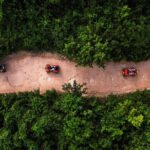
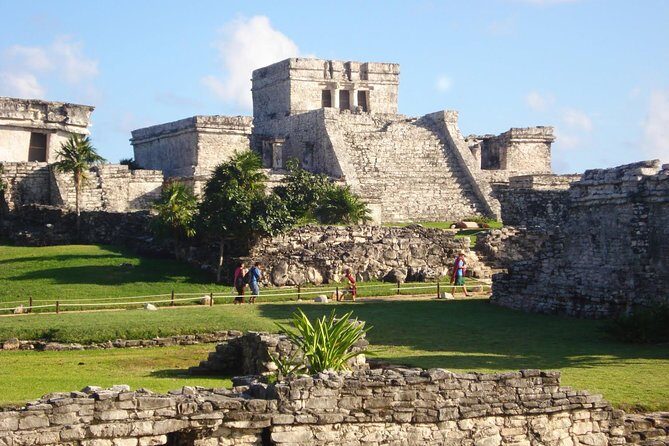
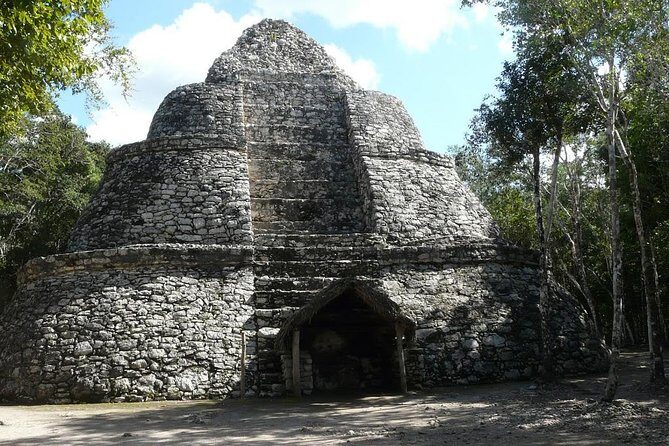
Coba is the opener, and it’s a smart choice. This site is set in a more tropical, forested environment, so the walk feels different from the ocean air of Tulum. You’ll get about two hours at Zona Arqueologica de Coba, with a ticket included.
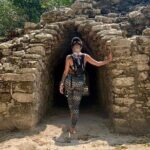
The headline here is scale. At its peak, Coba supported a population of about 50,000 and covered roughly 80 square miles (about 129 sq km). You’ll see that scale in the way the site stretches out—there’s a lot to cover, even if you don’t plan to do every single path.
A few things you should look for:
- Two ball courts (Coba had them, and they’re a major Maya architectural feature)
- The sacbé—white roads—linking Maya cities (think of them like ancient causeways for movement and trade)
- The preserved and rebuilt nature of certain structures, which helps you understand what you’re seeing instead of guessing
Coba pyramid climb: plan like it might not happen
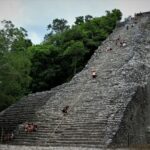
One key note: climbing the Coba pyramid is neither included nor guaranteed. That means even if you’re up for the climb, don’t build your whole day around it. If your goal is viewpoints, focus on what you can enjoy from where you’re allowed to go.
There’s also often an option to get around more easily at Coba (some visitors mention bike rentals or bike rickshaw options). If you want to move faster and avoid extra walking, it’s worth having a little spending flexibility—but don’t let that pressure you. If you’d rather walk through the foliage at a slower pace, the site still works.
The transition: from jungle ruins to cliffside views
The drive between Coba and Tulum is part of the day’s rhythm. You’re not “wasting time” here if you take breaks seriously: use restroom stops when they’re offered, and hydrate. The air-conditioned minivan helps, and the tour provides water during the day.
One thing I’d suggest: keep your expectations realistic. Coba is spread out and Tulum is compact but dramatic. When you get to Tulum, your feet will likely feel it—even if you paced yourself well.
The upside is that you get variety. Different setting, different feel, and different kinds of ruins. That variety is what keeps this tour from becoming a long march that you survive rather than enjoy.


Stop 2: Tulum ruins on the Caribbean coast
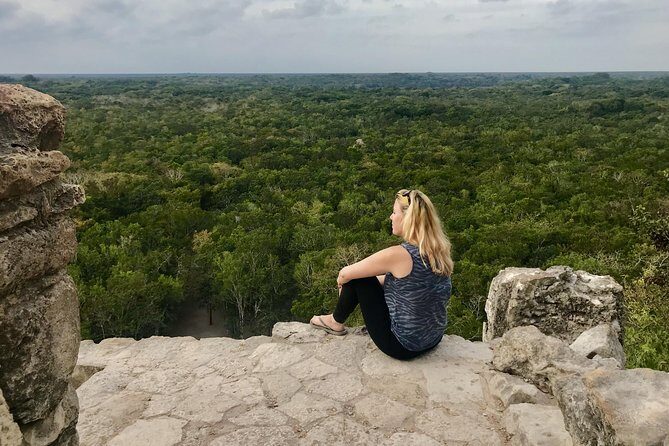
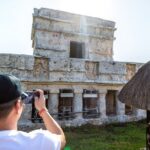
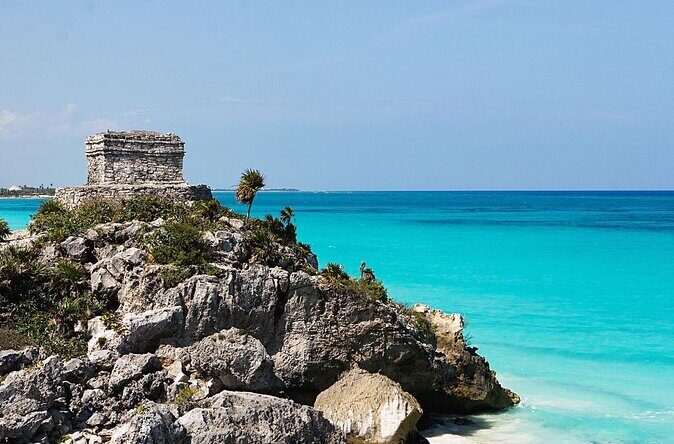
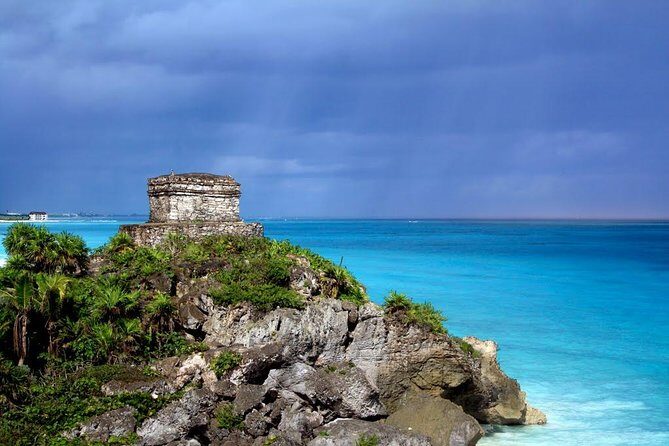
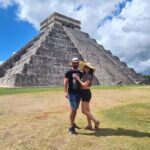
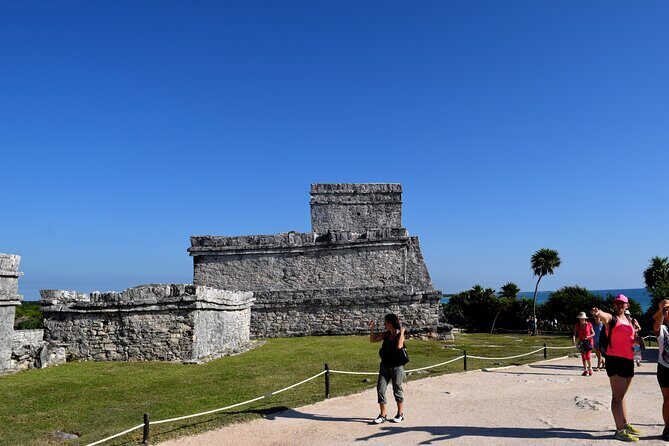
Tulum is the star of the show for most people, and the reason is visual. This is the only archaeological site built directly on the Caribbean coast, and it sits high enough that you get the kind of view that makes you stop and look around without taking a single photo.
At its peak, Tulum was a thriving seaport with Maya nobility and merchants living within its walls. That matters because it changes how you interpret the structures: you’re not just looking at ceremonial space. You’re looking at a trading-and-people place as well.
What your guide should help you notice
When the guide is on form (and the reviews suggest many guides are), you’ll get pointed out:
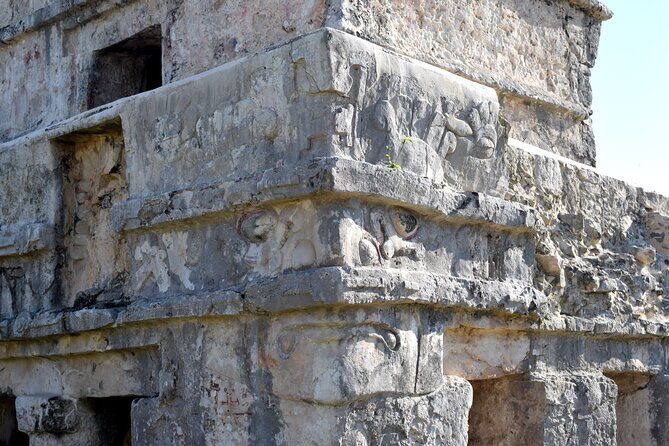
- Noteworthy structures, including a restored temple where murals show ancient red pigments
- How Tulum’s location shaped its role
- The Spanish conquest story and what that meant for the city
In other words, you’ll leave with more than “pretty ruins.” You’ll understand why the site is where it is and what happened around it.
The one rule to remember at Tulum
Plan for the site restrictions. Tulum strictly prohibits bringing in any type of bottle, and it also restricts food items in disposable packaging. That doesn’t mean you show up empty-handed—it means you store what’s not allowed and follow the rules at the entrance. Bring towels or clothes for your cenote later, but don’t assume you can carry everything into the ruins.
Also note the entrance fee piece. The tour lists a mandatory cash payment for Tulum archaeological site access: $45 per adult and $30 per child. Even if parts of admissions are described as included, this specific Tulum fee is clearly spelled out as a “pay on boarding” cash item. I’d strongly suggest you bring the right currency and keep it accessible so you’re not scrambling at pickup.
Jaguar Park and the Mayan Museum: artifacts you can place
Your next stop is the Parque del Jaguar, home to the Mayan Museum. You’ll have about 45 minutes here, and the ticket is included.
This is a good middle stop because it gives your brain a chance to connect what you saw in Coba and Tulum with real objects from the Maya world. The museum has thousands of artifacts, including vessels, sculptures, architecture, and more.
What I like about pairing a museum with ruins is that it turns “I saw it” into “I can picture how it lived.” You’ll also be less likely to forget details because you’re getting them in a different format—objects instead of structures.
If you’re a slower museum-walker, keep your pace steady here. 45 minutes can be quick if you read every placard, and the rest of the day is still waiting (especially the cenote).
Multum Ha cenote swim: the cool finish you’ll remember
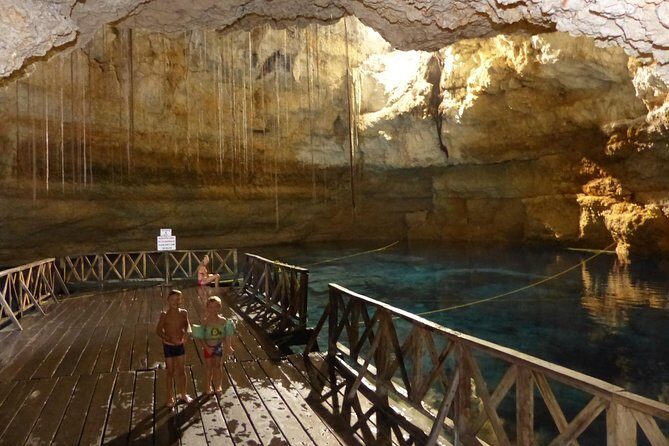
Then comes the reward: Multum Ha cenote. You’ll get about 45 minutes for swimming, and the cenote entrance is listed as free in the tour details.
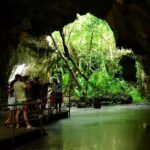
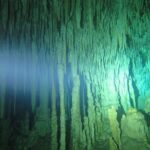
This cenote is known for its emerald waters and limestone formations. The guide will set you up for what to notice—limestone stalactites that formed over centuries—and the whole setting makes it feel like you stepped into a natural water gallery.
A couple of practical notes from the experience itself:
- Bring flip-flops or water shoes if you have them. Your feet will thank you.
- Towels are not provided at the cenote, based on review feedback, so bring your own.
- Consider bug spray. One review mentioned aggressive mosquitoes, so don’t treat the jungle-to-cenote part as “always calm.”
What to expect in water
The cenote is a true swim stop, not just a photo stop. The water is clear and refreshing after walking in heat, and it’s set up as a place where you can actually relax. Some visitors note fish in the area, so you may see movement under the surface. If you have an underwater camera, this is one of those moments where it can pay off.
When you’re done, you’ll head back by minivan to your hotel in Playa del Carmen or the Riviera Maya.
Lunch, drinks, and what to pack so the day stays easy
You get a buffet lunch plus beverages during the day, and that’s a real value. One of the nicest parts of the tour experience is that you’re not stuck searching for food at a random time while the rest of the group waits.
That said, drinks in the lunch buffet aren’t always included—some review feedback calls this out directly. Plan for that possibility. If you like sodas, juice, or fancy water, have a little cash ready.
What I’d pack (practical list)
- Towel for the cenote (no towel provided)
- Flip-flops or water shoes
- Hat and sunscreen (you’ll be outside at Coba and Tulum)
- Bug spray
- Swimsuit and a quick way to change
- A reusable water bottle for refills outside places where bottles aren’t allowed
Also, bring some small cash and/or pesos for incidental costs like souvenirs or any optional extras at Coba. Reviews also mention additional charges such as bike rentals at Coba, and a few mention spending on drinks near other stops. Even if you skip extras, having a small buffer prevents stress.
Price and value: $109 plus the reality of local fees
At $109 per person for a 10-hour small-group day trip, you’re paying for convenience and structure: pickup and drop-off, transport in an air-conditioned minivan, a professional guide, lunch, and site access included for key parts of the route.
Is it a bargain? It’s not the cheapest way to do ruins in the Riviera Maya, but it doesn’t try to be. The value is in the combination:
- You get two major ruins plus a museum plus a cenote swim in one day
- The guide helps you make sense of what you’re seeing
- Small group size keeps your time usable
- Lunch is built in, so you’re not hunting down meals between sites
Where cost can rise is when local fees show up. Tulum archaeological access is spelled out as a mandatory cash payment ($45 adult, $30 child). If you’re traveling with kids, that fee structure matters. The good news is the required fee is clearly stated, so there’s no guessing.
Overall, if you want a one-day hit that’s organized and not chaotic, this price can feel fair—especially compared to cobbling together multiple taxis and missing museum time.
Who should book this tour, and who might not love it
This is a great fit for:
- You want Coba + Tulum in one day without renting a car
- You like learning from a guide, not just wandering
- You want a cenote swim as the payoff
- You prefer small group pacing over big coach tours
It might be less ideal if:
- You’re dealing with mobility limits and walking long distances through ruins is a problem
- You hate early starts and long days
- You don’t want to handle local entrance payments in cash
And one more note: if you’re counting on climbing Coba’s pyramid, treat that as a bonus, not a guarantee.
Should you book this small-group Coba, Tulum, Mayan Museum, and Multum Ha cenote tour?
If your ideal day is structured, story-led, and capped with a real swim, I’d book it. The small group size (max 15) is the standout for how the day feels. The itinerary also makes sense: start with Coba’s jungle context, shift to Tulum’s coastal drama, add the Mayan Museum for meaning, then cool off at Multum Ha.
Just go in prepared. Bring towels for the cenote, expect walking, and have cash ready for the required Tulum ruins entrance fee. If you do that, you’ll likely end the day with photos you love and a clearer picture of how the Maya sites connect across time and geography.
FAQ
What’s the duration of this tour?
It runs about 10 hours.
Is hotel pickup included?
Pickup and drop-off are included for hotels in the Riviera Maya from Moon Palace to Tulum, including Puerto Morelos and Playa del Carmen. It’s excluded for Cancun and Costa Mujeres.
How big is the group?
It’s a small-group tour with a maximum of 15 travelers.
What’s included in the price?
The tour includes a professional guide, air-conditioned transport, buffet lunch, beverages during the day, bottled water, and entrance tickets for the listed stops (with local taxes/fees noted separately).
Are drinks included with lunch?
Lunch buffet drinks are not included.
Do I need cash for Tulum ruins?
Yes. Access to the Tulum archaeological site requires a mandatory cash payment on boarding: $45 per adult and $30 per child.
Is swimming in the cenote included?
Yes. Multum Ha cenote swimming is part of the tour with about 45 minutes on site.
Is climbing the Coba pyramid included?
No. Climbing the Coba pyramid is neither included nor guaranteed.
FAQ
Is the tour offered in English?
Yes, it’s offered in English.
What should I bring for the cenote?
Bring your own towel, plus appropriate swim/water footwear like flip-flops.
Can I bring a water bottle into Tulum?
Tulum rules prohibit introducing any type of bottle into the archaeological zone, so plan to store it before entering.
What payment method is accepted for the Tulum entrance fee?
The Tulum entrance fee is described as mandatory and payable in cash on boarding.
Are children allowed?
Yes, children must be accompanied by an adult, and there is a stated child fee for Tulum ruins.
Is there time for photos?
Yes. Guides often help with photos at the stops, and you’ll have time to take your own pictures as you move between viewpoints and structures.