REVIEW · CANCUN
Coba & Mayan Cenote tour with lunch from Cancun and Riviera Maya
Book on Viator →Operated by Cancun Adventures · Bookable on Viator
Cobá and Kuxtal make a great one-day pairing. You’ll spend the morning in Cobá’s jungle ruins, following Mayan roads they called sacbé and learning how the calendar and stone carvings shaped daily life. Then you’ll cool off with a swim at Cenote Kuxtal, one of those sacred sinkholes that still feels spiritually charged.
Two things I really like about this tour are the mix of big-site context and hands-on ruins time, plus the fact that lunch is included. Cobá isn’t just walk-and-look; you’ll get guide-led explanations around things like astronomical findings and the meaning of the Mayan calendar, with time to see carvings up close. And if you’re lucky enough to be with a guide like Lalo, you’ll likely get both humor and real detail.
One possible drawback: this is a moderate-walking day, and it’s not recommended for limited mobility. Cobá includes a famous climb of 120 steps to reach the top of Nohoch Mul, and even if you don’t go all the way up, you should expect uneven ground and a fair amount of moving between points.
In This Review
- Key highlights worth planning for
- Cobá’s sacbé roads and Nohoch Mul: the Mayan power map
- Church Temple, Oval Temple, and ball games: more than a photo stop
- Cenote Kuxtal swim: a short break that still feels sacred
- Lunch that’s actually part of the plan, not an afterthought
- Small group size: why up to 18 travelers feels better
- Timing and pickup: start time versus when you’ll actually leave
- GoPros, selfie sticks, and the drone rule you’ll want to know
- Price and value: what you’re really getting for $159
- Who should book this Cobá and Cenote day
- Quick practical tips before you go
- Should you book this tour or skip it?
- FAQ
- What time does the tour start, and when should I be ready for pickup?
- Is lunch included?
- Do I need an entrance ticket for Cobá and the cenote?
- Is GoPro or a selfie stick allowed?
- How physically active is the day?
- What’s the group size?
Key highlights worth planning for
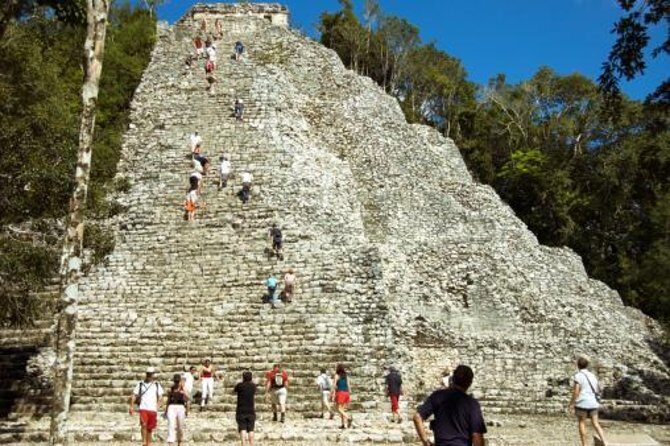
- Cobá’s Nohoch Mul: a 7-level structure about 42 meters tall, tied to the site’s biggest panoramic views
- Sacbé roads explained: the Mayan white roads used for trade and power
- Stone carvings + astronomical info: how the Mayans recorded events and studied the sky
- Cenote Kuxtal swim time: an included entrance with an hour in the water and jungle setting
- Typical Mexican lunch included: so you’re not scrambling mid-day
- Small group size: up to 18 travelers with certified bilingual guides
Cobá’s sacbé roads and Nohoch Mul: the Mayan power map
Cobá sits in a lush area of jungle and water. Think vegetation, open-air ruins, and the sense that this place was built to connect people through land routes and seasonal movement. The setting matters because it explains why Mayans didn’t just build temples; they built systems that tied together cities, trade, and religious life.
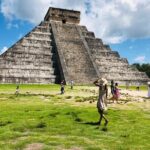
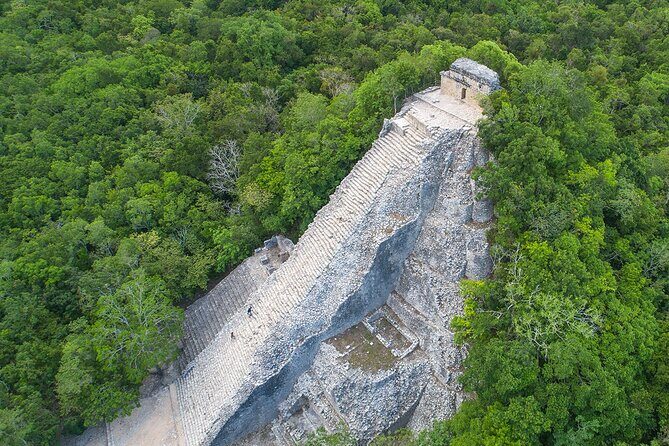
At the heart of Cobá is Nohoch Mul, widely known as the tallest building in the archaeological zones north of the Yucatán Peninsula. It’s a 7-level structure reaching about 42 meters (138 feet). What makes it memorable is the sheer climb: there are 120 steps from bottom to top, so even before you reach the views, you get a physical reminder that this wasn’t casual building. You’re climbing toward a point of observation and ceremony.
During your time here, you’ll also learn about the sacbé roads. These “white roads” were wide enough and purposeful enough to move goods and people, and that’s how Cobá’s network helped Mayans gain influence over long distances. When a guide explains the sacbé idea, the ruins start feeling less random and more like a real infrastructure you can picture.
One more detail that helps you understand Cobá: the area is known for lagoons and many cenotes. That means water wasn’t a separate topic from the ruins. It was part of the same worldview, and it’s why Cobá can feel both archaeological and alive.
You can also read our reviews of more tours and experiences in Cancun
Church Temple, Oval Temple, and ball games: more than a photo stop
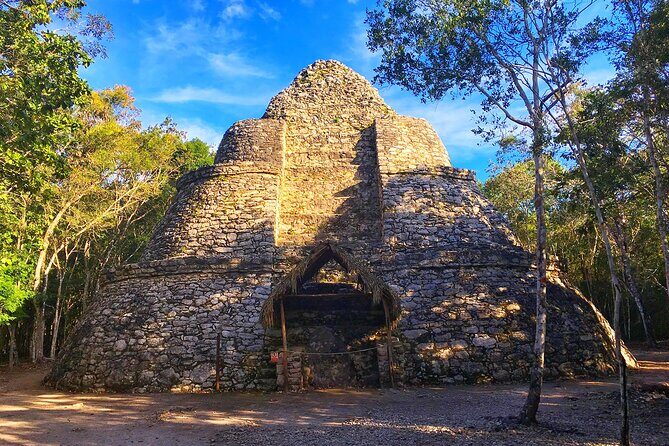
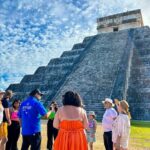
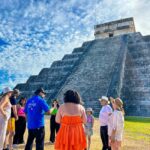
Cobá isn’t only about Nohoch Mul. You’ll also explore multiple key structures, including the Church Temple and the Oval Temple. These names might sound like modern labels, but they’re useful signposts once you’re on site. Your guide will connect what you’re seeing to how Mayan leaders expressed status, faith, and order through architecture.
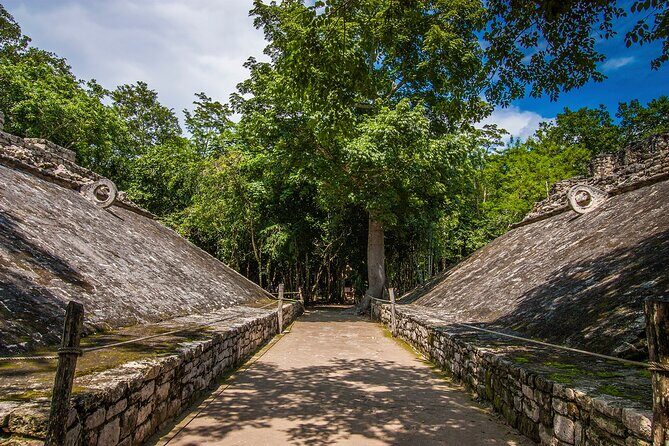
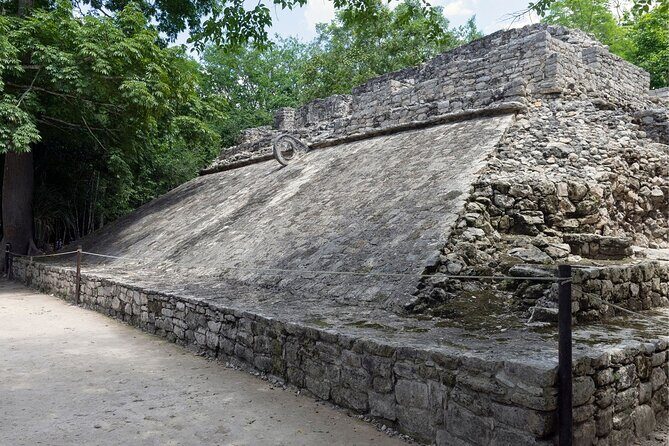
You’ll also spend time on the ball court area and learn about the ball games. Even if you don’t already know the rules or rituals, the cultural context is the point. In many Mayan sites, ball games weren’t just sport; they tied into myth, ceremony, and the idea of cosmic balance. A good guide will make that connection clear while you stand in the right spot and look at the stone features.
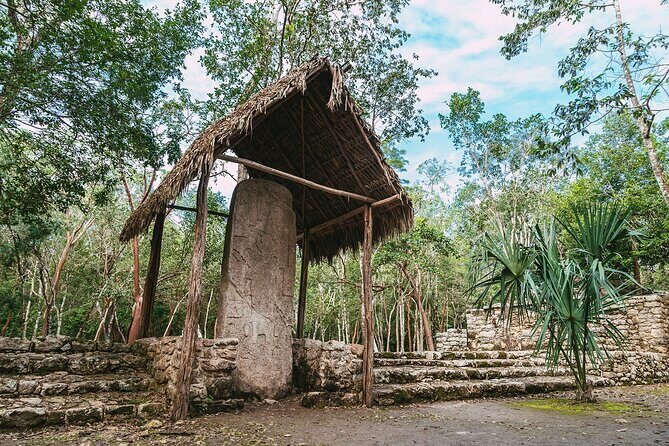
What I think makes this tour feel especially worthwhile is the focus on carvings and recorded knowledge. You’ll get an up close look at famous stone carvings, where Mayans etched important events. You’re not just seeing decorative stonework; you’re learning that these markings were information, like a historical log. That same theme continues with discussions of astronomical findings, which helps explain how the Mayans tracked time in a way that affected agriculture, ritual schedules, and leadership.
If you want to understand the Mayan calendar beyond the usual museum version, pay attention to how the guide ties timekeeping to the stones around you. The calendar shows up as more than dates on paper. It’s tied to what mattered—timing, authority, and celestial observation—so the ruins make sense as a working system.
As for pace, one important practical point: a good guide will adjust the day based on what you’re comfortable with. You should be ready to walk and climb, but you’re not stuck on one rigid “you must do everything” schedule. If you need to slow down, it helps to communicate early.
Cenote Kuxtal swim: a short break that still feels sacred
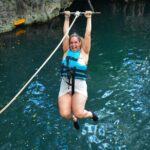
Cenote Kuxtal is the cooling-off moment. You’ll head there after Cobá, and you’ll have about an hour that includes admission. This is your chance to step from dry jungle paths into water that’s clear and calm enough to feel refreshing.
What’s special here is the setting. The cenote sits in a jungle-like environment, surrounded by vegetation, so it doesn’t feel like a theme-park pool. The water has spiritual weight in Mayan culture, and your guide should connect the cenote to the idea of sacred waters. Even if you’re not the type who follows rituals, the location helps you feel why people treated cenotes as more than a handy source of water.
A small caution: you should be comfortable with getting wet and moving carefully around cenote areas. The tour includes entry, but water access still needs basic sense and attention. Comfortable footwear and a careful mindset make a bigger difference than you’d think.
Also, umbrellas are included, which is a smart detail in this part of the world. It doesn’t guarantee sunshine, but it means you have one less thing to worry about, and it can help if weather shifts while you’re outdoors.
Lunch that’s actually part of the plan, not an afterthought
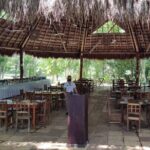
I like that lunch is built into the experience price. This isn’t a “good luck finding food near the ruins” situation. You’ll enjoy a typical Mexican lunch at a local restaurant, and you’ll also have water and light snacks during the tour.
For value, lunch matters because Cobá days can stretch fast. Once you start moving between structures, walking, and learning, you burn time and energy. Having food included means you’re not trying to solve hunger on a schedule you don’t control.
One practical tip: treat lunch as your anchor meal. Even if you’re not ravenous, eat enough to keep your energy steady for the cenote swim after. The day is short overall (about 3 hours total), so your body doesn’t get much time to recover if you skip meals.
Dietary notes are not specified, so if you have serious allergies or a strict diet, you’ll want to plan carefully and ask questions at booking. With tours like this, it’s always better to confirm than to hope.
Small group size: why up to 18 travelers feels better
This tour caps at 18 travelers, and that size does matter. In a small group, guides can move you through the site with less waiting and more flexibility. It also makes it easier to hear explanations about carvings, calendar meaning, and astronomical references without fighting for attention.
You’ll also have certified bilingual guides. In practice, that helps with two things: understanding the “why” behind what you’re seeing, and being able to ask questions on the spot. When the guide can explain the sacbé roads and Mayan calendar connections in clear terms, Cobá goes from impressive ruins to a story you can follow.
The group size also affects how the tour feels in the heat and on the ground. Cobá includes stairs and uneven paths. If your group is bigger, those bottlenecks become constant slowdowns. With a smaller group, you’re more likely to keep a comfortable rhythm.


Timing and pickup: start time versus when you’ll actually leave
Start time is 9:00 am, but it’s not the time you get picked up. Pickup depends on where your hotel is, and that timing can shift based on local routing. If you’re trying to line this up with other plans, build buffer time and treat pickup as the real clock that runs your morning.
Round-trip transportation is included from most hotels, with service windows based on the day:
- Cancun: pickup is available on Saturday only
- Riviera Maya: pickup is available on Tuesday and Saturday
This is a simple detail, but it can make or break the match between your travel dates and the tour. If your schedule doesn’t line up with the correct day, the tour won’t fit neatly.
The tour itself is about 3 hours total, with around 2 hours at Cobá and around 1 hour at the cenote. Because it’s time-structured, you’ll get a full experience without a long day out in the sun, but you also shouldn’t expect extra lingering time at every viewpoint.
GoPros, selfie sticks, and the drone rule you’ll want to know
This tour has clear photo and device rules. GoPros, tablets, and selfie sticks are subject to fees payable directly at the box office at the Cobá ruins. If you’re planning to bring any of those, budget for the possible fee and plan ahead for where to pay.
Professional photography equipment and drones are strictly prohibited. That’s a strong rule, and it’s the kind of thing that can turn into a hassle at entry if you don’t check beforehand.
Practical takeaway: if you want to travel light, bring your phone and regular camera. If you want action footage, consider bringing your GoPro but be ready for the box office fee.
You’ll also get umbrellas included. That’s helpful if weather turns, and it reduces the need to carry an extra rain item for a short tour.
Price and value: what you’re really getting for $159
At $159 per person, you’re paying for more than “a guided visit.” This price includes round-trip transportation from many hotels, admission to Cobá, admission to the cenote, a typical Mexican lunch, certified bilingual guiding, plus water and light snacks.
Here’s why that matters for value. If you tried to build this day yourself, you’d likely pay separately for transport between sites, entrance tickets, and guided context that helps you understand carvings and calendar references. Even if you’re a strong self-planner, Cobá and the cenote are not the kind of places you always experience best without interpretation. The guide turns stone and jungle into meaning, and that’s the part you can’t easily replicate with an app.
The group cap and language support also add value. When the tour is small and the guide is bilingual, you spend less time guessing and more time appreciating.
One more value note: this is a short commitment. Roughly 3 hours means you can fit it into a busy travel plan without losing a whole day. If you’re staying in Cancun or Riviera Maya and want a Mayan-culture hit without a long itinerary, this duration is a practical sweet spot.
Who should book this Cobá and Cenote day
This tour makes a lot of sense if you want:
- Mayan culture with context, not just a quick look at ruins
- A structured day that includes Cobá plus a refreshing cenote swim
- Bilingual guiding and a guided explanation of carvings, temples, and the calendar
It also fits families and younger travelers because the minimum age is 6 years old. Still, keep in mind that there’s moderate physical activity involved. The tour isn’t recommended for people with limited mobility, and Cobá’s stairs are a big factor.
If you enjoy learning while you walk, you’ll likely appreciate the way this tour connects architecture, carvings, and astronomy. If you prefer a very slow, low-effort day, you might find the pacing more active than you want.
Quick practical tips before you go
- Wear shoes that handle uneven ground and steps. Cobá is full of stairs and paths.
- Keep expectations realistic about climbing. Nohoch Mul includes a famous steep route of 120 steps.
- Plan for the cenote swim with a careful mindset around getting in and out.
- If you’re bringing a GoPro, selfie stick, or tablet, expect fees at the box office.
- If you’re booking from Cancun or Riviera Maya, double-check the weekday pickup match (Saturday-only from Cancun; Tue and Sat from Riviera Maya).
- Start time is fixed, but pickup depends on your hotel. Treat pickup timing as your real schedule.
Should you book this tour or skip it?
Book this tour if you want a focused, guided Mayan day that combines big-site ruins at Cobá with a genuine nature break at Cenote Kuxtal, all with lunch included. The price feels fair because it bundles transport, entrance tickets, guiding, and food into one simple plan.
Skip it if you need a very low-mobility experience, because Cobá involves stairs and moderate walking. Also skip it if you’re hoping for unlimited time at each stop; this day is short, so you get a satisfying highlight set rather than a lingering, free-form roam.
If your goal is to understand the Mayans through what they built and carved into stone, while still leaving time to cool off in a cenote, this is a strong choice.
FAQ
What time does the tour start, and when should I be ready for pickup?
The tour starts at 9:00 am, but pickup time depends on your hotel location. The pickup timing is different for each hotel, so don’t rely on the 9:00 am start time alone.
Is lunch included?
Yes. You’ll enjoy a typical Mexican lunch at a local restaurant as part of the tour price.
Do I need an entrance ticket for Cobá and the cenote?
Admission tickets are included for Cobá and Cenote Kuxtal, so you don’t need to buy them separately.
Is GoPro or a selfie stick allowed?
GoPros, tablets, and selfie sticks are allowed but subject to fees payable directly at the box office in the Cobá ruins. Drones and professional photography equipment are strictly prohibited.
How physically active is the day?
You should have a moderate physical fitness level. The tour is not recommended for people with limited mobility.
What’s the group size?
The tour has a maximum of 18 travelers.