REVIEW · COZUMEL
Open Water Diver Course
Book on Viator →Operated by Buceo en Cozumel | Medusas Dive Cozumel | Bucea por primera vez en la Riviera Maya · Bookable on Viator
Learning scuba skills in Cozumel feels doable.
This 3-day Open Water scuba certification course is built to move you from basics to real confidence, with classroom-style learning plus hands-on practice in shallow coastal water—then capped off with reef sessions around Cozumel. The goal is simple: help you become an independent diver who can use your international certification card to dive up to 18 meters, anywhere it’s accepted.
I like that the structure is split between shore training (focused, controlled, and coral-rich) and an on-boat reef day that pushes you to the real skill level. I also like the teaching approach from instructors like Aida and Eider, who are repeatedly described as calm, patient, and safety-focused, including extra support when fear shows up. One consideration: you’ll be on a tight daily rhythm (about 5 hours per day), and the program depends on good weather for the boat day.
In This Review
- Key Highlights Before You Go
- Cozumel Is a Smart Place to Start Open Water
- The 3-Day Flow: Shore Skills to Marine Park Reefs
- Day 1 and Day 2: Coastal learning in shallow, coral-filled water
- Day 3: Boat out for two reef sessions up to 18 meters
- Your Certification Card: The 18-Meter Limit (And the Kids’ Rule)
- Equipment, Your Body, and the Marine Environment
- Meet the Instruction Team: Aida and Eider’s Teaching Style
- Private Tour Format: What It Changes for You
- Time and Logistics: Where You Start, Where You End
- Price of $683.86: Does It Feel Like Good Value?
- Weather Matters More Than You Think
- Who Should Book This Course in Cozumel
- Should You Book This Open Water Course in Cozumel?
- FAQ
- FAQ
- What is the course duration?
- How deep will I be allowed to go?
- What happens during the first two days?
- What happens on the last day?
- Is this course private?
- What language is instruction offered in?
- Where do we meet?
- When does the activity run?
- What if weather is bad?
- Is there a minimum age?
Key Highlights Before You Go
- International certification card: lets you dive up to 18 meters (kids 10–11 go to 12 meters).
- 3 days of progression: shore skills first, then two deeper reef sessions on the final day.
- Real support in and out of the water: instructors named in feedback include Aida and Eider, with strong emphasis on patience and safety.
- Private format: it’s a private activity, so your group is the only one in the program.
- English instruction: offered in English, with a confirmation message after booking.
- Cozumel marine park reefs: the final day focuses on the reefs of the Cozumel marine park.
Cozumel Is a Smart Place to Start Open Water
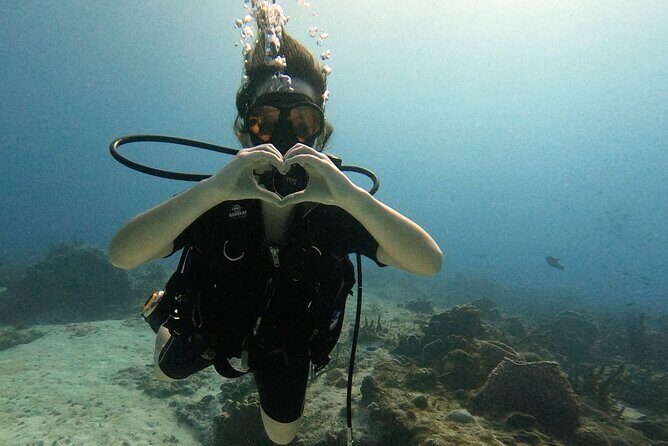
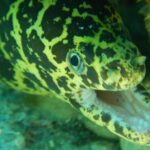
Cozumel makes the whole “learn scuba” process less intimidating. The island is known for clear, reef-filled water, and this course is designed around that. The first two days focus on shallow coastal water with corals and marine life, which is exactly where you want to build comfort: you can get used to breathing, buoyancy, and equipment without immediately jumping to deep water.
Then day three shifts to the reefs of the Cozumel marine park, with two underwater sessions and a target depth of 18 meters. That jump matters because it turns practice into something usable. You’re not just learning motions—you’re learning how the environment changes as you go deeper and how your body reacts when you relax.
If you want an “I can actually do this anywhere” card, this kind of setup is the right kind of pressure. Not too little, not too much—just enough to earn independence.
You can also read our reviews of more tours and experiences in Cozumel.
The 3-Day Flow: Shore Skills to Marine Park Reefs
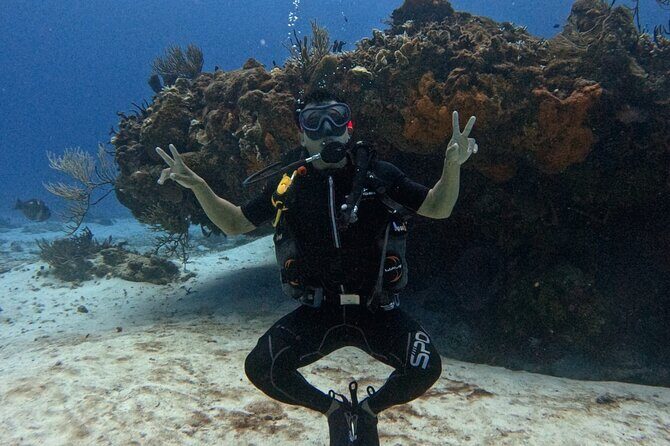
Here’s the rhythm I’d expect you to plan around: about 5 hours each day for 3 days, with the program running during 9:00 AM to 2:00 PM window hours.
Day 1 and Day 2: Coastal learning in shallow, coral-filled water
The first two days mix theory and practical work. You’ll do theoretical learning (online and in person) and then translate it into real skills right away. The practical sessions happen on the coast in a shallow area with corals and marine life.
Why that matters: shallow water gives you room to mess up safely. You can re-check how your gear feels, work on buoyancy and comfort, and learn how your body moves underwater. You also get time to meet the equipment and build a routine for using it.
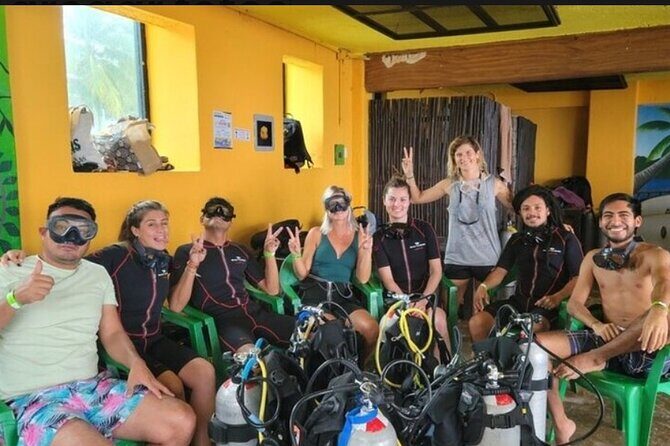
These days are usually where you build trust. From feedback about instructors such as Aida, the teaching style is described as clear and calming, with a strong focus on understanding—not just following instructions.
Day 3: Boat out for two reef sessions up to 18 meters
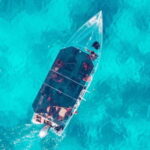
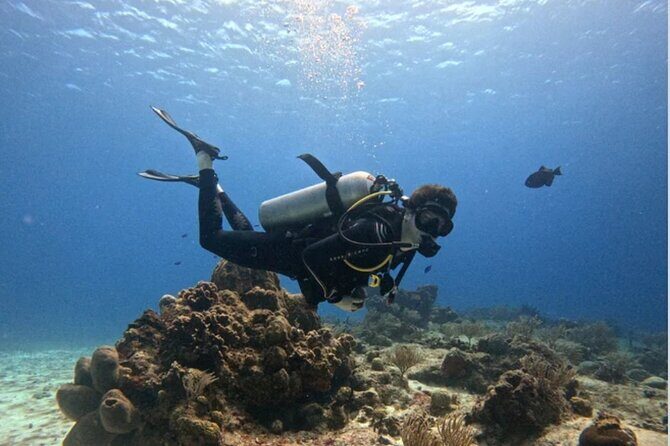
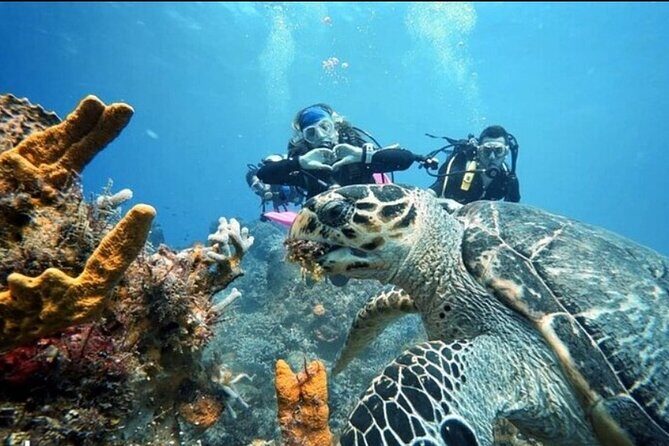
The last day is the payoff: you go out by boat and do two reef sessions in the Cozumel marine park, reaching 18 meters. That depth is the whole point of the Open Water certification card in this program.
Two reef sessions also help you learn the “real world” version of scuba skills. Conditions can vary even over short distances, and you’ll practice staying aware while still enjoying what’s around you. It’s not just technical—it’s also the first time many people feel like they’re truly underwater travelers.
One practical note: this boat day requires good weather. If conditions are bad, the activity can be rescheduled or refunded.
Your Certification Card: The 18-Meter Limit (And the Kids’ Rule)
This course is centered on the idea that you’ll earn an official, international certification card. The card is the key: it allows you to dive up to 18 meters anywhere the certification is recognized.
There’s one clear exception for young students: if you’re 10–11 years old, the maximum depth is 12 meters. That detail matters for planning and expectations. The structure of the course is built around learning independence, so depth limits affect what you can practice and what you’ll be expected to do confidently.
If your long-term goal is to dive in other countries, this card is what makes those future trips easier. Without it, you’re stuck with resort-style experiences. With it, you can plan trips based on your own comfort and certifications rather than only on guided fun formats.
Equipment, Your Body, and the Marine Environment
What I like about this course’s philosophy is that it’s not only skills on paper. It’s also about understanding what’s happening inside your body and what to expect from the environment.
The program includes practical learning to get to know:
- the equipment you’ll use
- how your body feels while using it
- the marine environment you’ll be in
That’s the difference between memorizing steps and actually becoming independent. When you understand why you’re doing something, you can troubleshoot in the moment. That’s also why calm instruction is such a big deal—especially if you’re nervous at first.
From feedback tied to this school, the teaching team is repeatedly described as patient and supportive, with instructors named like Aida and Eider. One person even highlighted that the owner was involved and helped them push past fear. That’s a strong sign that the school takes confidence seriously, not just checklists.
Meet the Instruction Team: Aida and Eider’s Teaching Style
You’ll work with instructors who focus on safety, clarity, and keeping you grounded. In the feedback you can see a consistent pattern:
- Aida is described as very professional, reliable, and calming underwater, with a teaching style that checks understanding rather than rushing ahead.
- Eider is also named as a super fun, knowledgeable instructor, and part of the supportive team that helps students feel prepared in and out of the water.
- Manuela is mentioned alongside Aida in the context of attention, patience, and security.
Another detail worth knowing: there are comments about instructors helping students explain details in a way that builds confidence. That matters if you’re the kind of person who learns best when you know what each step is supposed to accomplish.
And yes, there’s even mention of the school sharing sunset moments in the evening. That’s not something I’d treat as guaranteed for every schedule, but it does match the school vibe: people seem to leave not just certified, but also with a real connection to the island.
Private Tour Format: What It Changes for You
This is listed as a private tour/activity, meaning only your group participates. That’s a big value factor for a course like this.
In a group setting, instructors must balance multiple learning curves. In a private setup, your learning pace matters more. It also makes it easier to ask questions—especially if you have fear, anxiety, or past bad experiences.
Also, since the program runs about 5 hours per day, you’ll want that time to feel efficient, not like you’re waiting around. Private teaching usually helps it feel more personalized.
Time and Logistics: Where You Start, Where You End
You’ll meet at Buceo en Cozumel in downtown Cozumel, at Avenida 20 between Benito Juárez and 2 Nte, Centro, 77600 Cozumel, Q.R., Mexico. The activity ends back at the meeting point.
The program hours are listed as 9:00 AM to 2:00 PM (Monday through Sunday). With about 5 hours per day, those times line up with a full morning-to-early-afternoon schedule.
You’ll receive confirmation at booking, and you get a mobile ticket, which is handy if you’re hopping between tours during your Cozumel stay.
Price of $683.86: Does It Feel Like Good Value?
At $683.86 per person for roughly 3 days, the price isn’t cheap, but it’s also not random. You’re paying for a full learning progression: theory plus multiple practical sessions across different environments, plus a boat day for two reef sessions.
Here’s what makes it feel like value instead of just a single “try scuba” afternoon:
- You’re training toward an official international certification card
- You get structured learning over multiple days, not a rushed one-off
- You’re taught with a private format, which can improve comfort and confidence
- You practice in shallow water before being taken to 18 meters on the final day
If your goal is to earn the card and move on to future trips, the cost makes more sense than paying repeatedly for guided experiences. If you only want a one-time look at reefs, you’d probably compare against lower-cost intro snorkeling or short scuba try-outs—but for certification, this price looks fairly aligned with what a real training course costs.
Weather Matters More Than You Think
This experience requires good weather. If it’s canceled due to poor weather, you’ll be offered a different date or a full refund.
For you, the practical takeaway is simple: don’t schedule this right after a long day of travel where you’ll be stressed about delays. Leave yourself a little cushion so a reschedule won’t wreck your whole trip.
The course is built so that days 1 and 2 can happen in shallow coastal conditions, but the final day’s boat work and reef target depth depend on conditions.
Who Should Book This Course in Cozumel
This course is a strong fit if:
- you want an independent certification you can use beyond Mexico
- you’re okay with a 3-day commitment (about 5 hours per day)
- you prefer English instruction and clear teaching
- you like the idea of shallow-water practice before stepping into deeper sessions
It’s also a great choice if you tend to get nervous. The repeated emphasis on patient, calming instruction—especially linked to Aida—suggests you’re more likely to feel supported than pushed.
It may not be ideal if you have a tight schedule and can’t handle a multi-day course. Even though you’re training efficiently, scuba certification is still a process, not a quick activity.
Should You Book This Open Water Course in Cozumel?
I’d book it if your goal is true Open Water independence and you want Cozumel’s reefs to be part of the learning story. The combination of shallow coastal training, then a boat day to Cozumel marine park reefs up to 18 meters, is exactly the arc that turns fear into competence.
Double-check two things before you commit:
- you can comfortably handle a full 3-day schedule
- you’re fine with the fact that the boat day depends on weather
If that’s you, this course checks the boxes that matter: structured progression, safety-minded instructors (Aida and Eider show up again and again), and a real certification card that’s useful long after you leave the island.
FAQ
FAQ
What is the course duration?
The Open Water Diver course runs for 3 days (approximately).
How deep will I be allowed to go?
The certification card allows you to dive up to 18 meters. If you are 10 or 11 years old, the maximum depth is 12 meters.
What happens during the first two days?
The first two days include theory and practical classes in shallow coastal water with corals and marine life.
What happens on the last day?
On the last day you’ll go out by boat for two reef sessions in the Cozumel marine park, reaching the course depth target of up to 18 meters.
Is this course private?
Yes. It’s a private tour/activity, so only your group will participate.
What language is instruction offered in?
The course is offered in English.
Where do we meet?
You meet at Buceo en Cozumel, located in central Cozumel at Avenida 20 between Benito Juárez y 2 Nte, Centro, 77600 Cozumel, Q.R., Mexico.
When does the activity run?
The listed opening hours are Monday to Sunday, 9:00 AM to 2:00 PM.
What if weather is bad?
This experience requires good weather. If it’s canceled due to poor weather, you’ll be offered a different date or a full refund.
Is there a minimum age?
Yes. The minimum age is 10 years.