REVIEW · PLAYA DEL CARMEN
Cenotes diving
Book on Viator →Operated by Diversland Mexico · Bookable on Viator
First-time or seasoned, cenotes can steal your attention fast. This tour pairs classic Maya cenotes for the best morning sunlight effects, so you get that curtain of light and jungle views in the water. You’ll spend about 5 hours doing two underwater visits in two different cenotes, using pro equipment and a multilingual guide.
I especially like the fact that they handle the logistics: hotel pickup and drop-off across Playa del Carmen, Cancun, and the Riviera Maya. I also like that everything gear-related is included—tanks, weights, belts, and the rest—so you’re not hunting rental shops on vacation.
The main thing to consider is eligibility. You’ll need scuba certification proof (Open Water Diver or an equivalent), and the health questionnaire can rule out some conditions. If you’re new to buoyancy in enclosed underwater spaces, go in with patience and ask lots of questions early.
In This Review
- Key highlights to know before you go
- Why Chasing Cenote Sunbeams Actually Works
- How the 8:00 am schedule changes the whole experience
- Diversland check-in: where the day gets organized
- The cenote circuit: two different settings built for first-timers and photo lovers
- Chac Mool and Kukulkan: curtain-light and jungle views underwater
- Ponderosa (Jardin del Eden) and Tajma Ha (Taj Majal): mossy Eden and bat-cave palaces
- Equipment and instruction: what makes a cenote trip feel safe
- Price and value: is $260 worth it?
- Who this works best for (and who should plan carefully)
- Should you book it?
- FAQ
- What is the price per person?
- How long does the experience take?
- Is hotel pickup and drop-off included?
- Which cenotes are included?
- Do I need a certification proof?
- What is the minimum age?
- What is the group size limit?
- Is scuba insurance included?
- Can I cancel and get a refund?
Key highlights to know before you go
- Morning timing for light effects: expect the strongest sun beams when you start at 8:00am
- Two cenotes, different vibes: from Eden-like swimming pools to wide-open halls under bat caves
- Equipment included: tanks, weights, belts, and what you need for the water sessions
- Multilingual instruction: a guide helps you get comfortable and stay safe in changing underwater conditions
- Small max group: limited to 15 travelers, so you’re not stuck in a long cattle-car line
Why Chasing Cenote Sunbeams Actually Works
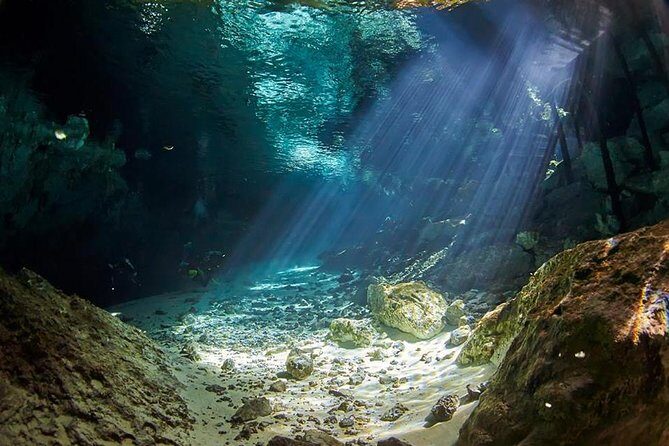
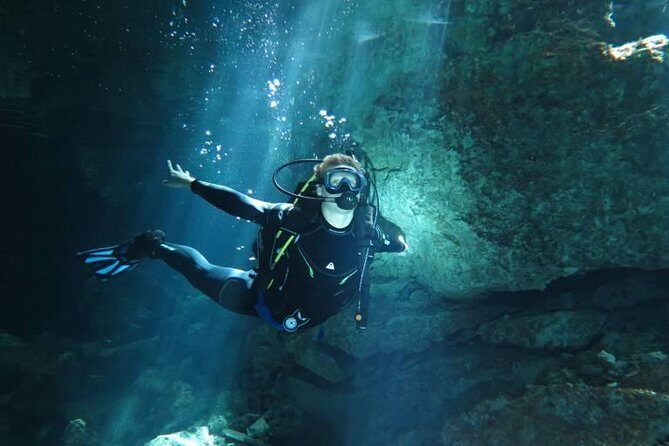
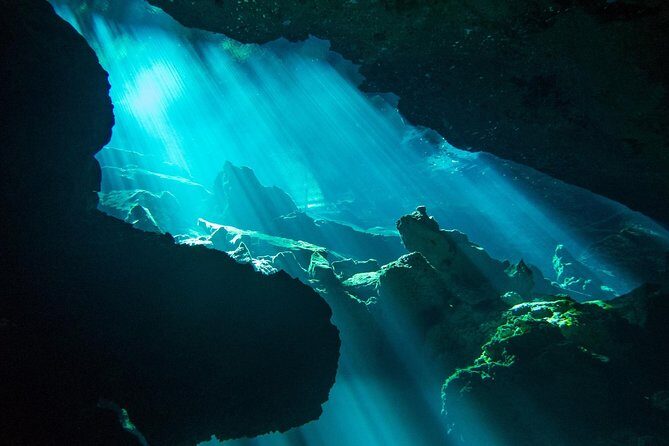
Cenotes are not just “pretty holes in the ground.” The real magic here is how sunlight behaves underground—especially in the morning. When you visit at the start of the day, light has a better angle to stream through openings and ceiling gaps, creating that curtain effect and high-contrast patterns underwater.
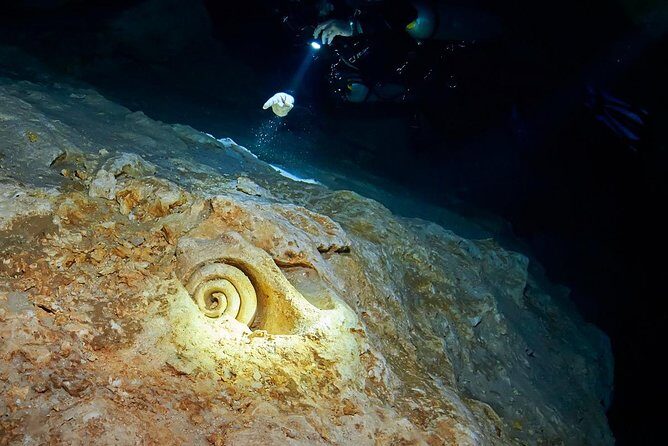
What I like about this setup is that it’s not random. The company intentionally focuses on cenotes known for light play, including big cave formations and fossil-like textures in the stone. You also get crystal-clear freshwater, so the visuals feel crisp rather than milky or murky.
One practical note: sunlight effects depend on conditions, like cloud cover and water clarity that day. Still, the 8:00am start is a smart bet, and you’re building your day around that advantage instead of hoping.
You can also read our reviews of more scuba diving tours in Playa del Carmen
How the 8:00 am schedule changes the whole experience
This tour runs about 5 hours, starting at 8:00am. That timing matters because the strongest “light show” is usually when the sun is high enough and angled well through the cenote openings.
Starting early also gives you a calmer feel on the water. You’re more likely to move through briefings and check-in without feeling rushed. And because you’ll be doing two underwater visits, you want your head clear for the first one—gear and breathing rhythm first, photos later.
If you’re the type who likes to take your time, morning helps. You can hover, look up at the light patterns, and actually process what you’re seeing instead of counting down the minutes until the next group photo.
Diversland check-in: where the day gets organized
Your day begins at Plaza Palmeiras (C. 11 Sur, Ejidal) at 8:00am, with hotel pickup available for all hotels in Playa del Carmen, Cancun, and the Riviera Maya. The activity ends back at the meeting point, so you’re not sent off into the jungle with a vague map and good intentions.
The first stop is Diversland, where you’ll typically get your gear and a run-through before the first water session. Since all equipment is included, your main job is to show up ready for the process: bring your certification proof, fill out any health questionnaire they require, and be honest about any conditions that could affect underwater safety.
This matters more than people think. In cenotes, you can run into changing water layers and visibility shifts. The better your early briefing and buoyancy basics, the more enjoyable (and less stressful) the rest of the morning feels.
The cenote circuit: two different settings built for first-timers and photo lovers
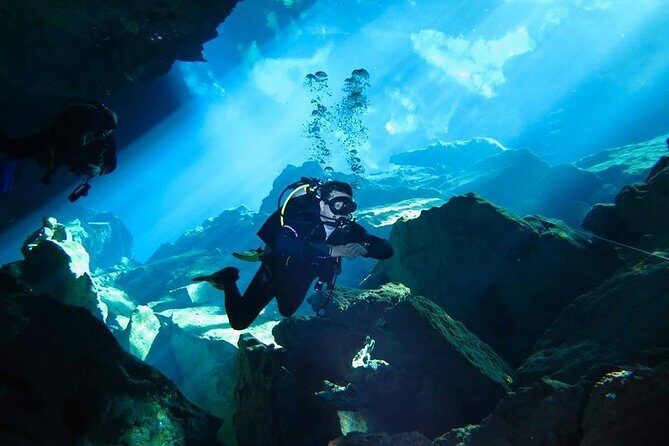
You’ll do two underwater sessions in two different cenotes. The experience is built around pairs of cenotes that are considered ideal for first sessions on the Yucatán Peninsula, with special attention to light effects.
From the options you might encounter, here’s the key idea: each cenote pair has its own “stage design.” One set leans toward sun curtains and jungle views underwater. Another set leans toward mossy rocks, Eden-like swimming-pool vibes, and big cavern chambers that feel like walking through a stone hall.
So you’re not just collecting two checkmarks. You’re comparing two environments in one morning, which is the best way to understand what cenotes do differently from open water.
Chac Mool and Kukulkan: curtain-light and jungle views underwater
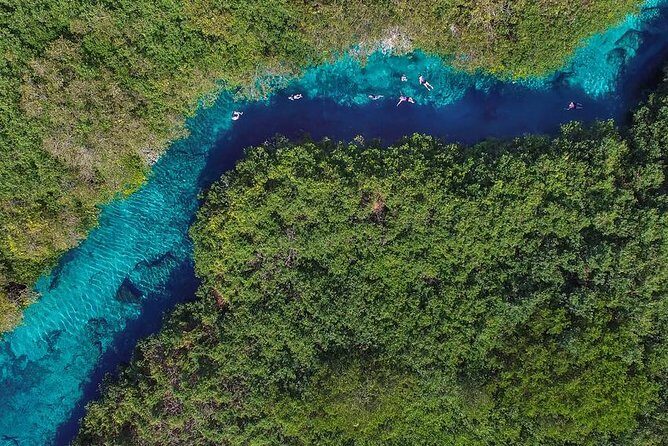
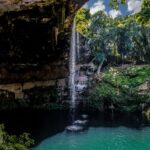
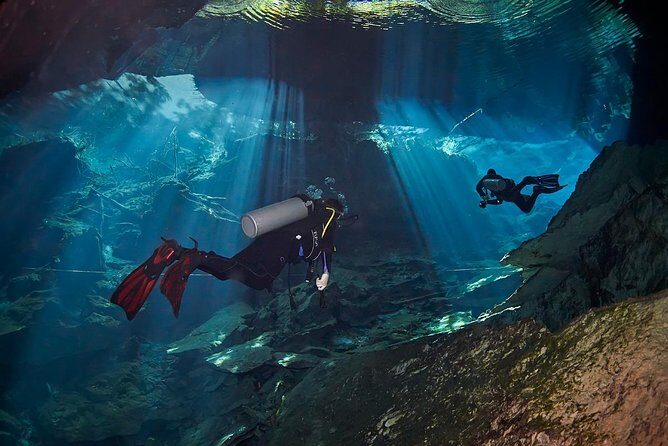
Chac Mool and Kukulkan are paired for a reason: they’re among the best cenotes for sunlight effects. In the morning, you’re likely to see that curtain of light streaming down, plus a strong sense of the jungle above the opening.
Expect crystal-clear freshwater and lots of visual texture—big cave formations, light play, and fossils or stone patterns that stand out more when the water is clear. This is a good choice if you want the underwater experience to feel atmospheric, not just “we’re underwater, cool.”
Potential drawback: because these are light-focused environments, you might find yourself looking up a lot. That’s normal. Just keep in mind that staring at light beams can mess with your body position if you’re not used to it. If you’re still learning buoyancy control, ask your instructor for a calm routine early.

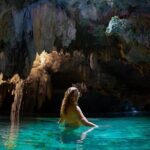
Ponderosa (Jardin del Eden) and Tajma Ha (Taj Majal): mossy Eden and bat-cave palaces
If you want a different mood, Ponderosa and Tajma Ha deliver. Ponderosa—also called Jardin del Eden—is described as a natural swimming pool of crystal-clear water. The center of attention here isn’t only the light; it’s also the life around the rocks.
You can find flora and fauna in the form of different fishes, turtles, and freshwater eels among large rock formations covered in green moss. In practice, that means you’re likely to spend more time watching small details close to the bottom and along the rock edges.
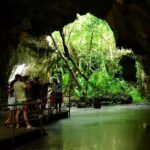
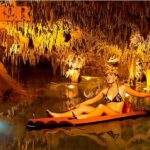
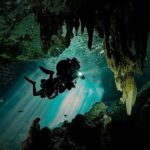
Tajma Ha—also called Taj Majal—is more cavern-like: a wide-open room underneath an air-filled bat cave. You get a cavern filled with light streaming through ceiling openings, plus stalactites, limestone formations, and huge chambers. It can feel like a palace made of rooms and corridors, not a “hole” in the ground.
What to watch for here is underwater layering. The tour information specifically notes halocline and light effects in several areas. Halocline is basically where water properties change noticeably, which can create a sharp visual boundary. Your instructor will guide you on where it’s best to move and how to keep your position stable.
Equipment and instruction: what makes a cenote trip feel safe
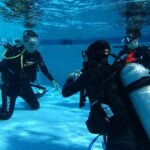
This tour includes the gear you need—tanks, weights, and belts—plus a professional multilingual guide. That combo is a big value point because cenote conditions can be different from open water: freshwater clarity, enclosed geometry, and shifting visual cues from light.
The most important thing an instructor can do in a cenote is help you get your body set up early. A well-fitted weight setup and a simple routine for breathing and neutral buoyancy makes the biggest difference to enjoyment. If you’re new to underwater conditions in enclosed spaces, you might feel a bit disoriented at first.
I like that this operator emphasizes multilingual instruction. When communication is clear, it’s easier to follow cues like where to look, when to hover, and how to manage your position if visibility changes.
And yes, the company has a reputation for careful planning and safe practices. I’ve seen enough accounts of instructors like Sergey, Liz, Dmitri, and Andy that it’s fair to expect a team that takes their coaching seriously, not just “hand you a mask and hope.”
Price and value: is $260 worth it?
At $260 per person, you’re paying for a full half-day experience with a lot included. You get:
- Two different cenotes
- All necessary equipment (not just a rental tank)
- Hotels pickup and drop-off
- Bottled water and snacks
- All fees and taxes
- A professional multilingual guide
The value logic is simple: cenote time is short, and underwater gear + guiding + transport usually add up fast if you try to assemble it yourself. Here, the cost covers the stuff that tends to be most annoying on vacation—scheduling, fitting gear, and making sure you’re paired with the right level of instruction.
If you’re traveling with a friend or small group, ask about group discounts, since it’s listed as an available feature. A small group can make the morning feel easier because the operator can keep organization tight while still letting you move at a human pace.
Also consider what’s not included: scuba insurance is optional. If you don’t already have coverage, it’s worth checking before you arrive so you don’t have to make a last-minute decision.
Who this works best for (and who should plan carefully)
This is built around people with the right skills. You’ll need proof of scuba certification (Open Water Diver or an analog), and the minimum age is 15.
It’s a strong fit if:
- You want a guided experience focused on light and formations, not just “time underwater”
- You like small-group organization with a max of 15 travelers
- You’re comfortable with basics like buoyancy and following instructor cues
Plan carefully if:
- You have any medical concerns that could affect underwater activity. The tour requires a health questionnaire, and conditions like asthma or heart conditions may prevent participation.
- You recently flew. It’s stated that diving within 24 hours of flying is not recommended, so schedule your trip with a little buffer.
If you’re new to buoyancy in enclosed spaces, treat the first water session as training time. Ask for calm check-ins. You’ll likely enjoy the second cenote more once you settle into your body rhythm.
Should you book it?
Yes—if you meet the certification requirements and you want a structured morning that’s all about light-filled cenotes and clear guidance. The $260 price makes more sense because it includes transport, gear, and two different cenote environments, not just one quick stop.
I’d book it especially if morning timing matters to you. This tour is designed around sunlight effects, and that’s the difference between “we went to a cenote” and “we watched light turn the water into something else.”
Skip or rethink if you’re unsure about health clearance, you’re within 24 hours of flying, or you don’t have the right certification proof. Cenotes are beautiful, but they’re still underwater environments that demand preparation.
FAQ
What is the price per person?
The price is $260.00 per person.
How long does the experience take?
Plan on about 5 hours (approx.).
Is hotel pickup and drop-off included?
Yes. Hotel pickup and drop-off is included, and pickup covers all hotels in Playa del Carmen, Cancun, and the Riviera Maya.
Which cenotes are included?
The experience combines two cenotes for your sessions: Chac Mool and Kukulkan, and Ponderosa (Jardin del Eden) and Tajma Ha (Taj Majal). You’ll do 2 sessions in 2 different cenotes.
Do I need a certification proof?
Yes. Evidence of scuba certification is required (Open Water Diver or an analog).
What is the minimum age?
The minimum age is 15 years.
What is the group size limit?
The tour has a maximum of 15 travelers.
Is scuba insurance included?
No. Scuba insurance is optional and not included.
Can I cancel and get a refund?
Yes, you can cancel for a full refund if you cancel at least 24 hours in advance. If you cancel less than 24 hours before the start time, the amount is not refunded.