REVIEW · PLAYA DEL CARMEN
Cenotes diving Dos Ojos and The Bat Cave
Book on Viator →Operated by Diversland Mexico · Bookable on Viator
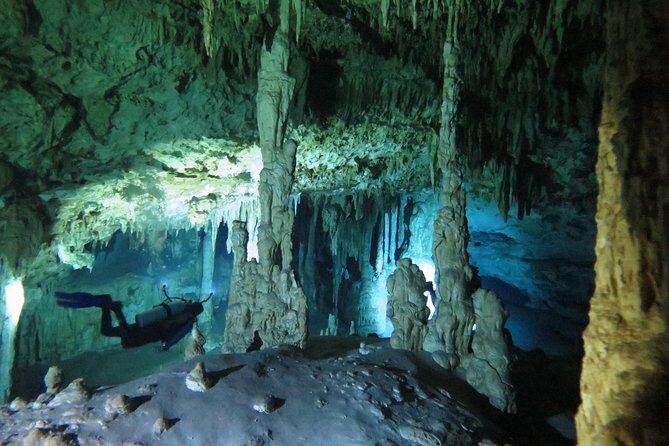
Cenotes with two totally different moods. This Playa del Carmen experience takes you into Dos Ojos and the Bat Cave—two connected worlds where the water clarity stays high and the cave atmospheres change fast. You’ll see giant stalactites and stalagmites in the brighter section, then switch to darker tunnels before you rise to watch flying bats.
I love the on-time hotel pickup and how smoothly the crew runs the day. I also love the clear, practical briefing, because it helps you feel calm in a place that looks wild and deep—but is set up for controlled, beginner-friendly water time. One thing to keep in mind: you’ll need proper scuba certification evidence for the certified sessions, plus a health questionnaire before you get in the water.
In This Review
- Key things to know before you go
- A smooth 8:00 a.m. start from Playa del Carmen
- Price and what $210 really buys you
- Dos Ojos and the Bat Cave: why these two stops work so well together
- Entering Dos Ojos: the Barbie line and those giant formations
- The Bat Cave route: low-light tunnels and the bat viewing moment
- Snorkeling instead of scuba: a good option for non-cert divers
- How private-group instruction helps you feel safe and comfortable
- The rest breaks that keep a 5-hour day enjoyable
- Certification, health checks, and the rules you shouldn’t ignore
- Gear and what you may still need to bring
- Meeting point and timing: know where to be
- Who should book this cenote scuba and snorkeling tour
- Should you book it?
- FAQ
- What’s the duration of the Dos Ojos and Bat Cave tour?
- Is hotel pickup included in the price?
- Do I need scuba certification?
- Is there an option for people who don’t scuba?
- What’s included with the scuba gear?
- Is equipment rental included?
- What are the age requirements?
- Are there any health or travel timing rules?
Key things to know before you go
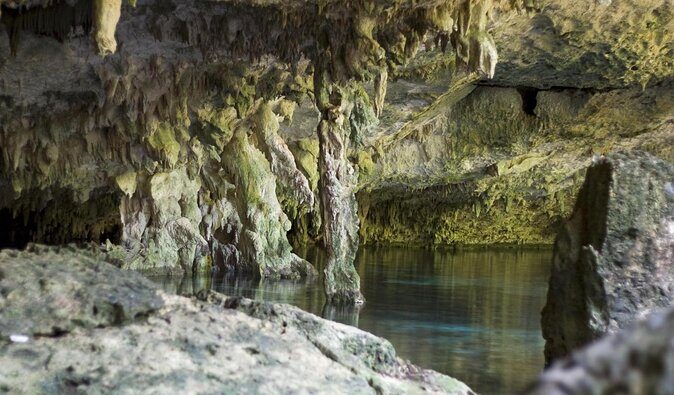
- Two cenotes, two totally different feels: bright “Barbie line” sections and a darker bat-cave route
- Beginner-friendly conditions: clear, shallow waters in Dos Ojos make first-time scuba less intimidating
- Professional instruction on hand: you’ll get guidance from multilingual staff and an instructor is assigned to your group
- Snorkeling option: if you don’t do scuba, snorkeling in the cenote is available
- Gear basics included: 2 tanks, weights, and a belt come with the tour
- Bats aren’t just a poster: you ascend at the end of the Bat Cave route to see them overhead
A smooth 8:00 a.m. start from Playa del Carmen
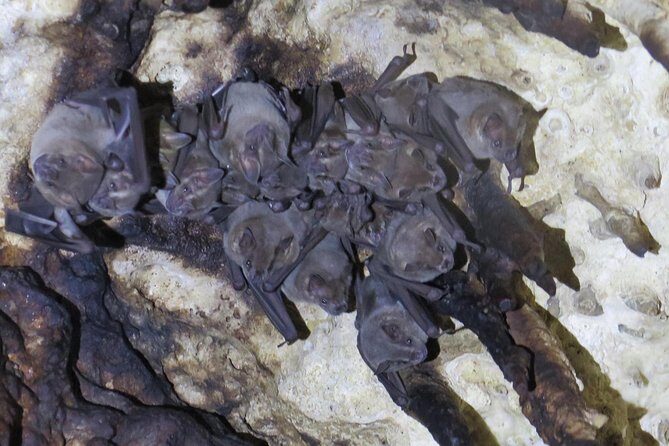
This tour is built around a simple plan: get picked up early, arrive ready, and spend your time actually in the cenotes instead of waiting around. The start time is 8:00 am, and the whole outing runs about 5 hours.
Pickup covers hotels in the Playa del Carmen center and Playacar, so you’re not stuck figuring out transportation on your own. If you prefer to meet at the plaza, the meeting point is Plaza Palmeiras (C. 11 Sur, Ejidal), Playa del Carmen.
If you’re the type who hates rushed mornings, this is a good fit. The day feels organized, and you can focus on the sights rather than chasing schedules.
You can also read our reviews of more scuba diving tours in Playa del Carmen
Price and what $210 really buys you
At $210 per person, the value here comes from what’s included. You’re paying for a guided, private-group-style day with two underwater sessions in two different cenotes, plus the basic dive-day essentials.
Included items that matter in real life:
- Hotel pickup and drop-off
- Professional multilingual guide
- 2 tanks, weights, and a belt
- Bottled water and snacks
- All fees and taxes
What’s not included:
- Equipment rental if you need it (listed as $15 USD/day)
- Diving insurance (optional)
Here’s how I’d think about the price: you’re covering transportation, guides, cenote access, and gear basics that can add up fast if you try to DIY. For many people, the biggest win is not the scenery—it’s reducing friction. When the crew handles the flow, you spend your energy on the water and the caves.
Dos Ojos and the Bat Cave: why these two stops work so well together
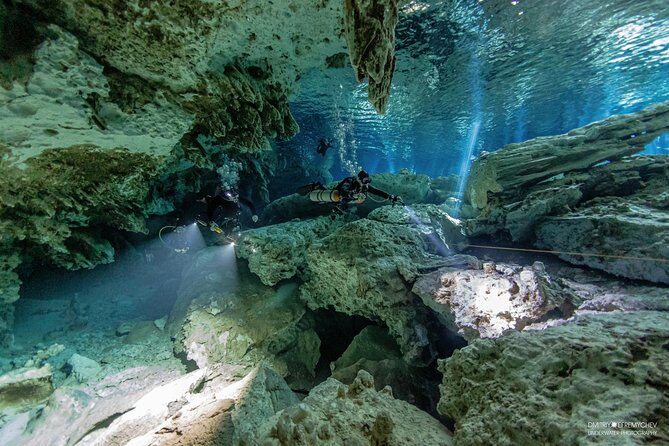
Dos Ojos and the Bat Cave are close enough that a single tour can do both. That’s a big deal, because cenotes aren’t just “pretty holes.” They’re distinct underwater systems with different light levels, different tunnel feelings, and different visuals.
Dos Ojos (named for two connected caverns that resemble two eyes) gives you a controlled first experience. The waters are known for great visibility, and the structure of the cenote makes it easier to understand what you’re looking at—stalactites, stalagmites, and huge rock formations that have been forming for millions of years.
Then the Bat Cave shifts the mood. Some parts feel darker, with low-light tunnels and rooms that make the whole place feel more like a cave than a pool. You’ll also get the payoff moment: you ascend to see flying bats.
This “bright-to-dark” pairing is exactly what makes the day feel worth it. It’s not the same room twice. It’s two different stories in stone.
Entering Dos Ojos: the Barbie line and those giant formations
Dos Ojos is split into two very different routes, and you get both. The brighter section is commonly called the Barbie line because it’s heavily illuminated and open in feel.
What you’ll notice right away:
- More light means the cave structure reads clearly
- Huge stalactites, stalagmites, and columns dominate the view
- The space feels more open, so you can take in details without the “maze” feeling
This is the segment that works best if you’re nervous about the underwater part. Clear visibility and a more lit environment help you stay oriented. If you’re doing scuba for the first time (with the required certification), this section gives you a confidence boost because you can see what’s around you.
The key drawback to remember: more light can also mean you’ll feel the “camera moment” pressure. If you want calm, slow viewing, bring the mindset of exploring rather than rushing for photos.
The Bat Cave route: low-light tunnels and the bat viewing moment
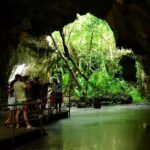
After Dos Ojos, the day moves to the Bat Cave route, and that’s where the atmosphere changes. This section has lower light, plus more tunnels and rooms, so the cenote starts to feel like a true underground cave.
You’ll follow a route that leads around an air-filled bat cave. Then you rise to view the bats and the decorations around the area. Even if you’re not a big wildlife person, this is one of those moments where you stop thinking about gear and start thinking about what you’re seeing.
A practical tip: because parts are darker, you’ll want to rely on your instructor for positioning and pace. Don’t fight the environment. Let the team’s guidance set the rhythm, especially if you’re still getting comfortable.



Snorkeling instead of scuba: a good option for non-cert divers
If you don’t want to do scuba, you’re not left behind. The tour offers snorkeling in the cenote for those who don’t dive.
This can be a smart choice if:
- you have zero interest in scuba certification logistics
- you want a lighter day plan
- you’d rather focus on surface views and formations
Keep expectations realistic. Snorkeling in cenotes is still cool and scenic, but it’s not the same experience as moving through the cave system with scuba. Still, with the water clarity that Dos Ojos is known for, you can get plenty of visual payoff.
If your group includes mixed experience levels, this option helps you travel together without splitting off into separate tours.
How private-group instruction helps you feel safe and comfortable
This is described as a private group setup, and the tour also notes that groups or families can have their own private instructor. That matters more than people think, because instruction quality is the difference between “I’m having fun” and “I’m worried the whole time.”
On guided cenote experiences, your stress level is usually tied to one thing: not knowing what’s happening next. A good briefing helps. You’ll get professional guidance before getting in the water, and your instructor stays involved during the process.
I also like the track record of this team’s communication style. In one example, Patrick was part of the operation and the day felt tightly run. Ana handled logistics and planning, and Dima brought both humor and strong local know-how to keep the group at ease. If you ever do a refresher, Elana is noted for being patient and giving clear, calm instruction.
No, you can’t bet your whole trip on who you get. But it’s a good sign when the crew’s approach shows up consistently: organized, safety-minded, and practical.
The rest breaks that keep a 5-hour day enjoyable
You’re not underwater the entire time. The tour includes time to rest and enjoy snacks between the underwater sessions.
That rest window is a big deal in cenotes, because your energy can drop faster than you expect, especially when you’re paying attention to buoyancy, breathing, and navigation. Snacks and bottled water keep the day steady rather than turning it into a cranky finish.
Also, it gives you a moment to observe the place without rushing. Cenote time can feel surreal—stalactites everywhere, light rays cutting through water, and that cave acoustics effect. A short break helps you actually take it in.
Certification, health checks, and the rules you shouldn’t ignore
This tour requires basic scuba certification for the certified sessions, and you’ll need evidence of scuba training (listed as Open Water PADI or equivalent). The minimum age is 15 years.
You’ll also fill out a health questionnaire before diving/scuba participation. Pre-existing medical conditions (including asthma or heart conditions) may prevent you from diving, and you’re advised to consult your doctor if you’re unsure.
One more important planning detail: diving within 24 hours of flying isn’t recommended. The idea is to reduce risk from pressure-related concerns, so plan your travel days with that in mind.
Also watch for equipment details. Even though tanks, weights, and a belt are included, equipment rental is listed separately at $15 USD/day. If you’re bringing your own kit, clarify what the crew expects you to have.
Gear and what you may still need to bring
The tour includes core scuba day gear: 2 tanks, weights, and a belt. That reduces what you have to haul or pay for.
What you’ll likely still need:
- basic personal items (towel, swimwear under/with gear)
- any personal snorkeling gear only if you’re not doing scuba (the tour notes snorkeling is offered, but doesn’t state what gear is included for snorkeling)
- extra layers for after water time, since you’ll want to warm up on the way out
If you’re renting equipment, budget for the $15 USD/day equipment rental cost. It’s listed plainly, so you can plan ahead instead of guessing.
Meeting point and timing: know where to be
The tour lists:
- Start: 8:00 am
- Meeting point: Plaza Palmeiras in Playa del Carmen
- End: activity returns to the meeting point
Even though pickup is offered from many hotels, I still suggest confirming what you’re told the day before. With cenote schedules, timing matters. You want to be early enough that you can check in and get briefed without stress.
This also affects how you plan the rest of your day in Playa del Carmen. Because the outing is about 5 hours and ends back at the pickup area, you’ll want an easy plan afterward—nothing that requires precision timing.
Who should book this cenote scuba and snorkeling tour
I’d point you toward this tour if:
- you want two cenotes in one: a bright one and a darker one
- you care about clear visuals and formations like stalactites and stalagmites
- you like guided structure, especially if you’re still building comfort underwater
- your group includes different comfort levels and you want one trip that still fits everyone (scuba for the certified, snorkeling for the rest)
It may be less ideal if:
- you’re looking for a long, slow, photo-only day with zero instruction
- you don’t want any paperwork like health questionnaires
- you can’t meet the certification requirement for the scuba sessions
Also, if you’re sensitive to cooler water or confined cave feelings, ask your instructor how the day pacing works before you commit. The tour is designed for beginner-friendly conditions, but you’ll still be in a cave environment.
Should you book it?
Yes—if you want a well-run Playa del Carmen cenote experience that gives you variety. The value feels strongest when you factor in hotel pickup, private-group style instruction, and the fact you get two distinctly different cenote experiences in about 5 hours.
Skip it if you don’t meet the certification rules for scuba participation or if paperwork and health screening would stress you out. Otherwise, this is a solid choice for a memorable day that mixes big-light rock views, darker tunnels, and a genuine bat moment.
FAQ
What’s the duration of the Dos Ojos and Bat Cave tour?
It runs for about 5 hours.
Is hotel pickup included in the price?
Yes. Pickup and drop-off are included for hotels in Playa del Carmen center and Playacar.
Do I need scuba certification?
If you want to participate in the certified scuba sessions, you’ll need evidence of open water scuba certification (PADI Open Water or equivalent).
Is there an option for people who don’t scuba?
Yes. The tour offers snorkeling in the cenote for those who don’t do scuba.
What’s included with the scuba gear?
The tour includes 2 tanks, weights, and a belt.
Is equipment rental included?
No. Equipment rental is listed as $15 USD/day.
What are the age requirements?
The minimum age is 15 years for cenote scuba participation.
Are there any health or travel timing rules?
You’ll need to complete a health questionnaire, and some medical conditions may prevent participation. Also, diving within 24 hours of flying isn’t recommended.