REVIEW · PLAYA DEL CARMEN
Cenote Diving – 2 Tank Dive Trip for Certified Divers
Book on Viator →Operated by Scuba Mobile Dive Center · Bookable on Viator
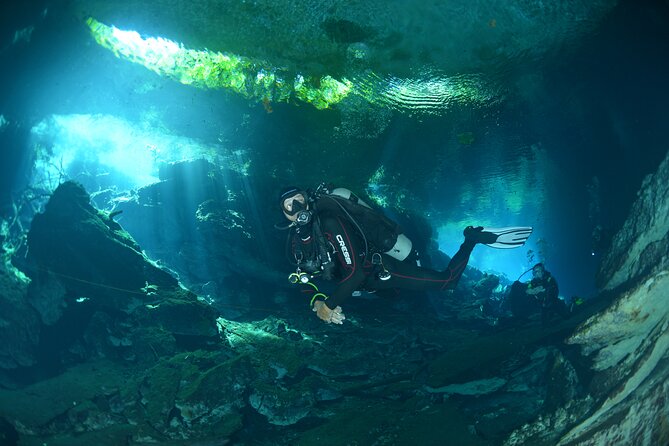
Spending a morning underwater is a lot more structured here. This two-tank cenote scuba trip in Playa del Carmen takes you into cavern passages at up to 50 feet (15m), guided by someone qualified to run full cave-style procedures. I like that the plan is simple and repeatable: meet up, gear up, go to a selected cenote, then do two focused underwater sessions with a built-in break.
My favorite part is the safety-by-design approach: you follow permanent lines inside the caverns, and the guide runs a clear pre-session briefing before you go in. The one thing to watch is the extra cost and rules around cameras—some cenotes restrict them, and others charge a fee—plus the cenote entrance charges cash-only.
In This Review
- Key things to know before you go
- Picking the Cenote Day: Chac Mool vs Dos Ojos
- Meeting in Playa del Carmen: 8:00 AM Start and Tight Check-in
- The 45-Minute Truck Ride: Why the Setup Matters
- Pre-Session Briefing and the Permanent Line System
- First Underwater Session: 45 Minutes, Up to 50 Feet
- The Surface Interval: Snacks, Sandwich, and a Real Reset
- Second Underwater Session: Two Tanks, One Focused Experience
- What’s Included vs What You’ll Pay Separately
- Included
- Not Included (the parts that can change your final total)
- Gear Rental Reality: Renting vs Bringing Your Own
- Who This Trip Suits Best (and Who Should Reconsider)
- Quick Planning Tips for a Smooth Cenote Day
- Should You Book This Cenote Scuba Trip?
- FAQ
- What time does the trip start, and how long does it last?
- Where do I meet for this experience?
- What scuba certification do I need?
- How many underwater sessions are included?
- How deep will I go?
- What’s included in the price?
- Are cenote entrance fees and cameras extra?
Key things to know before you go
- Two underwater sessions, one cenote: each lasts around 45 minutes, with a surface break between.
- Permanent lines in the caverns: you’re not relying on guesswork for navigation.
- Small group size: up to 8 people, which usually means less time waiting around.
- Clear depth limit: you’ll top out at 50 feet (15m).
- Food and drinks included: water/soft drinks plus snack and a sandwich during the break.
Picking the Cenote Day: Chac Mool vs Dos Ojos
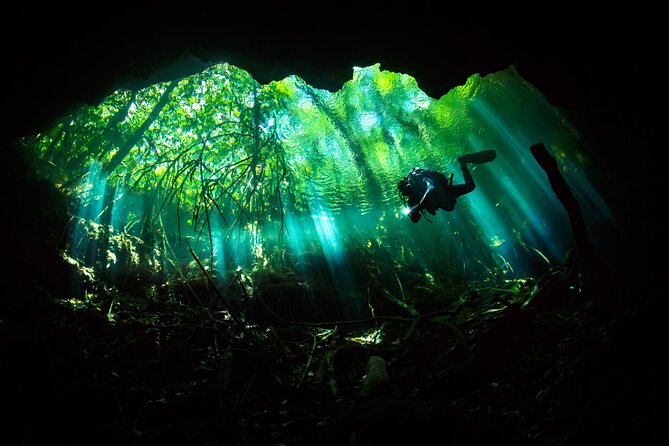
Your day centers on a single cenote chosen for you, commonly Chac Mool or Dos Ojos. That matters because each site has a different entrance fee (Chac Mool is 300 MXN, Dos Ojos is 600 MXN) and both charge separately from the tour.
Cameras are also tied to the specific cenote rules. Some privately owned cenotes don’t allow cameras at all, while others may permit them for an extra 20–60 USD, depending on the camera. If you’re the kind of person who brings a rig and expects to film everything, I’d plan to ask what’s allowed ahead of time—or be ready with backup plans.
The good news: you’re not showing up to a mystery situation with no guidance. Once you’re on-site, your guide sets expectations and runs procedures suited to the cavern environment.
You can also read our reviews of more tours and experiences in Playa del Carmen.


Meeting in Playa del Carmen: 8:00 AM Start and Tight Check-in
You’ll meet in the Centro area at Calle 4 Norte (Calle 4 Nte), near public transportation, and the start time is 8:00 AM. You’ll likely be doing the paperwork right after you arrive, then getting fitted with any gear you need before heading out.
This trip is set up for certified scuba participants. You’ll need proof of Open Water certification from a recognized agency, and you should have been in the water within the last 12 months. That recent-practice requirement is more important than it sounds: cavern-style underwater work rewards muscle memory and calm habits.
Group size is capped at 8, so your check-in usually won’t feel like you’re waiting behind a crowd. Still, do yourself a favor and show up early enough to get fitted without rushing.
The 45-Minute Truck Ride: Why the Setup Matters
After gear check, you board the truck for about a 45-minute drive to the chosen cenote. This travel time isn’t wasted. It’s part of the rhythm of the day, letting the team organize equipment and letting you settle in before your pre-session briefing.
Once you arrive, your guide—described as a Full Cave Diver and Open Water Scuba Instructor—does the briefing you need for this kind of environment. You’re not just told where to go; you’re coached on procedures and what the space feels like, including how line-following works in practice.
If you like structure, this is where you’ll feel it. You’re walking into the cavern knowing the rules, not improvising.
Pre-Session Briefing and the Permanent Line System
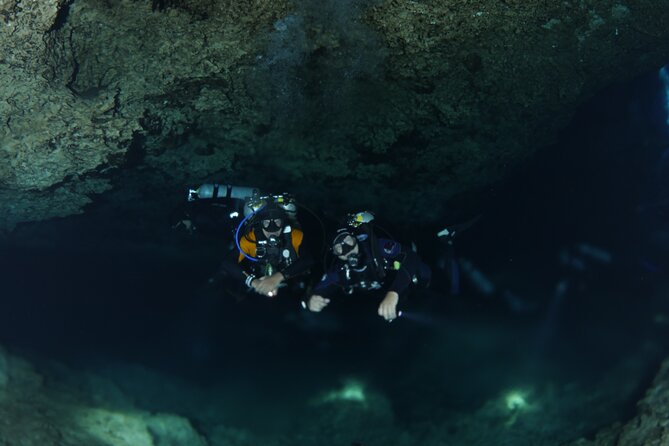
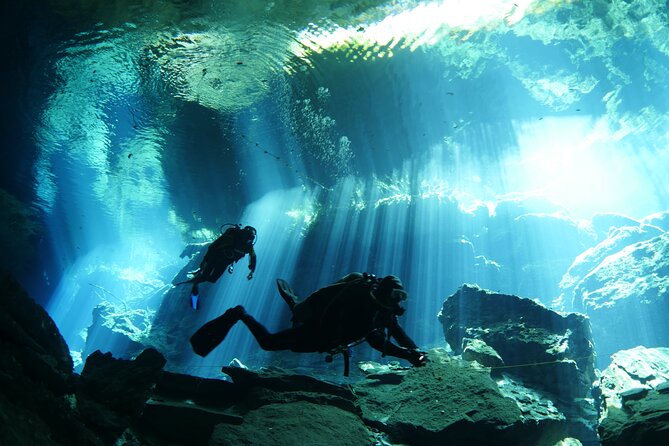
Inside the cenote, conditions can be confusing fast—tight turns, low visibility at times, and the fact that “straight ahead” doesn’t always help. That’s why this trip uses permanent lines set up inside the caverns.
Here’s what that means for your experience: navigation becomes procedural rather than guess-based. You’ll follow the lines during each underwater session, which helps keep the focus on buoyancy, calm movement, and staying comfortable through the plan.
Your guide’s background matters here. A full cave-style briefing approach isn’t about scaring you—it’s about getting you confident with procedures before you go in. Since each underwater session is around 45 minutes, you’re not expected to spend the entire day figuring things out. The briefing is the tool that makes the time feel productive.
First Underwater Session: 45 Minutes, Up to 50 Feet
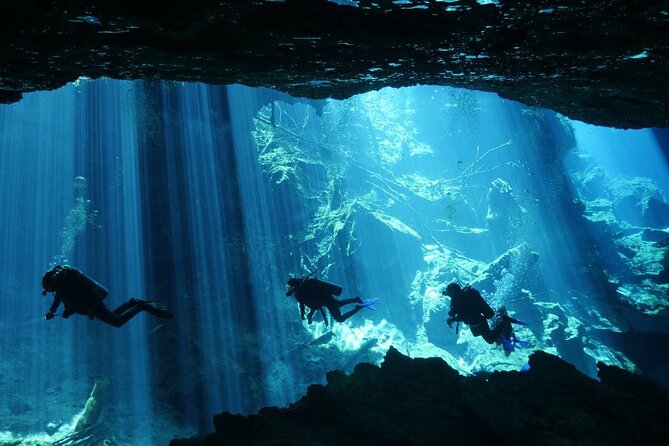
Each session is about 45 minutes, and the maximum depth is 50 feet (15m). That depth limit keeps the trip in a zone where certified participants can handle the time and profile with the right pacing.
The first session is usually when you get the feel for everything:
- how your buoyancy feels in a cavern setup
- how the line-following rhythm works
- how your breathing settles once you’re actually there
The included gear setup supports that. You’ll have tanks and weights provided, and there’s underwater light rental included for the trip. If you want to bring your own setup, you can—but if you need a full kit, you can rent a complete set for 25 USD, typically including BCD, regulator, a scuba computer, wetsuit, mask, and fins.
Plan to treat this first session as calibration time. The goal is to leave it feeling steadier for the second one, not to push hard.


The Surface Interval: Snacks, Sandwich, and a Real Reset
After the first session, you’ll have a surface interval of around 45 minutes. This break isn’t just downtime. It’s when you reset your head and body so the second session feels better instead of rushed.
Refreshments are included: water and soft drinks, plus a snack and a sandwich. For me, that’s a big value point. Cenote days are easy to underestimate—between the morning start and the truck ride, hunger hits fast.
This is also when you can ask practical questions: how you’re doing with buoyancy, whether you need a gear adjustment, or how to handle your comfort next time. You’re not stuck in limbo. The team gives you a proper buffer before the second session.
Second Underwater Session: Two Tanks, One Focused Experience
Then comes the second session, again around 45 minutes, still using the permanent lines. The two-tank setup is what makes this feel like a full experience rather than a short taste.
Why two tanks matters for you:
- If your first session feels a bit new, the second helps you get smoother.
- You have more total underwater time than a single-session trip.
- The plan stays controlled—you’re not hopping between multiple locations.
Also, because you’re staying with one cenote, you’re not repeatedly re-orienting to a new site. You’ll learn the general flow of the cavern environment as the day goes on, even if you’re not memorizing every turn.
The maximum depth stays the same for the day, so the focus is on comfort and procedure. It’s a great fit if you want a structured cavern experience at a reasonable time investment.
What’s Included vs What You’ll Pay Separately
This trip is very clear about what’s covered, which helps you budget without surprises.
Included
- 2 underwater sessions at one cenote
- Tanks and weights
- Roundtrip transportation from the meeting point
- Water and soft drinks
- Snack and sandwich
- Underwater light rental
Not Included (the parts that can change your final total)
- Full scuba equipment rental (BCD, regulator, scuba computer, wetsuit, mask & fins) is 25 USD
- Cenote entrance fees, cash only
- Chac Mool: 300 MXN
- Dos Ojos: 600 MXN
- Camera fees vary by cenote, often 20–60 USD, and some sites may restrict camera use entirely
For value, I’d treat the entrance fee and camera fees as “expected extras” if you’re planning to photograph. The included tank/weights and the light rental already save you the biggest hassle: sorting gear and lighting for the underwater part.
Gear Rental Reality: Renting vs Bringing Your Own
If you don’t have your own scuba gear dialed in, renting makes sense here. The full set rental is 25 USD and includes the core items you’d need to participate comfortably: BCD, regulator, a scuba computer, wetsuit, mask, and fins.
If you do bring your own, you’ll still get fitted and checked at the start. Even then, I’d make sure your mask fits well and your buoyancy setup is something you can rely on. The permanent line system helps with navigation, but it doesn’t fix gear issues.
One practical note: your underwater light needs are handled by the operator. That’s helpful because getting the right light for low-light cavern travel is rarely as simple as grabbing any flashlight.
Who This Trip Suits Best (and Who Should Reconsider)
This experience is positioned for participants from multiple levels, but with two non-negotiable conditions: Open Water certification and recent water time (within the last 12 months). You’ll also want moderate physical fitness. Cavern conditions reward controlled movement, and being physically comfortable helps you stay relaxed.
It’s a great match if you:
- want a guided cavern-style experience with structure
- like clear procedures and a line-following plan
- appreciate a day that includes real food and breaks, not just “go go go”
It might not be ideal if:
- you need camera freedom without extra fees or restrictions
- you haven’t been in the water recently and aren’t ready for procedural comfort
- you’re looking for a casual, no-briefing outing (this is planned and guided for a reason)
Quick Planning Tips for a Smooth Cenote Day
A few things will make your morning calmer.
- Bring cash for the cenote entrance fee (Chac Mool or Dos Ojos) because it’s listed as cash only.
- If you’re using a camera, plan around the fact that rules vary by privately owned cenote and fees can apply.
- Arrive early enough for paperwork and fitting—there’s a full schedule built around the 8:00 AM start.
- If you’re renting the full set, know what you’re getting: BCD, regulator, scuba computer, wetsuit, mask, and fins.
And since the caverns involve low-light conditions, don’t treat the included underwater light rental as optional. It’s part of how the experience runs.
Should You Book This Cenote Scuba Trip?
I’d book it if you want a structured, guided cavern-style underwater experience in Playa del Carmen, with two sessions, a real surface break, and permanent line support. The small group size (up to 8) and the clear depth limit (50 feet / 15m) also make this feel more controlled than “adventure-only” outings.
I’d think twice if your plan relies heavily on camera use, because cenote rules can limit what you can bring or add 20–60 USD fees. Also be honest about your recent scuba practice—this trip expects you to be comfortable within the last 12 months.
If you want a day that feels like a planned course rather than a gamble, this one fits that goal well.
FAQ
What time does the trip start, and how long does it last?
It starts at 8:00 AM and runs about 7 hours total, returning around 3:30 PM.
Where do I meet for this experience?
You’ll meet at Calle 4 Norte / Calle 4 Nte, Centro, Playa del Carmen, Q.R., Mexico, and the activity ends back at the meeting point.
What scuba certification do I need?
You must show proof of Open Water scuba certification from a recognized agency and have been in the water within the last 12 months.
How many underwater sessions are included?
The trip includes 2 underwater sessions at one cenote, each lasting about 45 minutes.
How deep will I go?
The maximum depth on these sessions is 50 feet (15m).
What’s included in the price?
Included are 2 sessions, tanks and weights, roundtrip transportation, water and soft drinks, snack and sandwich, and underwater light rental. Full scuba equipment rental is not included.
Are cenote entrance fees and cameras extra?
Yes. Cenote entrance fees are listed as cash only (Chac Mool 300 MXN, Dos Ojos 600 MXN). Camera rules vary by cenote; some don’t allow cameras, and others charge 20–60 USD depending on the camera.