REVIEW · PLAYA DEL CARMEN
Underwater Photo Shoot Experience in Cenote
Book on Viator →Operated by DriftCurrent photography & adventures · Bookable on Viator
A quiet cenote can feel like a reset button. This private underwater photo shoot in Playa del Carmen pairs scuba-style instruction with gentle styling, so you get great portraits without needing advanced swimming skills. I especially like the way they teach breath holding and posing step-by-step, then help you nail the look with outfit guidance and matching light fabrics. A small consideration: you’re going to be in and around cenote water, so if you’re uneasy with being close to water, you’ll want to go in with a calm mindset and listen to the coaching.
What makes it interesting is the mix of nature and craft. You start with briefing and relaxation, then move through a couple of cenote scenes (Cristalino first, then Cristal and Escondido) for photo and video clips that are mostly taken near the surface. The one drawback to plan for is weather: the experience depends on good conditions, so there’s a chance of rescheduling if the cenotes don’t cooperate.
In This Review
- Key highlights you’ll actually feel during the shoot
- Private underwater portraits in Cenote Cristalino and beyond
- What happens before you get the camera shots
- A styling-led look: outfit advice and light fabric support
- The first scene: Cenote Cristalino and a gentle start
- Second stop variety: Cenote Cristal and Escondido scenes
- Safety and comfort: how they keep it easy for non-experts
- Photo and video results: what you actually take home
- Who this is perfect for (and who should think twice)
- The “soft skills” that make the difference
- Timing, meeting point, and how to plan your day
- Value check: what’s included, what costs extra, and what you’re really paying for
- Should you book this cenote underwater photo shoot?
- FAQ
- What’s the duration of the Cenote underwater photo shoot?
- Is it a private experience?
- What language is the tour offered in?
- Do I need strong swimming skills or to hold my breath for a long time?
- Which cenotes are included?
- What’s included in the price?
- What should I bring or arrange myself?
- Does weather affect the experience?
- What’s the cancellation window?
Key highlights you’ll actually feel during the shoot
- Near-surface photo plan: most shots are taken close to the surface, so you do not need to hold your breath for a long time
- Breathwork + modeling coaching: you get relaxation and breath-holding techniques plus clear posing guidance underwater
- Outfit consultation and fabric matching: styling support helps your clothes look right in cenote light
- Two-scene cenote route: Cenote Cristalino first, then Cenote Cristal & Escondido for different looks in one session
- Professionally edited photos and clips: you get photos with post editing, plus video clips, not just raw pictures
Private underwater portraits in Cenote Cristalino and beyond
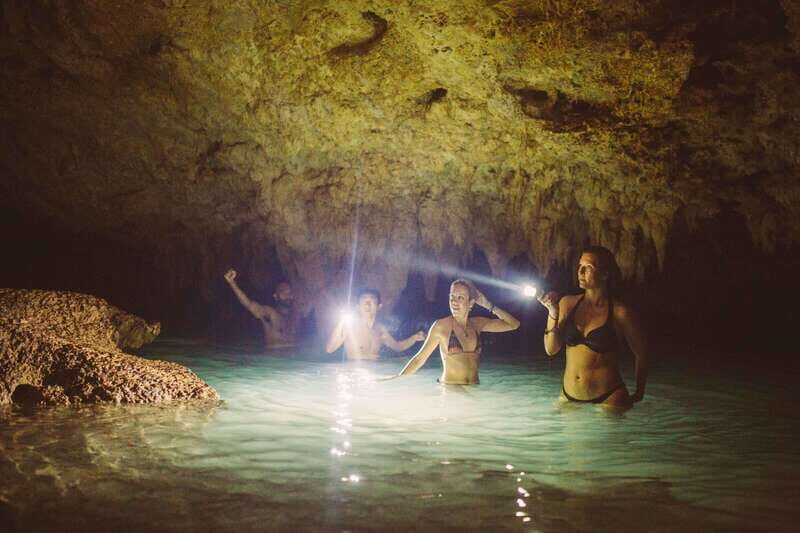
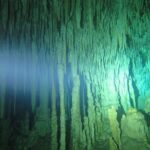
This experience is built for people who want underwater photos but do not want stress. You’re in a cenote, surrounded by natural rock and light, and the shoot is organized around scenes where your body position matters and your comfort matters more. The best part is that the whole flow is designed to be approachable: you get guidance before you’re expected to do anything underwater.
I like that the format is private, meaning it’s only your group. That usually helps with pacing, especially during a session that includes breathwork, positioning practice, and actual photo time.
Also, you’re not stuck with one setting. You start at Cenote Cristalino, then move to Cenote Cristal and Escondido, which gives you variety in the backdrops and lighting without turning the day into a long multi-stop adventure.
You can also read our reviews of more tours and experiences in Playa del Carmen.

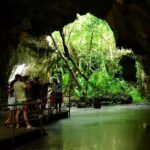

What happens before you get the camera shots
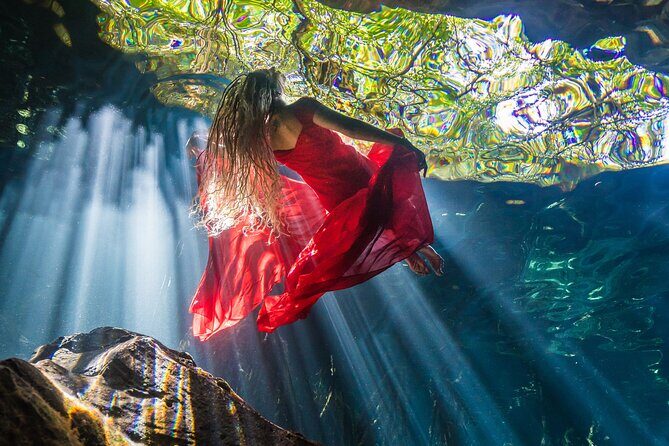
Expect a structured warm-up that feels more like training plus art direction than a random photo session. It begins with preparation and an initial briefing, and then you’ll go into relaxation and breath-holding techniques. The tone is calm and instructional, with the idea that you can learn what to do without being a “natural” swimmer.
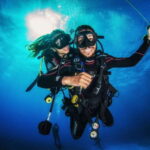
The coaching comes from scuba instructors, and that matters because underwater posing is not just about looking good. It’s also about how you move your arms, how you control your body angle, and how you manage breathing so you can stay comfortable and focused while the photographer gets the shot.
You’ll also receive posing tips based on your underwater skill level. That’s a big deal because it changes what you attempt. If you’re newer, you get a safer, simpler set of poses and camera angles. If you’re more comfortable, you may be given more creative options.
A styling-led look: outfit advice and light fabric support
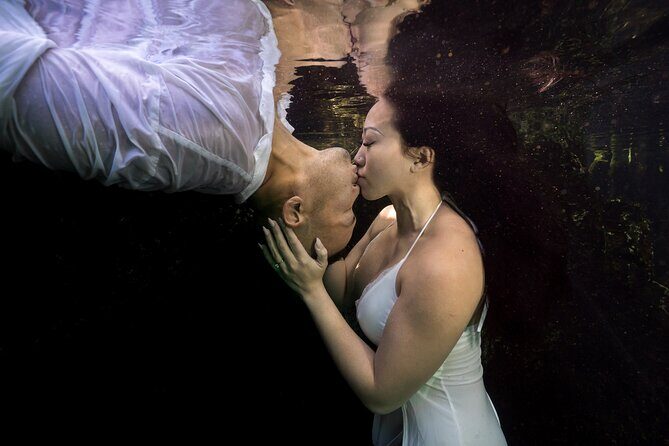
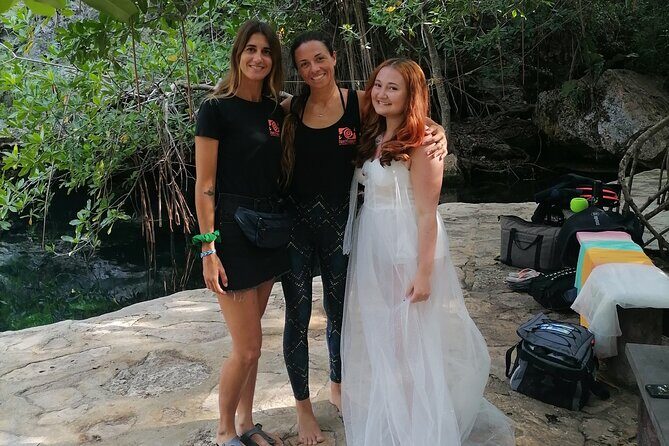
Your photos will live or die on how your clothing behaves in water and in cenote lighting. That’s why this shoot includes fashion-style input, with an outfit and theme consultation done via email. In practice, that helps you show up with a plan instead of guessing what will work.
During the session, you can also match your outfit with light colored fabrics available for the shoot. This is exactly the kind of detail that makes underwater photos look intentional. Light fabrics tend to float and move in a way that photographs well, and they can help create softer shapes against darker rock.
One more practical note: clothes and makeup are not included. If you want the styling to look polished, plan your wardrobe ahead and bring the items you discussed in your email consult.
The first scene: Cenote Cristalino and a gentle start
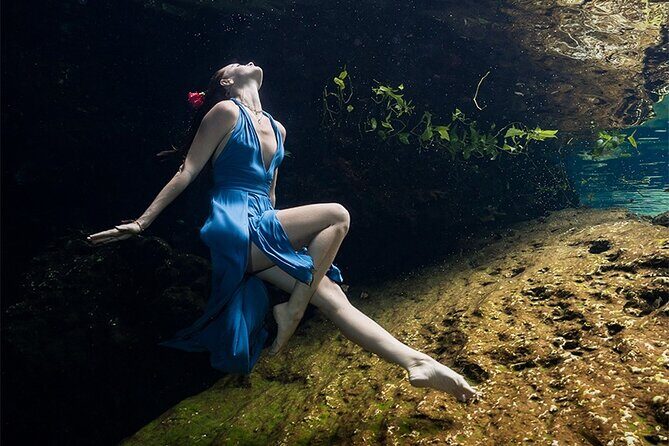
Cenote Cristalino is your starting point, and it sets the tone for the whole session. You begin the photo work once you’ve had the briefing and breathwork basics, so you’re not thrown into the deep end of a photo plan.
This first stop is a smart choice. It gives you time to settle into the experience while you build confidence with simpler poses and near-surface shots. You also get used to how the photographer directs you, and you can learn what feels natural for your body in the water.
Because you’re learning while shooting, timing matters. You’ll get more value if you follow the instructor cues quickly and avoid overthinking. If you stay loose and follow the plan, your photos will look more effortless.
Second stop variety: Cenote Cristal and Escondido scenes
After Cenote Cristalino, you continue at Cenote Cristal & Escondido. This is where the shoot earns its “more than one look” promise.
Different cenotes can change the vibe of your photos: lighting feels different, rock textures look different, and the water surface can affect how light falls. That’s why having two stops is more than a checklist item. It’s how you go from one type of portrait to another within the same 2.5-hour window.
The coaching doesn’t disappear at stop two. You’re still guided on posing and comfort. If you’re tired, you’re also better positioned to request adjustments. The point is to keep the session feeling safe and smooth, not rushed.

Safety and comfort: how they keep it easy for non-experts
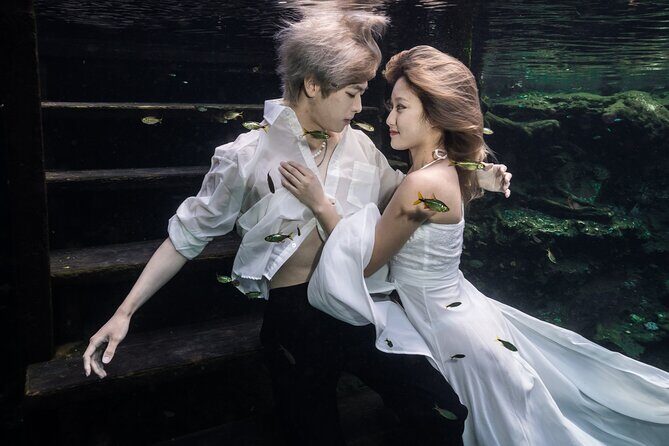
You do not need particular swimming skills, and you do not need to hold your breath for a long time. That’s the heart of the experience, and it affects everything: pacing, shot selection, and how long you’ll spend practicing before camera time.
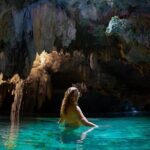
The near-surface strategy is smart. It lets you focus on posture and expression instead of fighting for breath or panicking about depth. And since the photographer adapts the type of photography based on your wishes and comfort level, you’re not stuck doing one formula.
One thing I appreciate from the vibe of the experience is the emphasis on body awareness. You’re encouraged to listen to your body underwater and enjoy the quiet of the cenote. That kind of cue helps you stay calm, and calm usually shows up in the photos.
Photo and video results: what you actually take home
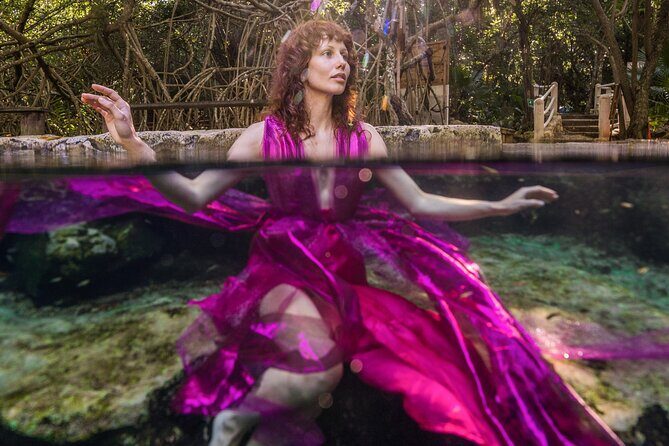
You’re getting professional photos with post editing, which is where most “underwater shoots” either succeed or fall apart. Raw underwater images can look flat or murky if color and contrast aren’t corrected. Here, post editing is included, so you can expect the final set to look intentional.
You’ll also receive video clips. That’s a nice bonus because underwater movement is hard to fake in stills. Even short clips can capture the fabric flow, the gentle movement of your pose, and the mood of the cenote.
You should expect that most of the shoot is centered on shots near the surface, which often means your results will look cleaner and more flattering. The photographer can focus on expression and composition instead of relying on long breath holds or complicated underwater maneuvers.
Who this is perfect for (and who should think twice)
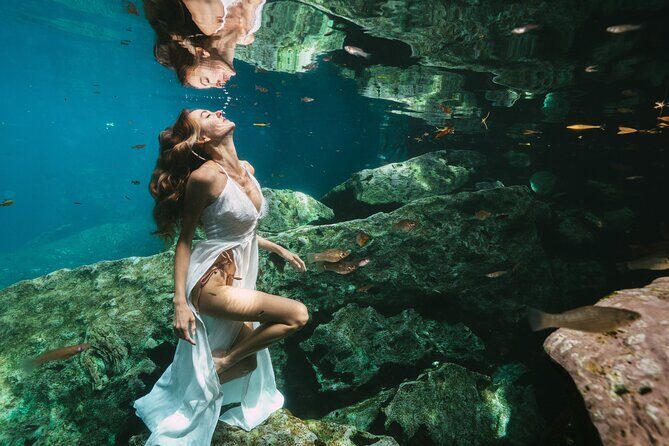
This works especially well if you want something Instagram-worthy but you do not want a “serious diver” experience. If you’re comfortable following directions, staying calm around water, and enjoying guided practice, you’ll likely love it.
It’s also a good fit if you want a private, story-like session. Starting at Cenote Cristalino and continuing to Cristal & Escondido gives you variety without needing a full day of logistics.
If you’re the type who gets anxious in water, be honest with yourself. The session is designed to be approachable, but it is still an underwater photo shoot. You’ll get the best results if you communicate your comfort level early and you trust the instructors and photographer.
The “soft skills” that make the difference
Underwater photos look easy when someone is guiding you well. The experience leans into that with patient instruction and modeling tips that help you translate your style into body angles underwater.
You may see names like Esther and Eleonora referenced in the experience, and their style comes through in the feedback: patience, ease, and making the shoot feel enjoyable rather than technical. That kind of coaching matters because confidence changes your movement and your face in every frame.
A practical tip for you: go in with a clear idea of what you want your photos to feel like. Casual, elegant, meditative, playful, serious. Then share your wishes. When the photographer adapts the approach to your comfort and goals, you’ll feel more in control.
Timing, meeting point, and how to plan your day
The session runs about 2 hours 30 minutes. That’s long enough to include briefing, breathwork practice, two cenote stops, and actual shooting time, without eating your entire day.
You meet at Cenote Cristalino at 77734 San José, Q.R., Mexico, and the tour ends back at the same meeting point. Transportation is not included, so plan your arrival and departure accordingly. If you’re staying in Playa del Carmen, figure out how you’ll get there and back with a buffer.
This activity is offered in English, and it’s near public transportation. If you’re traveling with limited time, that convenience helps.
Value check: what’s included, what costs extra, and what you’re really paying for
Instead of paying for a basic click-and-go, you’re paying for instruction plus the production side. Included are professional photos with post editing, video clips, cenote entrance fees, meditation and breathworking techniques, and modeling tips. You also get outfit and theme consultation via email.
What’s not included is transportation to the cenote, plus clothes for the photo shoot and makeup. In other words, the experience covers the creative direction and results, but you supply your look.
That’s why the value feels strong. You’re not just buying access to water and a camera. You’re buying the teaching, the styling support, and the finished deliverables.
Should you book this cenote underwater photo shoot?
Book it if you want a private, guided underwater photo session with real support for breathwork, posing, and styling. It’s ideal for first-timers and anyone who wants near-surface shots without advanced skills. The added benefit is the two-stop setting, which gives you more variety in one compact 2.5-hour session.
Think twice if you get strongly anxious around water, or if you’re looking for a long, adventurous underwater experience. This is more about comfortable portraits and body-friendly instruction than underwater thrill-seeking.
If you want photos that look crafted and calm, and you’re open to listening and adjusting in the water, this is an excellent choice for Playa del Carmen.
FAQ
What’s the duration of the Cenote underwater photo shoot?
It’s approximately 2 hours 30 minutes.
Is it a private experience?
Yes. Only your group will participate.
What language is the tour offered in?
The experience is offered in English.
Do I need strong swimming skills or to hold my breath for a long time?
Most travelers can participate, and you do not need particular swimming skills. Most photos are taken next to the surface, so you are not expected to hold your breath for a long time.
Which cenotes are included?
You’ll visit Cenote Cristalino first, then Cenote Cristal & Escondido.
What’s included in the price?
Included are professional photos with post editing, video clips, meditation and breathworking techniques, modeling tips, outfit and theme consultation via email, and cenote entrance fees.
What should I bring or arrange myself?
You’ll need transportation to the cenote. Clothes for the photoshoot and makeup are not included, so you’ll want to plan those.
Does weather affect the experience?
Yes. This activity requires good weather. If it’s canceled due to poor weather, you’ll be offered a different date or a full refund.
What’s the cancellation window?
You can cancel for a full refund up to 24 hours in advance. If you cancel less than 24 hours before the start time, the amount paid is not refunded.