REVIEW · MERIDA
Merida: Hacienda Sotuta de Peon w/ Cenote & Henequen Tour
Book on GetYourGuide →Operated by Hacienda Sotuta de Peón · Bookable on GetYourGuide
Green Gold makes a great story.
Just 45 minutes from Mérida, Hacienda Sotuta de Peón mixes 19th-century industry with real Yucatecan nature. You’ll walk restored factory spaces tied to the henequen boom, then ride out through agave fields the way workers once did—slow, steady, and surprisingly scenic.
I love the sisal processing demonstrations. They explain how “green gold” turned from plant to fiber, then to usable products, with working machinery you can actually watch. I also love the cenote swim at Dzul Ha, where the water is clear enough that you’ll feel your whole body cool down fast.
One consideration: this is a group tour, and you can get occasional background noise when people chat in different languages or when families are along. If you really want every word, sit where you can hear the guide clearly and don’t plan on catching 100% of details inside every building.
In This Review
- Key highlights worth penciling in
- Entering Hacienda Sotuta de Peón: More than a pretty hacienda
- Understanding henequen and sisal: The Green Gold story in plain terms
- The mule-powered “Trucks” and the ride through agave country
- The Mayan house visit: context you can actually use
- Cenote Dzul Ha: swimming time with clear water and easy logistics
- Lunch at Restaurante KIH: included food that finishes the day well
- Tour length and what to expect hour by hour
- Price and value: Is $58 a fair deal?
- Group size, guide language, and how to get the most out of it
- Best fit: who should book this tour
- A note on accessibility and comfort
- Should you book Hacienda Sotuta de Peón with Cenote and Henequen Tour?
- FAQ
- How long is the tour?
- What’s included in the experience?
- Do I need to bring anything?
- Is swimming in Cenote Dzul Ha included?
- What languages are the guides?
- Is the tour wheelchair accessible?
Key highlights worth penciling in
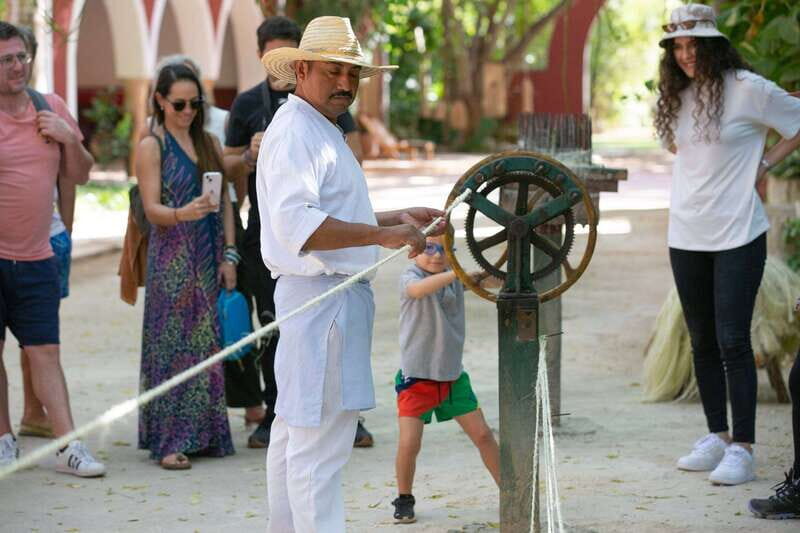
- Working sisal machinery in a restored hacienda that still runs like it did in its heyday
- Mule-powered rail trucks that move through the henequen fields at a relaxed pace
- A typical Mayan house visit that gives context beyond just plants and tools
- Cenote Dzul Ha swimming in a controlled, safe-feeling setting with changing areas
- Lunch at Restaurante KIH included, so you’re not hunting for food afterward
- Small group option that usually makes the explanations easier to follow
Entering Hacienda Sotuta de Peón: More than a pretty hacienda
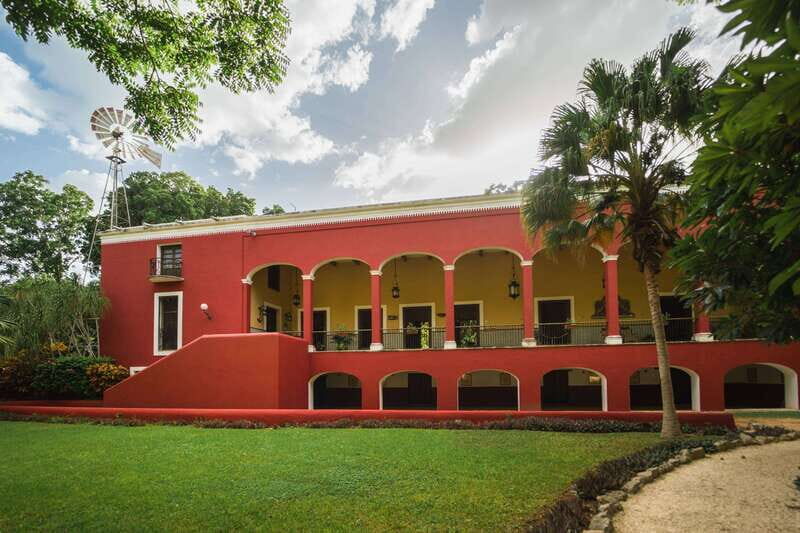
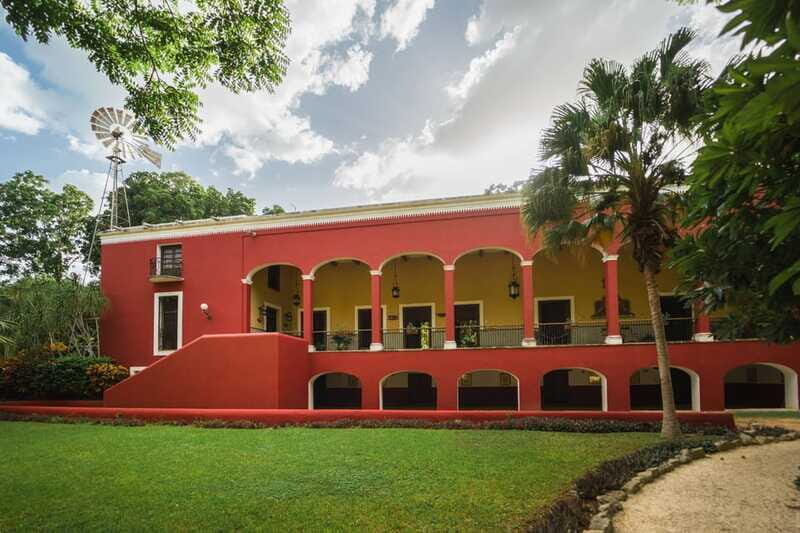
This tour works because it’s not only about architecture. Yes, the hacienda grounds are photogenic, but the heart of the visit is how the place explains itself. You’re walking through a business that shaped the Yucatán’s economy, then fading away when synthetic materials took over, and later being brought back by people who cared enough to restore the details.
Sotuta de Peón began operating in 1858, powered by sisal production. After a long period of prosperity, it fell into disuse for decades. Today it’s functioning again in a way that helps you understand how it operated day to day, not just what it looked like on postcards.
The setting helps, too. You’ll be surrounded by henequen fields and lush vegetation, with a calm, rural pace that makes the history feel closer. It’s easy to lose track of time when you’re moving slowly through working spaces and old equipment.
You can also read our reviews of more tours and experiences in Merida.



Understanding henequen and sisal: The Green Gold story in plain terms
Here’s what I think you’ll appreciate most: you don’t just hear henequen mentioned. You see the transformation steps.
During the tour, you’ll witness the transformation process:
- the agave plant as the starting point
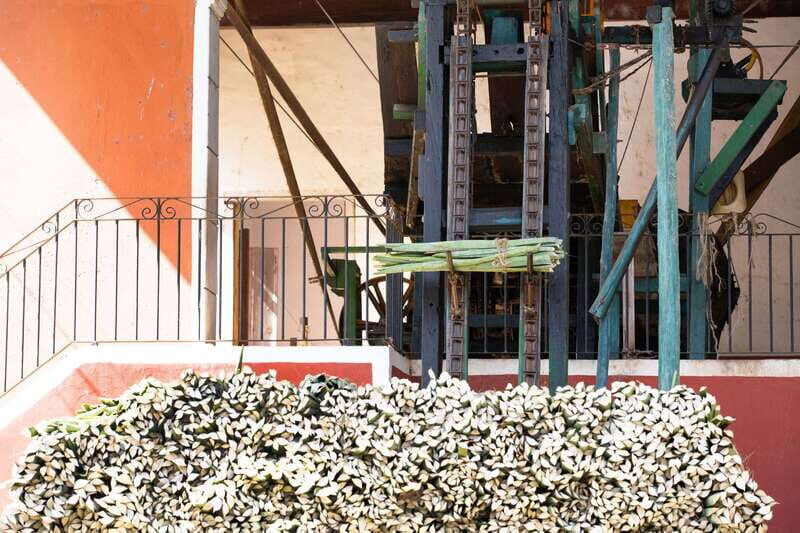
- how harvested leaves become fiber
- how that fiber is then processed toward finished products
The tour includes demonstrations with ancient machinery that’s been rebuilt to working condition. That matters. It turns “history” into a sequence you can follow with your eyes: plant to plant material, plant material to fiber, fiber to a usable result.
And if you’re the type who wonders how one crop could change an entire region, this is a satisfying stop. Henequen earned the nickname green gold here for a reason. Nylon and plastics later reduced demand, which helped explain why these haciendas didn’t stay busy forever.
The mule-powered “Trucks” and the ride through agave country
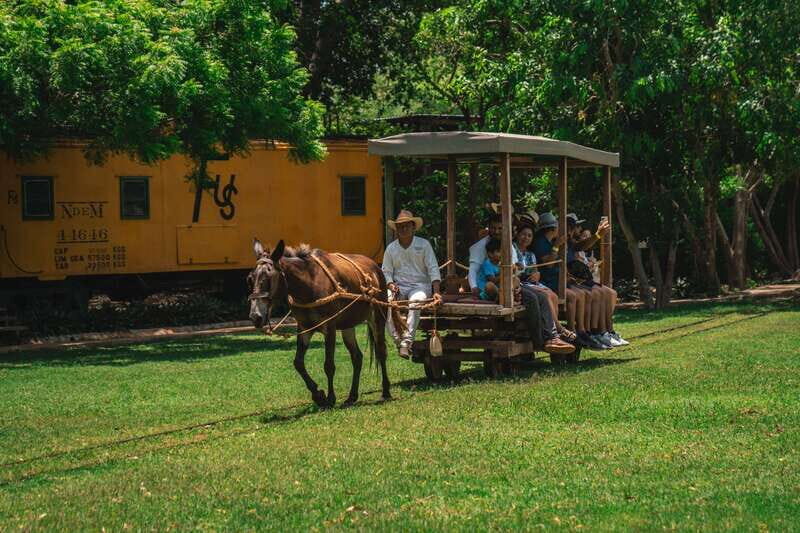
After the hacienda portion, the experience shifts from indoor explanations to motion through the fields.
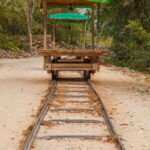
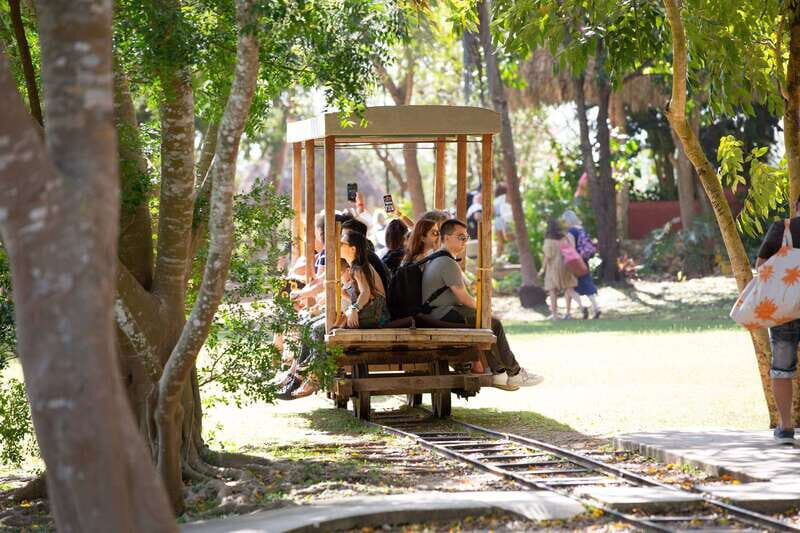
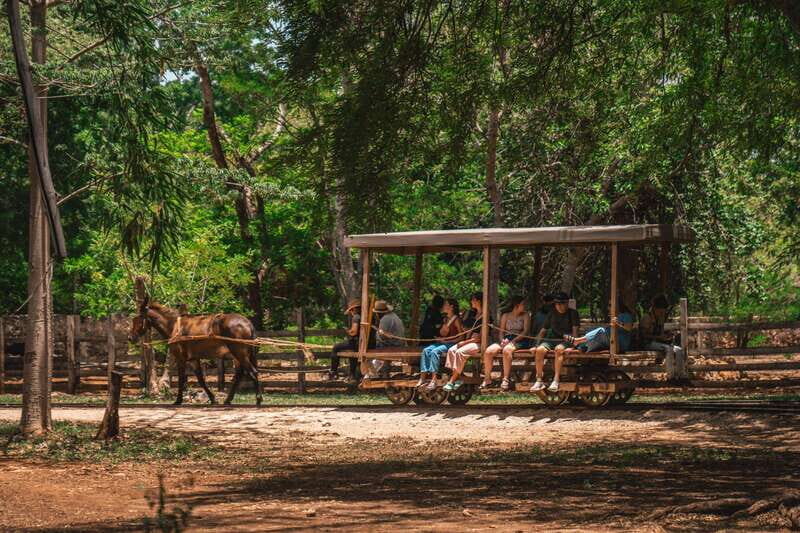
You’ll ride on wooden platforms called Trucks, pulled by mules on Decauville rails. Even if you’ve never seen a rail system like this, you can understand it quickly: it’s built for workers and supplies, not for speed. The result is a ride that feels steady and old-school.
This is also where the tour earns its “fun” rating. You’re not just sitting on a bus. You’re moving through agave country at a pace that lets you notice how the plants sit in the landscape and how the hacienda’s operation connects to the surrounding crop.
Practical tip: the ride is part of the day’s pacing. Wear comfortable shoes and expect a bit of dust or field grit. Nothing extreme, but it’s still outdoors.
The Mayan house visit: context you can actually use
One stop that doesn’t feel like an afterthought is the visit to a typical Mayan house. The value here is perspective: it reminds you that henequen production wasn’t happening in a vacuum. People lived their daily lives alongside this booming agricultural economy.
You’ll get a sense of how a home is laid out and how everyday life may have functioned in the region. It’s not meant to replace a full cultural tour of Mérida or the broader Yucatán. It’s a grounded complement to the industrial story.
If you like tours that connect history to real living spaces, this segment is an easy win.
Cenote Dzul Ha: swimming time with clear water and easy logistics
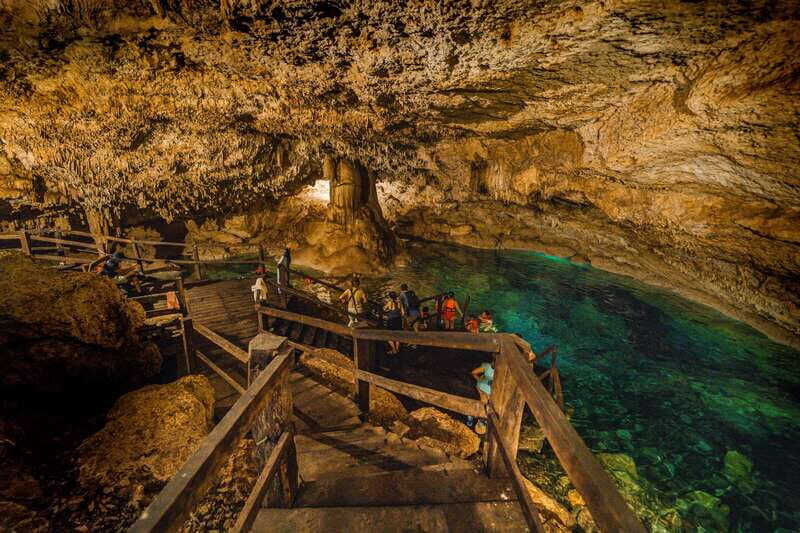
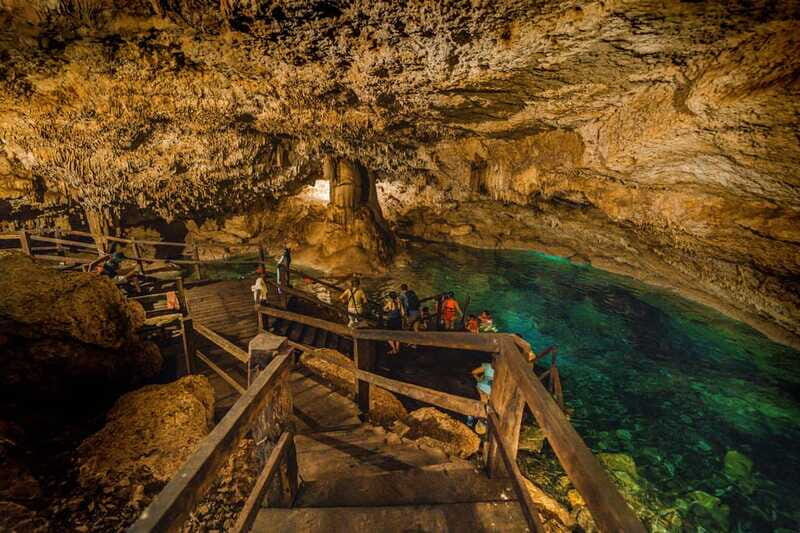
The cenote visit is the big payoff. Cenote Dzul Ha is described as crystal clear and known for highly coveted alkaline waters. And yes, you’ll have time to cool off with a swim.
What makes this cenote stop more than a quick photo break is the way the time is managed. You’ll have access to areas for changing, and there are amenities on-site such as bathrooms and showers. There’s also a bar/relaxing area while you’re waiting for your turn or taking a breather after getting wet.
Also, the cenote experience is set up in a way that feels safe and organized, especially if you’re not an experienced cave swimmer. This is important. Cenotes can be unpredictable places if you go in unplanned, but here it’s built into the day.
Bring:
- a towel
- swimwear
If you tend to get cold easily after swimming, pack something light to throw on afterward. The water feels great in the moment, but you’ll still be outside before you dry off.



Lunch at Restaurante KIH: included food that finishes the day well
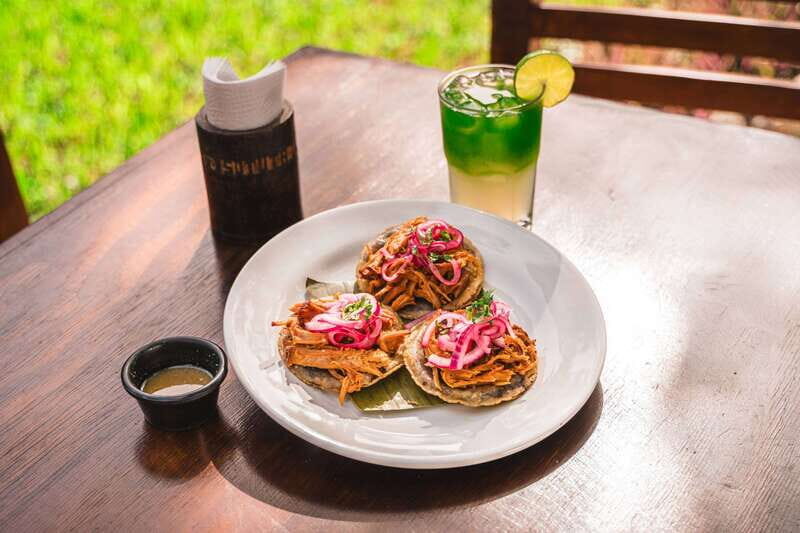
A lot of tours give you snacks and call it lunch. This one includes a proper meal at Restaurante KIH for about 30 minutes.
That lunch block is part of the value equation. You’re not forced to decide where to eat right after a swim, and you don’t lose time driving off property. Instead, you can settle, eat, and mentally reset.
The timing also matters. Since the day includes a guided hacienda portion plus the cenote, the meal helps keep energy steady so you can enjoy the ride and the final segments without feeling wiped out.
Tour length and what to expect hour by hour
The total time is listed as 3 to 4.5 hours, depending on the start time. A useful way to plan is to expect:
- a guided hacienda visit around the 3-hour mark
- time afterward for lunch
- the cenote portion as the cool-down and swim block, with changing and recovery time built in
Why this matters: if you’re scheduling around airport transfers, restaurant reservations, or a tight day trip, this is one of those experiences that fits into a half-day window without feeling rushed.
If you’re traveling with kids, the overall structure can help. Even when kids get restless, you’re not stuck in a single room for hours. The day moves: indoors for explanations, then outdoors for the ride and cenote.
Price and value: Is $58 a fair deal?
At $58 per person, this tour sits in the “worth it if you like hands-on culture” category.
Here’s why the value can feel strong:
- You’re paying for live guide interpretation in both English and Spanish
- The tour includes key components that would cost extra if you pieced them together: hacienda access, demonstrations, cenote swim time, and lunch
- You get a transportation element that’s part of the experience: the mule-powered Truck ride on rails, not just a drive to a spot
Is it a bargain? Not exactly in the budget sense. But for a structured half-day that combines history, a signature ride, a swimming cenote, and food, it can work out well—especially if you would otherwise spend time figuring out transport and entry fees on your own.
My rule of thumb: if cenotes are on your Yucatán list and you want more than a quick stop, this price makes sense. If you only want to swim and don’t care about the henequen story, you might prefer a simpler cenote-only option.
Group size, guide language, and how to get the most out of it
This is typically run as a small group available experience, with live guides who speak Spanish and English.
Still, here’s the real-world part to plan for: group tours mean you might share space with people who chat while the guide speaks, especially across language groups. If you want the cleanest experience, choose seating/positioning where you can hear the guide best, especially during indoor explanation time.
Guide quality can also make a huge difference. Guides such as Philip and Evan have been noted for strong, passionate explanations and for switching between languages clearly. Even if your guide isn’t one of those names, the format is designed for bilingual delivery.
If you’re traveling with someone who speaks only one language, this can help. You’re not stuck listening to nothing but one group’s pacing.
Best fit: who should book this tour
This tour is a great match if you:
- want a half-day activity from Mérida
- like history that you can see in action, especially old machinery and processing steps
- want a cenote swim with practical on-site setup
- appreciate a mix of industry, nature, and culture (hacienda + Mayan house + cenote)
It may feel less ideal if you:
- hate group settings or want silent, personal attention
- dislike swimming or are not comfortable getting changed for water time
- only care about the cenote and nothing else
A note on accessibility and comfort
There’s a little conflict in the available info: the activity is listed as wheelchair accessible, but another note says it’s not suitable for wheelchair users. If accessibility matters for you, contact the operator before booking so you can confirm what’s workable on the ground.
Comfort-wise, plan for walking on uneven outdoor surfaces and for outdoor temperatures while you wait for the ride and swim.
Should you book Hacienda Sotuta de Peón with Cenote and Henequen Tour?
I’d book it if you want a day-trip that feels like a complete story: sisal history you can visualize, a signature mule-rail ride, and a cenote swim that doesn’t require extra planning. The fact that lunch is included is a real convenience, not just a throw-in.
Skip it if you’re looking for a purely low-effort cenote stop or if you’re very sensitive to group distractions.
If you’re visiting Mérida and you’re deciding between a couple of “hacienda” options, this one has a strong mix: the working henequen/sisal process, the Trucks ride, and the Cenote Dzul Ha water time.
FAQ
How long is the tour?
The duration is listed as 3 to 4.5 hours, depending on the starting time you choose.
What’s included in the experience?
It includes appetizers and lunch, plus guided portions of the hacienda visit and the cenote activity.
Do I need to bring anything?
You should bring a towel and swimwear.
Is swimming in Cenote Dzul Ha included?
Yes. The tour includes time at cenote Dzul Ha where you can safely swim.
What languages are the guides?
Live tour guides are listed as speaking Spanish and English.
Is the tour wheelchair accessible?
The information includes both wheelchair accessible and a note that it is not suitable for wheelchair users. If you need wheelchair access, it’s best to check directly with the operator before booking.