REVIEW · CANCUN
Del Grano al Cafe Learn how to roast grind and prepare coffe
Book on Viator →Operated by Hacer tortillas a mano siguiendo la tradición mexicana · Bookable on Viator
Coffee can teach you a lot. In this 1-hour class, I love the hands-on fact that you roast and grind your own green coffee beans, and I love that you end by brewing and tasting the cup you made yourself. One possible drawback: it’s tightly timed, so you’ll learn the core process (not every niche method under the sun).
You also get complimentary Mexican cookies to go with your coffee, plus a certification of appreciation and a free gift to take home. It’s built for both locals and tourists, so the vibe stays friendly rather than stiff.
Finally, it’s small—up to 6 travelers—and run in English, which makes it easier to ask questions when you’re holding hot beans and tools. If you prefer big, loud group activities, this will feel more like a focused workshop than a spectacle.
In This Review
- Key highlights you’ll feel right away
- Why a coffee class in Cancún feels like culture (not a sales pitch)
- The Venado 10 setup: small group, quick start, hands-on workflow
- Meet Alex and learn the full coffee chain in one session
- From green beans to brown coffee: roasting basics you can repeat
- Grinding to match flavor: coarseness is not a minor detail
- Brewing with a drip filter: make your cup, then make it again
- Extras: cookies, certification, and the free gift souvenir
- Price and value: $5.98 to book, $20 on site (total $25)
- Who should book Del Grano al Café (and who should skip it)
- Should you book Del Grano al Café?
- FAQ
- How long is the Del Grano al Café coffee class?
- What does it cost?
- Where does the experience start?
- What happens during the class?
- Does each participant get coffee beans?
- Are cookies included?
- Is it offered in English?
- How many people are in the group?
- What is the cancellation policy?
Key highlights you’ll feel right away
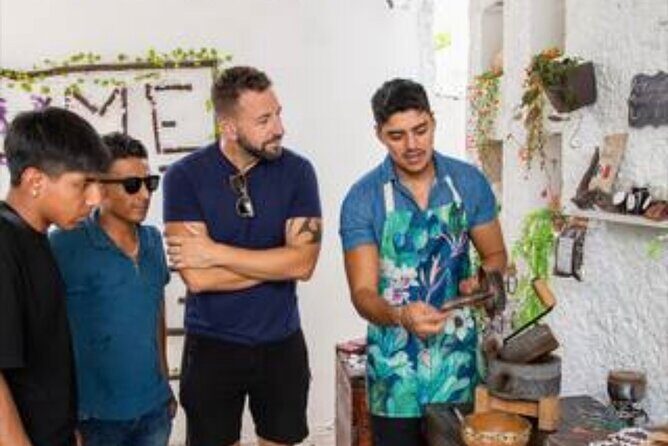
- You roast green beans yourself, using special utensils made for the lesson
- You learn grind size on purpose, not just “grind it and hope”
- You brew with a drip filter so you can repeat it at home
- Small group, one central spot makes the class feel personal
- Complimentary Mexican cookies pair with your finished cup
- A free gift + appreciation certificate give you something tangible to remember
Why a coffee class in Cancún feels like culture (not a sales pitch)

Cancún is famous for beaches and big tours, but coffee is a different entry point into Mexico. This class uses coffee as the lens for history and culture— including what coffee meant to ancient Mayan cultures—while you’re doing the actual work: roasting, grinding, and filtering.
What I like most is that it doesn’t feel like a lecture that starts and ends with facts. You’re learning the why while you watch beans change color and smell. You also get a real sense of how preparation affects flavor, which is the difference between drinking coffee and building a coffee habit.
The best part: you’re not just consuming. You’re controlling the process. And once you’ve done that once, it’s a lot easier to understand why different cafés taste different.
You can also read our reviews of more tours and experiences in Cancun.


The Venado 10 setup: small group, quick start, hands-on workflow
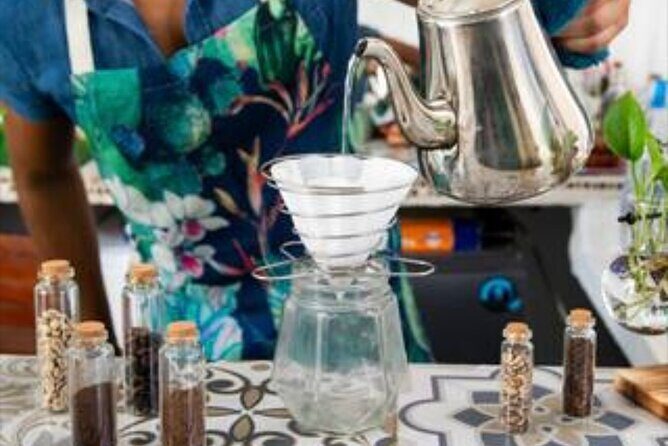
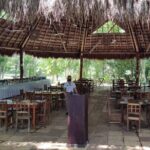
The class meets at Venado 10, 77500 Cancún, and it runs from there with the activity ending back at the meeting point. Based on how the experience is described, it’s set up in a small outdoor area, and you’ll see a clear welcome setup when you arrive.
Group size matters here. With a maximum of 6 travelers, you’re not stuck waiting your turn in a long line. It also means the instructor can help with the details that actually change results—like grind coarseness and how the coffee is handled during roasting.
In real life, that kind of small group format often beats the larger tours where you feel like background noise. You’ll also get more from the story side because you can ask questions without shouting over a crowd.
Meet Alex and learn the full coffee chain in one session
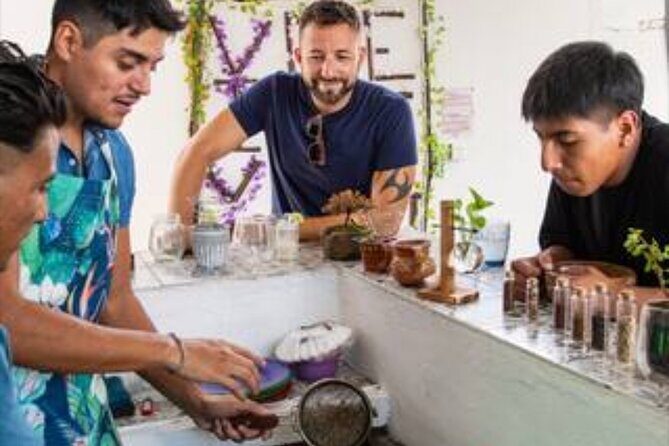
Your host is Alex, and he runs the experience with a clear teaching focus and a “let’s do this together” energy. People specifically note that he helps right away when you arrive— even at the doorway—so you’re not left wandering around trying to find where the class is happening.
The lesson is organized as a full chain, not isolated steps:
- Green coffee beans (raw)
- Roasting (turns them brown and develops flavor/aroma)
- Grinding (fine-tuning extraction)
- Filtering/brewing (drip filter method)
That structure is what makes this class useful. You’re not memorizing random trivia. You’re seeing how each step affects the final cup.
And yes, you’re going to smell the difference. Roasting changes more than color—it’s where aromas wake up. You’ll start noticing how the beans behave once heat hits them, and that becomes the reference point for everything after.
From green beans to brown coffee: roasting basics you can repeat
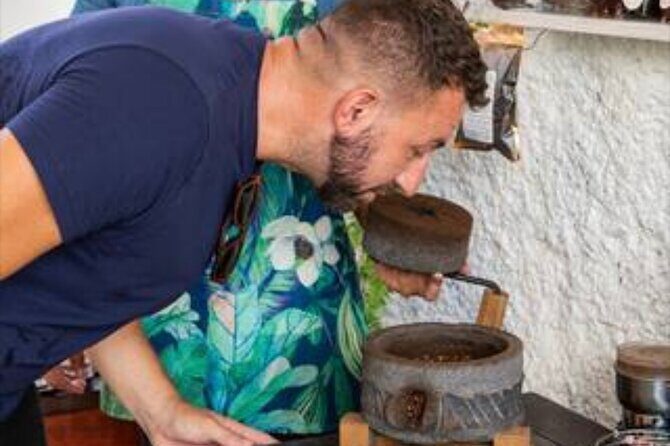
Each participant receives a portion of green coffee beans, which you’ll roast during the workshop. Roasting is the “turning point” in the process, because it creates the flavors and aromas you associate with roasted coffee.
In the lesson, you’ll work with special utensils for roasting. You learn that roasting isn’t just about heating until they’re brown—it’s about developing flavor through the roast process, because that flavor shows up later in the cup.
A practical takeaway you’ll want to carry home: roast and grind are connected. If your roast is lighter or darker than you expect, the grind you choose may need adjustment to keep the cup balanced. This class gives you that cause-and-effect sense, even if you don’t leave with a science textbook.
Also, roasting as a group (small group, again) makes it less intimidating. You can watch others’ progress while Alex guides. That’s how you avoid the common “I’m going to burn these beans” moment.
Grinding to match flavor: coarseness is not a minor detail
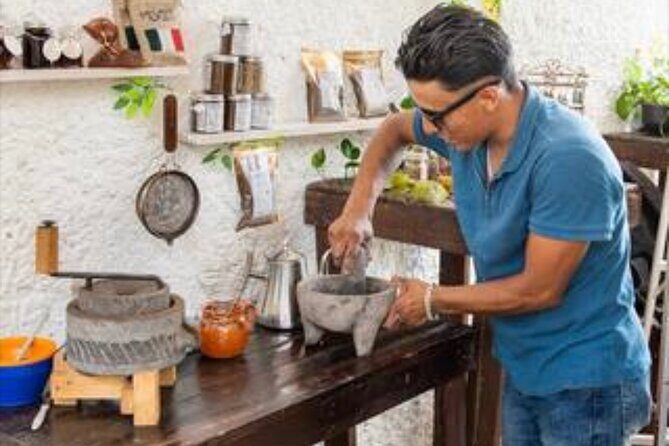
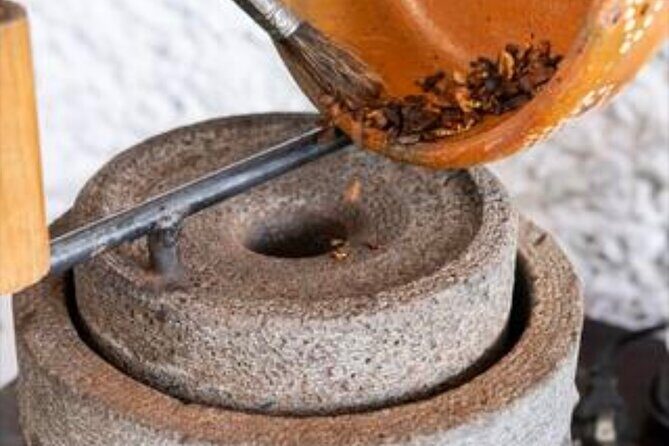
After roasting comes grinding, and this is where many coffee lovers either level up or stay frustrated. You’ll learn how to grind the beans and—crucially—how to choose the coarseness for the desired flavor.
Why does coarseness matter? In simple terms, grind size changes how water extracts coffee during brewing. Too fine can lead to over-extraction and bitterness. Too coarse can lead to under-extraction and a weaker cup. The class teaches this in the context of what you’re preparing next, so it doesn’t feel abstract.
Because the final brewing method in this class is a drip filter, you’ll get a framework that fits that style. So when you’re back home, you’re not guessing between five different systems. You have one method you practiced, plus the adjustment knob of grind size.
If you’re a coffee person who always orders the “same thing” and wonders why it tastes different at home, this section is the part that usually clicks.




Brewing with a drip filter: make your cup, then make it again
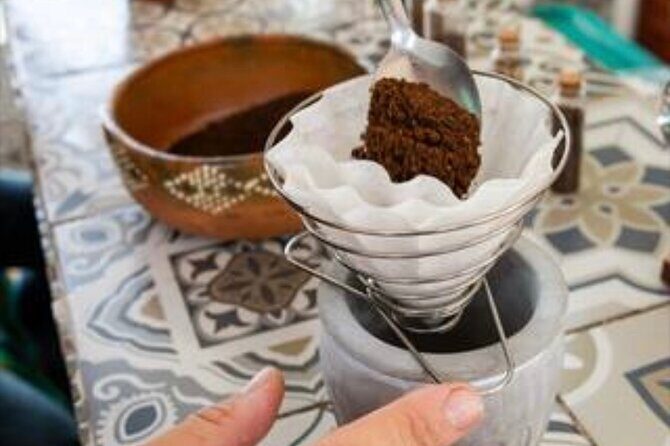
Your session ends with brewing using the drip filter method. You’ll select, clean, roast, and grind your coffee to use that extraction method.
This matters because drip is one of the most repeatable home styles. It’s not locked into one fancy machine, and once you know how your grind affects the cup, you can keep dialing it in.
You’ll brew your coffee yourself, then taste what your choices created. That moment is worth it even if you’re not a hardcore “barista type.” It’s the fastest way to build intuition:
- Roast level affects aroma and depth
- Grind affects strength and balance
- Brewing method affects flow and extraction
And you’re not learning this through theory alone—you’re learning by doing and then tasting.
Extras: cookies, certification, and the free gift souvenir
Coffee tastes better with snacks, and the class includes complimentary Mexican cookies paired with your brewed cup. It’s a small touch, but it changes the experience from “lesson” to “shared break.”
Before you leave, you’ll also receive:
- a certification of appreciation
- a free gift, described as a unique souvenir
Those items are handy because they turn the class into something you remember clearly, not just a memory of good coffee. A certificate also signals you weren’t just watching—you participated in the process.
And one more bonus: Alex also offers a tortilla-making class (handmade, following Mexican tradition). If you finish coffee and think, ok, I want more of this, you can usually keep going with that extra experience rather than switching to a totally different activity style.
Price and value: $5.98 to book, $20 on site (total $25)
Here’s the money math in plain terms. It costs $5.98 to book, then you pay $20 on site, for a total of $25 per person.
At first glance, that might look like a “cheap booking fee plus surprise fee” setup. But the structure is common for short classes. What you’re paying for is a hands-on, instructor-led workshop that includes:
- green coffee beans for you to use
- roasting and grinding instruction
- brewing with a drip filter
- complimentary Mexican cookies
- an appreciation certificate
- a free gift souvenir
Also, it’s about 1 hour, so you’re not tying up a half-day. That’s real value in Cancún, where time disappears quickly between beach plans and dinner plans.
One more value note: it tends to be booked ahead, with an average booking window of about 70 days. If you’re going in peak season, don’t assume you can walk up last minute.
Who should book Del Grano al Café (and who should skip it)
This class is a strong match if you:
- love coffee and want to understand what changes flavor
- prefer small groups and personal help while you work
- want a Mexico-focused experience that’s hands-on, not just sightseeing
- like practical takeaways you can repeat at home
You might want to skip or look elsewhere if you:
- want a long multi-stop tour
- expect a huge production or constant entertainment
- want every possible coffee brewing method covered in depth
The sweet spot is a short, focused workshop where you leave able to explain what you did and why your cup tastes the way it does.
Should you book Del Grano al Café?
If you’re spending time in Cancún and you like the idea of learning something you can actually use later, I think this is an easy yes. The combination of roasting green beans, learning grind coarseness, and brewing your own drip-filter coffee gives you real skills in a short time.
Also, the small size (max 6 travelers) and Alex’s teaching style keep it feeling personal, not generic. The cookies, certificate, and free gift add enough comfort that you feel taken care of, even though the class is compact.
Book it if you want a hands-on break from beach mode. Skip it only if you’d be unhappy with a one-hour session that focuses on the essentials rather than offering a long buffet of different experiences.
FAQ
How long is the Del Grano al Café coffee class?
It’s about 1 hour.
What does it cost?
The total is $25 per person, with $5.98 to book and $20 paid on site.
Where does the experience start?
The meeting point is Venado 10, 77500 Cancún, Q.R., Mexico.
What happens during the class?
You learn how to roast, grind, and filter coffee, including brewing with a drip filter method.
Does each participant get coffee beans?
Yes. Each participant receives green coffee beans to use for roasting.
Are cookies included?
Yes. You get complimentary Mexican cookies to go with your coffee.
Is it offered in English?
Yes, the course is offered in English.
How many people are in the group?
The class has a maximum of 6 travelers.
What is the cancellation policy?
You can cancel for a full refund if you cancel at least 24 hours before the experience start time. Confirmation is received at booking.