REVIEW · CANCUN
Cancun: 2-Tank Dive for Beginners with MUSA and Reef Dive
Book on GetYourGuide →Operated by Go Diving Cancun · Bookable on GetYourGuide
Scuba here feels like a real start. You’ll learn the basics in a theory class and pool practice, then do two guided underwater sessions in the Mexican Caribbean—one at MUSA and one on a natural reef.
I especially like the hands-on pace for first-timers, plus the fact you get a small group setup. I also love that the first site is a famous underwater art museum, not a random drop-off. One possible drawback: you need to be a confident swimmer, and this format comes with health limits (including asthma and some respiratory issues).
The best part for me is how the training and safety come first. The instruction includes equipment use, underwater communication signals, and how your body reacts underwater—so you’re not guessing once you’re on the boat.
The second thing I like: you get two different experiences in one trip. At MUSA you’ll see the underwater sculptures, and on the reef you’re more likely to get the kind of fish variety and color people hope for on a first day.
Here’s the consideration to take seriously: you’ll be spending about 35 minutes underwater on each site, and the experience isn’t suitable for everyone (pregnancy, epilepsy, certain heart or breathing conditions, recent surgeries, and age/weight limits). If you’re unsure, this is one activity where you should check your fitness before booking.
In This Review
- Key points to know before you go
- Why MUSA plus a natural reef works so well for first-timers
- The 6-hour flow: theory, pool practice, boat ride, then two underwater sessions
- Instructor style and small-group attention (Clemente Herrera and Doris)
- Your first underwater stop at MUSA: 400 sculptures and realistic visibility
- The natural reef session: where the colors and fish variety often land
- What’s included, what isn’t, and the rules you should take seriously
- Price and value: what $157 buys you in Cancun
- Who should book (and who should not)
- Practical tips to help you enjoy the underwater part
- Should you book this Cancun beginner scuba experience?
- FAQ
- How long is the experience?
- How many people are in the group?
- What language is the instruction offered in?
- What’s included in the price?
- What do I need to bring?
- Is a wetsuit included?
- Do I need to know how to swim?
- Is sunscreen allowed?
- Review Summary
Key points to know before you go
- Theory + pool practice first so you’re not learning everything while you’re already underwater
- Small group (up to 6) with close attention from your instructor
- Two underwater sites: MUSA art and a natural reef, each around 35 minutes
- Guided descent with buoys from the boat so you don’t feel rushed or adrift
- English and Spanish instruction with patient teaching that helps you feel safe
Why MUSA plus a natural reef works so well for first-timers
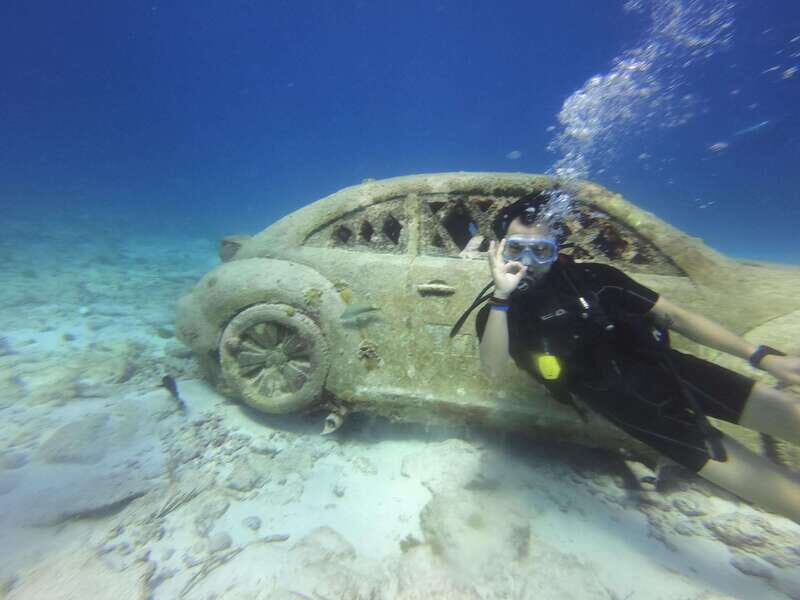
If you’re new to scuba in Cancun, you want two things: a calm learning curve and a payoff you’ll remember. This setup hits both.
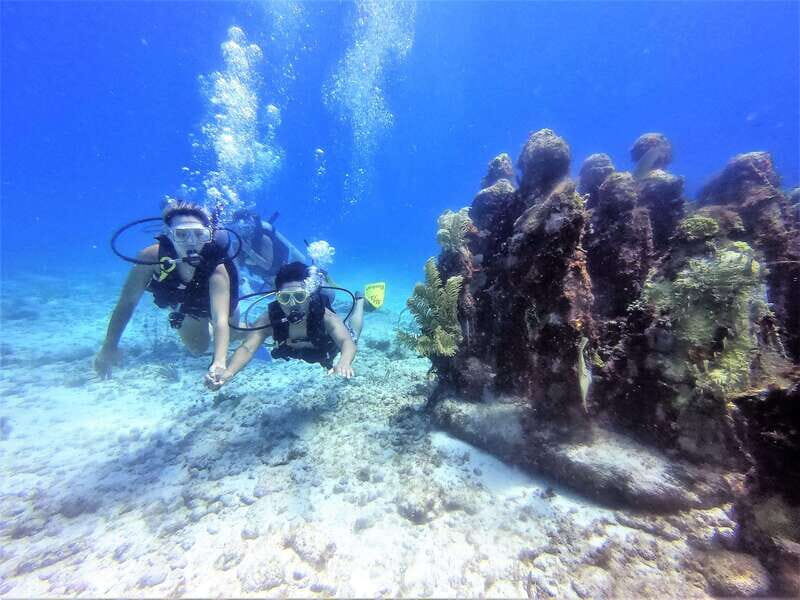
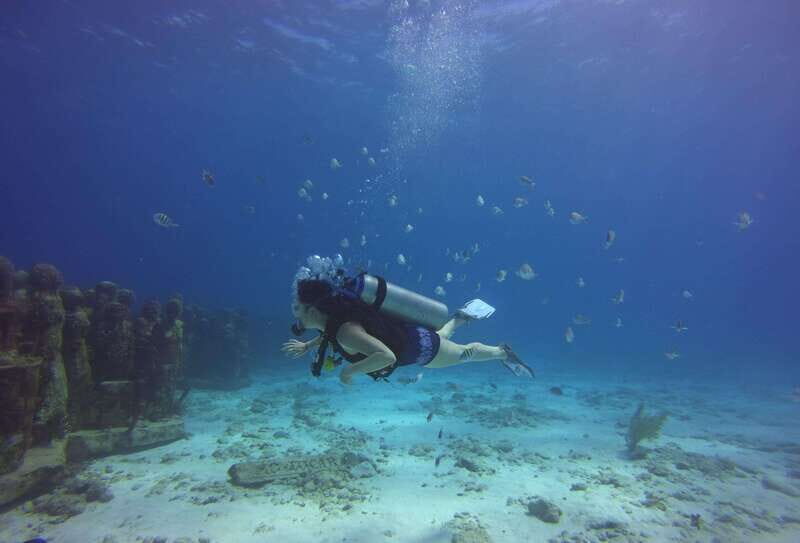
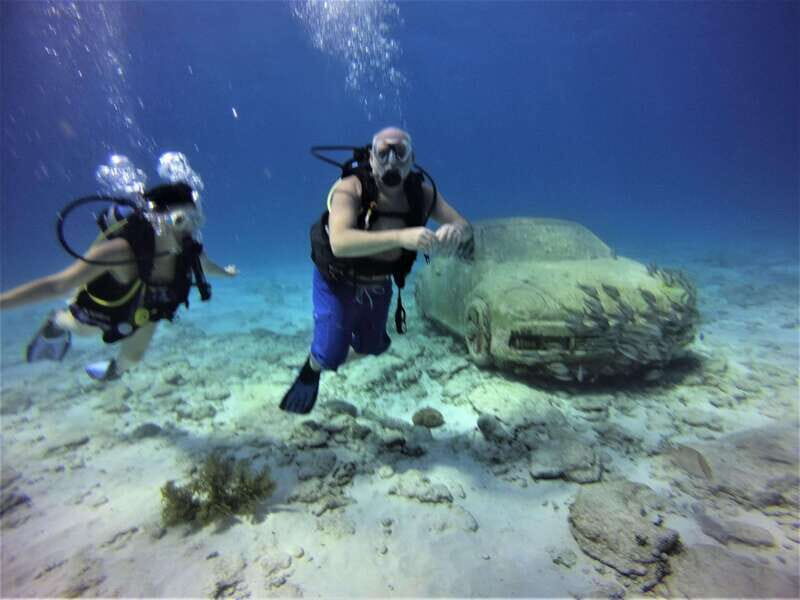
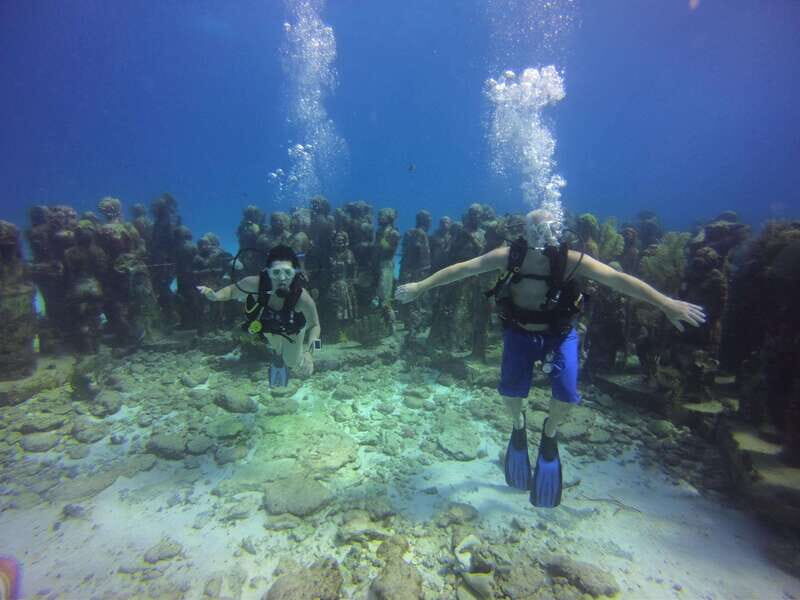
MUSA (the Cancun Underwater Museum of Art) gives you a built-in sense of wonder. Instead of staring at rocks and sand, you’re surrounded by underwater sculptures. One review described the atmosphere as unique, and that makes sense: it’s not just an environment—it’s an art space you can walk through (well, swim through) once you’re geared up and guided down.
Then the second site shifts you into classic Caribbean reef mode. On a natural reef, you’re more likely to see lively fish life and color. In one account, the museum visit had more limited fish visibility, while the reef stop became the real highlight. That contrast is useful: you get an emotional “wow” at MUSA, then you get the living reef experience in the second session.
Put together, you’re not stuck with only one kind of underwater viewing. You also avoid the all-or-nothing feeling that can happen with beginner “one-and-done” trips.
You can also read our reviews of more tours and experiences in Cancun.



The 6-hour flow: theory, pool practice, boat ride, then two underwater sessions
This is a structured day, not a random “show up and go.” It starts with a theory class, then moves to pool practice, and only after that do you board the boat.
Here’s the rhythm you can expect:
- Theory class: you’ll go over equipment use, how you’ll communicate with underwater hand/arm signals and signs, how your body works underwater, and basic techniques. The emphasis is safety first.
- Pool practice: you’ll practice key skills in a controlled setting. This matters for first-timers because you can repeat motions without waves, current, or deeper water pressure.
- Boat transfer: once you’re ready, you’ll ride to the descent area. The transfer time is about 30 minutes.
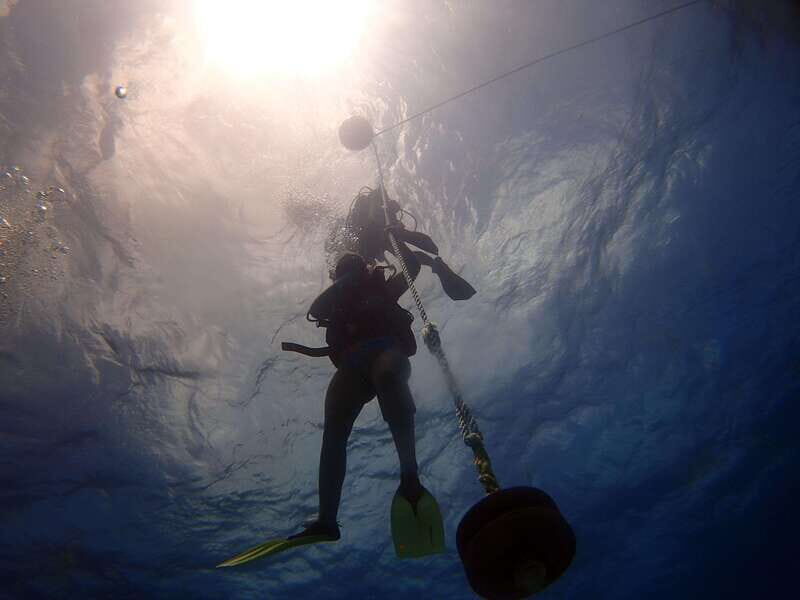
- Descent setup: when you arrive, you tie yourself to buoys and then enter the water with your guide directing the process.
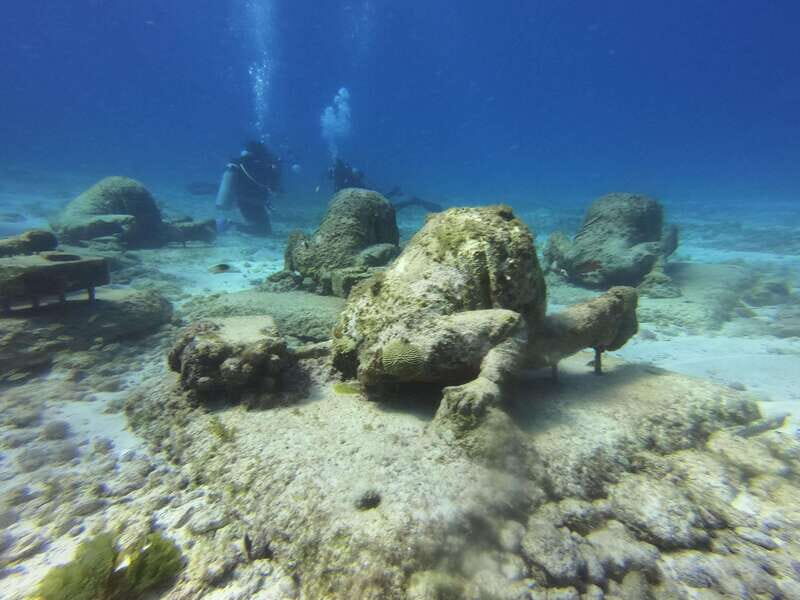
- First underwater session (MUSA): about 35 minutes underwater at around 10 meters. You’ll visit an area with about 400 underwater sculptures.
- Second underwater session (natural reef): another 35 minutes underwater at the reef site, focused on marine life and reef scenery.
- Return: about 30 minutes back to the marina.
Even if the exact timing of the classroom and pool parts varies, the order stays the same: learn the basics on land and in shallow water, then put it all together under supervision.
Instructor style and small-group attention (Clemente Herrera and Doris)
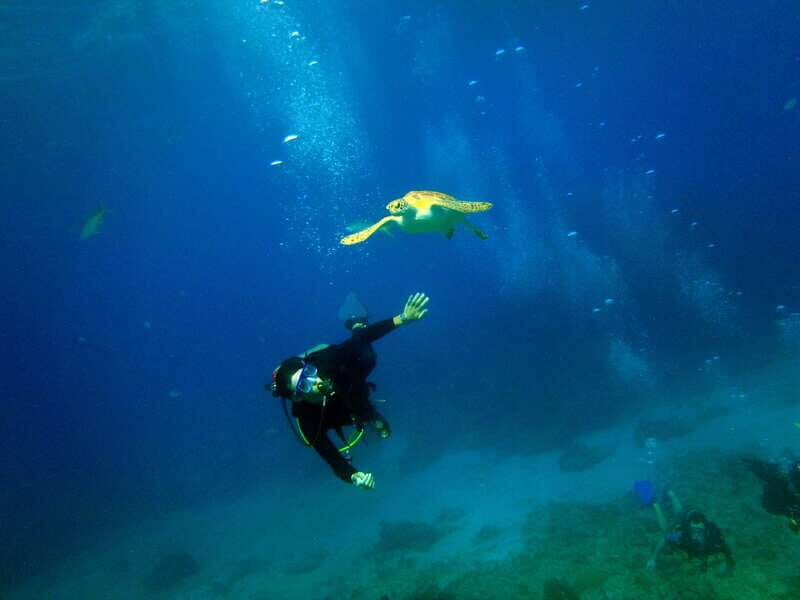
A good beginner scuba day isn’t about showing off. It’s about calm coaching. The small group size here—limited to 6 participants—is a big part of why this format works.
In the feedback, the name Clemente Herrera shows up with praise for professional, clear instruction. One review specifically credited the training as highly informative, and noted how the instructor kept things structured and confidence-building. Another review highlighted careful English teaching and patience, with the diver feeling safe throughout. That last point matters: safety isn’t just rules—it’s how the instructor explains and checks understanding.
There’s also mention of Doris alongside the teaching team. While the role isn’t spelled out in full detail, the important takeaway for you is that instruction seems to come from real people who stay engaged with the group, not a rushed assembly line.
If you’re the type who needs to understand what you’re doing before you do it, the “learn first, then practice” flow plus a small group is a strong match.
Your first underwater stop at MUSA: 400 sculptures and realistic visibility
MUSA is usually the reason people choose Cancun for a first scuba training experience. It’s unusual. You’ll descend to around 10 meters and spend about 35 minutes underwater.
What you can expect to see:
- Underwater sculptures in an art installation format
- The chance to experience the museum atmosphere up close
One review noted that fish visibility at MUSA was more limited. That doesn’t mean you’ll see nothing—it just means this stop is more about the art environment than guaranteed schools of fish. The sculptures can still be visually stunning and it’s a fun way to start because you’re focused on objects and shapes, not just hunting for sea life.
Practical tip for how to enjoy MUSA: let the sculptures be your guide for what to look at. If you’re trying too hard to spot animals instantly, you can get frustrated. If you treat it like an underwater gallery, the experience stays enjoyable even when fish sightings are slower.
The natural reef session: where the colors and fish variety often land
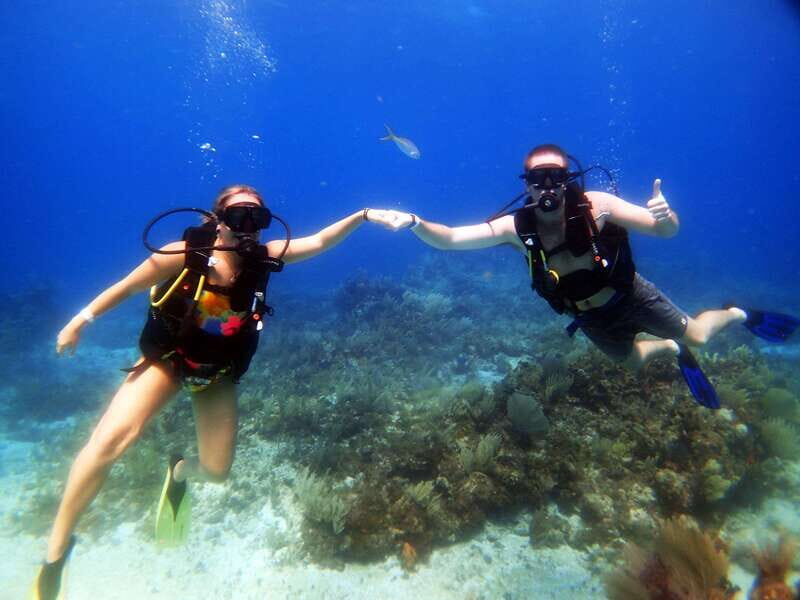
After MUSA, you’ll move to the second site: a natural reef. You’ll be underwater for another 35 minutes.
This is the segment that tends to deliver the classic “wow, I can’t believe I’m here” feeling—especially for people hoping for lively marine life. In one review, the reef stop was described as the true highlight, with more variety and color that made the underwater time memorable.
Why this second site matters for beginners:
- You get a second chance to practice what you learned (same general skill set, new environment).
- Reef settings often make it easier to focus on fish and movement, which can reduce the mental pressure of staying locked into technique.
So if you’re choosing this tour type because you want both art and living reef scenery, this structure is a good bet.





What’s included, what isn’t, and the rules you should take seriously
Let’s talk gear and comfort, because these small details can make or break the day.
Included:
- Scuba equipment
- Bottle of water or juice, cookies, and fruit (plus bottled water)
- All fees and taxes
Not included:
- Transportation to your location (the tour emphasizes hotel pickup/drop-off in Cancun, but you should still plan how you’ll reach the meeting point)
- Wetsuit (if needed)
Bring:
- Swimwear
Don’t bring (or at least don’t use):
- Sunscreen is listed as not allowed.
One more “know before you go” point that’s not negotiable: you need to know how to swim. Also, this trip isn’t recommended for people who fly within the next 24 hours.
From a planning angle, this is the kind of tour where you should keep your schedule simple. You’re coordinating a full day (about 6 hours) and two underwater sessions.
Price and value: what $157 buys you in Cancun
At $157 per person for about 6 hours, this is aimed at first-timers who want a guided, structured introduction without a long and expensive certification-style course.
Here’s what you’re really paying for:
- Two separate underwater sessions (MUSA + reef)
- Guided training progression (theory → pool practice → guided underwater time)
- Small-group attention (up to 6 participants)
- Equipment and fees included
- Language support in English and Spanish
- Hotel pickup/drop-off convenience in Cancun
Costs you’ll handle separately:
- Getting to the pickup/meeting area (transport isn’t listed as included)
- Wetsuit if you need one
When I judge value, I look at whether the trip reduces uncertainty for beginners. This one does that. You practice basics before going deeper, and you get a guided structure with a smaller ratio. For many first-timers, that’s worth more than trying to “save money” on a less guided experience.
If you’re expecting a cheap thrill ride, this isn’t that. But if you want a safer, clearer start with two underwater sessions and included gear, it feels like solid value.
Who should book (and who should not)
This activity lists clear limits for health and comfort reasons. Don’t treat them like suggestions.
Not suitable for:
- Children under 14
- Pregnant women
- People with back problems
- People with mobility impairments
- People with heart problems
- Non-swimmers
- People with respiratory issues (including asthma)
- People with epilepsy
- People over 70
- People over 331 lbs (150 kg)
- People with recent surgeries
Also noted:
- Not for travelers who fly within the next 24 hours
- Not for travelers with uncontrolled high blood pressure
If you’re within the limits and you want a beginner-friendly format, the structure is designed to help you get comfortable step by step. If you’re outside the limits—or you’re borderline—ask a medical professional first. Scuba isn’t the place to gamble with breathing, heart conditions, or recent surgery recovery.
Practical tips to help you enjoy the underwater part
You don’t need special gear beyond swimwear, but you do need the right mindset.
- Listen closely in the theory class. Underwater communication signals matter, and you’ll be using them later.
- Treat pool practice like the main lesson. If you understand the motions well there, the open water part feels much more doable.
- Stay calm during the boat-to-water transition. You’ll go down from the boat with guidance and ties to buoys—don’t rush; do what the instructor says.
- Plan your day around the full 6 hours. This is not a quick half-hour stop. You’ll need time to gear up, practice, and do both underwater sessions.
One small “gear rule” is easy to miss: no sunscreen. If you’re used to slathering on before water activities, switch your plan. Wear clothing that protects skin and stay smart about sun exposure.
Should you book this Cancun beginner scuba experience?
I’d book it if you want a clear path into scuba in Cancun: theory first, pool practice next, then two guided underwater sessions at MUSA and a natural reef. The small group setup (max 6) and the emphasis on safety and confidence-building are exactly what first-timers need.
I wouldn’t book it if you don’t meet the safety limits (swimming ability, health conditions, age/weight limits) or if you have a flight planned within 24 hours. In those cases, it’s better to choose something that matches your situation.
If you want both the famous underwater museum experience and a reef stop with strong chances of seeing marine life, this combo is a practical way to spend a day in the Mexican Caribbean.
FAQ
How long is the experience?
The total duration is 6 hours.
How many people are in the group?
It’s a small group limited to 6 participants.
What language is the instruction offered in?
The instructor teaches in English and Spanish.
What’s included in the price?
Included are scuba equipment, a bottle of water or juice, cookies and fruit, bottled water, and all fees and taxes.
What do I need to bring?
You should bring swimwear.
Is a wetsuit included?
No. A wetsuit is not included if needed.
Do I need to know how to swim?
Yes. You need to know how to swim.
Is sunscreen allowed?
No. Sunscreen is not allowed.
Review Summary
Rating: 4.7 (6 reviews)
Most praised: professional, patient instruction (including English clarity), feeling safe, and the contrast between MUSA and the natural reef (with reef often described as the highlight).