REVIEW · TULUM
2 cenote divings (including one deep diving) for advanced divers in Tulum
Book on Viator →Operated by La Calypso Dive Center · Bookable on Viator
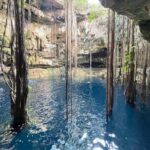
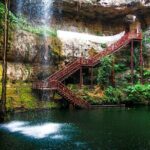
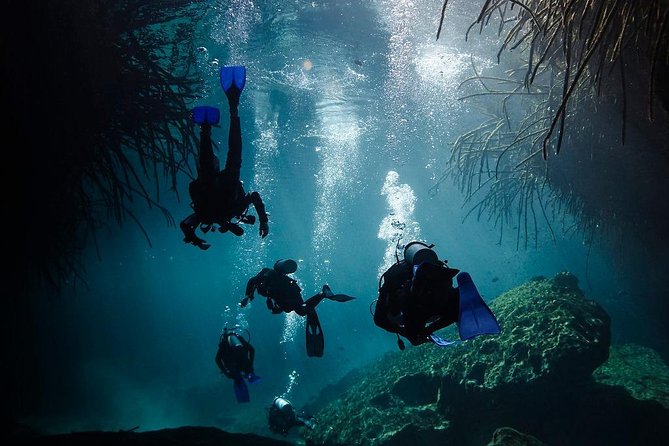
Cenotes here feel like underwater cathedrals. This outing strings together the Pit and Dos Ojos for a mix of sulfur-cloud depth, halocline effects, and limestone sights that feel built for photos. I like the small-group feel, capped at just 4 people, which makes the briefing, gear checks, and pacing feel human, not rushed.
I also like that they handle the logistics that usually slow you down: you meet at the shop, get equipped with the needed scuba gear, then jump straight into the cenote route. One thing to think about first is the qualification: for the deeper Pit portion you need proof of Advanced (level 2) scuba training, and it’s not recommended if you have asthma or certain medical conditions.
In This Review
- Key highlights worth your attention
- Why the Pit and Dos Ojos pair so well in one morning
- Start at the La Calypso shop in Tulum, then gear up fast
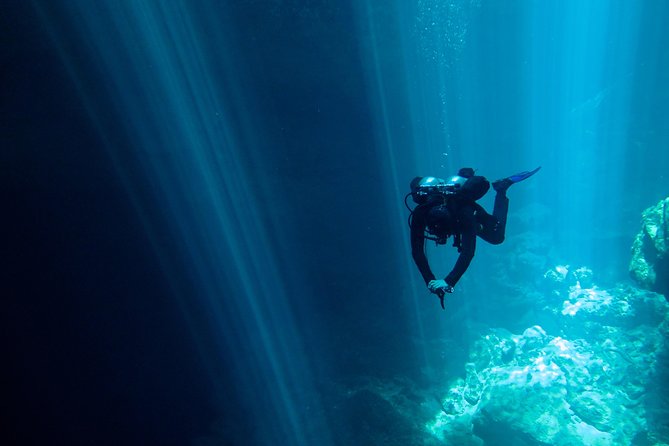
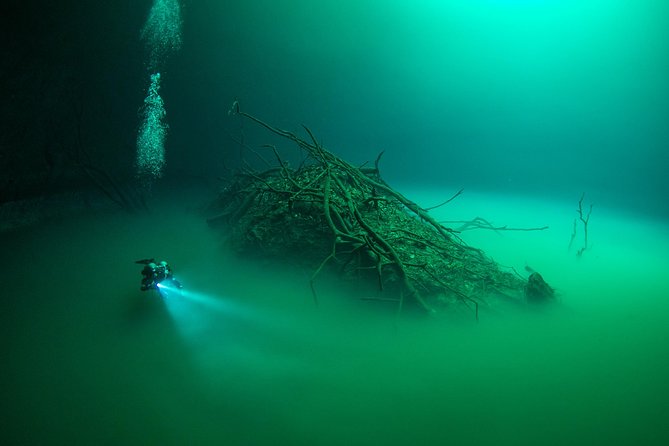
- Pit cenote: a sulfur cloud, halocline, and that sun-ray feeling
- Dos Ojos at Parque Dos Ojos: limestone worlds and the bat cave vibe
- Stop-by-stop pacing: what a 5-hour schedule really means
- Your guide: calm control and clear briefing (Martino and Alex)
- Price and value: why $215 can still feel fair
- Who should book, and who should skip this Pit + Dos Ojos route
- Gear, safety, and the health questionnaire basics
- Should you book this Tulum cenote scuba experience?
- FAQ
- What cenotes are included in this experience?
- Do I need advanced certification for the deeper Pit portion?
- What scuba equipment is included?
- Is transportation included?
- What is the duration and start time?
- Where do I meet the group?
- What is not included in the price?
- Is there a small-group limit?
- Is the tour offered in English?
- Can I dive if I have asthma or if I flew recently?
- What if I need to cancel?
Key highlights worth your attention
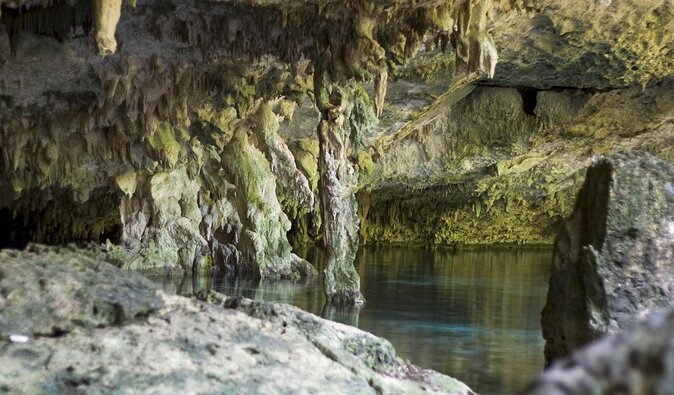
Pit timing can mean cleaner light effects
You’re set up early enough that the sun rays and atmosphere in the Pit often look extra dramatic.
Two very different cenotes in one morning
The deeper Pit is all depth, halocline layers, and caverns; Dos Ojos shifts to wide limestone views and the bat-cave vibe.
You’re in experienced hands
Guides like Martino and Alex are mentioned for careful briefing, strong control in the water, and a calm, fun attitude.
Gear and cenote entrance fees are included
You pay for the main pieces up front, so you can budget mainly for food and any personal extras.
Transportation is handled
Round-trip rides from the shop to the cenotes are included, which keeps the day moving smoothly.
Small group keeps the water time feeling personal
With only a handful of participants, your guide can watch spacing, buoyancy, and comfort more closely.
Why the Pit and Dos Ojos pair so well in one morning
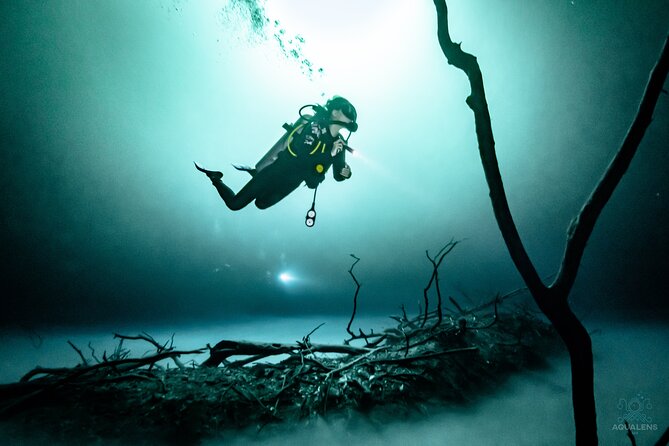
This is the kind of Tulum cenote outing that makes sense only if you’re chasing variety. You start with the Pit for a deeper, more technical-feeling experience, then you switch gears to Dos Ojos for longer, visually rich underwater roaming through formations and caves.
What makes the pairing valuable is the contrast. The Pit is described as a bottomless-well style space where you can see a sulfur cloud at about 25 meters and experience a halocline layer. Dos Ojos, on the other hand, is famous for limestone textures, underwater light play, and the bat cave area, so it reads more like a “where do I look first?” show.
You’ll also feel the planning in the timing. An 8:00 am start and a small group usually mean less crowd energy in the first location, which matters because cenote entry can get busy fast.
You can also read our reviews of more tours and experiences in Tulum.

Start at the La Calypso shop in Tulum, then gear up fast
You meet at Calle Sagitario Pte. 872, Tulum Centro at 8:00 am. The experience runs about 5 hours total, and it ends back at that same meeting point.
The shop setup is practical: you arrive, get equipped, and then head out by vehicle to the cenotes. One review specifically notes a private, shaded garden setting for collecting gear, which sounds small, but it matters when you’re trying to stay relaxed before you enter cold, dark water. You’re also told you’ll be fully equipped with the necessary scuba gear, and they include cenote entrance fees in the price.
There’s also an important reality check: you’ll need to complete a health questionnaire before you dive, and if you have medical issues like asthma or heart conditions, you should speak with your doctor first. If you’ve been on a recent flight, diving within 24 hours of flying is not recommended.
Pit cenote: a sulfur cloud, halocline, and that sun-ray feeling
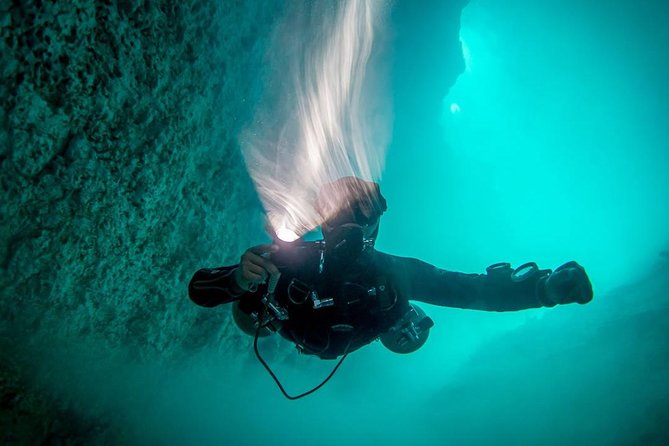
The first underwater stop is the Pit area, introduced as a near-bottomless well with a sulfur cloud around 25 meters deep. That detail is more than trivia. Sulfur haze can change how you see distances, how light travels, and how the air feels as you adjust your breathing and buoyancy.
You can also expect halocline conditions. In plain terms, a halocline is where water layers meet and light and visibility can shift. It often creates a boundary you can feel with your eyes even when everything else stays still. Guides who know these sites can help you position yourself so you get the effect without fighting your buoyancy.
Then there are the caverns. The Pit isn’t just about depth; it’s about motion in a confined underwater space. In the reviews, people highlight “sun rays” and a light effect when they were among the first in the Pit. That’s a good sign for what you’ll experience: when conditions line up, the water turns into a natural projector.
One more thing: the Pit portion is the qualification-sensitive part. For this deeper section, you must have Advanced (level 2) certification proof. Open Water certified divers with deep certification can also participate, but standard Open Water without deep training should not assume they’re cleared.
Dos Ojos at Parque Dos Ojos: limestone worlds and the bat cave vibe
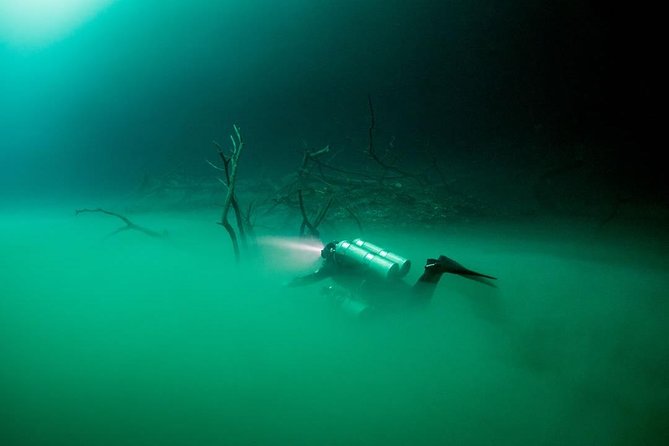
After the Pit, you head to the Dos Ojos area, listed as Cenotes Dos Ojos and Parque Dos Ojos. This is where the underwater mood shifts. Instead of depth layers and sulfur haze, Dos Ojos is described as a system with millions of limestone formations and lots of visible detail.
This cenote is also known for underwater light play. Reviews mention incredible light patterns and people using the word underwater surprises, which is typical of Dos Ojos: your route changes your view, and you end up noticing things you didn’t expect to exist inside a limestone maze.
The bat cave is part of that story, too. You should think of it as a dark pocket in the cavern system that can make you slow down, watch, and take the scene in rather than rush ahead. It’s a great place to practice smooth control: if you hover correctly, you’ll see more without stirring up the water.
Dos Ojos also tends to feel more “swimmable” than a tight, depth-focused site. One review notes that the second cave felt more popular because they could swim around further. That’s exactly what many people hope for after the first deeper stop: a chance to widen your focus and enjoy the formations at a steadier tempo.
Stop-by-stop pacing: what a 5-hour schedule really means
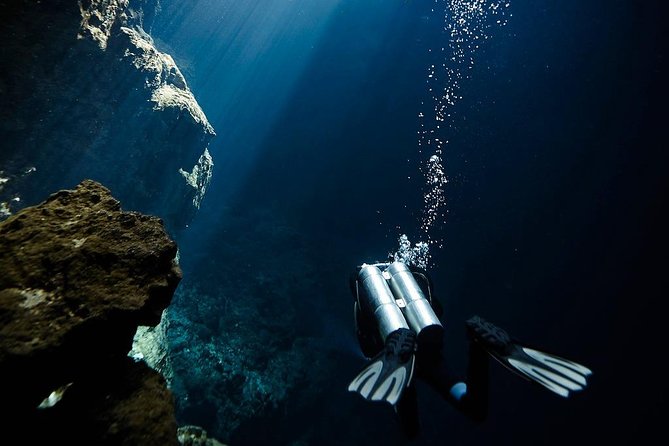
The whole experience is about 5 hours. In practice, that means your day is structured, not stretched. You’re doing two cenote sessions, with equipment time, the drive between sites, and the actual underwater time baked into a tight morning flow.
The order matters. Starting with the Pit gives you the deeper, more demanding portion while you’re fresh, then you can enjoy Dos Ojos with better energy and less stress about depth constraints.
The small group also affects pacing. With only up to 4 participants, you’ll usually spend less time waiting around on gear or standing in lines at entry areas. You’re more likely to get direct attention on buoyancy, hand signals, and where to look next.
- Selva Maya Eco Adventure Park: Ziplining, Hanging Bridges, Rappelling and Cenote
★ 5.0 · 1,057 reviews

Your guide: calm control and clear briefing (Martino and Alex)
The reviews put a strong emphasis on guide quality, and it shows in the kinds of details people remember. One guide named Martino is praised for explaining the briefing well and taking good care, with clear water and strong overall confidence. Another guide, Alex, is mentioned for safety and for knowing cenote and cave history, plus a fun-but-professional vibe.
You can use this as a decision tool even before you book. For a qualified cenote route, you want a guide who can do three things:
- explain what you’ll see (not just what to do),
- keep the group comfortable and spaced,
- manage the environment so visibility and comfort stay good.
That’s what these names point to. And it’s why this experience gets a high recommendation rate.
Price and value: why $215 can still feel fair
At $215 per person for about 5 hours, this is not the cheapest cenote option in Tulum. But the value case is solid because you’re buying several “hidden costs” up front:
- scuba gear use is included,
- transportation to and from the cenotes is included,
- cenote entrance fees are included,
- you’re getting a small-group format.
So your additional spending is mostly personal: snacks or meals. Lunch and breakfast are not included, and you’re also not getting hotel pick-up or drop-off. If you’re staying close to the meeting point or can get there easily, the price stretches further.
The advanced certification requirement also helps explain the price. The deeper Pit portion isn’t for everyone, and a guide needs the right training mindset and planning to run that part safely.
Who should book, and who should skip this Pit + Dos Ojos route
This is aimed at people who can handle overhead-ish feeling and depth control in cave-style environments. You’ll need moderate physical fitness, and for the deeper Pit portion you must have Advanced (level 2) proof (or Open Water plus deep certification).
If you have asthma, this is not recommended. And if you have other medical conditions (including heart issues) you may be blocked by the health questionnaire or by your doctor’s advice.
This tour is a good fit if:
- you’re already comfortable underwater in cenote settings,
- you want a strong guide-led experience rather than a chaotic group,
- you want two different atmospheres in one morning (Pit depth effects plus Dos Ojos formations).
It’s a poor fit if:
- you don’t meet the certification requirements for the deeper Pit portion,
- you’re medically unsure for diving,
- you prefer casual, beginner-level water activities.
Gear, safety, and the health questionnaire basics
You get the scuba equipment you need as part of the package, and you’ll be fully equipped at the shop before heading out. That’s important because cenotes punish gear problems quickly: fit, buoyancy, and regulator comfort all affect your stress level once you’re underwater.
You’ll also complete a health questionnaire prior to participating. Pre-existing medical conditions can prevent you from diving. If you’re sitting on the fence about your fitness, the smartest move is to confirm with your doctor before travel. That’s especially true if you’ve got asthma, since the tour explicitly flags that risk.
Finally, there’s a hard rule worth knowing: once you enter the water and begin the underwater portion, the activity’s success or failure isn’t the responsibility of the guide or dive center, and refunds aren’t possible after the dive starts. That’s normal for this type of activity, but it’s still good to enter with clarity.
Should you book this Tulum cenote scuba experience?
Book it if you’re an advanced certified scuba participant who wants a two-cenote morning with real variety. The Pit’s sulfur cloud, halocline, and cavern feel (plus the chance of gorgeous light effects) pair really well with Dos Ojos’ limestone formations, bat cave area, and visual underwater “play of lights.”
Skip it if you don’t meet the Advanced (level 2) requirement for the deeper Pit portion, if you have asthma, or if you want a beginner-friendly, low-stress outing. This experience asks for preparation, and it rewards you most when you’re ready for that environment.
If you do book, I’d treat the qualification check as step one, not an afterthought. Then show up early, bring the health info they ask for, and let the guide steer. In places like these, smooth buoyancy and a calm mindset do half the job for you.
FAQ
What cenotes are included in this experience?
You visit two cenote areas near Tulum: the Pit (as the deeper first stop) and Cenotes Dos Ojos, with the Dos Ojos area listed as Parque Dos Ojos.
Do I need advanced certification for the deeper Pit portion?
Yes. Proof of Advanced (level 2) certification is required for all participants wishing to take part in the deeper Pit portion. Open Water with deep certification can also be eligible.
What scuba equipment is included?
The experience includes the use of scuba equipment, provided as part of the tour.
Is transportation included?
Yes. Transportation from the shop to the cenotes round trip is included.
What is the duration and start time?
The experience lasts about 5 hours and starts at 8:00 am.
Where do I meet the group?
You meet at Calle Sagitario Pte. 872, Tulum Centro, 77760 Tulum, Q.R., Mexico. The activity ends back at the same meeting point.
What is not included in the price?
Lunch and breakfast are not included, and there is no hotel pick-up or drop-off.
Is there a small-group limit?
Yes. The experience is set up with a small group size, with a maximum of 4 travelers.
Is the tour offered in English?
Yes. The tour is offered in English.
Can I dive if I have asthma or if I flew recently?
Asthma is specifically flagged as not recommended. Also, diving within 24 hours of flying is not recommended. You’ll complete a health questionnaire before diving.
What if I need to cancel?
You can cancel for a full refund up to 24 hours before the experience’s start time. If you cancel within 24 hours of the start time, the amount paid is not refunded.
More Tour Reviews in Tulum
- Selva Maya Eco Adventure Park: Ziplining, Hanging Bridges, Rappelling and Cenote
★ 5.0 · 1,057 reviews